
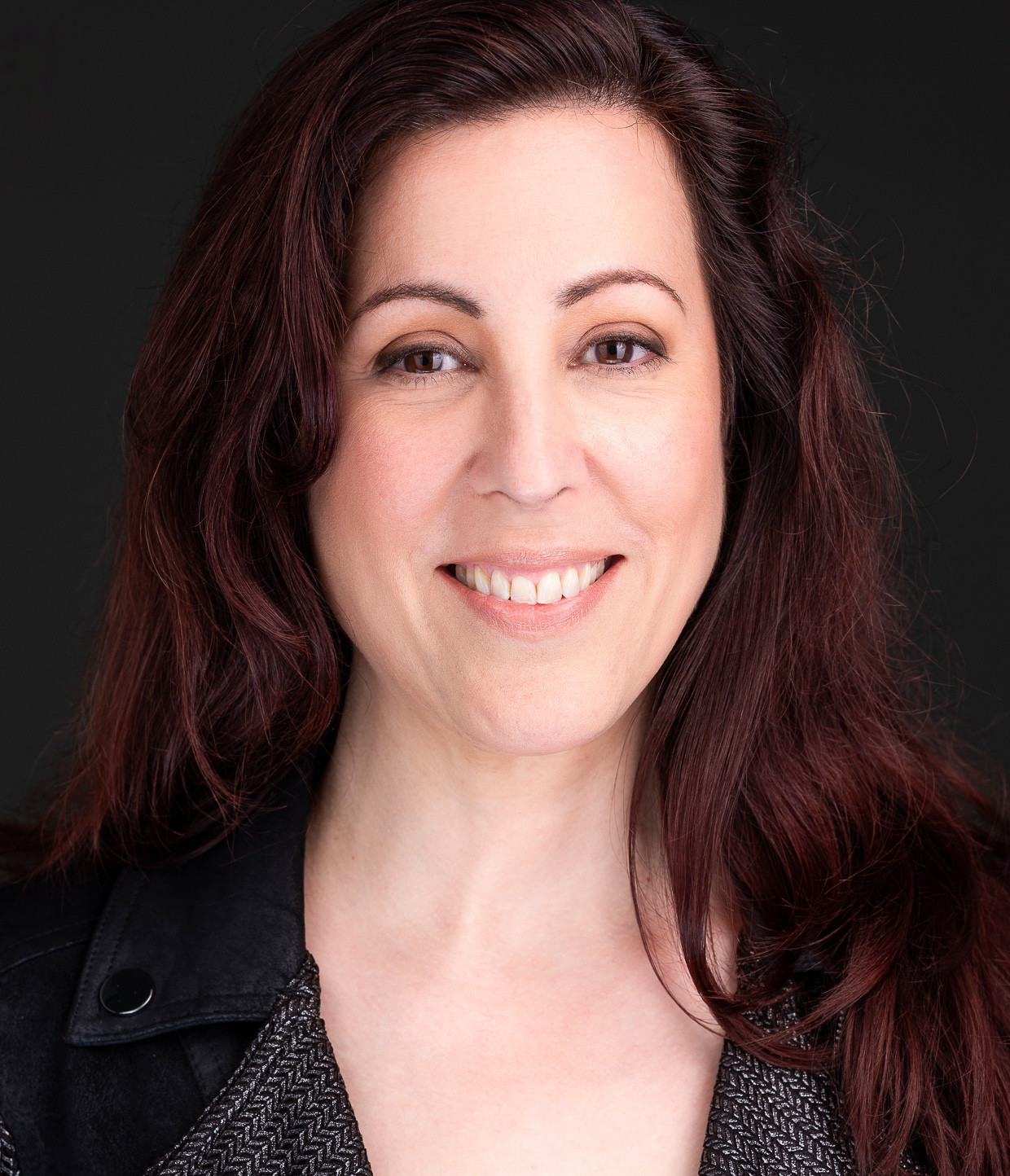
Jodi Krangle is a Toronto-based voice actor who works with major brands all over the world including Dell, BBVA, HGTV, Nespresso & Kraft. She’s been heard in thousands of your favorite commercials and websites, so odds are very good that you’ve already heard her voice. She also hosts the Audio Branding podcast, which delves into how to make an impact with sound, and how sound influences us. We talk about her journey to voice acting, the reality of voice acting versus our perception of it, and some ways sound can alter perception that will probably surprise you. Jodi also has some advice for anyone who’s considering a career in voice acting.
Show links: Jodi Krangle
Jodi’s website
Jodi on Twitter
Jodi on LinkedIn
Jodi on Facebook
Jodi’s YouTube channel
Subscribe!
You can subscribe to Follow Your Curiosity via the handy links at the top of the page for Apple Podcasts, Spotify, iHeart Radio, TuneIn, and YouTube. If you enjoyed the episode, don’t forget to tell your friends!

Transcript: Jodi Krangle
Please note: This is an unedited transcript, provided as a courtesy, and reflects the actual conversation as closely as possible. Please forgive any typographical or grammatical errors.
Nancy Norbeck [00:00:06]:
Welcome to Follow Your Curiosity. Ordinary people, extraordinary creativity. Here’s how to get unstuck. I’m your host, creativity coach, Nancy Norbeck. Let’s go. My guest this week is Jodi Krangle, a Toronto based voice actor who works with major brands all over the world, including Dell, BBVA, HGTV, Nespresso, and Kraft. She’s been heard in thousands of your favorite commercials and websites, so odds are very good that you have already heard her voice. She also hosts the audio branding podcast, which delves into how to make an impact with sound and how sound influences us.
Nancy Norbeck [00:00:45]:
We talk about her journey to voice acting, the reality of voice acting versus our audience perception of it, and some ways sound can alter perception that will probably surprise you. Jody also has some advice for anyone who’s considering a career in voice acting. Here’s my conversation with Jody Krangle. Jody, welcome to Follow Your Curiosity.
Jodi Krangle [00:01:07]:
Thank you so much for having me.
Nancy Norbeck [00:01:10]:
So I start everyone out with the same question, which is, were you creative as a kid, or did you find your creative side later on in life?
Jodi Krangle [00:01:19]:
Oh, I was creative as a kid. Definitely. In fact, I did a lot of different things. I did I tried everything, you know, like a kid does. I tried drawing. I was okay at it. I wasn’t great. I was more I was better at copying than I was at doing my own work.
Jodi Krangle [00:01:35]:
Mhmm. So I wasn’t bad at copying, but I had not enough to really make, you know, anything of it. And I I sang as a very young kid and I continue to do that. I’ve done that all my life. So that’s really where my creativity took its, fruition, I guess. That’s that’s what I ended up focusing my attention on most of. And I played piano by ear as a kid for a very long time. But, you know, when it comes to playing an instrument by ear, there’s only so far you can get with that.
Jodi Krangle [00:02:10]:
So I came across the the the threshold of where I could get to, and it got frustrating enough. And I knew I wasn’t gonna take lessons, and so I was like, yeah. Okay. Good. I’ll focus on the singing. So that’s pretty much, you know, I’m a pretty practical person when it comes right down to it. I do the creativity. I love that, but I’m also right and left
Nancy Norbeck [00:02:32]:
brained. Mhmm.
Jodi Krangle [00:02:34]:
So for me, it’s like it’s a control issue almost. If I can’t really be good at it, I almost don’t wanna do it.
Nancy Norbeck [00:02:43]:
I I get it. I toyed with the idea of learning to play ukulele when my now 10 year old nephew was born, and I thought, I’m not sure that I have the patience to be a beginner with this. So I don’t think I’m gonna go and throw a whole bunch of money into it because I’m gonna want to just be good at it right away, and that’s not how this works.
Jodi Krangle [00:03:01]:
Yeah. That’s why I never went into guitar. Like, my sister did. My sister is a fantastic guitarist, and and she uses that now with her performances, which is great, because it’s a lot more portable than a piano. But, yeah, I just I focused on the singing. So now I am, I am beholden to whoever decides to make my backing track.
Nancy Norbeck [00:03:23]:
There you go. So since your sister played guitar, did you guys do a lot of music together as a kid?
Jodi Krangle [00:03:32]:
Like as myself and my sister you mean? Or Mhmm. Not usually. No. No. We had very different musical sensibilities. She’s two and a half years younger than I am, so she’s more in the folk rock range. Mhmm. And I tended to be more pop big band.
Jodi Krangle [00:03:48]:
So, that’s kind of a really different sensibility.
Nancy Norbeck [00:03:52]:
Yeah. It is.
Jodi Krangle [00:03:53]:
Yeah. I do more of the torch singing. So yeah.
Nancy Norbeck [00:03:56]:
Yeah. I would lean more in your direction too. So I I get that.
Jodi Krangle [00:04:00]:
Yeah. The the jazz jazz torch singing is kind of where I’ve fallen right now. So I I really like that part.
Nancy Norbeck [00:04:07]:
Cool. Yeah. Did your parents support you in all of this? Or were they like, this is great as a hobby, but you can’t make money at it, so you need to go get a degree in something sensible?
Jodi Krangle [00:04:18]:
You know, they were really, really good. My parents are both musical. So a lot of times, they were very encouraging as far as the music was concerned for both my sister and I. Although, I have to say that they were a little more encouraging to me, and I I don’t know whether that was because I’m the firstborn or whether they didn’t think that my sister had a huge amount of talent, which I disagree with, but, you know, it’s different. You know, we have different voices. They’re not similar. And so I I don’t know. I don’t know what it was.
Jodi Krangle [00:04:52]:
So I think they were a little more encouraging for me musically than they were for my sister, which, you know, I think they regret a little now, and and I’m sort of disappointed on her behalf. But, you know, parents make mistakes. No one’s Right. No one’s, you know, perfect. And, yeah, they were very encouraging. And, we used to have sing a long time before bed. It wasn’t story time. Yeah.
Jodi Krangle [00:05:14]:
My Cool. My mom would sing, and my dad would get the guitar, and we’d sit on one of our beds, and the two dogs would be there, and we’d all be singing. It was like, this is when we were traveling in a car, we’d all be singing together. Like, it was this is what we did as a family.
Nancy Norbeck [00:05:29]:
I love that. It’s so cool.
Jodi Krangle [00:05:32]:
So yeah, I was raised in a very musical family, and I don’t think it was necessarily that they were discouraging us from making a living at it. I think that they just wanted us to follow our bliss and be happy. And the moment that the music didn’t do that for us, they would they would suggest we do something else. And, you know, in my case, I had a songwriting website
Nancy Norbeck [00:05:57]:
for
Jodi Krangle [00:05:57]:
a really long time, called The Muse’s Muse, which was all of it was a resource for songwriters, because I was writing songs at the time. This is back in 1995. So, yeah, I’ve been on the Internet a long time.
Nancy Norbeck [00:06:10]:
Long time.
Jodi Krangle [00:06:11]:
Yeah. So that that website went for twenty one years. Like, I I had it online until 2016. And it was basically just a huge place where a lot of articles and reviews and resources, like, where all the songwriting contests were and where you could get instruction and all sorts of interesting stuff was happening, and it had a message board that was really well attended and and had a lot of people on it, you know, when message boards were still a thing, they’re no longer a thing. However, yeah, I think Mighty Networks has taken over that kind of
Nancy Norbeck [00:06:51]:
Probably. Niche.
Jodi Krangle [00:06:52]:
Yeah. Yeah. But, you know, when 2016 came along and I had started my voiceovers in 2007, And by the time 2016 came around, I was already well in the voiceover stuff and doing really well, so I didn’t want any distractions anymore. It was because I was running running that site by myself. It was a big job. Yeah. I had a newsletter going on that site that had 8,000 subscribers around and, you know, it sounds like a big number but I would hear from the same four or five people every time I sent stuff out like it was like no one else was paying attention they were just on the list I don’t know like it there’s so much apathy out there and it was even beginning back then but but anyway so so like 8,000 people on this list, and I had a newsletter that went out every month for eighteen years, and I never missed one. So that was all on the website.
Jodi Krangle [00:07:47]:
Like, I I would print it out on the website, and people could look at it there. And, yeah, it was it was a lot of work. Yeah. Yeah. So, when I decided to let that go, it was mostly because social media was huge, and I couldn’t make the website into a social media haven.
Nancy Norbeck [00:08:09]:
Mhmm.
Jodi Krangle [00:08:09]:
Would it cost a huge amount of money that I did not have to put into it and or didn’t wanna spend, to be honest. You know, it’s it’s a lot of money when you’re not making any money from the site. You know, but I I had a good long run. I met a lot of really wonderful people. I learned a lot about the Internet. That’s how I learned SEO and Internet marketing, and that’s what I ended up doing before voiceovers. So, yeah, I’ve been an early adopter of the Internet for a long, long time. But music and voice and all of this stuff has always been a part of my life.
Jodi Krangle [00:08:43]:
So sound has always been there.
Nancy Norbeck [00:08:46]:
So where did you go from being a kid who liked to sing?
Jodi Krangle [00:08:53]:
Interestingly into computers. I did say I was left and right brained. Right? Uh-huh. Okay. So so, my dad loved being, loves. He’s still around, thankfully. Loves being on the bleeding edge of technology. He loves that stuff.
Jodi Krangle [00:09:14]:
So when I was 16, he bought a computer. This was, like, 1986, I think. Mhmm. And it was an Epson Equity two with a CGA monitor, a 20 meg hard
Nancy Norbeck [00:09:26]:
drive, and
Jodi Krangle [00:09:28]:
a five and a quarter floppy disk. Yep. And, yeah, PC all the way, DOS, you know, like, I I loved that computer. It was an XT. I had it for years, many years. I had it going into university and was using it with a, I think, 1,200 baud modem or something to dial into the VSAT machine on university campus so that I could laser print my essays for my classes. So, yeah, there’s there’s a lot going on here. But basically, I got into computers.
Jodi Krangle [00:10:08]:
I started selling the hardware, and then I sold software for medical offices. And then I got married. And, at that point, I had some run ins with people that I was, working with, not the software people, but the people that I had been selling hardware for. Mhmm. It was very sexist. Like, this is, like, early nineties, even, like, late eighties. Right? And super sexist. And when the owner of one of these stores started trying to steal hugs in the back room Oh.
Jodi Krangle [00:10:48]:
Yeah. It was just it was a little too much. So, yeah, so I left that whole life. I just didn’t wanna be there anymore. I wanted nothing to do with it. And I was a secretary for five years in a really, really quiet office where there was, like, three people that came in and out. And very rarely did they spend much time in the office. I was doing word processing.
Jodi Krangle [00:11:13]:
I had most of my work done by 10:30 in the morning. I got there at nine, and, I was a very fast typist. I had learned how to type in grade seven, something like that, and I was, like, over, like, a 100. Like, it was, like, it was it was huge. I was doing really well that way. And that is a skill that has kept me in good standing for a long time. Let me tell you. Being able to type, like, touch type, oh, that’s like the skill I use the most in my daily life.
Jodi Krangle [00:11:43]:
I swear. But yeah, so I did that for about five years, and then I, while I was there, taught myself how to make websites. So this is before the Muses Muse. The Muses Muse started in ’95. I was at that, that small office from about ’90 on, right after I got married. And, Yeah. I was there for a long time. And my husband and I sort of made a proposal for this company to make them a website.
Jodi Krangle [00:12:16]:
And when we sent that through, they were like because I was making, I don’t know, probably minimum wage as, like, a secretary, like, it was like less than 30 ks a year. It was like nothing. And and when I told them that I could make websites, they were like, oh, wonderful. Okay. We’ll make that part of your job description. They weren’t gonna pay me anymore. I was like, okay, after five years, that’s how you’re gonna treat me? Uh-huh. No.
Jodi Krangle [00:12:42]:
No. So, faxes were still a thing at the time. And I faxed another company an idea for what their website could look like, and they hired me. Good for you. Yeah. So that was around the time I I got into modems and the Internet and all of this stuff through, like, local bulletin boards and stuff. Like, the the modems were becoming a thing in ’88. And then, you know, by the time ’95 came around, I was all over the Internet.
Jodi Krangle [00:13:17]:
I was you know? And and I taught myself a lot and, worked at this, they were a, data recovery, outfit, which oh my god. Let me just tell you. Like, I was doing their Internet marketing and and ads, along with their website for a little bit. And, let me just tell you, this is data recovery as far as, like, competition. It’s it’s like porn. Like, I’m serious. Like, it was serious business. Like, they were really, like, that with their competitors, they were like They hated they hated each other.
Jodi Krangle [00:13:56]:
It was really it was quite something, not just to see, you know, and, wow, like, the competition was incredible. So, yeah, learning under those circumstances was quite something.
Nancy Norbeck [00:14:07]:
Well, and data recovery even now is not cheap
Jodi Krangle [00:14:10]:
at all. It’s definitely not. And it’s a cutthroat industry. Like, they don’t, I mean, I don’t know at this point what it’s like because I haven’t been in that business since, like, ’97, I think. ’97, ’98. So it’s been a while. But, but, yeah, it was quite something. And, yeah, from there, I I had taught myself how to do Internet marketing and SEO because of both that job and the Muse’s Muse, which was going on at the same time.
Jodi Krangle [00:14:41]:
And, and I just decided to go out on my own, but I was, because of the people I met on the Internet through the songwriting website, actually, they were, as sort of like, Evergreen Gaming Company. They had a software program called Zillions of Games that was a board game software, gaming package. Right? Like, you could make whatever board game you wanted. It had Okay. It had the usual stuff. Like, it had chess and checkers and all of the regular stuff, but it it had games from all over the world, which was really fascinating. And they wanted to sell it to somebody at, like, e three. So I ended up, you know, working with this guy that I had met through the muse’s muse, because he was also doing songwriting.
Jodi Krangle [00:15:31]:
He had a resource of his own, and he hired me to do some of their marketing for their company. And, so, yeah, I ended up doing that for a year or so and moving on to, other SEO and internet marketing. And, you know, by the time 2007 rolled around, and I was on my own, I’d been on my own for a few years, just doing it for clients. Mhmm. And, 2007 rolled around and Google was it. Like, suddenly Right. There was nothing else other than Google. Nothing else mattered.
Jodi Krangle [00:16:05]:
Right? Like, you used to have a ton of other, directories out there and all of a sudden, and it got boring. It just got really boring. So so, yeah, like, things tend to happen with me when I get bored. That is that is when I do my most changing. So, at some point, I was like, I think October 2007, I was like, no, I’m done. I’m done. Hanging up the the placard on the door. It’s done.
Jodi Krangle [00:16:39]:
I don’t wanna do this anymore. And, I basically stopped doing that and said, okay, now it’s time to do the voiceover. I’ve wanted to do this for years. I had volunteered my time at the Canadian National Institute for the Blind in ’95, ’96 and sort of got a feel for it because we were sort of reading magazines onto reel to reel tape, actually, which was interesting. But I like the tech as much as I like the reading. And, and and understanding sort of where that was and what you could do with it. And then thinking, well, okay, what’s involved in this? You know, I’d like to pursue something new that still sound and still uses my voice. But, you know, it’s a little more uniform, you know, people give me a script.
Jodi Krangle [00:17:28]:
I don’t have to write the script, you know? So I, you know, it, it just kind of appealed to me in a lot of different ways. And, so I just went from there and it probably took me about two and a half years and many mistakes to start making a decent living because this is not an easy industry to just jump into. But Yeah. Yeah. Yeah. So how
Nancy Norbeck [00:17:52]:
did you actually jump into it? I mean, what what what did you have to do? I mean, I know that, you know, there are demo tapes and things like that. I mean, how how did you figure out all of these pieces and put it all together?
Jodi Krangle [00:18:05]:
Well, in the beginning, I actually got, like, a a package kind of, instruction manual, I guess, from an outfit in Downtown Toronto here. And, they sent me a CD, and they sent me a booklet, and you could practice, and you could look at some scripts, and you could sort of understand what was going on a little bit. I didn’t actually go to any classes there, but, it was it was interesting. So it gave me a sort of crash course in how these things work a little bit. And I knew some people up where I was living that were in the music business. So, you know, music wise, I had access to a studio where they could help me record something. So I kind of did like a rudimentary first demo myself with some of these scripts and, you know, they put music on it for me and, you know, all of that. And it wasn’t awful, but it wasn’t it wasn’t great because I didn’t know.
Jodi Krangle [00:19:12]:
Right? I I had no idea. You you don’t really know unless you take coaching, and I hadn’t had any coaching at that point. So I went online and I looked for the first place that actually offered some demos, not realizing that maybe you should get a little coaching first. You know, I’m making all the classic mistakes, like, just out of nowhere. Oh, I think I could do this. I guess because I was musically inclined, I thought it’s not that big a leap.
Nancy Norbeck [00:19:43]:
Mhmm.
Jodi Krangle [00:19:44]:
And and I’m I was kinda right, you know, but there’s a little more to it, obviously. So, yeah, it was, I I ended up getting a demo, two demos done, actually, a commercial and a narration demo from an outfit that was what they call a demo mill.
Nancy Norbeck [00:20:02]:
Mhmm.
Jodi Krangle [00:20:02]:
And and the demo mill idea is that, basically, they will work with anyone with a credit card.
Nancy Norbeck [00:20:08]:
Mhmm.
Jodi Krangle [00:20:10]:
So they really didn’t instruct me in anything. I had a studio that I could go to. Pardon me. And, and they could, record me there, and it was remotely done. And there was a director that was directing me at the time, but I didn’t have any of the skills of someone who was actually coached. So I wasn’t really ready for that demo. I didn’t connect to anything I was saying. I was repeating what they were telling me and reading the script thinking, oh, this is what I’ve heard on the television.
Jodi Krangle [00:20:43]:
So this is how it should sound. Right? But that’s not how this works at all. And it really is actual acting. There is some acting involved because you have to care about what you’re saying. You have to connect with that copy. It has to mean something to you. And the only way to do that is a really healthy feeder of the mind. And that’s acting, whether it’s, advertising, marketing, a cartoon character, a video game character, an audiobook, it’s all acting, even the commercials.
Nancy Norbeck [00:21:18]:
Oh, I’d say especially the commercials.
Jodi Krangle [00:21:21]:
Yeah. Yeah. And I mean, I, I, that’s where I make my livelihood right now. It’s mostly mostly in commercial and narration because I kind of appreciate the advertising marketing aspect of this. It’s for me, it’s kind of it’s really interesting to see the psychology of it, you know? Like, I I’m fascinated by how this all works, which is again, how the whole audio branding thing came to be because I’m fascinated by what I’m contributing to.
Nancy Norbeck [00:21:47]:
Right. Right. I a couple years ago, I met with a guy who, like, was an Emmy award winning sound designer, and I haven’t thought about him in ages. But now I’m thinking I should get him on the podcast. But
Jodi Krangle [00:22:01]:
Sure. Yeah.
Nancy Norbeck [00:22:01]:
Because somebody had referred me to him because I was thinking, you know, there was a a local kind of adult school thing where someone came in and did a session on, could you be the voice over person? And, of course, you went in and you paid your $15 for the evening, and then he wanted you to come and take all of his stuff and whatever. And I was never sure just how legit he was, but someone had referred me to to this other guy. And, you know, the the level of enthusiasm that you have to generate for dog food was so far beyond anything I had ever really, first of all, noticed on an ad before or even imagined that you could drum up for dog
Jodi Krangle [00:22:51]:
food. People are very serious about their pets. Let me tell you. Yeah.
Nancy Norbeck [00:22:55]:
And I mean, it’s not just dog food. That’s just the first thing that comes to mind.
Jodi Krangle [00:22:59]:
Yeah. Sure.
Nancy Norbeck [00:22:59]:
But, you know, I mean, it was so to me, it felt so incredibly over the top, and I’m sure that you get used to it. But I just couldn’t quite wrap my head around managing to pull off that level of enthusiasm for something that is that ordinary. So so that’s why I I think that probably commercial voice over is, to me at least, it would be more of a challenge than, you know, reading an audiobook or whatever, which I would love to do. But but yeah, I mean, it did it seem that way to you? Or did your marketing background make it seem more?
Jodi Krangle [00:23:39]:
You know, it it it changes because I I’ll bet that when you first heard commercials, like when you were first listening to them, they were way more overblown than they are now. Because, everyone’s BS o meter is so high right now. So no one wants to be sold to. Mhmm. They want to be talked to. They wanna be brought in. Right? So a lot of the commercial stuff that’s going on right now is very understated. It’s, very, you’re in the room while I’m talking.
Jodi Krangle [00:24:11]:
I’m not selling to you. I’m not trying to get your attention. This is just me talking. And a lot of the times, the voice actor is brought back, not pushed forward. Like, that’s what voice over shouldn’t be voice over. It should be voice under, Especially when you’re talking TV, because when you’re talking TV, you are sort of, you know, going to the video, right? Like you’re highlighting the video, the visual, you’re not actually the be all and end all of that piece. And it’s different for radio because radio, you’re all, you’re the only thing. So you are being their theater of the mind.
Jodi Krangle [00:24:53]:
You are everything at that point. So it’s a different type of read. But but, yeah, most of the video, you know, you’re you’re definitely pushing back. You’re not you’re you’re holding back. You’re not you’re not everything in that production. So, yeah, it’s it’s a way to draw people in. It’s not, it’s not a, you know, you need to do this and, you know, this is such a great product and I love it and I think you should love it too. No.
Jodi Krangle [00:25:27]:
It’s more of a, I think this is great, but if you don’t like it, it’s up to you. I mean, that’s really that’s really the idea nowadays. Right? It’s like, okay. Like, I’m just gonna tell you how great I think it is, but, you know, it’s up to you if you wanna do anything. It’s That’s so interesting.
Nancy Norbeck [00:25:49]:
But I do it as like that. That, you know, we are, like, so I think we are as a as a culture, as a society, as a planet, so over overloaded with all of this stuff that we are. We we we are so incredibly hypersensitive to it that it makes sense that even just in the last six or seven years, it would have changed a lot.
Jodi Krangle [00:26:13]:
Yeah. But it’s it’s been coming for ten or twelve. Like, it’s been coming for a long time. And even when I started in 2007, the trend was already to be pulled back. You know, there aren’t a whole lot of things that are in your face these days unless it’s a parody of older commercials, and then it’s played for laughs. Right? So you don’t get that a whole lot anymore. Most of it is just being your authentic self. And again, authenticity is that word that that buzzword that’s used 50,000,000 times in a day, I’m sure.
Jodi Krangle [00:26:51]:
But authenticity is really what people are after. They wanna know who you are. So my work got way better when I realized that people were hiring me because I’m me, not because I have a beautiful voice or because I can do this script with a smile that they liked, like, you know, or I sound like this person. No. They they want my personality and my point of view because that’s what fits their brand. So just being me, when I let myself just be me, I did a lot better.
Nancy Norbeck [00:27:28]:
Isn’t it amazing how that works? We spend so much time thinking we have to be somebody that we’re not. But most of the time, all anybody wants is the real us.
Jodi Krangle [00:27:38]:
Yeah. And that’s part of what you really need the coaching for when you’re starting out in voice over because you’re being coached really to have a point of view. That’s what acting really is when you get right down to it. Right? It’s having a point of view and committing to that point of view. You can change it. You know, I’m I’m infinitely directable when I’m in a session. I do whatever the client needs me to do. That’s what I’m that’s my job.
Jodi Krangle [00:28:05]:
My job is to make them happy. And if they want me to emphasize the word, and I will do that. You know? That’s that’s up to them. I wouldn’t suggest it. But but if that’s what they really wanna do, I will give it to them. No problem. That’s whatever. But the idea that I have a point of view and that going in there, I am giving them what my sensibilities tell me I should give them is at least a good place to start.
Jodi Krangle [00:28:37]:
Yeah. It certainly makes it easier for them to direct me where they want me to go. And I do a lot of auditioning. Like, I audition 15 times a day. You know? It’s it’s not like I you know, you get jobs, which is fantastic, and and I love everyone that I that I do. And I don’t always have to audition. Some people I’m working for on a regular basis. I’ve already done all that.
Jodi Krangle [00:29:02]:
We’ve already had those discussions, and they’ll just come at me with whatever they need in the day. And I I often don’t have any warning. It’ll just show up in my inbox, which is fine, because what I’ve done with my career is I’ve sort of patterned it so that what I do is projects that are five minutes of finished audio or less. So I don’t tend to do a lot of long form, which means that I can put out fires before they become fires. I have that time, and I have good work life balance, and I can get a job done in half an hour without any trouble. So if someone has a rush emergency job, I can do it for them. If they want an update on something I’ve done for them before, I can do it in five minutes. I can have it in their hands.
Jodi Krangle [00:29:50]:
You know? The these are are things that I’ve managed to make my, my career fit around because I knew that these were things that were needed in the commercial narration industry, especially in the commercial industry because a lot of times it moves really fast. And it depends on what genre you’re in. Like, obviously, political is a lot quicker than, say, you know, retail anything, really. Mhmm. But, you know, if you’re in a you’re doing retail for a grocery store, like, that’s that happens. That changes every week. Or, like, I have a regular client who does a bunch of furniture spots for places all over, Pennsylvania, all over, they’re I think they’re based in Baltimore. So there’s, like, they do stuff for a whole bunch of different people.
Jodi Krangle [00:30:44]:
And those deadlines are really fast, but the spots only last for, like, two weeks. So you get a few clients like that, and you have a career. Yeah. Yeah.
Nancy Norbeck [00:30:57]:
So how long does it usually take you to do, like, a thirty second ad?
Jodi Krangle [00:31:04]:
It depends on if they wanna be on the line with me. If they wanna be directing me, then it can take I mean, with the furniture guys, like, these guys I’ve gotten really used to. We have a really good working relationship. We have fun, which I love. You know, those are the best clients. Right? And I can do three spots with them in probably fifteen, twenty minutes. And they’re recording it on their end, so I’m not editing. But if I if if I get, emailed, let’s say, a a couple of scripts that are thirty seconds, I’ll usually give them two or three takes, and I can have that in their hands in probably a half an hour.
Jodi Krangle [00:31:44]:
And, yeah. And, I mean, there are some people who have other things going on in their life, and they need to wait twenty four hours. You know, sometimes that’s the case. So everyone has a different way of doing this and and everyone has a different clientele that needs different things. So I’m not saying one is better than the other. That’s just how my clients operate.
Nancy Norbeck [00:32:09]:
Yeah. I’m just thinking of, like, the perception of how long it would probably take versus the reality of of how long it takes and what all is involved. Like, I know you know, I was talking to somebody recently about a book that was coming out, and they were saying, oh, I hope that this person is gonna read it themselves. I said, if that book is of any length at all, I said doing an audiobook takes a whole lot longer than you think.
Jodi Krangle [00:32:33]:
Oh, it does. Times it by four.
Nancy Norbeck [00:32:36]:
They might easily decide, I’m gonna let somebody else read this book. Thank you very much.
Jodi Krangle [00:32:41]:
Yes. I don’t do audiobooks. There is a reason for that. I I couldn’t do audiobooks. I am really impressed by the people who do because it is a marathon, and I would never I would never subject myself to that. I just wouldn’t do it.
Nancy Norbeck [00:32:59]:
I think the danger there would be that you’d be dead sick of that book before you got to the halfway mark, and then you’re just like, how much longer do I have to do this? Yes.
Jodi Krangle [00:33:08]:
Yeah. Exactly. But, you know, like, there are people who love it and all the power to them. They can have all the books that I would have done. I I I give them all of my, would be books, But I I wish you all the best with them.
Nancy Norbeck [00:33:25]:
Sounds like a plan to me.
Jodi Krangle [00:33:27]:
Yeah. Yeah.
Nancy Norbeck [00:33:29]:
So do you pretty much find clients on your own, or do you work with an agent?
Jodi Krangle [00:33:33]:
I have several agents all over The US and Canada and well, I have one agent in Canada because that’s kinda how we have to operate here. I have several, agents in The US, and I have a few in The UK and Germany and, The Netherlands, you know, around the The Nordics. And yeah, I I do get a lot of work that way, but I also do have work on my own, people who have found me through my website, because it’s been around for a while, people who have gotten referrals from, several of the people that have contacted me are through referrals. Sometimes, fellow voice actors point people in my way, and I do the same for them
Nancy Norbeck [00:34:18]:
Mhmm.
Jodi Krangle [00:34:18]:
Depending on what’s needed. So it’s a really nice close knit community, actually, the the voice over community. You’d think with it being actor ish that it would be very competitive. But because it’s kind of impersonal, because you’re not seeing anyone visually, it’s actually very releasing. It’s very freeing. And it’s all a subjective, well, this is the voice I heard in my head, or this is not the the voice that I heard in my head. And if I’m not the voice that you heard in your head, well, okay. I I can’t say anything about that.
Jodi Krangle [00:34:53]:
That’s your decision. And I’m happy to point you in the direction of someone who you think could be the voice in your head. Yeah. Because that’s I’m I’m a service industry, you know, at least partially.
Nancy Norbeck [00:35:05]:
Mhmm.
Jodi Krangle [00:35:06]:
And I wanna make sure that the people that contact me get what they need.
Nancy Norbeck [00:35:10]:
It makes sense. Mhmm. It makes sense. And it makes sense to me too that that not being seen just kind of opens up a whole other dimension.
Jodi Krangle [00:35:19]:
It does. Yeah. It’s so, so much more casual. Like, you know, I it’s just it feels so much less judgmental when they’re judging you on your voice rather than your looks. Yeah. It just does. I especially for women, I’m thinking. I could be wrong about that.
Jodi Krangle [00:35:40]:
I’m not a man, so I can’t say.
Nancy Norbeck [00:35:42]:
But And I think, you know, there is so much bias that’s age related Yes. In acting, and I think that it’s much easier to get around that
Jodi Krangle [00:35:52]:
Mhmm.
Nancy Norbeck [00:35:53]:
When no one can see you. You you know? You could be playing someone who is older or younger than yourself, and as long as you can pull it off, no one cares. Yes. Because they’re not looking at you and saying,
Jodi Krangle [00:36:03]:
oh, she’s too old. We can’t cast
Nancy Norbeck [00:36:07]:
her. Which, you know, is it says so much that it works that way on audio. It says so much about how visual perception affects everything.
Jodi Krangle [00:36:19]:
It does. It really does. Yeah. And it’s unfortunate because there are a lot of great performances that may not have been seen because of that.
Nancy Norbeck [00:36:26]:
Mhmm.
Jodi Krangle [00:36:27]:
But when you get into the audio, it’s all about how you sound. So, there are several older women like, the woman who plays Bart Simpson is, I don’t know, 60, I think. Yeah. So, and, you know, women play a lot of young boys in cartoons in animation, and it seems to work just fine. And there are women who have very young sounding voices, even though they may be in their fifties. So, you know, I don’t I don’t think it’s whatever you sound like.
Nancy Norbeck [00:37:07]:
Right.
Jodi Krangle [00:37:08]:
That’s where people go and and you’re gonna have good actors. That’s really what the point
Nancy Norbeck [00:37:14]:
is. Yeah. Well and she’s been playing that part for thirty odd years. And good for her because Oh, absolutely.
Jodi Krangle [00:37:22]:
Yeah. That’s fantastic. And she’ll be playing it for a lot longer, I’m thinking. I mean, I don’t see any reason why she shouldn’t. She still sounds like Right.
Nancy Norbeck [00:37:32]:
As long as she sounds like her son.
Jodi Krangle [00:37:34]:
Yeah. Yeah. I mean, she made him. So Right.
Nancy Norbeck [00:37:40]:
What else is
Jodi Krangle [00:37:41]:
he gonna sound like? Yeah.
Nancy Norbeck [00:37:42]:
It would be an interesting challenge to try to find somebody else who could pull that voice off at this point.
Jodi Krangle [00:37:47]:
Yeah. Yeah. Yeah. But, yeah, all the power to them. People who can do voices like that until they’re way older than you think they are. I think that’s awesome. Absolutely. Yeah.
Jodi Krangle [00:38:00]:
And I mean, I’ll be doing this job for as long as people hire me. There’s no reason for me to retire because I love it. Right.
Nancy Norbeck [00:38:08]:
Right. That’s I mean, it’s perfect.
Jodi Krangle [00:38:09]:
Yeah.
Nancy Norbeck [00:38:10]:
Yeah. So you’ve gotten into audio branding on top of all of this, and I I don’t think most people even really know what audio branding is.
Jodi Krangle [00:38:23]:
That is a good question. I’m actually gonna give you a definition that the International Sound Awards used, and they are if you look for the International Sound Awards, they have been doing this, I believe, since 2009. And they award, they give an award called the ESA Bell. The ESA Bell? Yes. It’s actually quite clever, to people who do innovation in sound. So if you look on their website, you can see a whole bunch of really interesting projects that have been awarded in the past. It’s kind of fascinating. And, so they define audio branding as a brand sound that represents the identity and values of a brand in a distinctive manner.
Jodi Krangle [00:39:05]:
The audio logo, branded functional sounds, brand music, or the brand voice are characteristic elements of audio branding. So it’s a bunch of different things that my voiceover is only one aspect of. So I just got really interested in what I was contributing to and the power of sound and how it influences us, both in our buying decisions and in our daily lives. So my podcast kind of delves into a whole bunch of different aspects of sound and how we experience it commercially, but also, you know, every day. Mhmm.
Nancy Norbeck [00:39:43]:
Can you give us an example of what an audio logo would be? Because I know I think of a visual logo as soon as I hear the word logo, so I bet I’m not the only one.
Jodi Krangle [00:39:53]:
Well, audio logos or sonic logos are only one aspect of audio branding. So it’s not the entire thing. But if you think of the intel, right, you think about or or the, you know, McDonald’s, I’m loving it, you know, that that trill. There’s all sorts of sonic logos or even the the bong of Taco Bell. Like, that’s a Sonic logo. Right? So so there are audible sonic like, sonic logos are the audio incarnation of the visual. And in a lot of cases, that can inform you as to what the company should sound like and where it might go with a whole audio brand, but it isn’t the be all and end all of that audio brand. So a voice could be part of that audio brand.
Jodi Krangle [00:40:44]:
The music that you use on your on hold can be a part of that audio brand. The music that you pipe into your office or into a public space where you happen to have an office, the sounds that, your kettle makes. Like GE, if they’re putting an audio brand onto something that’s theirs, then GE is going to have a certain sound that plays when your kettle is boiled. You know, there’s all sorts of different things. Car companies are really going into this big time because you’re getting to the point now where there are electric cars and they have to manufacture the sounds that those cars used to make, because you can’t have a totally silent car that wouldn’t be allowed on the road. Right. So there are but there are particular sounds that’s like a Ferrari makes a certain sound, and people buy that car to make that certain sound. So So what do you do now if that car is electric?
Nancy Norbeck [00:41:44]:
Well,
Jodi Krangle [00:41:45]:
you recreate the sound as an actual soundscape in the car or outside the car, like, projecting outside the car. Right?
Nancy Norbeck [00:41:55]:
When when my dad first got he was the first one in the family to buy a Prius, and I remember him saying in a parking lot, he’s like, why are these people not moving out of the way? I’m like, because they can’t hear you. Yeah. And back then, that was around 2010. You know, people were saying that they were gonna, you know, create these sounds for the exterior of the car so that people could hear you coming. And I don’t I bought my own Prius a couple years later, and certainly mine does not do that. Yeah. I don’t know if if they’re still working on it thinking about it, but certainly, there are definitely those moments when you’re like, oh, yeah. That person has no idea that I’ve turned my car on and I’m backing up, and they’re walking right behind me, and it’s terrifying.
Jodi Krangle [00:42:36]:
Yeah. Well, now they have I believe they’re they’re putting together regulations or have already put together regulations that these cars have to have certain sounds for when they’re backing up, for when they’re stopped, or whatever. But there are things like, for instance, Nissan put together a campaign, which was an audio branding campaign, technically, because what they did was they had a soundtrack that you could play inside the car through Spotify that would pipe through their electric car to calm kids as their parents were driving them around. So young Wow. Young kids, like babies and whatever, like, they they were lulled by the sound of the car. And so a lot of parents would take their kids out and just drive around to soothe the children. And when an electric car comes into being and these sounds are no longer a part of the actual car, well, what do you do? Apparently, you make a Spotify list that actually plays those same car sounds so that the kids could sleep.
Nancy Norbeck [00:43:49]:
That’s amazing. And yet, I also remember hearing that, like, with the electric trucks, that the kind of guys who tend to buy the big, bulky, you know, trucks were not happy because they didn’t sound like trucks. And so they were looking into doing something similar to generate the sound because it was just like, it’s too quiet. We can’t can’t drive this truck, which is amazing to me too.
Jodi Krangle [00:44:15]:
Yeah. Think think also about the the final frontier of self driving cars. Mhmm. What do you do inside that car when you no longer have to drive it? That’s a whole soundscape. That’s a whole place where a lot of sound can happen and a lot of really interesting sound can happen because you could watch a movie, you could listen to audiobooks, you could listen to a podcast, you could create, you could do things like, you know, there’s there’s all sorts of things you can do in that car that you wouldn’t be able to do if you were driving it. Right. And the sound in that car needs to be good enough that you could watch a movie and experience it nicely. You know? So there’s a lot of things that are going into the new tech that’s coming out that are sound related and that are really exciting.
Nancy Norbeck [00:45:04]:
Yeah. And and you mentioned that through your podcast, it it’s, you know, you started out more with the idea of talking about the marketing side, but you’ve gotten more into just how sound operates. And I’m curious about that.
Jodi Krangle [00:45:19]:
Yeah. There’s a lot of really interesting stuff. So, one of my earliest guests was a guy named Steve Keller, and Steve is the, sonic strategy director for Sirius XM and Pandora and Stitcher, and I believe SoundCloud as well now. And they do a lot of really interesting work with his advertising agency within that ecosystem. They’re called Studio Resonate. And they did a promotion for a Gatorade like drink called Propel back in, I think, ’20 oh, god. I almost wanna say 2016 or ’17, something around there. The before times.
Jodi Krangle [00:46:03]:
Yeah. Yeah. So, they did a, a promotion for Propel where they had everybody in, a sort of DJ station with headphones on listening to a certain type of sound and dialing in the salty or sweet of the drink that they were tasting by what they were hearing. So they could manipulate what you were hearing, whether you were gonna taste more sweet or salt depending on what was being piped into your ears. And they they’ve done that a few times actually now. One of I I can’t remember which beer manufacturer it was. I think it was a German beer manufacturer, and they were, they were taking away or adding the bitterness to beer based on what people were listening to in their headphones. And they’ve started using this for sustainable foods.
Jodi Krangle [00:46:59]:
For instance, jellyfish is one of those things that’s very plentiful in the ocean that we are not using as food. And we could, but to make it more palatable, you have to sort of, like, bread it and, you know, make it nice and good to eat. Right? Mhmm. And so if you are able to make people experience a more pronounced crunch from a fried piece of food Wow. With the music that they’re hearing while they’re having their dinner, Or, you know, say you’re diabetic and you really shouldn’t be having a whole lot of sweet. But if you listen to certain sounds in a hospital environment and they feed you certain foods, you can you can experience those foods as more sweet and more enjoyable to you then. There’s all sorts of applications for this, and it’s really fascinating to see where it’s gonna go because it’s not done by any means.
Nancy Norbeck [00:47:56]:
That is absolutely mind blowing.
Jodi Krangle [00:47:58]:
It
Nancy Norbeck [00:47:58]:
is. Now I wanna understand why that works, which probably is a deep dive down the Google rabbit hole. But, I mean, of all Neurological
Jodi Krangle [00:48:09]:
stuff. Like, all of our senses are connected in a lot of interesting ways, and I don’t even think that we realize how deeply that connection really goes at this point.
Nancy Norbeck [00:48:19]:
No. Clearly not. I mean, I remember hearing about studies where, you know, the color of the plate that you put the food on had an impact on on what you thought of it, but it never ever would have begun to occur to me that what you were listening to, the pace at which you were eating, that I’ve heard about before, and that makes sense to me. But how you actually perceive the taste of something is
Jodi Krangle [00:48:45]:
Yeah.
Nancy Norbeck [00:48:45]:
Is just absolutely mind boggling.
Jodi Krangle [00:48:49]:
Yeah, it really is. And and I mean, I am not a scientist. So going into a deep delve on this for me, you might, you know, I may not be able to explain it as well as someone like Steve could. But,
Nancy Norbeck [00:49:00]:
right,
Jodi Krangle [00:49:01]:
yeah, but, but it is fascinating. There are so many ways to look at this. And so many ways that sound impacts everything we experience. It’s amazing, not just what we taste, but, you know, just the the way that an experience feels to us in general, the way that we remember something. Because our strongest senses are smell and and and hearing. Like, those are our strongest senses. And so when we experience something through either of those senses, either really intensely or through prolonged exposure, like, repetition, Mhmm. We tend to remember it more.
Jodi Krangle [00:49:46]:
I think that’s why jingles were so effective. And and why some audio branding is really effective like that that intel, like, it is so ingrained in my head right now because I heard it growing up on every tech commercial for years. Right? Just so long and so much and so often. It’s like I don’t I could hear one note of that and I know exactly what it is.
Nancy Norbeck [00:50:11]:
Yeah, it’s it’s Pavlovian.
Jodi Krangle [00:50:14]:
It it really is. It really is. And I I think that when it comes to audio branding, people are not using this to the extent that they could. They’re not paying enough attention to the sound as something to help the memory.
Nancy Norbeck [00:50:27]:
Mhmm.
Jodi Krangle [00:50:27]:
Because because it really does make you more memorable. And what is advertising? What do you want advertising to do? You want to be remembered.
Nancy Norbeck [00:50:38]:
Right. I mean, it’s it it makes sense to me as as a musician both because, like, I I turned on this is so out there in its way, but I I pulled up the Stravinsky Symphony of Psalms on YouTube a couple months ago, which I sang my freshman year in college. I hadn’t listened to it in at least ten or fifteen years. And it all just came flooding back because, you know, I sang it for three three or four months, whatever it was, in college and, you know, really, really learned it. And you think that those things go away. I mean, there’s a reason why we teach kids the alphabet with a song. Right? And so you know, but it’s also the same thing when you when you leave the Broadway show. The hit is the thing that everybody’s humming in their head on the way out the door.
Nancy Norbeck [00:51:25]:
Definitely. That makes sense to me because we’ve all experienced something like that.
Jodi Krangle [00:51:30]:
Yeah. And it’s way more important, I think, than people give it credit for. It’s been ignored. I mean, as far as, like, advertising and marketing is concerned, up until probably about five years ago, you were not really hearing anything about audio branding. It was there. People were experimenting with it. And maybe it’s just because I’m sort of involved in it now that I’m seeing it everywhere. You know, like, if you’re about to buy a specific brand of car, you start seeing them on the road everywhere.
Jodi Krangle [00:52:02]:
Right? So maybe that’s my problem right now. But really, like, I’ve had this podcast for about three years now. And just in the three years, I’ve seen so much growth in this. It’s amazing.
Nancy Norbeck [00:52:16]:
Yeah. Well, I I will bet you that anybody who listens to this, including yours truly, is gonna notice it just based on your intel example alone is enough to, you know, because we all know it. I think we’re gonna start noticing stuff everywhere at
Jodi Krangle [00:52:35]:
least for a little
Nancy Norbeck [00:52:36]:
while. So so yeah. I mean, it it’s it’s amazing that that stuff happens all the time. You think of Intel, you think of the little circle logo, but you don’t necessarily actually, I bet you do hear the song in your head, those four notes. You just don’t realize that you hear it in your head when you picture that hand drawn circle.
Jodi Krangle [00:52:57]:
Yeah. See, this is why I love this so much because it is psychological. It’s part of our human makeup. It’s human nature to notice these things. I had a really early interview with a fellow who is a professor at UNLV, and he, was talking about this, film music and film course that he gives. And when he talked about that, he mentioned that this is something that we are biologically, evolutionary wise, we are born with. And and it it’s something that we use as defense. I mean, we are geared to hear things way before we see them for for safety.
Jodi Krangle [00:53:41]:
Right? Right. If you if you hear a boom behind you, you’re gonna pay attention to that.
Nancy Norbeck [00:53:49]:
Yes, you are.
Jodi Krangle [00:53:50]:
You know, that’s if the the lion is about to come and attack you, it’s the hearing that is gonna alert you to what’s going on, not necessarily the sight.
Nancy Norbeck [00:54:01]:
Right. And, you know, several years ago, I saw a TED talk with a guy named Julian Treasure Yes.
Jodi Krangle [00:54:06]:
Is like
Nancy Norbeck [00:54:07]:
the most unforgettable name ever.
Jodi Krangle [00:54:09]:
Yes.
Nancy Norbeck [00:54:09]:
And and he was talking about, you know, not only things like that, but, like, the effect of sound that we try to tune out on, you know, like, being in an open office and the sound from the open office and how it destroys productivity, which is
Jodi Krangle [00:54:23]:
Oh, totally.
Nancy Norbeck [00:54:24]:
Why all of these people who’ve been open office crazy in the last few years. It’s like, you don’t even know what you’re doing. No. The people who are working for you know what you’re doing, but you don’t know what you’re doing. But he also talked about birdsong and how, you know, when the birds stop singing, something in your nose, something’s about to happen, whether it’s a weather event or a predator or or what it is. And when when the lockdown started two years ago, I noticed that on the days when I couldn’t open my door and hear the birds outside and whatever, I could really tell the difference. And I ended up going on YouTube and finding an eight hour video that somebody had put up there of birds out in England or something, and it made such a huge difference. So it’s like, thank you, Julian Treasure.
Jodi Krangle [00:55:13]:
Yeah. It it feels like safety to us because if the birds are there, then everything’s okay. Right. Yeah. So, yeah, these are things that we are are geared towards as human beings, and it’s natural for us to feel that. And so in that same vein, audio sound is super emotional for us. It reaches our hearts really fast. So, again, when it comes to commercials and advertising and marketing, why wouldn’t you use that? You can you can let someone know what your company is, who you are on a visceral level so quickly with a bit of sound.
Jodi Krangle [00:55:56]:
And they’re not gonna get that from looking at your logo. Maybe they’ll get a little bit of it. But, you know, I I I’ve said this a few times, but I I liken it to watching a movie without sound. If you watch that movie, you know what’s going on. You can see what’s going on. You just don’t care about what’s going on. Right? So when I look at a company logo, I can see maybe a little bit about what they’re about, maybe. But when I hear who they are, then I care.
Jodi Krangle [00:56:26]:
That matters. Right? Whereas the rest of it just doesn’t.
Nancy Norbeck [00:56:33]:
It’s amazing how all of these things come. I’m I’m still I’m still mind blown on the jellyfish thing.
Jodi Krangle [00:56:41]:
Yeah. It’s pretty amazing because, you know, they’re sustainable foods. You know, they may not be necessarily palatable until you do something with them. But when you do, they’re just fine. Right.
Nancy Norbeck [00:56:53]:
Right. It’s when people talk about cricket powders, like, so maybe somebody’s working on audio
Jodi Krangle [00:56:59]:
coming off of this.
Nancy Norbeck [00:57:00]:
Do that.
Jodi Krangle [00:57:00]:
Yeah. Yeah. The jellyfish I I could do the jellyfish. I don’t think I could take ground.
Nancy Norbeck [00:57:05]:
I’m not so sure about the jellyfish either. I’ll let you go first.
Jodi Krangle [00:57:10]:
You know, I I’ve I’ve had squid. I, you know, I don’t mind that. So I don’t know how much more different it could be, but
Nancy Norbeck [00:57:19]:
There’s only one way to find out, and you get to tell us all about it.
Jodi Krangle [00:57:22]:
That is true. Yes. I’ll have to find some jellyfish somewhere. Yes.
Nancy Norbeck [00:57:29]:
If you do, I wanna hear about it.
Jodi Krangle [00:57:32]:
I’ll let you know.
Nancy Norbeck [00:57:33]:
Alright. It’s a deal.
Jodi Krangle [00:57:35]:
Okay.
Nancy Norbeck [00:57:36]:
So well, this has been an absolutely fascinating conversation, and I’m so glad that you came by. And I I am curious to know if if you have any advice for somebody who wants to start getting into voice over, you know, maybe something that that you didn’t know when you started that you think is, like, the particularly important thing that they should do or not do or or anything else to help them on that road.
Jodi Krangle [00:58:02]:
Don’t do what I did. Get coaching. There there is a website out there called voiceoverextra.com. It’s voiceoverxtra.com, and I highly recommend that people have a look at that website if they’re serious, because it gives you articles, it gives you information about upcoming webinars and, group sessions, so you can test out and see if you might like to do a particular genre. There’s information about all different types of genre. There’s information about the business of it because this is a business, and you better be prepared to run your own home business because that’s what this is. You need to remember to invoice, you need to do your taxes. You know, these are not things you can skip out on.
Jodi Krangle [00:58:53]:
So having a decent business head on your shoulders is probably a good idea. And, being able to, oddly enough, audio engineer your own stuff for a little bit, at least, because often you’re going to be working from home, you’re going to have your own home studio, and you’re going to need to know how to edit and make yourself sound good and do something with your environment. But on that website, there are a whole bunch of informative articles and webinars and sessions, group sessions that you can participate in that aren’t that expensive. They’re, like, I don’t know, 50 to $100 per, and you’re doing it with probably 8 to 12 other people maybe. So it’s a little less expensive than it would be one on one with a coach. But it’ll also give you an idea of who the good coaches are. So then you know who you should be approaching and who won’t who isn’t gonna just take your money and run.
Nancy Norbeck [00:59:50]:
Always good to know.
Jodi Krangle [00:59:51]:
Yeah. Always good to know. Yeah.
Nancy Norbeck [00:59:54]:
Alright. Well, thank you again.
Jodi Krangle [00:59:57]:
This has been a lot of fun. I appreciate you’re having me here.
Nancy Norbeck [01:00:01]:
That’s this week’s episode. Thanks so much to Jodi Krangle and to you for listening. Please leave a review for this episode. There’s a link in your podcast app, and in it, tell us about a time sound had an impact on you. If you enjoyed our conversation, I hope you’ll share it with a friend. Thanks so much. If this episode resonated with you, don’t forget to get in touch on any of my social platforms or even via email at nancy@fycuriosity.com. Tell me what you loved.
Nancy Norbeck [01:00:31]:
And if you’re feeling a little bit less than confident in your creative process right now and you haven’t yet signed up for my free email series on six of the most common creative beliefs that are messing you up, please check it out. It’ll untangle those myths and help you get rolling again. You can find it at f y curiosity dot com, and there’s also a link right in your podcast app. See you there, and see you next week. Follow Your Curiosity is produced by me, Nancy Norbeck, with music by Joseph McDade. If you like Follow Your Curiosity, please subscribe, rate, and review on Apple Podcasts or wherever you get your podcasts. And don’t forget to tell your friends. It really helps me reach new listeners.
Nancy Norbeck [01:01:13]:
Thanks.