
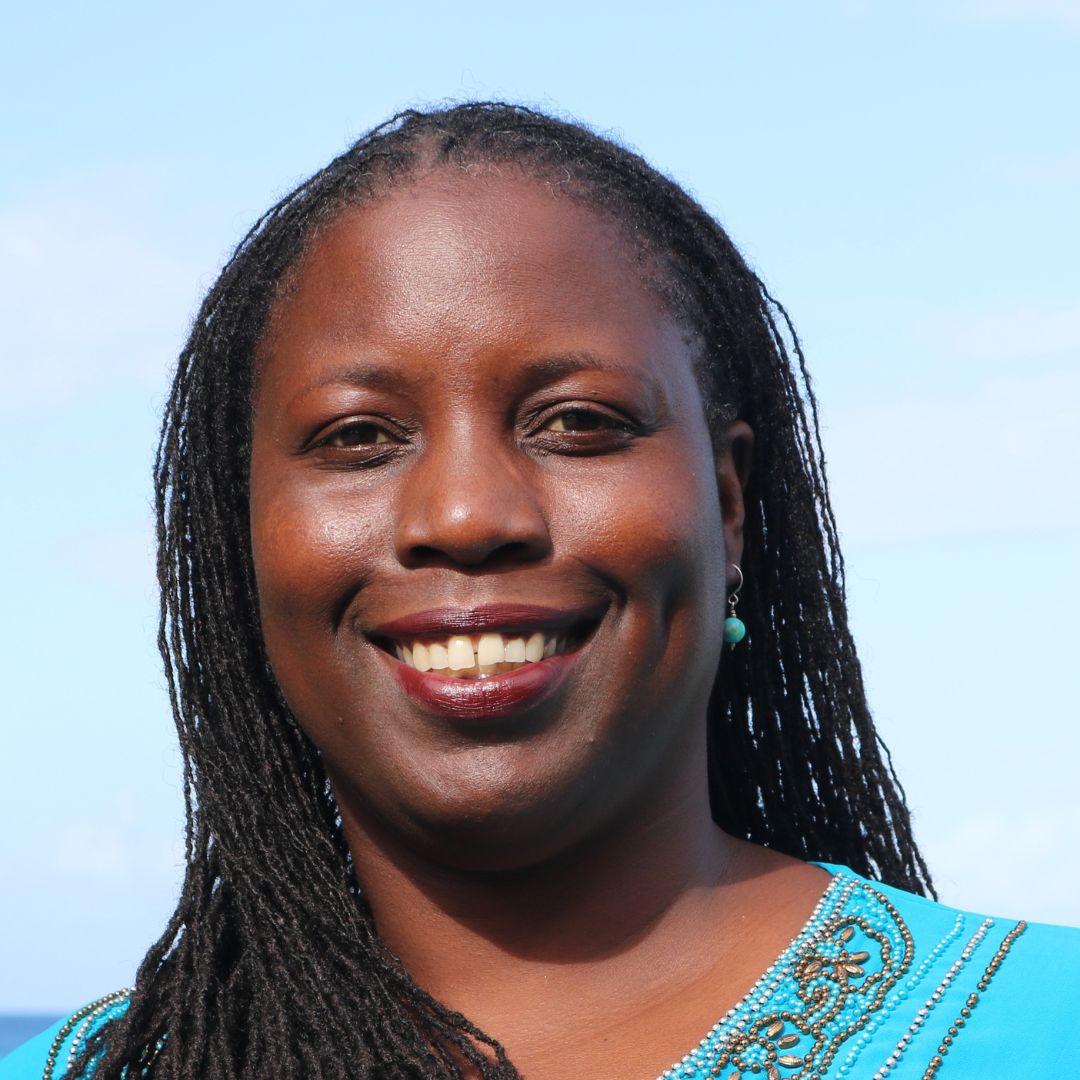
My guest today is Safiya Robinson, a storylistener, writer, and explorer of creativity. She is the author of two books and the host of the Writing Black Joy podcast, a space that celebrates the joyful narratives of Black creatives. Her work centers joy, authenticity, and the belief that creativity doesn’t need permission. In addition, she is a keen world traveller who uses her writing to explore her experiences and philosophy on life. Safiya and I talk about our perceptions of creativity, what writing does for us, how AI may be interfering with those benefits (and when it can be very useful), the power of putting your work out there, what we’ve both learned from choral singing, and more.
Episode breakdown:
00:00 Introduction
04:07 Childhood experiences with writing, music, and letter writing.
08:11 Discovering creativity as an adult, redefining what creativity means.
12:13 Leaning into creativity, starting a blog at age 39.
16:23 Making space for creativity and keeping it alive.
20:25 The impact of AI on student creativity and writing.
24:08 Outsourcing creativity to AI and the value of writing.
28:08 AI and the creative process.
32:00 When AI is useful for cover letters but not for art.
36:02 The balance between making creativity accessible and keeping human uniqueness.
40:05 The origins of Writing Black Joy.
44:10 The courage required to share creative work publicly and its impact.
Show Links: Safiya Robinson
Safiya’s website
Subscribe!
You can subscribe to Follow Your Curiosity via the handy links at the top of the page for Apple Podcasts, Spotify, iHeart Radio, TuneIn, and YouTube. If you enjoyed the episode, don’t forget to tell your friends!

Transcript: Safiya Robinson
Please note: This is an unedited transcript, provided as a courtesy, and reflects the actual conversation as closely as possible. Please forgive any typographical or grammatical errors.
Nancy Norbeck [00:00:06]:
Welcome to Follow Your Curiosity. Ordinary people, extraordinary creativity. Here’s how to get unstuck. I’m your host, creativity coach Nancy Norbeck. Let’s go. My guest today is Safiya Robinson, a story listener, writer, and explorer of creativity. She’s the author of two books and the host of the writing black joy podcast, a space celebrates the joyful narratives of black creatives. Her work centers joy, authenticity, and the belief that creativity doesn’t need permission. In addition, she’s a keen world traveler who uses her writing to explore her experiences and philosophy on life.
Nancy Norbeck [00:00:43]:
Safiya and I talk about our perceptions of creativity, what writing does for us, how AI may be interfering with those benefits, and when it can be very useful, the power of putting your work out there, what we’ve both learned from choral singing, and more. Here’s my conversation with Safiya Robinson. Sofia, welcome to Follow Your Curiosity.
Safiya Robinson [00:01:04]:
Thanks so much for having me. It’s really great to be here, Nancy.
Nancy Norbeck [00:01:09]:
So I start everyone with the same question. Were you a creative kid, or did you discover your creative side later on?
Safiya Robinson [00:01:18]:
I was definitely a creative kid, but I never considered myself to be creative. So I think now in looking back, it is like yeah. I I was a dad. I always played music. I always sang. We did a lot. I grew up in church, so there was a lot of singing, music, poetry. I always wrote.
Safiya Robinson [00:01:43]:
The one thing I didn’t do was draw our paint because I’m terrible at it. But I thought that that was what being creative was. So I’ve always been creative, but I never considered myself to be creative until about ten years ago.
Nancy Norbeck [00:01:55]:
That’s so interesting. And I think so many people do that. You know, they define creativity so narrowly and define themselves right out of it.
Safiya Robinson [00:02:04]:
Yeah. And I guess for me, like, yeah, I did music. I doubt but I wasn’t the choreographer. I wasn’t the person who was making up the music. So to me, I was that wasn’t really creative. And I did write, like I said, but, again, it wasn’t I wasn’t I wasn’t writing that epic fantasy fiction that I wanted to write, which I still haven’t written. So there’s that. And then, like I said, I couldn’t draw.
Safiya Robinson [00:02:30]:
I couldn’t paint. So to me, it I’d I just never put that word as part of my description.
Nancy Norbeck [00:02:36]:
Yeah. Yeah. Thank you and a lot of other people. So so what kind of things were you writing?
Safiya Robinson [00:02:44]:
All sort. I used to write a lot of poetry, but I liked I liked the kind of poetry that was, like, I call it, like, doctor Seuss. Like, I’d write the kind of poetry that was just fun and rhymy and probably a little bit annoying for somebody who’s a real poet, but that was fun for me. And I like to write essays. Yeah. That was about it. That’s what I used to write. I remember telling my one of my English teachers when I was about 14 or 15 that I wanted to write a book.
Safiya Robinson [00:03:16]:
But even then, in my head, it would be this fiction, epic fiction. So even though I did write a lot of essays and stuff like that, and I loved English. I loved language. I loved words. I was saying to my work colleague the other day, I felt I feel like words are like a puzzle. I’ve always loved language. And when I got into university, I used to edit people’s at this is how I one of the many ways I earned money in university. People used to pay me to add their essays.
Safiya Robinson [00:03:44]:
I wasn’t in any of these courses, but I did law, I did psychology, you name it, I did it. Because I just felt like it was just words and I was like, this goes here and that goes there and it just felt like a puzzle to me. So I’ve always loved words, always loved language. Yeah. So that’s what I used to write. And I loved writing letters. Like, I adore, adore, adore. To this day, I love writing letters.
Safiya Robinson [00:04:08]:
So I used to write a lot of letters.
Nancy Norbeck [00:04:10]:
Do you write, like, handwritten letters?
Safiya Robinson [00:04:13]:
Still do. Still have a pen pal. I’m going across the world, trying to bring my nephew and my nieces into the the sort of gig. So I started writing my nephew letters when he was a baby. He is 11 now. And, you know, he’s I I still write him letters. I always send him cards. They write back sometimes.
Safiya Robinson [00:04:36]:
It’s fun. It’s just like, you know, they’re not writing epics or anything. But to me, this is this is where the seed is planted because they’ve always loved getting those cards and getting those letters. And I said to I said to my nephew when he was younger, I was like, you know, oh, you know, he was like, what am I getting for Christmas? I was like, what are you giving for Christmas? He’s like, what can I give? I was like, you can make cards. And he was like, oh. And, that’s what he does now. So yeah. I I I love I love writing for connecting either with others.
Safiya Robinson [00:05:07]:
And I think it it’s also made me quite reflective and a bit, you know, quite observant writing those letters. So I I want that for him and for her. Both of them and my my my niece, my two nephews and my niece. It’s the other two are way too young now to even read. So, like, when they can, it’s coming.
Nancy Norbeck [00:05:27]:
I love that they write back. That’s just such an alien concept to most kids these days.
Safiya Robinson [00:05:34]:
Yeah. Yeah. I love it. I love that their moms are like me because they’re my sisters, which is great. So, you know, they they provide the paper and the pen and the stamp and all of that. The last one he wrote to me, it was so thoughtful. I was like, oh, he’s he’s starting to he’s starting to think. He’s starting to, it just it just I was just like, this is this is what I wanted.
Safiya Robinson [00:06:00]:
So it’s worth it to keep on writing.
Nancy Norbeck [00:06:03]:
That’s amazing. We could, we could go on a total tangent about thoughtful nephews because I have one of those too, but I think we’ll save that for later, even though I’m so curious.
Safiya Robinson [00:06:13]:
It’s a lot of that conversation, although I really wanna hear about your nephew as well. Right.
Nancy Norbeck [00:06:18]:
Yeah. So it it sounds like you were in a really creative environment as a kid, even though you didn’t recognize it that way, and probably were encouraged to keep doing what you were doing.
Safiya Robinson [00:06:31]:
Yeah. You know, it’s it’s I only think of I only think back on it now because I remember a few months ago, a friend of mine asked me something about my dad. My both my parents passed away many years ago. But my dad, he he was in the theater and writing and all of that when before I was born, just after I was born. And in hindsight, I’m like, I could have recognized it because he was very much into, like, you know, studying and school work and whatever. But the fact that I was in the drama club and the band and the choir and dancing, and he he didn’t stop me from doing any of those things. I haven’t I’d never really put two and two together because I’m you know, he he was he was happy as long as, you know, he’s like, it’s not gonna distract you. In a way, he could have been the one that was like, no.
Safiya Robinson [00:07:23]:
Don’t because I, you know, I I know people whose parents didn’t allow them to do those things. And he he you know, orchestra, bands, quite like, do your thing. And so in hindsight, I think for him, those are those are a part of life even though you have to still get your job and do your thing. I feel like he was encouraging in that way. And yeah. So that was that was the kind of environment. I I enjoyed those things anyway, and I was allowed to do them, which is great.
Nancy Norbeck [00:07:59]:
That’s great. And that doesn’t surprise me since you said he was in the theater that he was totally fine with you doing any of that stuff. That’s fantastic.
Safiya Robinson [00:08:08]:
Yeah. So it was good.
Nancy Norbeck [00:08:11]:
So when did you said you figured out that you were creative about ten years ago, and I’m really curious to know what that was like.
Safiya Robinson [00:08:20]:
I was I was I’ve only I thought about it recently. So what happened was I so I I work in health care for over twenty years of my career, and I’m now teaching in health care, and still do some health care. So that that’s been my career, my whole career. But I always I I had this I I imagined that I was gonna change career at some point. And so at some point, I was doing this, career coaching with this course I was taking and whatever. And you kind of you put words together and I I I I wish I could remember exactly what I was doing when I came up with this thing, and it was about being creative and being a problem solver. And I told my sister, and she was like, well, that’s weird. You don’t consider yourself to be creative.
Safiya Robinson [00:09:12]:
Do you now she has always considered me to be creative, but I was all like, nah. And she can draw and she can paint. Right? So to me, she’s the creative one. So I was like, nah. And she was like, you don’t consider yourself to be creative. No. And I was like, no. I I really I I really don’t, but that’s interesting.
Safiya Robinson [00:09:31]:
And it was just like a little seed. It was just like a little seed. And then I probably forgot about it because it didn’t didn’t bring me the dream career that I imagined I’d try to walk off into. And so life went on. And then but I always wanted to start a blog. Always always wanted to start a blog. And what was funny was I thought I would write fiction. But years ago, I was living in Tanzania.
Safiya Robinson [00:09:59]:
I was working with a charity there. And in order to keep in touch with my friends, I started writing these, like, newsletters, including pictures and everything, just to kinda keep them up with what was going on in Tanzania. And then I will and then I remembered I started not just after I left college. Me and my best friend went traveling, and we’d write I’d write and this was early email, blue screen, like right. And I’d write these emails to my friend, and I really enjoyed it. And so I thought, if I could enjoy that, I could probably write a blog. That should be interesting. Yeah.
Safiya Robinson [00:10:32]:
So I started a blog about eight years ago. Still have it to this day. And at the time, I was writing the life lessons I learned before I turned 40. It must be 39 lessons I learned before I turned 40, and it was the the blog was called 39 and counting. I’m reliably informed it still is even though, it now has a different name. That is still the base. I’m not very tech Safiya. So that is still the base website address, but it’s now says something else.
Safiya Robinson [00:11:04]:
So it’s still called that 39 and counting. I’m it’s close to the 49 now than I ever have been before. But, it’s been a good ride, and I really enjoyed it. And that that was when I felt like I leaned into being creative. Yeah. That was when I felt like I kind of leaned into it. And by doing that, I feel like it then it made it meant that I was trying things more. I was doing things more.
Safiya Robinson [00:11:34]:
I met more people. I was chatting to more. Like, it kind of opened up that door at that stage.
Nancy Norbeck [00:11:41]:
Oh, so I’m trying to figure out how to, how to ans ask this question and it shouldn’t be this hard. I think, like, when you finally really leaned into it and realized that that was a part of you, like, how did that feel aside from the part where it did not have the magic movie moment where all of a sudden you all of your dreams came true? But, you know, like, to to realize that at at, you know, 39 ish.
Safiya Robinson [00:12:13]:
It didn’t feel like a big deal at all. It felt it almost felt like, okay. This this is this is good. This is what I should be doing anyway. So it felt really good. It felt really natural. I think what’s been funny over the year as the years have gone on, pretty much every year, I will find something that I wrote years ago that I totally forgot about. So, recently, when I was at when I was at school, at university, we had, we called it a review.
Safiya Robinson [00:12:44]:
Basically, we would make plays and, skates and stuff, and we would put them on. And, basically, someone reminded me the other day that we were kinda making fun of the staff. Like, as a as a university teacher now, I would be horrified if the students were doing that to me, but actually, as a student, this felt completely natural. And I realized I’d written a parody, of a song, and we actually we actually choreographed it and performed it. And I had totally forgotten about that. But I found my yearbook when I was packing up to move and the lyrics to the song are all there. And I was like, I’ve forgotten about that. So, like, pretty much every year since then, I found something that I had written years ago that I was like, like, oh, man.
Safiya Robinson [00:13:25]:
I totally forgot about that. But I was so I think I was so fixated on work and trying to find work that felt like it suited me. So fixated on that that I don’t think I’d I would have noticed anything else. And that started from the time I was in university. So I think I just in my mind, just probably like I told you how, you know, my dad works at a bank and all these things, but he was, like, at night writing theater and drawing and doing his thing. That was that to me, that’s what that felt like. I you know, I for most of my life, I’ve sent in choirs. I’ve done, you know, different things like that.
Safiya Robinson [00:14:08]:
But I it never felt like real life. The real life was, like, this job that I have to do and trying to find work that didn’t make me irritated. So that that was my sort of journey at the time, and it wasn’t I was very fixed. I didn’t realize until recently how completely fixated I was on it. Wow.
Nancy Norbeck [00:14:33]:
Yeah. It’s it’s interesting. Your your distinction between real life and not is one that I haven’t really consciously thought about before, and I suspect that most of us don’t really consciously make that distinction. And yet, I think we probably all do even if we don’t realize we’re doing it.
Safiya Robinson [00:14:55]:
Yeah. I I think so as well. And I and I definitely do. And I I hear it it comes up in conversations with friends who have creative things that they do. Like, one of my work colleagues, she’s an incredible she’s she also doesn’t deserve herself to be creative, but she will, like, I think I’m gonna knit a Hobbit hole today. And she would just get needle and thread it and start doing it, and it’s there. And I’m like, no pattern? No. Just yeah.
Safiya Robinson [00:15:23]:
And I’m like, okay. This is interesting. And, but, you know, for us, real life is what happens in our office. For her, real life is like her family and, you know, the things the mortgage and all the things. Right? It’s not this thing that you’re doing kind of for fun. And I think I think it was around that time that I started to really think about not just the importance of of creativity in life, but the importance of, fun and that joy. And even if it doesn’t feel like real life, if we don’t have it, real life gets horrible pretty quickly. And so even if we have that distinction, just the idea that it’s it’s still even if we compartmentalize it, it’s still an important compartment that we have to kind of feed at a certain point in time.
Nancy Norbeck [00:16:23]:
I love the way you just put that. It’s still an important compartment even if it has to be compartmentalized. Yeah. And I, cause I think, you know, it’s so easy to get sucked into real life and then that compartment falls to the wayside and it’s years and we haven’t done the things that we really love to do. And then, you know, it like, do you find a way back when you do? Have you do you feel like you’ve forgotten what you were doing and how to do it? Or does it come right back? You know what I mean? I think it is different for everyone, but it’s such an important part of us. And then it’s almost like, you know, you stick it in that box. If you’re not careful, the box ends up in the back of the attic completely forgotten, and then you pull it out. And I think that’s when for a lot of people, it’s like, oh, oh, I forgot about this.
Nancy Norbeck [00:17:25]:
Kind of like what you were saying about going back and reading things that you’d forgotten you wrote. You know, I, I think there’s, there’s something there that always wants to be there, but it’s so easy to let it go.
Safiya Robinson [00:17:40]:
Yeah. And I I consider myself to be lucky that because I I kept writing letters and I kept I kept on doing that because that was my way of connecting with people. And so I think because of that, it kept me doing something that I’m, you know, I stopped playing the flute. I’ve only recently you probably can’t you can’t see it because of the the blurred background but, like, there’s a flute right in the corner here. I’m trying to bring that back in. I never stopped singing but to me that was just like a choir. It’s not, you know, but, like, there were things that I did stop doing. And there are thing and I I’m a lot more intentional about what I do now for not maybe another conversation for another time, but, I it or maybe it’ll come up later.
Safiya Robinson [00:18:31]:
But I I’m a lot more intentional at what I do now because I’ve gotten a lot more aware of the stuff that I accumulate. And, and so that’s been a that’s been a constant sort of push and pull between wanting to take up that new hobby of making, you know, like, making collages or whatever and realizing, like, I don’t wanna pile a magazine in the corner of my house all the time. So balancing those types of creative pursuits with with real life as it is, but knowing that I need there has to be a place for something. And how do I bring in the things that I enjoy because I realized that those are the things that make me me. Right? Those are the things that that I think make me. And I I having gone on that journey and now that I am working at the university and I’m seeing students that come in that the first thing that goes is this creative thing that they did. And I think because I never gave it up at school, I never gave it up in college. So I was at university and I I used to be in the play every year.
Safiya Robinson [00:19:37]:
I used to, like I still would make space for those things because I was like, oh, this is this is important enough that I don’t wanna have nothing fun in life. You know? But watching watching students go through that. And then even, like, I think I’ve been talking about this so much recently. The we’ve been talking so much about AI recently and how our well, for me, it’s how our students are using it. And I feel like I just feel like you’re gonna leave your whole creative creativity and your whole, like, humanity. You’re gonna outsource that to this thing. And then and then what? You know? I’m so glad that I I I’m old enough that I, you know, I grew up without the Internet and all those things. And so I was writing letters and was like, kept doing that.
Safiya Robinson [00:20:25]:
But there, you know, there’s some people who’ve never written one in their life, you know. So it’s it’s an it’s a different world and yeah, I think about that a lot.
Nancy Norbeck [00:20:34]:
Yeah. And and, you know, the the idea of outsourcing your creativity to AI just reminds me of all of the posts that I’ve seen online that were said, you know, I want AI to come and do the things I don’t wanna do. You know? I wanted to come and do my dishes and clean my house and whatever to make room for me to be able to do all of the things that AI wants to do for me. You know? I wanna go and do all those creative things, and I don’t have time because I have to do all this other stuff. So why is AI coming in and having it so backwards? You know, like, I don’t I don’t need you to do all the creative things. Do the things that make me time to do the creative things.
Safiya Robinson [00:21:18]:
But, you know, I think for me, what this goes back to and and this is why I think it’s something that I think about so deeply and I talk about so much. It goes back to right what we started with at the beginning and those ideas around what creativity is and what it means to be creative. And I think, you know, I I have a podcast as well. And one of the things I found interesting when I started it is I was I mean, I interview creatives. I interview writers. I’d say to people, oh, I’d love to have you on the podcast. And they’d be like, oh, I’m not a writer. And I’m like, I’m literally holding a book in my hands.
Safiya Robinson [00:21:56]:
I’m not really sure not really sure what you mean. Right? And, you know, I’ve I’ve been oh, you have to write three books if you wanna consider yourself to be a writer. And I’m like, who who’s idea what was that? Like, who made up that rule? And I I’m I have a certain personality. I do not like arbitrary rules. I’m like, I am sorry. What? You you have to write three books to call yourself a writer? I don’t think so. Personally, I don’t think you have to write any books to call yourself a writer. But I think a lot of that gatekeeping, what it has meant is that, you know, for me, I never considered letter writing to be creative, but it kept me writing my whole life.
Safiya Robinson [00:22:40]:
And so then when I started my blog and started my other thing and in fact, that first novel that I wrote, which was not an epic fiction, but it was a I I wanted a book that was this where the story was told through letters that were written. And that was the first book I wrote. And it was so fun because I just got to write letters for the whole book and I loved it. And but I would never have considered writing letters to be creative at all. And I think that I those ideas around what we consider to be creative, when we start doing that compartmentalizing, then it’s easy you know, when I think about it from the perspective of student our students, it’s easy to not feel like the essays that you have to write are creative. Where the assign you know, that reflective thing that you it’s easy to feel like this is just a tick box because I need to pass this thing. I’m gonna run it through AI, see what happens. And whereas, you know, when we have the conversation about is it is it, you know, at this point, is it important for our students to even learn how to write? I’m like, I think it is.
Safiya Robinson [00:23:46]:
I think writing teaches you how to think. Right? And I think creativity teaches you how to make connections. And if we remove that, then we’re gonna lose more than we think we’re gonna lose. We’re not just losing one assessment type for another. We’re not like, we’re losing so much more than we think when we outsource certain things.
Nancy Norbeck [00:24:09]:
Yeah. And I I so agree with you about, you know, writing writing not only teaches you how to think, it teaches you what you think, and it teaches you how well you understand what you think, you know. You know, if, if you can’t write about it, you don’t really understand it.
Safiya Robinson [00:24:30]:
Exactly. And, I often think, but my my best friend, she’s gonna she’s gonna be so mad at me, but, hey. She always says to me, she’s, you know, you’re a writer. I am not a writer. And I’m like, I, like, I I can name some stuff that she’s written. It’s all work related, some of it’s tech. She doesn’t see she’s like, I never liked English and I’m like and recently I read an article about her because she got promoted and she talked about doing philosophy at university and I’m like, I’m sorry. How have you never told me this? You’re a sewer rider.
Safiya Robinson [00:25:06]:
She’s gonna she’s gonna I just was like, what? I’ve never told her this. So if she listens to this, she’s gonna be horrified. But I just you know, that is that is what to me, that is what writing is, and it really feeds into how we think, how we make connections, fleshing out those ideas that might be a little spark. You know? And, and I worry I worry that I worry what what what we will miss when it goes. I was saying to my sister, it’s like, you know, when people thought it was much better to drive and get in a to drive than it was to walk somewhere and then they’ll drive all the way to the gym and then they’ll try to work out there. But it’s never gonna replace walking in nature and all of those things. And I think the same is gonna be true for so much creativity that we kind of outsource, thinking that we’re saving time, you know, saving time so we can wash more dishes and do more cleaning and all those things. Right? Like, no.
Safiya Robinson [00:26:07]:
I think I’d rather write.
Nancy Norbeck [00:26:09]:
Yeah. Yeah. I and and that’s the thing. Like, you know, I, I think right now, especially it seems like maybe it’s the novelty, you know, like everybody has this new toy that they wanna play with and the novelty hasn’t worn off yet. For me, there there are a couple things that I’m more willing to use it for. But fundamentally every time I have tried it, usually under duress, to do any kind of actual writing, first of all, I feel like I’m betraying myself as a writer. And second, when I look at what it turns out, I have this weird sense of a couple of things. The first thing is, wow, that’s actually better than I thought it might be.
Nancy Norbeck [00:27:06]:
And that kind of terrifies me. It’s the second is I know I need to make this better, but it’s good enough that I don’t know how. There’s, there’s something about it that just like shuts off the editing part of my brain when I look at what it turns out, like it’s good enough. And yet if, if somebody came to me, like if, if you and I were working on a writing project together and you handed me a piece of writing, even though your writing would probably be better, I don’t think I’d have that problem. I don’t know what it what it is about it. It’s very weird. But the third thing is, and this is the part that scares me the most, the little part of my brain that says, wow, I don’t ever have to do this again. And it’s, it’s like, I can feel my own writing agency being chipped away because I let this machine do something for me, even if it’s small.
Nancy Norbeck [00:28:08]:
And that that’s part of why I just kind of say, yeah. Okay. Everybody else can use it to generate ideas, but I wanna keep my brain on and functioning and not let it be seduced by this thing that wants to come in and just do it all for me and make it better. Now, to be clear, if it were coming in to clean my house, I don’t think I’d feel that way about it. I think I would probably welcome it with open arms.
Safiya Robinson [00:28:37]:
My god. Some dish some dishes in the sink. Please help yourself to those. Alright. But it it’s, I’m reminded of two things completely. This happens all the time. One is, did you watch did you watch the latest Wallace and Gromit?
Nancy Norbeck [00:28:54]:
No. Okay.
Safiya Robinson [00:28:57]:
I I won’t talk about it then because I don’t wanna spoil it for your end. So let us let us move on to the second thing that came to my mind. You know, god, don’t watch it now. Second thing that came into my mind, which is that I’ve never used it to write anything for me. I’ve used it to come like, I was working on something recently, and I had I had a lot of a lot of things that I just kinda didn’t care about that much. I probably shouldn’t be saying this on on on live podcast, but it doesn’t make might not much of a difference to me. And I used it to kind of pull those ideas together. Right? But I’ve never actually used it to write anything because I like writing.
Safiya Robinson [00:29:41]:
I like, you know, even when I was a student and I used to write my notes by hand, it it allowed the idea to come into my brain in a completely different way, and it allowed me to be able to make connections between things. So if something is important to me, I must write because otherwise, it doesn’t even pass through my brain. So that’s not I don’t really yeah, I’ve never I’ve never used it to write anything for me. And as a consequence, I can always tell. At the moment, maybe in six months, it won’t be true anymore. But for right now, I can tell when something’s been written by AI. I read it. It sounds vague.
Safiya Robinson [00:30:25]:
My brain starts to glaze over, and I’m like, no. This is not this is not real. So so for that reason, I’ve never actually used it because I’m afraid of I don’t want to sound like that. I wanna sound like me. And I I have a very you know, if anybody reads right there, like, that is a 100% the words coming out of your mouth. And so I’m like, how is a I don’t I don’t I have no interest in having that outsourced.
Nancy Norbeck [00:30:51]:
Yeah. I I mean, I think that that vagueness is part of what makes it hard for my brain to latch onto it to try to go in. And, I mean, there are certain things that it does that drive me bonkers, The like and and they tend to be the things that alert you to the fact that a human didn’t write this. Like the words that it always uses, everything is delving into something or it’s a deep dive into something or it throws in the most overblown adjectives to describe people. It, it, you know, all of this stuff, though I have to take objection to that whole em dash thing that’s going on right now because I have been cheerfully abusing em dashes my entire life. And that does not mean that my writing is AI. Thank you very much. Everybody has seemed to decide now that if there’s an em dash in it, it was AI.
Nancy Norbeck [00:31:39]:
I’m like, no. No. I can show you plenty of writing from long before AI existed where I was abusing em dashes, and I will continue to. Thank you very much.
Safiya Robinson [00:31:49]:
Yeah. I I’m a I love my m doctors. I’ve got my I don’t know what you call them, parentheses. Mhmm. Like, they’re they’re a life itself to me. I’ve used them all along even when I handwrite things, so I’m not yeah.
Nancy Norbeck [00:32:00]:
Yeah. But though I do remember my my, my twelfth grade English teacher telling me that m dashes were a cop out and that I shouldn’t use them. Obviously, I listened really well. Sorry, sorry. They’re they’re my best buds. But there, there is one thing that I used it to write that was, I have to say was really helpful. And that was the first draft of a cover letter where you uploaded your resume and the job description, and it turned out a cover letter and it was truly, truly terrible. And maybe because it was a cover letter, it was much easier to look at it and say, this is absolutely awful.
Nancy Norbeck [00:32:47]:
But what was helpful about it was I didn’t have to write the first draft myself. Because I was absolutely stuck staring at that blank page. And when I got this terrible draft, it was like, okay, this is absolute garbage, but now I have something to work with. And I think I changed like 95% of it, but that was so much easier than having to construct it for myself. Cause I’m sorry, a cover letter. In most cases, I imagine that there is somebody out there who really makes an art form out of cover letters, but it’s not me. You know, cover letters to me are not particularly creative writing. They’re kind of a necessary evil instead.
Nancy Norbeck [00:33:26]:
So in that in that case, I’m I make an exception.
Safiya Robinson [00:33:30]:
That’s fair. I I will say I like to use it to generate questions. So if I have to write a cover letter, I’m like, send me a list of questions I need to answer in this cover letter because I hate written cover letters, and I but I know that the point of a cover letter is to include certain things and I if I can’t remember what they are, I’m like, send me a list of the questions I need to answer in this cover letter. And then I will write it myself. But I don’t. Yeah. I I to me, there’s something about if there’s something about the feeling of processing something through my mind and doing it that I cannot be replaced in any way other than writing now. So that’s that’s what I do.
Safiya Robinson [00:34:10]:
You know, maybe I’ll be the only one left. Yeah. Who’s who’s writing my own stuff still, but I’m okay with that.
Nancy Norbeck [00:34:17]:
You and me. You and me. The two of us. It’s a pledge.
Safiya Robinson [00:34:21]:
Yeah. I’m BS, Nancy. So yeah. But, yeah. It’s it’s hard as well because I I know people who really find writing difficult. Mhmm. It’s really difficult. And so I can see why and, you know, there’s something happening at work right now where I feel like your ability to write will be the one of the things that helps to determine what what happens next.
Safiya Robinson [00:34:52]:
And so it’s not fair on people who are not able to craft that thing. And that makes me really upset because I don’t like things that are feeling unfair. But so I get it. I get that there’s some people who find it difficult to write. And for them, this feels like fresh air almost to be able to do something that they didn’t they didn’t previously know how to do or think they could. And, you know, nothing can replace, for me, a lifetime of writing other things, which has brought me to the point I am today. If someone has never done that, then, you know, it’s not fair for me to say, well, you can learn how to write when I’ve been doing it since I was able to pick up a pen. And that was, you know, several decades ago.
Safiya Robinson [00:35:37]:
So it’s it’s a tough one. But, I I I my feelings are my feelings. I I really do think I, you know, I do think that it is human to create and the outsourcing that is a to me, it feels like we’re losing our humanity. It feel it sounds really dramatic. But I told you, I’m a theater kid, so I’m a bit dramatic. And it that’s how it feels to me. So yeah.
Nancy Norbeck [00:36:08]:
Yeah. No. I you know, the other thing that I am thinking of as we’re talking about this is that about ten years ago, I did some writing tutoring, and I had a kid that I worked with who was this bizarrely kind of blank slate in the sense that, you know, to try to give him a focus for what he was writing. I would ask him like what he was interested in and, you know, what, what are your hobbies and whatever. And he would literally just shrug at me. And I thought there’s, there’s gotta be something, you know? And like he, I think he played the violin and he did a sport. And when I asked about those, it’s like, well, my mom sends me for lessons. So it was like just this complete disconnection with with interest in things.
Nancy Norbeck [00:37:03]:
And I mean, he was perfectly happy to sit down and, you know, write something for his English teacher when he understood the assignment, which is a whole other subject, or to write, you know, a
Safiya Robinson [00:37:17]:
guest a whole other podcast episode.
Nancy Norbeck [00:37:18]:
Oh, Lord. Teachers, please write clear assignments for your students. That’s all I’m saying. But, you know, and he would, he would write a short story for me and whatever, and and that was fine. But it was like, I couldn’t get him to really actively, meaningfully engage with anything, and it scared me. It scared me because I I just I sat there watching this kid, and I kept thinking, your answer to everything is to shrug. And someday somebody is going to come along and look at you and say, you are the perfect mark for whatever kind of con I’m trying to, to put over, and you are gonna be in so much trouble. And I finally kind of in, in desperation, and I don’t know why his parents didn’t seem to be particularly concerned about this unless they just weren’t aware.
Nancy Norbeck [00:38:16]:
But, I started teaching him about how advertising works. He was hoping that maybe it would upset him enough to realize that people were trying to manipulate him, that he would start to care. And I’m not sure how well it actually worked, but when I see people kind of surrendering their brainpower to AI, that’s what it reminds me of. It’s like, I don’t think we wanna be a whole culture where we just shrug and go along with whatever we’re told because historically, people going along with whatever they’ve been told, it doesn’t go well.
Safiya Robinson [00:38:55]:
Never never ended well. And I think I think that that is a great way to describe it. It’s just just, yeah, ticking a box, going along with it. Let’s see what happens. Never never ended well. Never ended well. And, so yeah. I the world is in the hand of the world is gonna be in the hands of the creatives.
Safiya Robinson [00:39:24]:
I I firmly believe that. So we’ll, we’ll see what happens.
Nancy Norbeck [00:39:27]:
I hope so. And I hope in a really good way. I hope that it brings things like writing in the arts into more prominence and gives them more value when they’re done by humans rather than done by machines.
Safiya Robinson [00:39:40]:
So too. But, yeah. I guess I guess it remains to be seen.
Nancy Norbeck [00:39:44]:
Yeah. Time will tell. Right? Yeah.
Safiya Robinson [00:39:47]:
You tell.
Nancy Norbeck [00:39:48]:
So tell us about your podcast.
Safiya Robinson [00:39:51]:
My podcast. So I I find it difficult to know where to start with the podcast sometimes because it it’s it’s important to me. And, you know, when something’s really important to you, sometimes you’re almost like, I can’t even get the words out.
Nancy Norbeck [00:40:04]:
Well, let’s start with
Safiya Robinson [00:40:05]:
the title. A a cat. A cat and I will. So I’m on the podcast that’s called writing black joy, and I interview black creatives with joyful stories about their creative, process, about their projects, about whatever whatever we feel like talking about. Right? When I started it, for me, one of the things that that I noticed when I was because I grew up in Barbados. So I grew up in The Caribbean, and they were they were books written by Caribbean authors. I read I read I also read a lot of books by British authors, lots of Enid Blyton, lots of, C. S.
Safiya Robinson [00:40:47]:
Lewis, some American authors. I was, like, I was a big reader as a kid. And my sister always tells me I could read from the time I was, like, three. And I was always, like, I don’t believe you until I can see her her younger son who is now two. And I’m like, he can read though. So now I’m starting to wonder maybe I could read from time to time. I was right or remember it. So who knows? But I’ve always loved reading.
Safiya Robinson [00:41:13]:
And I’ve always wanted to write. But I felt like I I didn’t wanna read I didn’t want to read the type of books that I was reading that belong to that genre of Caribbean literature. But it felt like I’m from The Caribbean. This is what I’m supposed to write, and I don’t wanna write it. And I wanna write fun books. I wanna write books that are, like, fun and playful. And it I felt like the only books that I could write about someone who’s like me, black from The Caribbean, would be these books that I didn’t wanna read. And I was like, yeah.
Safiya Robinson [00:41:50]:
No. No. So that was the kind of seed that was planted about it. You know, fast track maybe few decades. I I started seeing that people were self publishing their own books, and I was starting to see books that I’d never seen before with types of characters that I’d never seen before and I was like, I had this dream of maybe doing a publishing company and all the things that I mean is still out there somewhere floating. But, my editor at the time, who’d edited my first book, was like, that’s a big idea. You need to make it doable right now because it was beyond felt beyond what I couldn’t even it was such a large idea. I couldn’t even figure out what where to start.
Safiya Robinson [00:42:39]:
And so she was, like, make it small and and do a small version of it. And so I decided and it’s so funny because this has only recently really come back to me full circle. But at the time, I wanted to create a gallery. So like an art gallery, but for writers. So and, it was gonna be digital. Anyway, I still laugh when I look at that jacked up website that I created because it was really terrible. But I I I collected the writing, and I was like, oh, it’d be great to showcase the writers. Think I’m gonna just send them some questions and get them to send me some answers.
Safiya Robinson [00:43:24]:
And I was like, oh, it’d be fine if I could interview them and record it. That’s how the podcast started. So the, the premise is still the same. I interviewed black writers about joyful stories, their own experiences as creatives, all the things. Except now I do creatives because I feel like right. Right. I I, like, I have a special place in my heart for writers, but I feel like we tell stories in so many different ways, and I wanted to capture some of the stories that were being told that weren’t in written form. And so it kind of expanded to creatives, and I made it seasonal because it was all I could handle, and that is my podcast.
Nancy Norbeck [00:44:10]:
That sounds fantastic. I love that that you got there through this big idea, and and it kind of morphed along the way. I think that’s so cool. You know, because our ideas don’t always come out the way we expect them to, but that’s not necessarily a bad thing. I mean, look at you. You’re interviewing all of these people.
Safiya Robinson [00:44:31]:
Yeah. I mean, it it abs and I still might create you know, I still have dreams of creating that platform. I still have dreams. I still have lots of big ideas. Like, they’ll they’re they aren’t going anywhere. But, also, I’m glad that this didn’t come out. I’m glad that I have this as a result even though it’s not exactly what I wanted it to be. And, you know, it’s so funny because I was chatting to someone about it recently, about thinking about the podcast almost like a piece of art as opposed to, podcast with, you know, where I because I was getting really bogged down on the metrics and all of that.
Safiya Robinson [00:45:12]:
And But but the idea of, you know, and when you think about my whole thing about creating art in the first place was a bit like the idea of thinking of it as a piece when when I just told you the idea started at a gallery. Right? So it’s not it’s not that foreign, but I just never made those connections. Now the idea of thinking about it as a piece of art has just really given it life, actually. And so, yeah, it’s it’s been real real fun journey over, yeah, almost four years.
Nancy Norbeck [00:45:44]:
That’s awesome. And, you know, I’m I’m nodding in part because it’s taken me a long time, and I I still have to remind myself of this from time to time to think of this podcast as a creative thing. And yet it absolutely is. But it’s sort of like what we were saying back at the beginning. You know, you you don’t think of it that way. And I think part of me not thinking of it that way is, oh, I have to sit down and I have to edit it and I have to put it up on the host. You know, I have to do all of these technical things that are not the part that I enjoy the most. This is the part that I enjoy the most.
Nancy Norbeck [00:46:19]:
Right? Like you’re nodding. I’m not surprised. And, and so somehow that it kind of outweighs the actual creative part of it. And I have to say to myself, no, no, this is a really creative thing. You know, you don’t know where it’s going to land. You don’t know who you’re going to meet. You don’t know what you’re going to ask them. You have to come up with it.
Nancy Norbeck [00:46:42]:
A lot of it, you know, in the moment and, you know, okay. So it’s not a book. It’s not a record. It’s not, you know, a painting you hang on the wall, but it’s still a really creative thing that leads to all sorts of places you didn’t expect. At least that’s certainly my experience. I wouldn’t be surprised if it’s yours.
Safiya Robinson [00:47:07]:
Million percent. And you talk about it not being a book or not being a whatever. Part of the reason I started interviewing creatives rather than writers was because I to me, I felt like these outcomes, these whatever you wanna call it, these creative projects, to me, they’re in you know, I I grew up years ago when when what really influenced were us were books and films and maybe a little bit of TV. I had only one channel until I was, you know, in college. So maybe a little bit of TV. But now there’s YouTube and there’s blogs and there’s podcasts and there’s all of these different things. And I feel like they’re they’re as influential on us as a book or a story or whatever. And so to me, that’s one reason I think of it as creative.
Safiya Robinson [00:47:58]:
But the other thing is I self published a couple of books. And it shocked me, the difference between writing the book and the publishing tale of it. Like, you just talk about difference between having the conversations and the editing and the whatever whatever. Those that whatever whatever, that was what I felt when I was self publishing my books. And I I couldn’t I hated it because I write fast, and I felt like it took me 10 times longer to publish the book than I did to write it. And that made me so, like, irritated. But sorry for the random noise. It’s like, oh, I was so mad.
Safiya Robinson [00:48:35]:
But, also, that’s that’s you know, I feel like that is always true if you want to share something you created with the world. I’ve had a blog for a long time. Right? And the blog, no problem. Publishing the blog, whole different conversation. Right? And I think I actually think that that sharing piece is a different part of the process. It’s a different thing within in and of its own. Right? And it brings with it its own sort of benefits and what’s important there. I can tell you that writing the blog was not as transformational as putting it out there.
Safiya Robinson [00:49:24]:
And the same is true with the podcast. Right? So I think I think of it as its own separate piece of the pro piece of a process that requires its own amount of courage and its own amount of it’s just a different different engaging something different. And I think it’s so valuable. And that’s what I have to keep reminding myself when I wanna when I wanna put stuff out there. Not because I wanna get rich, although, yeah, that’d be nice. But because I think putting stuff out there carries its own inherent value. Sharing that story is what connects you with somebody else.
Nancy Norbeck [00:50:01]:
Absolutely. And and, you know, it’s funny because, like, I’ve never thought about this before, but but while you were talking, I thought when you write something and you choose to put it out in the world, it’s, it’s yours alone. You are completely in control of that process down to deciding not to do it. But with the podcast, I’ve never felt that. And I think it’s because when you interview someone else, there’s this expectation that it’s going to go out at a certain point. You know, I mean, that’s kind of part of the deal. You, you give me some of your time. I give you an episode that you can share with other people.
Nancy Norbeck [00:50:47]:
You know, it’s not the whole deal, but it’s part of the deal. And yet, in so many ways, both of them, you’re putting yourself out there in a way that can be really vulnerable and really terrifying. And I mean, I’ve, this is year seven for this show. So at this point I’m kind of used to it. It doesn’t really faze me to put an episode out anymore. I don’t remember what the first one felt like, but I’m pretty sure I was probably equal measures excited and terrified. Whereas, you know, putting out a blog post, you can talk yourself out of that.
Safiya Robinson [00:51:27]:
And I do. I see this as somebody who has spent months writing blog posts of almost none of which I published. I’ve thought myself out of every single one for a million reasons. Right? Which are not even that interesting. And I remember the fear of of putting my first blog post out there. But I I so believe that that that brings you untold courage, confidence. It changes your writing. I, maybe, like, a year or two ago, I interviewed, a comedian, and he was, like, one of my dream guests.
Safiya Robinson [00:52:16]:
And I remembered him talking about doing stand up. And I was like, you know, what role does the audience play in writing and developing your stand out? And he’s like, they are a part of the process. And I think I think about that when I think about music because I’ve like I said, I’ve grown up performing music, singing, playing, theater, all of those things, and how the audience becomes a part of that creative process. And you never think twice about it when you when you’re in theater. Like, never you don’t think that you’re gonna not put it. Like, that’s not that’s not that’s not what you’re doing it for. But you also remember like, I always think about this when I think about my writing. Like, I could spend six months rehearsing a play that’s gonna go for two nights, and no one sees all of that rehearsal.
Safiya Robinson [00:53:10]:
And it’s okay for it’s okay if you have to edit and draft and not show all of your work because you don’t do that. Like, you know, I I I I sing in a choir. We rehearse for months before we go out there and sing one song. Right? And nobody hears the, the little squeaky, you know, beginning piece of it. So I think I think the same is true for podcast. I think but I think it’s true for writing as well. We we feel we suddenly feel like I’ve written something and it’s like a very binary thing. Do I have to put it out in the world or not? Now I need to put some stuff out into the world right now, but also I know that I get to choose.
Safiya Robinson [00:53:51]:
And, but I try I know that the the more I choose to do it, the easier that choice becomes.
Nancy Norbeck [00:53:58]:
Yeah. Yeah. The more confidence you build as a result of having done it. Like, I I put the thing out there and I did not spontaneously combust. I am still alive. It’s okay. Maybe I can do this again.
Safiya Robinson [00:54:13]:
The funny thing about podcasting is there’s so many people that don’t that don’t publish their podcast. If you think about it. Right? I know I know as many people who wanted to write pod who wanted to start podcast who haven’t, as people who wanted to write a blog or a book who haven’t.
Nancy Norbeck [00:54:31]:
Or people who last a couple of episodes and then that’s it. Yeah. Yeah. Well, and you know, there’s something else that you just mentioned that you’ve mentioned before that we both have in common, which is choral singing. And in in light of what we were just talking about, like, I I’ve had wicked stage fright for pretty much ever, but singing in a choir to me never had that problem. And I think it’s because you have that whole safety in numbers thing, right? Like if, if you’re afraid to do a creative thing on your own, go find a choir. And, and also, you know, you, you mentioned nobody sees those, those first ugly moments when you’re sight reading a piece and going, wait, what’s this doing? And how does this fit together? You know? But I love that part. It’s sort of like when you go to the orchestra and they’re tuning up and there’s all of that cacophony at the beginning, and then, you know, the, the concert master comes out and, and plays the a and all of a sudden everyone is playing an a and it’s like the, the chaos turns into order.
Nancy Norbeck [00:55:42]:
And that’s kind of what happens in a choir. It except that you’re all figuring it out together. And without all of you, you wouldn’t have that piece of music. I always find the rehearsals so much more interesting than the actual performances. I don’t, I don’t know if I’m just a weirdo about that, but I think that’s where all of the cool, fun, creative stuff happens. And the the performance is just the icing on the cake.
Safiya Robinson [00:56:08]:
Okay. Exactly. I so agree with you. I actually went to music workshop shop yesterday with my two choir directors, and we were talking about just that because I always remember I’ve been in I’ve been in choirs for a long time, but I’ve never really thought about it until now, which is weird. Right? But I I remember going into the choir, and it happens every term when we’re learning new music. We come in at the beginning, and they hand out the music, and then they they kind of they put it on Dropbox, and then they’re like, you sing the first line and the second line, then you put it together. And I’m like, woah. What is that noise? And they’re like, that’s amazing.
Safiya Robinson [00:56:44]:
And I’m like, okay. And after a couple of years now, I’m like, you know what? They can they can see it. They can see where this is going. And I need to I need to see that too. I need to to see this noise as as, the sort of the beginning of of something that’s gonna be amazing because it always is. And, I I think a part of being a creative is also being able to pull that vision. Right? Pull the vision of if this is terrible, but it’s going to be really good at some point. And I love I love that being in the being in the choir has given that to me.
Safiya Robinson [00:57:30]:
Being in orchestra has given that to me. That knowledge, even even theater, you know, I always think to myself, like, you know, I love I love the sort of last I I like I love the rehearsal process, but what I really like is that first time you do a run through, and you’re like, this is a thing now. Like, it’s always blows my mind Every single time, it blows my mind. And, when I try to bring some of that into my writing.
Nancy Norbeck [00:58:00]:
Yeah. It’s like, oh, it’s a real thing. Like, when you see your your book in book form for the first time, it’s like, oh, it’s a real thing. But I’m also reminded, you know, I, I went to a reunion for my college choir last year and I did not sing this time and sitting out and listening, I thought would be really painful and, and it wasn’t, It wasn’t. It wasn’t. But there was a moment during a break in all of the rehearsals when a bunch of of my friends from from my era and I were talking, and they mentioned the one piece and they said, I have no idea what the heck is going on in that piece. And, you know, I re I know that feeling, that feeling of something in here is supposed to make sense and it’s just not doing it. And I have no idea.
Nancy Norbeck [00:58:47]:
And this must be a mess because it feels like a mess in my head. But I said to them, said, you know, I know why you’re saying this, but what I can tell you from sitting out and listening is that that is the most gorgeous, incredibly gorgeous piece. And you can’t hear it yet because you’re trying to figure it out. But I am here to tell you from out there, it is stunning. And, you know, I remember moments like that when, when we were all in choir back in undergrad and I would have looked at me then saying something like that and been like, you’re crazy. It sounds ridiculous. That doesn’t make any sense. Trust me.
Nancy Norbeck [00:59:32]:
It was beautiful. It was beautiful. So there’s something about, you know, you have to kind of go through, be willing to go through that phase of, I have no idea what’s going on right now. And I don’t know if I’m gonna figure it out in order to get to the beautiful part.
Safiya Robinson [00:59:54]:
Yeah. And I think that is it. Someone asked me last night because our choir directors have two choirs. Quite often, we’ll do concerts together. And someone said to me last night, which one do you think is better? I said, it’s hard to say because when I listen to them, I’ve never heard those songs. I’ve never, you know, I’ve never sung them on repeat for months at a time. And so to me, it’s amazing. Whereas, I can’t hear my choir like that.
Safiya Robinson [01:00:21]:
I can never hear it like that because I’m in it. And so it’s just a different experience. Right? But I think I I really admire our choir directors because I feel like a big part of of that creative process is being able to hold a vision even when the thing sounds discord and and like a cacophony. And I think the same is true for your podcast. It’s, you know, when I’ve got, like, six f like, right now, I’ve got three, four episodes in the bank, and I’m just like, I haven’t even started editing yet. And I’m just like, oh, man. This this part always kills me, and it always turns out okay. So it’s just holding the vision of what what it can be when it’s just a mess.
Safiya Robinson [01:01:05]:
And I I feel like I love I love that creating other things have brought me that perspective.
Nancy Norbeck [01:01:14]:
Yeah. Don’t give up too soon. Don’t give up too soon. Don’t give up before the the the gorgeous stunning result happens. Yeah. Well, I feel like that is a great note to end on.
Safiya Robinson [01:01:32]:
This is so fun. I really enjoyed this conversation.
Nancy Norbeck [01:01:35]:
Me too. Thanks so much for coming. That’s our show for this week. Thanks so much to Safiya Robinson and to you. Sophia’s links are in the show notes. I hope you’ll leave a review for this episode. There is a link right in your podcast app, and it is super, super easy and really makes a difference. If you enjoyed our conversation, please do share it with a friend.
Nancy Norbeck [01:01:56]:
Thanks so much. If this episode resonated with you or if you’re feeling a little bit less than confident in your creative process right now, join me at the spark on Substack as we form a community that supports and celebrates each other’s creative courage. It’s free and it’s also where I’ll be adding programs for subscribers and listeners. The link is in your podcast app, so sign up today. See you there and see you next week. Follow Your Curiosity is produced by me, Nancy Norbeck, with music by Joseph McDade. If you like Follow Your Curiosity, please subscribe, rate, and review on Apple Podcasts or wherever you get your podcasts. And don’t forget to tell your friends.
Nancy Norbeck [01:02:37]:
It really helps me reach new listeners.