
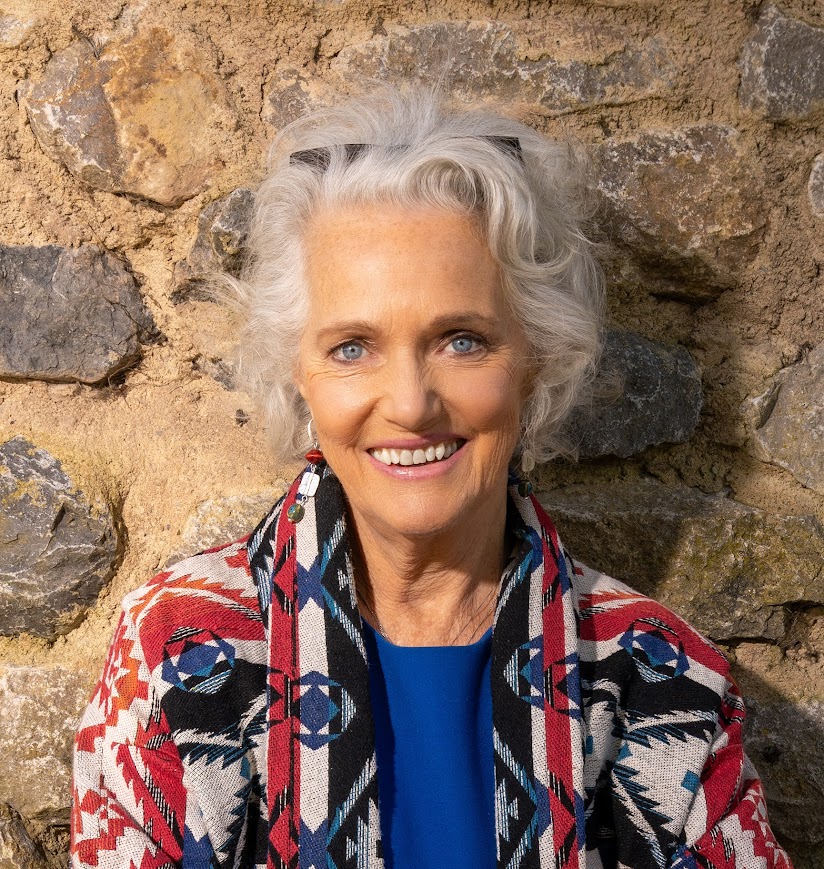
Louise Jameson is a classically trained actress whose first love is the stage—she spent two years with the Royal Shakespeare Company at the beginning of her career—but she also became known to millions of British television viewers through her roles in such hugely popular television series as Doctor Who, Tenko, Bergerac and EastEnders. Her recent theatre credits include Vincent River and directing the UK tour of Revenge. Her audio credits include Doctor Who (Big Finish), writing ATA Girl, about the women of the Air Transport Authority during World War II, and multiple titles for BBC Audio and Audible.
Louise talks with me about her unusually young start at the Royal Academy of Dramatic Art, and how her training continued at the Royal Shakespeare Company, how her Doctor Who character, Leela of the Sevateem, reflected the feminism of the 1970s (and how she didn’t), how she started writing, and what she thinks of the opportunities for—and representation of—women in film and TV over the years.
Episode breakdown:
00:00 Introduction
04:00 Louise describes childhood creativity, daydreaming, and reading early.
08:00 Drama school, age gap with classmates, and strict discipline.
12:00 Acting requires teamwork; Louise reflects on early career.
16:00 Louise’s Shakespeare passion, favorite roles and performance experiences.
20:00 Louise talks about landing Leela role in Doctor Who.
24:00 Doctor Who impacts life daily; gratitude for lasting connections.
28:00 Leela’s feminist traits and costume choices, fighting stereotypes.
32:00 Leela’s intelligence and evolution, relationship with other companions.
36:00 Influence of audio plays; Gallifrey series has strong female fandom.
40:00 Louise discusses writing, self-doubt, and encouragement from collaborators.
44:00 Directing stage, teaching drama; regrets and living in the now.
48:00 Shakespeare’s rhythmic influence on Louise’s writing and teaching.
52:00 Conversation shifts to social media, attention economy, and technology.
56:00 Louise analyzes Shakespeare’s poetic technique and its storytelling power.
01:00 Louise explains collective magic of live theater and storytelling.
01:04 Progress and ongoing challenges for women in TV and film.
Show Links: Louise Jameson
Louise’s website
Subscribe!
You can subscribe to Follow Your Curiosity via the handy links at the top of the page for Apple Podcasts, Spotify, iHeart Radio, TuneIn, and YouTube. If you enjoyed the episode, don’t forget to tell your friends!

Transcript: Louise Jameson
Please note: This is an unedited transcript, provided as a courtesy, and reflects the actual conversation as closely as possible. Please forgive any typographical or grammatical errors.
Nancy Norbeck [00:00:06]:
Welcome to Follow Your Curiosity. Ordinary people, extraordinary creativity. Here’s how to get unstuck. I’m your host, creativity coach, Nancy Norbeck. Let’s go. Before we get started, I want to let you know that for the first time, you can watch this interview on YouTube. If you’ve ever been curious to see what one of these conversations looks like or just see the inside of my rather small closet studio, this is your chance. You’ll find the link in the show notes. I hope to be able to keep releasing interviews in video format for those of you who’d like to watch them, so keep your fingers crossed.
Nancy Norbeck [00:00:45]:
If you’d rather keep listening, don’t worry. Audio isn’t going anywhere, though for my own sanity, I’m using a video first editing approach. I don’t think you’ll notice too much difference. Whatever way you choose to listen, I’m always really, really glad you’re here. Now, on with the show. Louise Jameson is a classically trained actress whose first love is the stage. She spent two years with the Royal Shakespeare Company at the beginning of her career, but she also became known to millions of British television viewers through her roles in such hugely popular series as Doctor Who, Tenko, Bergerac, and EastEnders. Her recent theater credits include Vincent River and directing The UK tour of Revenge.
Nancy Norbeck [00:01:28]:
Her audio credits include Doctor Who for Big Finish, where she also writes ATA Girl, about the women of the Air Transport Authority during World War two, and multiple titles for BBC audio and Audible. Louise talks with me about her unusually young start at the Royal Academy of Dramatic Art and how her training continued at the Royal Shakespeare Company, how her Doctor Who character, Leela of the Sevateem, reflected the feminism of the nineteen seventies, and how she didn’t, how she started writing, and what she thinks of the opportunities for and representation of women in film and TV over the years. Here’s my conversation with Louise Jamieson. Louise, welcome to Follow Your Curiosity.
Louise Jameson [00:02:12]:
Thank you.
Nancy Norbeck [00:02:13]:
I start everyone with the same question. Were you a creative kid or did you discover your creative side later on?
Louise Jameson [00:02:20]:
Completely creative. And, of course, now we have terms for attention deficit disorder, dyslexia, you know, neurodivergent. We we we understand these things kinda go hand in hand with creativity. I was always being accused of daydreaming, just just just drifting off, but and storytelling. I was obsessed with with stories. And aged four, I went to school being able to read, thanks to my mom, and also because I later discovered I was dyslexic. Of course, if you can get in early with the letters accurately, then you you solve a lot of problems that could be created later on. So, yeah, I went to school reading, and I was useless in the sewing class.
Louise Jameson [00:03:13]:
And the teacher used to give me a book to read to the rest of the class while they all got on with their sewing. So, yeah, day one day one, the very first performance I ever did was Little Miss Muffet, in a nursery school. And, I got this huge round of applause, and I remember, you know, standing behind this door thinking, I’m gonna do this forever. I remember having that thought, aged four. Yeah.
Nancy Norbeck [00:03:44]:
That’s fantastic.
Louise Jameson [00:03:46]:
I know. So lucky. And in my teenager, when I was a teenager, loads of my friends said, I don’t know what to do, and I can’t I was just I just just knew just knew where I was headed. Yeah.
Nancy Norbeck [00:04:00]:
What did your family think of that?
Louise Jameson [00:04:02]:
They forced me to get they were I think my mom was secretly thrilled. I think she’d have loved you know, she was a fifties housewife and, dedicated her life to the children and keeping home, cooking lovely meals, all of that, but was queen of the amateur dramatics. And I think in another life, she would definitely have have married the two as as I did. Not that I ever kept home as well as as well as she did. I kind of live in chaos, really. But
Nancy Norbeck [00:04:35]:
That sort of goes along with that neurodivergent thing, I think.
Louise Jameson [00:04:38]:
Yeah. But they, they force they said you’ve got to get another qualification because it’s too precarious. So I looked around for the quickest one I could find, and it was, a secretarial course. So I’m actually, and to this day, a very, very good touch typist, which, you know, with the advent of computers and now I write as well, it’s been unbelievably useful. So I’m very grateful to them.
Nancy Norbeck [00:05:05]:
Sure. Yeah. Wow. And you went off to drama school at, like, 17?
Louise Jameson [00:05:12]:
Yeah. They let me in really early. They let me in to RADA, which is, you know, one of the top colleges in this country. Mhmm. The Royal Academy of Dramatic Art. And, yeah, I was out at 19. It was only a two year course. I was out at 19, ready, trained, raring to go, where most kids were just starting college.
Nancy Norbeck [00:05:36]:
Right. Yeah. I thought that seemed young when I saw it. Did that
Louise Jameson [00:05:40]:
put me through some hoops. They really put me through some they didn’t just go, yeah, we’ll have her. It was like they called me back. They called me back. They called me back. And I think they were thinking, can we really let her in this young? Because I was actually 16 when I was auditioning and 17 when I went, but they did.
Nancy Norbeck [00:05:58]:
Did it?
Louise Jameson [00:05:58]:
I lied to them. I had an interview with the with the head teacher, you know, the principal, mister Crudwell. And he said and, he’s he said, you know, why have you chosen this college? And in in all honesty, I’d chosen Central School of Speech and Drama. That’s the one I really wanted to go to. They didn’t want me. They turned me down. And, anyway, I said to mister Crumple, I had a dream last night that I was 92 years old, and I was hammering on this door going. I said, I’m not going anywhere till you let me in.
Louise Jameson [00:06:32]:
Complete fabrication. Anyway, they never Wow.
Nancy Norbeck [00:06:41]:
It’s always amazing to me when you hear these stories of, you know, people like you who applied to a school and weren’t let in. And then later on, I mean, obviously, you got into RADA instead. But, you know, later on end up doing amazing things, and you sort of sit there going, yeah. You didn’t call that one well, did you?
Louise Jameson [00:07:00]:
Well, I believe, RADA turned I might be wrong, but I believe RADA turned down Vanessa Redgrave, and Central School took her. So
Nancy Norbeck [00:07:09]:
It evened out.
Louise Jameson [00:07:10]:
They all make mistakes, don’t they?
Nancy Norbeck [00:07:12]:
Yeah. That’s fascinating. Did going there so young, was that an issue at all? Did the other students there notice, care? Was it a factor?
Louise Jameson [00:07:24]:
No. We had an eleven year age gap in our term. We went from 11 to 28. And I think it stood me in good stead because it was still it’s a bit more liberal now, but it was run on quite rigid. I was straight out of school, so I felt very liberated there because I was only studying stuff I wanted to study. I wasn’t being forced through maths and geography and history. Of course, it’s all incredibly important, but I like to approach it through drama. But the, you know, the 28 year old who’d been a plumber and lived a life and had kids and, you know, suddenly being told that if he was late three times, he was out.
Louise Jameson [00:08:07]:
And and that it was strict. You know, if you were late three times over two years, that’s it. Out. Wow. Yeah. Yeah.
Nancy Norbeck [00:08:19]:
Wow. I
Louise Jameson [00:08:20]:
mean, we actors are, you know, often accused of being undisciplined and but he that show goes up at half past seven. It’s like Right. You can’t skate in five minutes late. You can’t because you you’re not just letting yourself down. It’s like the whole building is in trouble if you’re late.
Nancy Norbeck [00:08:39]:
Mhmm.
Louise Jameson [00:08:40]:
When I was on EastEnders, if you were late on the studio floor, you’ve got to find an episode fee. Just taking out your wage packet. No. Don’t wait for an excuse.
Nancy Norbeck [00:08:53]:
Yeah. Yeah. That is, that is definitely something people don’t think about when they, you know, I, I think so many people think that, you know, acting’s not a real job and all of that kind of stuff. And so they make those assumptions when no, you gotta show up or you’re not getting paid or keeping the job. And it’s, it’s not like having a salary nine to five position that goes on for years and years. You know, you’re constantly out there looking for the next thing and hoping that your agent helps you find the next thing. And because if it doesn’t, you know, you’re in trouble.
Louise Jameson [00:09:31]:
But there’s also that sense of responsibility to your team. Mhmm. There’s, I work currently working on a soap called Emmerdale. And there’s a kind of, there’s a kind of competition to get to the floor first. You know, once you you go for a makeup check or you’ve gone for a costume change or they’re a little ahead of time and you’ve been called in ten minutes early so you can get on the floor quicker, it’s like if you’re if you don’t keep the floor waiting, you know?
Nancy Norbeck [00:10:10]:
Yeah. Yeah. So you ended up going to the RSC pretty early too.
Louise Jameson [00:10:20]:
Yeah. That was like a third three years training, really. It I was, I’ve done maybe two or three years in the business. I’ve done a bit of rep, fortnightly rep, which is a real learning curve. Learn and play, perform. And then when you’re performing that, you’re rehearsing the next. So you’re working from ten in the morning till ten at night. It’s a hard slog.
Louise Jameson [00:10:41]:
I loved it. 14 pounds a week.
Nancy Norbeck [00:10:44]:
I was
Louise Jameson [00:10:45]:
getting to do that. Yeah. Hard work. But then RSC came, and it was, did you know I was working with the creme de la creme? I had I don’t know if you’ve heard her mentioned ever, but Cicely Berry taught me voice. She’s like the queen of of voice. One of her pupils is Patsy Rosenberg who then took over teaching at the national. And, I worked with John Barton, no longer with us, who who what he didn’t know about Shakespeare wasn’t worth knowing. I learned about you you you don’t need to hear this, but I learned things that like trithong vowels and hard consonants and soft consonants and how to do the kind of, Sherlock Holmes work on a Shakespearean text.
Louise Jameson [00:11:34]:
I found it so exciting and interesting. Stuff I’d responded to when I was 11, not knowing all these technicalities. You know, Julia Juliet’s speech, when he shall die, take him and cut him out in little stars, and he will make the face of heaven so fine. And those, you know, those words excited me, but I didn’t I didn’t know why. I didn’t know that speech was about them making love. I didn’t know that until much, much later. You never taught that stuff in school.
Nancy Norbeck [00:12:08]:
No.
Louise Jameson [00:12:11]:
Well, that would make a 16 year old’s ears prick up, wouldn’t it? Right?
Nancy Norbeck [00:12:18]:
Yeah. It it’s funny because I you’re saying you were 11. I was 13 or 14 when I first discovered Shakespeare, and I can’t remember now if I actually was curious enough to go to the library and take the books out first or, and this will absolutely cement me as the geek I am, if it was right after Doctor Who was on, on Sunday afternoons on the public TV station near me, for at least a while, there was this show called the Shakespeare Hour that was hosted by Walter Matthau, and for one hour every week, he would do a little intro, and they would show one hour of one of the BBC productions from the seventies, late seventies, early eighties when they did that that whole series. And so I just sat there and never turned the TV off and was completely transfixed. I mean, I remember watching Felicity Kendall in Twelfth Night, and I knew her from watching The Good Neighbors. And then, you know, Lalla Ward turned up as Ophelia. And I was like, that’s Romana. So it all kind of came together that way for me.
Nancy Norbeck [00:13:37]:
But, you know, I I was the weird kid in all of my literature classes because I liked Shakespeare and everybody else was like, oh god, we have to slog through this. I was like, it’s great. What’s wrong with you?
Louise Jameson [00:13:50]:
Well, what’s wrong with this is that they’ve been taught. They’ve not been taught correctly. Right. I’m sure the teachers have all the passion, but they have to re reach this criteria of of, an academic understanding and not an emotional understanding or a storytelling skill.
Nancy Norbeck [00:14:11]:
Right. And also, you know, you’re asking 14 year olds to go home and read Romeo and Juliet and make sense of it off the page without seeing it. You know? Seeing the movie was always the prize at the end after you suffered through trying to figure out what the heck all of this was on the page. I have thought that that was backwards since I was 14 years old. Yeah.
Louise Jameson [00:14:34]:
You’re absolutely right.
Nancy Norbeck [00:14:35]:
It’s meant to be performed and seen. Why on earth do we think this is an okay way to teach this?
Louise Jameson [00:14:41]:
Yeah. Yeah. And he didn’t write it to be studied. Right. Or she didn’t write it to be studied. It’s very strong evidence that it might have been a woman. He might have been a she. Yeah.
Nancy Norbeck [00:14:56]:
Yeah. Yeah. But it wasn’t it wasn’t meant for any of that. No. I’ve I’ve often said it’s sort of like if you handed a 14 year old a Beethoven score and said, go home and read this, and we’re gonna talk about it tomorrow. It’s like, that makes no sense. You would never do that.
Louise Jameson [00:15:14]:
That’s that’s such a good analogy. That is such a good I’m gonna steal that
Nancy Norbeck [00:15:18]:
and use it.
Louise Jameson [00:15:21]:
Yeah. Because it’s yeah. It’s just a load of dots on a page. It means nothing Right. Until a musician brings it to life.
Nancy Norbeck [00:15:28]:
Right. Right. And then when I was teaching, I also had the kids who would come up to me. I I taught English as a second language, so I was not the one teaching them Shakespeare. But every year, one of them would come up to me and say, Ms. Norbeck, I have to read this Shakespeare when it’s all in old English. And I was like, no, it’s not. And always would pull out the copy of Beowulf and say, can you read this? And say, no.
Nancy Norbeck [00:15:54]:
I’m like, yeah, that’s because that’s old English. What you’re reading is not old English. And they would kind of go, okay. But but it was true. So, you know, and I was like, just stick with it. You know, it’ll it’ll it’ll come together when you watch the movie, if not before. It’s a shame that you’re gonna have to wait until then. Yeah.
Nancy Norbeck [00:16:16]:
But, you know, but yeah, no, I always I loved watching all of those, you know, whatever I could find, even if it was only, you know, the first hour one week, and then three weeks later, the last hour, I didn’t care. I was I was watching all of it, and and it still is one of my favorites. So I was excited to see that that you also are such a Shakespeare aficionado.
Louise Jameson [00:16:41]:
I have a one woman show, which I’ve sent around called I was Shakespeare’s mistress, which is just, it’s like I don’t know if you have the program Desert Island Discs where some chooses their favorite music. Well, I just choose my favorite speeches. Most of them are Shakespeare and link them with anecdotes. It’s not quite as worthy as it sounds. It’s it’s it’s not it’s not quite twin set and pearls. I do stray into stand up and a little bit political and, yeah. But but, I I use Shakespeare as a springboard for it all.
Nancy Norbeck [00:17:21]:
That sounds fantastic. What what’s your favorite Shakespeare role that you’ve played?
Louise Jameson [00:17:26]:
I think probably Rosalind in As You Like It. I played it in, Regents Park Open Air Theatre. Nice. And my first experience of Shakespeare was a midsummer night’s dream in Regents Park Open Air Theater. So it’s lovely to bring it full circle and
Nancy Norbeck [00:17:43]:
Oh, that’s great.
Louise Jameson [00:17:44]:
So yeah.
Nancy Norbeck [00:17:46]:
That’s great. Wow. So you got to do Royal Shakespeare Company, and then not long after that, you ended up playing Leela on Doctor Who, which must have been quite a contrast.
Louise Jameson [00:18:03]:
I know. My agent decided, I think probably quite rightly, that I’d, you know, I’d forged ahead in theater and played I wasn’t playing leads, but I was playing quite substantial roles at the RSC, you know, Bianca in the Shrew and Cordelia in King Lear. So I I got to a particular level. You know? And and they said to me, we we could keep you on, but we think it would be good for you to just go and explore outside of this company for a while. And she said, well, I think you should do a a TV series. So we held out, and I got down to the last 10 for the Avengers, which Joanna Lumley got, of course. You know? But who wants her career? And then, there was a series called Angels about nurses I nearly got. There was a series called Survivors, which I nearly got.
Louise Jameson [00:19:04]:
The Pennant, Pennant Roberts interviewed me for Survivors. This is in the days way before self taping. I liked my audition, but I didn’t get the part. Lucy Fleming got the part I went for. And then later, he remembered me and called me in for Doctor Who. And there were 60, young women they saw. Wow. And that whittled down to 10 and then three and then me.
Louise Jameson [00:19:39]:
Yeah. Yeah. Yeah. I never knew it would turn into my pension.
Nancy Norbeck [00:19:47]:
I was gonna say, it’s it’s with you forever once you’re there.
Louise Jameson [00:19:52]:
There isn’t a day goes by where someone doesn’t mention it, or I get a letter, or someone asks me to do a PA because of, you know, Doctor Who. Not a day goes by.
Nancy Norbeck [00:20:05]:
That’s amazing.
Louise Jameson [00:20:06]:
Extraordinary, isn’t it?
Nancy Norbeck [00:20:07]:
Yeah. Yeah. It’s like I I remember John Leeson saying in Long Island a couple of years ago, you know, he was supposed to come in and be the robot dog for one story, and he’s been doing it for how many years now?
Louise Jameson [00:20:20]:
But, you know, part of the reason they kept him on, because because it’s no secret that Tom and I there was friction between Tom. He’s absolutely fine now. You know, we we he’s publicly apologized, and we’ve we’ve done an enormous amount of audio work together and really have got on well. Thank goodness. And, but when John came in to the rehearsal room, the whole atmosphere calmed down. He’s got this kind of social magic touch of getting on with everybody, and I think they saw him as a kind of mediator, you know, as well as a very talented actor. But I think they were so sorry, miss kind of mediator between Tom and I and and, and just kept him on, which was just fabulous. And it really well, it really was lovely to have because Tom and I are the only two regulars.
Louise Jameson [00:21:13]:
You even the has changed. Even our producers changed halfway through the season. So we were the two that were the only two that were there all the way through until lovely Mister Leeson and I.
Nancy Norbeck [00:21:26]:
Well and he got to be an iconic robot dog too. So, you know, I mean, who doesn’t love K-9? I think there are people who don’t love K-9 and I do not understand them.
Louise Jameson [00:21:36]:
Really?
Nancy Norbeck [00:21:37]:
Yeah. I think I’ve heard people say that, though I can’t remember where now, so I could be wrong, but I am a sucker for canine. I actually bought both of my nephews little plush canines for Christmas this year. And at Thanksgiving, I was like, we have to sit down and watch this episode because, you know, it’s like, we have to watch the invisible enemy. So you know where canine comes from and we almost didn’t make it. We finished it, I think the day before Christmas Eve and they’re well, they, the little one just turned 10 and the, the older one is about to turn 13. But when we finished, they were both were like, canine is so cute. I thought that’s good.
Nancy Norbeck [00:22:15]:
Cause there’s two of them under the tree downstairs. But, but yeah, no, I think, I think K-9 is fabulous, but I also, you know, in watching the, the Blu ray extras, you know, the behind the sofa episodes and things like that, it is so delightful to watch you with Tom now because it’s so sweet.
Louise Jameson [00:22:38]:
Yeah. Yeah. It’s a funny old shift of shift of relationship big time. And, you know, he’s very he’s he’s, what, in his nineties now. Mhmm. And has has, I think probably about fifteen, twenty years ago, just had this huge turnabout in in, well, I would term it as gratitude. I’m not quite sure how how he would he’d phrase it differently. I think that would be a bit woo woo for him.
Louise Jameson [00:23:18]:
Mhmm. But but I saw him being profoundly grateful for the life he’s had and the experiences he’s had and how much doctor who has done for him as well as what he’s done for doctor who.
Nancy Norbeck [00:23:34]:
Yeah. Yeah. It’s it’s great to see his videos now. You know, I think he did a Christmas one this past year that was really quite adorable. So, so, yeah, but it’s, it’s a lot of fun to watch all of those. For people who are not familiar on the Doctor Who Blu ray sets, there are little they’re like half an hour, and they they’re called Behind the Sofa because, you know, kids always hide behind the sofa from all of the monsters, and they have a variety of people paired or tripled up on that sofa watching the episode and commenting on it. And to watch the dynamics is as much fun as watching the actual comments and seeing the little clips that are included. So the they’re they’re a treat.
Nancy Norbeck [00:24:23]:
They they really are. And it looks like you all have a fabulous time making them.
Louise Jameson [00:24:30]:
Yeah. It’s always good. It’s it’s never a bad atmosphere, really, when when a group of people get together to do anything related to doctor you know, when we travel to the conventions or we go and do a Big Finish audio or you there there’s always a because only you really know what it’s like to be in it, and it’s the same in the soap world. I love the I love the soap awards, not because prizes are being given out, but because it’s a room full of people who completely understand where your life is at at the moment Like nobody else can because they’re we’re all having the same experience.
Nancy Norbeck [00:25:09]:
Right. Right. So I’m curious with Leela because she was such an unusual companion. I don’t think there’s ever been another companion quite like Leela, and I can’t imagine that anyone would try. But, you know, the the reputation before Leela was much more, I’m the girl who gets everything explained to her and then runs around and gets in trouble and screams a lot. And that’s not at all what what Leela was. And again, for people who aren’t familiar, Leela is this character who is a tribeswoman, essentially. She’s not terribly educated, but I don’t think she’s stupid by any stretch of the imagination.
Nancy Norbeck [00:25:54]:
She has her own talents and instincts. And I I think, you know, for the mid seventies, it was a very interesting choice.
Louise Jameson [00:26:04]:
We were on the crest of the feminist wave, weren’t we? The women’s lib coming over from America. And ’76-’77, I was recording. ’77, ’78, it was going out. And maybe I’ve got maybe I’m a year out there, but it was around there. And it was like it was we were just women were just going. And in 1976, the equal rights bill went through in England, which meant I could, as a single female, I could get a mortgage. Couldn’t get one before. Outrageous.
Louise Jameson [00:26:43]:
And that’s quite modern history, really. I know it seems forever ago to you maybe, but, I mean, I did manage to get one because I joined, an an association. So so there were six of us, and we had two male professionals, who kind of guaranteed it for the rest of us. To this day, I’m not sure how it worked, but I seem to snuck in under the radar and got myself a mortgage. But it was I had to go through hoops. You know? It
Nancy Norbeck [00:27:12]:
wasn’t just
Louise Jameson [00:27:13]:
plain sailing despite the income. And, so I I think they wanted to have, yeah, they wanted more assertion in the companion. Also, you know, Lis Sladen was amazing. I mean, there was kind of no point in trying to recreate Lis. Right. So why not go for the polar opposite? Mind you, they took Lis’s clothes off to do it. And at the time, I I didn’t think that was in any way gratuitous. Of course, looking back now, I think, you know, not not really necessary to be running around in a leather leotard.
Louise Jameson [00:27:55]:
But, you know, she grew up in a, to all intents and purposes, rainforest. And with a tribe, she would only wear animal skins because that’s the only material available to her. It was very hot. So I guess I guess I know she’ll undress and just, whatever that movie was where she came out of the sea in a fur bikini. I think they were probably trying to emulate some of that. But I was I I held on. I really held on to you know, if ever a script came through that said Leela screams, I I found a way around it, except when I was eaten by a giant rat. I think anybody would scream under those circumstances, but that is her only scream.
Nancy Norbeck [00:28:42]:
Yeah. And that’s that’s phenomenal because it says so much about who she is, Cause she’s not a screamer. You know, she’s, she’s the one who has to be talked down from knifing someone who looks like a threat. You know, I mean, in any sort of confrontation, I would want Leela on my side, not the other side.
Louise Jameson [00:29:02]:
Yes.
Nancy Norbeck [00:29:03]:
Absolutely.
Louise Jameson [00:29:06]:
Tom hated all that. He he he hated the Janis thorns. For those of your listeners that don’t don’t know, the Janis thorns was something I carried in a pouch. And if I, stuck it in anybody, they were, motionless for fifteen minutes, and then they died. Paralyzed for fifteen minutes, and then they died. And, he he just hated it. I mean, a, he thought it solved too many problems for me running around with weapons. You know, it’s it’s slightly took the danger out of it.
Louise Jameson [00:29:38]:
And I think he probably got a point there, but, yeah, he didn’t he just didn’t like the violence. He wanted to find other ways to solve, which is the ethos of the doctor, isn’t it? Right. It’s solved through discussion and
Nancy Norbeck [00:29:53]:
Yeah.
Louise Jameson [00:29:54]:
Tolerance.
Nancy Norbeck [00:29:56]:
Yeah. Brains. Yeah. Brains over brawn a whole lot. Yeah. Yeah. But, you know, I, I think I have trouble at least let’s put it that way. Thinking of a companion who has been involved in more different parts of the Doctor Who universe than Leela, especially on audio, you know? I mean, she’s, she’s in Django and Lightfoot, which makes sense because that was a spinoff of, of one of those episodes.
Nancy Norbeck [00:30:26]:
But she turns up with the fifth Doctor. She turns up with the sixth doctor. She goes and lives on Gallifrey, which again is a spinoff, but still has this incredible life on this other planet. She, she turns up kind of everywhere. I was listening to the last John Hurt set, I’m way behind on my big finish, the other day, and there she was. And I thought, good grief, where isn’t Leela? Which is phenomenal. She gets to do so many things for a character that I’m a director of
Louise Jameson [00:30:55]:
Hertz way back. I and, I don’t know if you have if it ever came over there, but, play for today used to be a Wednesday night program, where they try out new writing and offer new actors. And John Hurt was, leading the cast in a play called The Peddler. And, I played and he had a wife and a mistress and a one night stand, and I played the I played the one night stand. So I worked with him right at the beginning of my career and then right at the end of his. It was another synchronicity that was, you know, privilege, I suppose.
Nancy Norbeck [00:31:37]:
Absolutely. And he certainly seemed to have fun doing the doctor who stuff.
Louise Jameson [00:31:41]:
Oh, I think he did. I think he’s quite difficult to control. Not my job, obviously, but I think he’d be he’s quite difficult to control.
Nancy Norbeck [00:31:50]:
Yeah. But it it was when I when I realized it, I thought, I I can’t think of another companion who got to interact with all of these different characters and doctors and situations. And, and really, I think not that she needs to prove her worth, but I think she proves that it’s not all about smarts, that you can be smart in multiple ways. You know?
Louise Jameson [00:32:18]:
She’s got a huge, IQ, you know? Oh, yeah. Just her intelligence is all about instinct. And because of the big finish development, she’s also become educated in other ways now Mhmm. Depending which branch of the story I’m I’m, leading off with. It was particularly joyous to work with La la Ward with and to be her companion and to, have that her kind of slightly severe logic and my Mhmm. And my, gentler, instinct by her side. I think it was really lovely for the writers to have that have that contrast to work with.
Nancy Norbeck [00:33:09]:
Yeah. It works so well. And for a long time, I avoided Gallifrey because I thought when Gallifrey the series, for those who don’t know, because I thought, a series about politics on Gallifrey? What? And then when I finally broke down and gave it a try back like seven years ago or something like that, I was on a road trip and I was madly downloading the next one every time I stopped somewhere. It was, like, absolutely instantly hooked because that that relationship between the two of them is so strong. And then you have, you know, Braxiatel and Narvin kind of to foil off of with them. And the whole the whole dynamic of those four characters is so fantastic, but I will admit that my favorite single episode is the one where you and La la switch places.
Louise Jameson [00:34:06]:
Oh, we end up in those floating tanks. Yes.
Nancy Norbeck [00:34:09]:
Yes.
Louise Jameson [00:34:09]:
Love that. She, La la absolute well, so did I, but La la absolutely loved it. Yeah. We’re a bit like that off stage as well. You know, she’s got this kind of scientific brain. She was married to Richard Dawkins, you know, and is now with a, a ex Cambridge professor. So she’s very attracted to the academic mind, and I’m, a a huge advocate of homeopathy, and I have a daily yoga practice. And it’s on the other on the other side of the medical world.
Louise Jameson [00:34:48]:
You know? Very particular big pharma and try and avoid that wherever possible. You know? Yeah. I got, my very first days filming as, Leela ever at, I think it was Ealing Studios. No. Not Ealing. Yeah. Ealing. Anyway, there was a after I’d finished filming, there was this little knock on my door, and I and I, opened it.
Louise Jameson [00:35:19]:
And there was this young lad who’s about 12 with a pen and paper going, can I have your autograph? This is long before I’d had been on screen, and he’s he was the son of a sound guy from the next studio, and it turned out to be Gary Russell, who, of course, produced Gallifrey. So if I’d and if I’d be nasty to him, I Gallif I don’t think he would ever exist. I’m like, yeah. Of course. Come in. I signed it. Give him a picture and, you know, all of that.
Nancy Norbeck [00:35:49]:
Yeah.
Louise Jameson [00:35:49]:
So that was nice to him,
Nancy Norbeck [00:35:52]:
Yeah. Well, I think Gallifrey was really his passion project, and and it’s such a good one.
Louise Jameson [00:35:58]:
Yeah.
Nancy Norbeck [00:35:59]:
Such a great one. So, anyway, I’m I’m glad I got over my initial reluctance to listen because it’s just such a treat. So
Louise Jameson [00:36:09]:
It and it does have a its own very specific, fandom. You know? People listen. I think, probably more female based. You know, the the the main bulk of Big Finish is listened to by men, but I think Gallifrey’s got a very strong female based fandom.
Nancy Norbeck [00:36:27]:
Oh, that makes sense.
Louise Jameson [00:36:29]:
Yeah.
Nancy Norbeck [00:36:29]:
Yeah. And, of course, everybody loves Narvin. I was laughing at, at LA in February at Gallifrey when he had the little Narvinette buttons, I was like, okay, I have to have one of them. Yeah. So, so yeah, it’s, I mean, the other thing that’s unusual about Leela is, as you said, you know, to be playing a character over such a stretch of time, you know, the way that she has evolved and you have evolved.
Louise Jameson [00:36:58]:
Yeah. It I mean, it I I don’t think there’s I can’t think of anything else. It’s it’s because of the power of audio, isn’t it? I mean, I would love to go, but I was I was bowled over by the reaction to the commercial I did for the blue line. My family, love, warrior of the 70. It was just a little two minute ad. That’s why I mean, I had huge fun doing it. We were in this great big, quarry and a lovely actor to work with, and they gave me an egg whisk, which was a weapon of mass destruction. So, like, you know, used all the powers of my imagination to make that work, and shooting at the sky.
Louise Jameson [00:37:45]:
And, of course, they put the Daleks in afterwards. But the reaction to it but, I mean, people said people said that it actually made them tear up to to to see Leela in her, whatever, let’s say, seventies, eighties. And I I just thought, though, I think there’s there’s probably some scope to be had to put that on screen and in a and in the story. I hope Russell t Davis is listening to this.
Nancy Norbeck [00:38:17]:
You can send me
Louise Jameson [00:38:18]:
a copy. I do think I do think there’s a story there, and I’m not I I don’t know what it is yet, but I don’t think she’s quite done yet.
Nancy Norbeck [00:38:28]:
I don’t I don’t think so. And I will admit, I watched that again this morning, and I teared up again this time too.
Louise Jameson [00:38:34]:
You teared up.
Nancy Norbeck [00:38:36]:
I think there’s just something. First of all, there’s obviously the nostalgia factor, but there’s just the fact of, of Leela not only still being there. And again, for people who don’t follow Doctor Who, the context is that there’s this huge time war with the Daleks, which are the iconic Doctor Who alien monster, but the fact that she’s, she’s still there and now she’s in full Time Lord robe regalia and is a commander in this fight, even though this isn’t even her own planet. And she’s still the same Leela underneath all of it. Again, I am Leela, warrior of the 17 and blasting Daleks out
Louise Jameson [00:39:23]:
of the
Nancy Norbeck [00:39:23]:
sky is, is powerful stuff. You know, like this character isn’t still just, you know, chasing things around with a knife and, and she’s gained a position of respect and she’s to some degree in charge of something involved in this great conflict. And she refuses to back down ever in the face of that conflict. Also doesn’t hurt that you looked absolutely stunning, but you know, the the whole thing, it was just like, wow. You know, this fabulous woman warrior is out here still fighting, and there is there is power in that.
Louise Jameson [00:40:07]:
I had to, not fight exactly, but I had to, ask quite firmly for the long white hair. Mhmm. Just thought Leela Leela isn’t gonna be fussed with hairdressers. Yeah. You know, she’s not gonna she needs that she needs that that look, you know, healthy, aging woman that doesn’t really care about her appearance, just about the honesty and truthfulness with which she’s leading her life.
Nancy Norbeck [00:40:40]:
Yeah. Yeah.
Louise Jameson [00:40:41]:
So I didn’t wanna go with, you know, chic bob.
Nancy Norbeck [00:40:45]:
Yeah. That wouldn’t have been Leela.
Louise Jameson [00:40:47]:
No, no.
Nancy Norbeck [00:40:48]:
I think everybody would have been like, what happened to her hair? Yeah. But she’s, she’s such a great icon that way. And I think that, you know, any, anybody who looks at that character as, you know, even like we were saying, you know, there, there are aspects, especially in her costume that can be seen as anti feminist, but I think overall she’s a fabulous feminist icon.
Louise Jameson [00:41:19]:
Thank you.
Nancy Norbeck [00:41:21]:
Oh, you’re welcome. I mean, yeah. I, I, I teared up for a reason and so did everybody else. So and it’s it’s really cool to see her evolve and to see you get to keep playing her. So anyway, but speaking of big Finnish related things, I mean, you’ve you’ve done some really interesting things there without Leela being part of the picture. You’ve written things for them. You’ve directed things for them. You’ve basically created a whole series for them.
Nancy Norbeck [00:41:59]:
Had you ever imagined that that was a direction that you were gonna end up going in?
Louise Jameson [00:42:03]:
No. I have David Richardson to thank for my writing, really. He he has encouraged me all the way along the line. And the first job he gave me, I went, no. I can’t write this on my end. I’m gonna co write it, which I did with Nigel Fairs. We’ve collaborated quite a lot on on various scripts. And then he said, you know, the next one, I want you to do it on your own.
Louise Jameson [00:42:28]:
And then I wrote for the Omega Factor and Survivors and Doctor Who. You know, we’ve we he’s given me a a big scope, and I to this you could give me anything as an actor, and I could make something of it. I am supremely confident. Some would say arrogant. I can make any text work even if it’s badly written. But, writing, I’ve got this little, voice in my head. I am not worthy. I, never trained as a writer.
Louise Jameson [00:43:05]:
I don’t have the ability. I shouldn’t really be here. This is all oh, that was just a lucky fluke. You know, like that. Mhmm. You know those voices? And I do know my writing’s improved, and I and I and I do know I’ve got a bit better, but I still I still you know, I left school with four GCSEs. I haven’t got a university degree behind me. I’ve I’m dyslexic.
Louise Jameson [00:43:29]:
I can’t spell. My punctuation’s all over the place. I have to have someone proofread everything. So I yeah, it’s I find it hard. I find it almost painful sometimes, writing.
Nancy Norbeck [00:43:45]:
Well, I’ll I’ll tell you a secret that’s not probably really a secret, but I don’t know. Maybe it is. I did an MFA in creative writing about fifteen years ago. And I was stunned when I got there at how many of my classmates struggled with things like grammar and spelling, but they still managed to get themselves into an MFA program and do amazing things. So for you and for anybody else who’s listening, who thinks that they can’t be a writer because they have trouble with grammar or spelling or anything, that’s what proofreaders and editors are for.
Louise Jameson [00:44:20]:
Yes. Yes. I guess. But then it yes. I know. And then I think I re recently, I’m not when does this go out?
Nancy Norbeck [00:44:33]:
Oh, at the end of the year.
Louise Jameson [00:44:34]:
Alright. So I’ve written a short I can say this because it it hasn’t come out. It’s coming out in October. I’ve written a short story for, Doctor Who magazine for the, Halloween edition. I think that’s when it’s going out. I hope it is. And I hovered over the you know, after my my fourth or fifth draft, they think it’s the first draft. I hovered over the send button.
Nancy Norbeck [00:45:02]:
Mhmm.
Louise Jameson [00:45:03]:
And then I sent it. And I sent it to about, I have five people, and, not one of them got back to me, for three days. And I was like, oh, that’s it then. It’s rubbish. Nobody nobody like but, of course, I’d sent it late on a Friday night. People don’t get to their inbox until Monday morning. Right? No.
Nancy Norbeck [00:45:29]:
Yeah.
Louise Jameson [00:45:32]:
Yeah. Anyway, it’s fine. They like it. And it’s and I’ve got this amazing, friend of mine, Briony Waters, who’s doing the illustrations. She’s not illustrated for the magazine before, and they are phenomenal. Her illustrations are phenomenal. So I’m really pleased with the end result, but it was it was a blooming journey for Tappan’s Hailey. They don’t play amazingly.
Nancy Norbeck [00:46:03]:
Yeah. Yeah. But it’s, it’s true. Those demons pop up in your head. Silence is almost worse than no, we don’t like it because at least then if somebody says, no, we don’t like it, you know where you stand, but silence could be anything. And human beings are really good at psyching ourselves out. Yes.
Louise Jameson [00:46:23]:
Yeah. Like I say with acting, you know, if I got a bad crit, it used to upset me dreadfully, but it it doesn’t anymore because I, you know, I know it’s a it’s a hackneyed phrase, but I know I bounced off my truth, and I’ve done the best I possibly can with it. And, you know, if you don’t like it, then it’s that’s not my problem.
Nancy Norbeck [00:46:42]:
Right. Right.
Louise Jameson [00:46:44]:
But with the writing, I’m going, oh, yeah. You’re right. You can’t do it.
Nancy Norbeck [00:46:50]:
But, you know, I think actors have a really good sense, probably more than most other supposedly nonwriting professions, of what good writing looks like because you deal with it all the time.
Louise Jameson [00:47:03]:
It’s true. It’s true. I’ve had other people’s words in my mouth for over fifty years, and you you there’s a there’s a very good litmus test of, how easy it is to learn. If the words slip in, then you know it’s well written. If you really have to battle at getting the lines in, then then there’s a problem in there somewhere.
Nancy Norbeck [00:47:26]:
Well, and I think, you know, that was one of the first pieces of advice I was given when I was doing my MFA program was to read everything out loud before I sent it back. Oh, really? Because you can hear where it doesn’t flow. It’s it’s the exact same thing, you know, and you may be also be able to hear where your punctuation is off and whatever. But if something’s complicated either to understand or to read, you’ll know it when you read it out loud in a way you don’t when you just read it to yourself.
Louise Jameson [00:47:55]:
Well, I I mean, that’s something I I do automatically because because that’s my skill. Mhmm.
Nancy Norbeck [00:48:03]:
So,
Louise Jameson [00:48:05]:
that’s something I do anyway, but I didn’t realize that that was a technique that was taught. That’s really interesting.
Nancy Norbeck [00:48:10]:
Yeah. Yeah. And I thought the first time, you know, it was like, I don’t think this is gonna make that big a difference. I was wrong. And now I pass it on to other writers that I work with. I’m like, just read it out loud. You’ll know, you won’t have to ask, you know, cause we all know how language flows when we hear it. And if it doesn’t, when you read it off of that page, it’s, there’s no question at all.
Nancy Norbeck [00:48:40]:
That’s that’s your free writing tip for the day, listeners. Thank you. I should come
Louise Jameson [00:48:45]:
to you for lessons.
Nancy Norbeck [00:48:49]:
So but you’ve also directed a lot. Had you directed much before Big Finish?
Louise Jameson [00:48:56]:
Not not audio. I directed, stage, and I also taught drama to teenagers, which I love doing, especially the naughty ones, because they come with, you know, and life experience and, often a temper. You know, they have energy that’s, that the the good students often don’t have, who will learn their lines and hit their mark and and be very well behaved in the class, but they don’t they haven’t, you know, got that spark.
Nancy Norbeck [00:49:42]:
I think they’ve probably had it desparked from themselves. Right?
Louise Jameson [00:49:47]:
Desparked. Kids are desparked. It’s a good word.
Nancy Norbeck [00:49:51]:
Yeah. I mean, I think a lot of us are. You know, so many adults just feel like, oh, I couldn’t possibly do that. I, I want to try this thing, but no, I couldn’t do that. And it just seems so tragic to me. Not that everyone has to be everything, but if there’s something that that calls to you, go try it at if for no better reason so that you’re not regretting it at the end of your life that you never did it.
Louise Jameson [00:50:16]:
I’m reading a book at the moment called Briefly Perfectly Human, and it’s, by written by a death doula, is it called? Mhmm. Doula, Doula doula. And she says that’s the that’s the big regret. I should’ve I should’ve, would’ve, could’ve.
Nancy Norbeck [00:50:33]:
Right. I wish I had.
Louise Jameson [00:50:35]:
Yeah. Yeah. It’s a big regret on the on the deathbed over and over again, she sees it, that people settle for less.
Nancy Norbeck [00:50:46]:
Yeah. And I, I think it’s probably unlikely that you can make it that far without regretting anything. But I think if you can minimize the number of things you regret, you’ve done pretty well.
Louise Jameson [00:50:58]:
And regret what you have done and not what you haven’t. Yeah. And that’s all that’s that’s that’s an adage I I think is worth doing. And, actually, all we all we can do is deal with the now, isn’t it? That’s all we have. You know, the as as the, the Buddha says, there is no yesterday. There is no tomorrow. There it it doesn’t it just doesn’t exist.
Nancy Norbeck [00:51:20]:
Right. There’s
Louise Jameson [00:51:21]:
no now. This. Yeah.
Nancy Norbeck [00:51:23]:
Yeah. We’re so divorced from now anymore. You know? We sit and stare at phones that take up all of our attention and miss everything that’s going on around us.
Louise Jameson [00:51:36]:
I think it’s rather scary, this, dopamine addiction.
Nancy Norbeck [00:51:43]:
Mhmm.
Louise Jameson [00:51:44]:
You know, I include myself in that. I can Oh, yeah.
Nancy Norbeck [00:51:46]:
We all have it now.
Louise Jameson [00:51:47]:
Just have a look at Instagram and then it’s half an hour has gone by. Half an hour but I’m never gonna get back. And and what have I done? I’ve watched some puppies, and I’ve wept over Gaza, and I’ve raped. And I’ve contributed nothing to the world. I just soaked up what other people want me to believe and observe.
Nancy Norbeck [00:52:16]:
Yeah. Yeah. It’s the attention economy, I think, is what they call it.
Louise Jameson [00:52:21]:
Do they?
Nancy Norbeck [00:52:22]:
Yeah. Because all of those sites are, are competing for our attention. You know, that’s why Instagram and Facebook and all of those are so addictive. They’ve figured out how to keep your attention on the app longer because that makes them more money, which is also kind of terrifying. I the number of times that I look at things like this and think of a Doctor Who episode, because, you know, isn’t that like the quintessential Doctor Who plot is that some some big evil corporation and or alien has figured out a way to completely strip the human race of something that makes it fundamentally human. And I just You
Louise Jameson [00:53:02]:
watched, years and years?
Nancy Norbeck [00:53:05]:
I watched part of it back in 2019 before I came over your way for a vacation. And it was so freaky that I never finished. I just couldn’t quite bear to finish it. And I’ve I’ve kind of wondered since then if I should go back.
Louise Jameson [00:53:23]:
Conversation. I think you’d find it fascinating.
Nancy Norbeck [00:53:26]:
I probably should go back to it.
Louise Jameson [00:53:28]:
Yeah. It’s just amazing.
Nancy Norbeck [00:53:30]:
It was a little too real in 2019. Yeah. You know? And I’m sure it’s even more real now because it certainly was foreseeing things that were just the current situation then taken to its logical conclusion.
Louise Jameson [00:53:44]:
Yeah. Yeah. I think it’s the finest bit of television I’ve ever watched. Yeah.
Nancy Norbeck [00:53:53]:
Yeah. It was even without finishing it, it was it was very good. That’s why it got to me.
Louise Jameson [00:54:00]:
Yeah, of course. Yeah.
Nancy Norbeck [00:54:02]:
But I’ll, I’ll go back and give it another look.
Louise Jameson [00:54:05]:
Okay.
Nancy Norbeck [00:54:06]:
I promise since you asked. Has, do you think going back to the writing, do you think that all of your time with Shakespeare has influenced how you write?
Louise Jameson [00:54:20]:
Oh, absolutely. I do. Yes. Completely. The sensuality and rhythm of the language for me, is is paramount to to make something work. It’s it is music, and, it’s like a piece of jazz. So you you have this, you know, literally a heartbeat under what Shakespeare says, and then he’ll he’ll take you up, but he’ll he’ll always come back to the beat. It’s like listening to really good improvised jazz.
Louise Jameson [00:54:57]:
And, if I could write with that kind of with an end of that scale, I’d be a happy woman. Yeah.
Nancy Norbeck [00:55:08]:
Yeah. Yeah. I think, you know, I remember my, those same high school teachers talking about how iambic pentameter is the most similar meter to the way that humans speak and thinking. Yeah. We don’t really talk like that. Do we? But I think
Louise Jameson [00:55:26]:
there’s a lot to it. Would you like to have a cup of tea? I mean, it’s, it’s just that. Yeah.
Nancy Norbeck [00:55:32]:
Yeah. It’s, it’s fascinating to me that, you know, there is that kind of a meter that reflects regular speech so well, you know, all of the rest of them kind of feel like that, you know, they’re, they get a little bit sing songy or you can make them sing songy and yet it doesn’t really happen so much with good old iambic pentameter.
Louise Jameson [00:55:56]:
So when I’m teach when I’m teaching it so this is why Shakespeare has you know all this. Forgive me. I’m probably telling you the so Not at all. The re the reason you have five meters to a bar is, you know, this the the thrust through of the storytelling written in a heartbeat rhythm. And as an audience, you you can hear when the rhythm goes off, and that alerts you to there being something much deeper in the offing and going through the actor’s psyche. And the most fame arguably, the most famous line in Shakespeare is to be or not to be, to be or not to be. That is the quest. Jim is put next to so you got an extra little foot on there.
Louise Jameson [00:56:43]:
And that’s of course, he’s he’s contemplating whether to kill himself or not. So, of course, his heartbeat’s gonna be all over the place. So when you come across that in a Shakespeare speech, there’s one too short or one too many or, he’s only used hard consonants, which would indicate fury. There are a million different clues to to look for. Or you you know, the meter’s interrupted by somebody else finishing the line that tells you how quickly you need to interrupt or whether you need to leave a pause because you’ve only got two beats to finish the line. There’s all these little indications, which there’s no point in teaching any of that until someone’s fallen in love, as you say, with the end result first, and then go back and look at that. How did that happen? How did you Yeah. So it’s a really long answer to say that I think I’m hugely hugely influenced by Shakespeare.
Louise Jameson [00:57:47]:
Yeah. Yeah.
Nancy Norbeck [00:57:49]:
Of course. Well, and and to that point, about twenty five years ago, there was a I’m right outside of Princeton, New Jersey, and there had been a Princeton rep company and every summer they would do their Shakespeare in the Park. And they brought someone in named Anne Occhio Grosso from the Midwest. And I think she had also done Shakespeare in DC and whatever. And she did a workshop where she had us reading from the First Folio and was going over all the kinds of things that you were just talking about. Like, this is what a comma means, and this is what a period means, and this is what the dash means. And it was absolutely like having my mind blown straight all over the walls. I, I just could not believe that you could find that much in a handful of lines from Shakespeare that, that all of that was in there.
Nancy Norbeck [00:58:38]:
And she didn’t even get into as much as you were just talking about, but it was beyond eyeopening. And that really was the night that I thought I was working in tech support at the time, and I was like, I I can’t do this. I gotta go teach. I need to go teach because this is so wild, and they’re never gonna let me teach this to high schoolers, but I still have to go teach.
Louise Jameson [00:58:59]:
Oh, that’s incredible. Literally, you decided that night. Yay. Good old Shakespeare.
Nancy Norbeck [00:59:06]:
Yeah. Yeah. It was just and and, you know, but if I had, you know, gone home and and called up friends or my parents or anybody like that and and tried to explain to them what I had just heard, I think they probably would have said, maybe you should go to the ER. You don’t sound quite right. Like, what are you talking about? Have you lost your mind? Is there a med you need to take? No. I’m just excited because who knew? Who
Louise Jameson [00:59:37]:
knew? You know? I think when it works I was asked by, you know, I told you I’ve just broken my knee, and, I was left with the, a fracture expert at the clinic while he he he wanted to get his boss to discuss something under my kneecap. And we had this rather, we had this rather awkward moment where we were suddenly left having making polite conversation instead of discussing my skeleton. You know? And he said just out of the blue, he said, what’s the what what do you love most about acting? And I and I said to him, I what I love most is that is that pin drop moment, you know, when everybody everybody in the building, 2,000 people in the audience, everybody on stage, you’re you’re waiting to see, is the gun gonna go off? Are they gonna kiss? Is she gonna burst into tears? You whatever the moment is, there’s a collective concentration. Somebody said everybody’s heart starts beating in the at the same time. I hope that’s true. I don’t know. Anybody believe it. Yeah.
Louise Jameson [01:00:53]:
And and Shakespeare has so many of those moments. If if you’ve been lulled properly by the by the jazz to lead you to that to that moment, and everybody’s on song. Doesn’t happen every night. You know, someone might have a cough in the audience or a phone will go off or somebody act as, you know, fluff their line or but sometimes those those nights when it everything’s perfect.
Nancy Norbeck [01:01:23]:
Everything’s magic.
Louise Jameson [01:01:25]:
It’s divine. I think it touches the divine, whatever you believe it’s me. It comes from somewhere else. It comes from a from a whole line of storytellers, you know, oldest profession. Mhmm.
Nancy Norbeck [01:01:40]:
Yeah. I I think when we really are in that moment in whatever creative thing we’re doing, we are in touch with that same life force, whatever you wanna call it. And that’s why it is so magical and we enter that flow state. I think there’s really something more going on there.
Louise Jameson [01:02:00]:
Yeah. I agree completely. Yeah.
Nancy Norbeck [01:02:06]:
So now I have the challenge of that feeling like such a great place to stop while I have another question.
Louise Jameson [01:02:12]:
I’m a go on that.
Nancy Norbeck [01:02:14]:
Well, I really wanted to hear what you think about how things are and have changed for women in film and television over the years and how they are now, if that’s not a whole separate episode, which it might be. I I it
Louise Jameson [01:02:33]:
really is, isn’t it? The what do we do now moment, you know, that that I think on the whole, it’s absolutely going in the right direction, but I think we still have our challenges. That’s the that’s the short answer. There still aren’t enough female writers, you know, right down on on base level. I can’t expect a 23 year old ambitious male to write about the menopause. You know? He that’s not his experience. And, you know, good luck to him, and I hope he has a fantastic career, and he writes about what he knows and what he feels passionate about. But we’ve gotta get I mean, it’s no good me as an actor sitting here going, I need better parts. But I you we’ve gotta get writing them.
Louise Jameson [01:03:22]:
We we can’t rely on men to do that for us. Right. Sometimes, you know, you get an amazing male writer for women. But but but, really, writing from your own experience is is the you’re gonna produce the best work, so we have to get writing. This is a note to myself as well.
Nancy Norbeck [01:03:47]:
A note to yourself and a rallying cry for all the women out there. Yeah.
Louise Jameson [01:03:50]:
All the women out there. And I think, you know, sexual harassment and all of that is it’s it’s still going on. It’s easier to, report it now. You’re more likely to be believed now, but it’s still it’s oh, excuse me. It’s still happening. Yeah. We’ve just gotta get very courageous about calling it out immediately, nipping it in the butt. Yeah.
Nancy Norbeck [01:04:19]:
Yeah. And yet I think that’s the most difficult thing for a lot of people to do is to actually, you know, because you go through that whole process where you psych yourself out. Right? Like, did that really happen? And was it really what I thought it was? And was it really that bad? And and yet it seems to me if you have to ask yourself all of those questions, it’s not because nothing happened.
Louise Jameson [01:04:41]:
Which is why, collectively, it it works better because you you you mention it in private to somebody, and that’s where the me too happens. And that’s you’re validated. You’re not dealing with it on your own. There are plenty of places to go and get validated No. Yeah. I’m in my seventies, and I’ve done three and a half years therapy. And I, you know, really had to work hard on myself. There’s there’s so many actors’ careers I could ruin with one, you know, historically, one Mhmm.
Louise Jameson [01:05:26]:
To a to a rag mag. There’s kinda no point. It’s posthumous for a lot of them. What’s the point? However, I I wish I’d had more support back in the day. I think it’s probably why I’ve championed, the charity I support is domestic abuse volunteer support service. So I I so much is done behind closed doors without any support. So it’s to ferret out the most private, abuse and show well, it happens to men as well. Mhmm.
Louise Jameson [01:06:08]:
To show people that they have they have somewhere to turn. And it’s as true of our industry, where it’s it’s still very important what you look like. And along with that goes, you know, a whole kind of sexual harassment. It’s such a complicated question you ask. A good one. Yeah. But I I think on the whole, it’s very positive things are happening. Yeah.
Nancy Norbeck [01:06:41]:
Well and your your comments about needing more female writers reminds me of my conversation with Lizzie Hopley, who, you know, decided there weren’t parts that were the parts that were available were not the kind that she wanted. And so she just sat down and started writing them for herself, which I think is, is fabulous on so many fronts. You know, you go and you create your own, your own role. So, you know, it exists because you created it. And then if you can make it happen so much the better, but then it’s also out there for somebody else and it’s creating greater representation of what what women really are like, are capable of, you know, whatever. And I mean, that’s that’s just genius to me.
Louise Jameson [01:07:27]:
And it was true back in the day, Lily Tomlin did some amazing work on your side of the pond that, for example, you know, really did some fantastically complex, female issue stuff, keeping it light and entertaining and profound all all at the same time. And that’s been going since well, what when? Late sixties, early seventies, early seventies?
Nancy Norbeck [01:07:53]:
Something like that? Yeah. Yeah.
Louise Jameson [01:07:57]:
But we the momentum’s slow. We need to speed it up a bit.
Nancy Norbeck [01:08:03]:
I would agree with that, just as someone watching characters on TV. I would definitely agree with that, though it is better. It is definitely better. So, alright. Well, I have really, really enjoyed this conversation, Louise.
Louise Jameson [01:08:20]:
I’m so glad. You had joy. Thank you.
Nancy Norbeck [01:08:24]:
That’s this week’s episode. Thanks so much to Louise Jameson and to you. Louise’s links are in the show notes. I hope you’ll leave a review for this episode. There’s a link in your podcast app. It is super easy, and it really, really makes a difference. If you enjoyed our conversation, please do share it with a friend. Thank you so much.
Nancy Norbeck [01:08:47]:
If you’re tired of thinking about answering a creative call, but never actually doing it, Come join me for an hour and start feeling like yourself again. The Follow Your Curiosity Creativity Circle is a safe, welcoming, and encouraging environment where we send the shoulds and inner critics off to summer camp, where they’re kept busy rather than getting in our way. You can find it at the link in your podcast app. See you there, and see you next week. Follow Your Curiosity is produced by me, Nancy Norbeck, with music by Joseph McDade. If you like Follow Your Curiosity, please subscribe, rate, and review on Apple Podcasts or wherever you get your podcasts. And don’t forget to tell your friends. It really helps me reach new listeners.