
What happens when the role you play on screen starts to close doors in your real life?
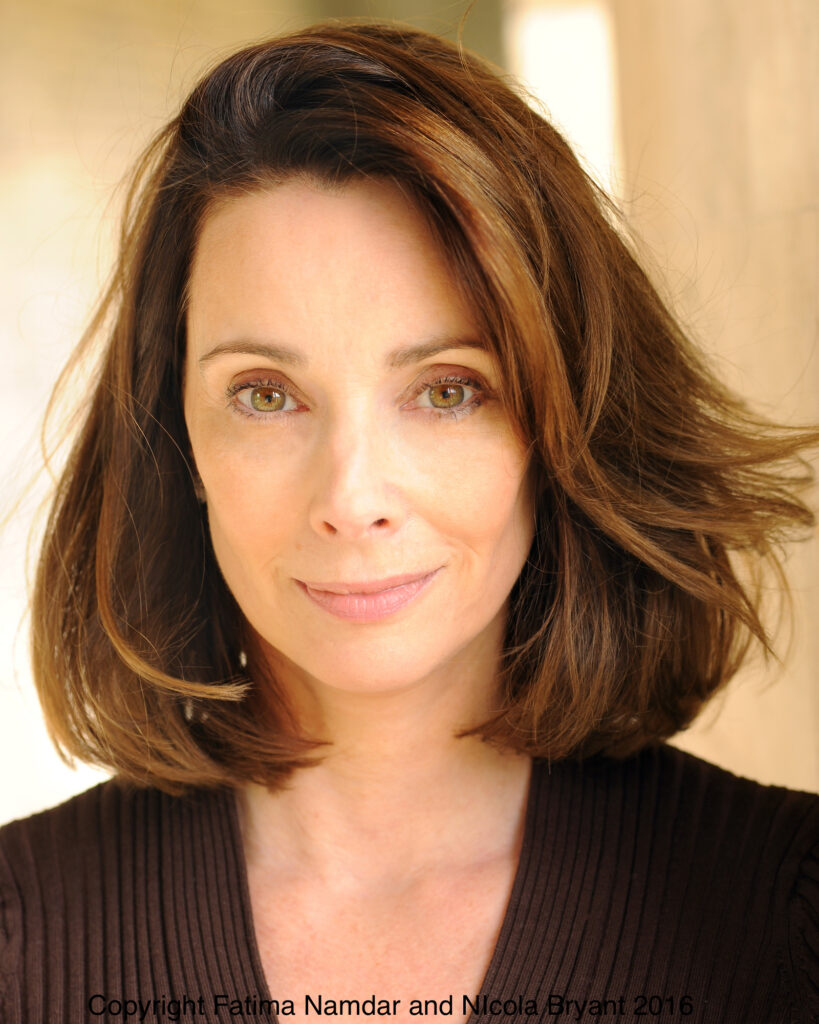
My guest this week is actress Nicola Bryant, famously known as the American companion, Peri, on Doctor Who. In a story that sounds like a movie itself, Nicola shares how she pretended to be American for three years—both on and off-set—and how that choice affected her career for decades.
We explore her creative childhood, her transition from ballet to theater, and her deep interest in the power of hypnosis to help others heal and grow. This is a conversation about creativity, identity, and the courage it takes to finally trust your own gut.
If you’re ready to stop performing and start feeling human again, I invite you to join me for our free Creativity Circle.
Episode breakdown:
0:00 Intro and childhood creativity
4:15 The art of creative cooking
8:30 Perception and seeing the world differently
13:00 From ballet school dreams to acting
17:45 The “act 18” audition story
22:15 Realizing the power of acting choices
27:30 Embodying roles and character work
32:00 The secret Doctor Who audition
37:15 Living a double life as American
42:30 Navigating career typecasting and snobbery
47:45 Getting discovered in the West End
52:15 Returning to Peri on audio
56:30 The science and art of hypnosis
1:00:00 Trusting your gut and the mind body connection
Show Links: Nicola Bryant
Nicola’s website
Subscribe!
You can subscribe to Follow Your Curiosity via the handy links at the top of the page for Apple Podcasts, Spotify, iHeart Radio, TuneIn, and YouTube. If you enjoyed the episode, don’t forget to tell your friends!

Transcript: Nicola Bryant
Please note: This is an unedited transcript, provided as a courtesy, and reflects the actual conversation as closely as possible. Please forgive any typographical or grammatical errors.
Nancy Norbeck [00:00:06]:
Welcome to Follow Your Curiosity. Ordinary people, extraordinary creativity. Here’s how to get unstuck. I’m your host, creativity coach, Nancy Norbeck. Let’s go. My guest this week is actress, Nicola Bryant. Nicola’s first professional role was as the American companion, Peri, on Doctor Who in 1983, where she appeared alongside Peter Davison and Colin Baker. Since leaving Doctor Who, Nicola has worked extensively in theater in The UK and made guest appearances in numerous television shows, most notably as Rowan Atkinson’s niece Millicent in Blackadder’s Christmas Carol, and the award winning comedies 10%ers and My Family. She also guest starred in the American thriller, Headhunter, playing the American psychiatrist who in real life released Ted Bundy back into society, and the two final episodes of Star Trek Continues as Lana.
Nancy Norbeck [00:01:01]:
In 2022, she appeared in the horror movie The Wilds, for which she won a best supporting actress at the British Horror Film Festival. Nicola talks with me about her creative childhood, giving up ballet for acting, and the connections she’s found between the two, being typecast as an American after Doctor Who and its effect on her career, her interest in hypnosis, and a whole lot more. Here’s my conversation with Nicola Bryant. Nicola, welcome to Follow Your
Nicola Bryant [00:01:32]:
Curiosity. Thank you. I’m excited to be here.
Nancy Norbeck [00:01:35]:
I am too. So I start everyone with the same question. Were you a creative kid, or did you discover your creative side later on?
Nicola Bryant [00:01:44]:
I didn’t know everybody wasn’t fully creative. I think when you’re a kid, you think everyone’s the same as you, don’t you? You think we’re all alike. I hear music, like, all the time. So I hear it according to my feet walking on the ground. Immediately, a tune starts. I hear it according to outside noises, anything. Pay me a piece of classical music, and the lyrics are floating in the air. Anything that doesn’t have lyrics then has lyrics, it’s like, oh, and our hubby’s just gonna whine.
Nicola Bryant [00:02:22]:
And, so I thought everybody’s world was the same. It took me a long time to realize that not everyone’s world was the same. My grandmother had been a cook in service, like a missus Bridges.
Nancy Norbeck [00:02:41]:
Mhmm.
Nicola Bryant [00:02:41]:
She taught me how to cook, and she had loads of recipes, but I I could never stick entirely to the recipe. I’d always be, well, shall we throw some raspberries in or some you know? And she she loved that because she was always rigid with the recipe, and she loved the fact that, oh, Nicola, I’ve never tried it with this. And and that was how my brain worked, and has never stopped. I think sometimes an off switch might be nice, not just for me, for other people. But, yeah, that’s that’s the planet I live on.
Nancy Norbeck [00:03:18]:
Well, I’m glad you mentioned cooking because I don’t think that cooking gets the creative credit that it should, especially
Nicola Bryant [00:03:24]:
Look at this. Yes. Yeah.
Nancy Norbeck [00:03:25]:
Yeah. Especially when you can experiment that way.
Nicola Bryant [00:03:28]:
And I do mean creative, as in create a beautiful meal out of leftovers in the fridge, not following a recipe or anything. It really is that creative process. To me, that’s the difference between having a driving license and being a Formula one driver. You know? Most of us not now. But most of us can get a driving license. I’ve been on tour, and I end up becoming the company chef, you know, and which to me is a great deal because I love cooking. And and then everyone else does the washing up. But people go, how did you make that out of two old eggs and some limp greens and a you know? Because that is far more what I enjoy than throwing a showy dinner party.
Nicola Bryant [00:04:17]:
I’m I’m not a fan of dinner party pressure where you’ve got to, you know when people say, what’s your signature dish? I don’t have one. I just enjoy the fridge. Oh, I’ve got two carrots, a quarter of a cup of, coconut oil, some limp looking broccolini. What am I gonna make tonight? And that was literally tonight’s starting point. I love it.
Nancy Norbeck [00:04:49]:
I love it. So when did you figure out that not everybody’s world was like yours?
Nicola Bryant [00:04:58]:
I don’t think it was really until I was in my teens. Maybe because you just don’t ask those questions when you’re younger. There were sort of moments where I would feel like, well, don’t you hear that? You know? Like, the trees are marching and, you know, things where people would want to kind of, that you you might get an odd look and people would say, oh, no. But I I never felt like I thought, oh, well, they just missed that one thing or something. I didn’t feel like, that everyone was so terribly different. My world was very creative because, I did ballet all the time with my best friend. So my best friend was the same as me, and my best friend that did opposite was the same as me. You know, I would write poems, and she would do all the drawings around them.
Nicola Bryant [00:05:59]:
And and that was kind of our world. I think the thing that sort of showed it more than anything else was my sister was very different. She just she and I don’t know if this is a creative thing, though, because my dad used to have floor plans around all the time because he had a central heating business, and there would be plans of buildings. And he taught me how to read plans very quickly and easily, and I understood them from a very young age, whereas my sister could never read plans. Now I would have thought that was a more scientific thing maybe, but, I I think it was the difference between my sister and I that in the way sort of started to show me that not everyone was the same.
Nancy Norbeck [00:06:48]:
It always fascinates me. You know, I I used to teach, and I taught a lot of kids who had learning differences and that kind of thing. And, you know, there are so many different ways that we see the world. And, you know, I I mean, I even wonder sometimes we all know the sky is blue. Do we see the same shade of blue? Does it really look the same to all of us? And and that’s what is coming to mind as you were describing all of this. Like everybody’s perception is so different because everybody’s brain is so different. Absolutely. Yeah.
Nicola Bryant [00:07:24]:
And I think that I particularly well, with the color thing. You know, I had a a good friend, who’s got that quite common thing that men have with the colorblindness with the
Nancy Norbeck [00:07:35]:
Mhmm.
Nicola Bryant [00:07:36]:
The red and the green, I think, or something. And, so you then wonder because how many men would refer to the color top that I have on, which, oh, over here, I would say it’s like a plum
Nancy Norbeck [00:07:51]:
color. Mhmm.
Nicola Bryant [00:07:52]:
But someone else might say burgundy, someone might say purple, someone might say mauve. Is that because we have different labels, or are we actually seeing quite different colors? Right. Right. And then there’s the I don’t I don’t know
Nancy Norbeck [00:08:07]:
that it’s a joke necessarily, but that, you know, you can show a man three different shades of light green, and he’ll tell you they’re all the same color. And a woman will say, no, they’re totally different. Yeah. And I think that one is just because women are more likely to pay attention to color than men are, but still it’s it’s all it’s all those subtle differences in perception. It’s fascinating.
Nicola Bryant [00:08:33]:
It reminds me of something I did with my step kids. I don’t know where I got it from, but I had this whole, massive box full of felt colors. They were like little felt pads, and they would stick to the shower window of the bathroom I had at the time. And when the kids would, be in the bath, I’d put all the colors up on the shallow thing, and then I’d say things like fuchsia and mauve and turquoise and aquamarine and because I I was determined that they would know all the differences in the colors. And they’re like, they were really good at it. So I think it it might be that nature nurture thing. Mhmm. That we don’t bother to teach boys three shades of green.
Nancy Norbeck [00:09:29]:
Right. Because
Nicola Bryant [00:09:31]:
but those who are really interested in it and become designers and and all of that, they see those things. Right. But for those who haven’t had someone sticking colors up on the shelf or wall, you know, then maybe they haven’t learned all those differences because they’re and I thought, well, while they’re young, let’s just have fun and see.
Nancy Norbeck [00:09:51]:
Absolutely. Why not? Why not? So with all of the music in your head, how is it that you ended up deciding to go into theater rather than music?
Nicola Bryant [00:10:04]:
It’s interesting, isn’t it? Well, my first love was ballet. So that relates really strongly to, the music. And I did want to be a ballerina, and I still choreograph things in my head all the time and and stuff. But, and then I left. So I started dance when I was three. I started piano when I was, like, four. And when the whole ballerina thing disintegrated around age 11, because I did get into ballet school, but my parents didn’t want me to go, which was a huge blow. Then I had to kind of let go of that.
Nicola Bryant [00:10:57]:
And the world is very different. For for example, you couldn’t, do a composition o level, you know, GCSE. And when I was about, I don’t know, probably about six or seven, I wrote a really basic, study in c, and I played it to my piano teacher who was furious. Now if you did that today, your piano teacher would say, oh, that’s interesting. I didn’t know you wrote music, Nikola. And they would talk to you about it because when I was, I don’t know, about fifteen years ago, I played because I can’t forget that first piece of music I wrote. I can still play it. It’s just there in my head.
Nicola Bryant [00:11:51]:
It’s not written anywhere. And I played it to him, and he said, when when did you write that? And I said, I don’t know, about six or seven. He said, oh my goodness. If someone had just seen that in you and pushed you in that direction, who knows? But life was different. I got my knuckles wrapped with a ruler. I was told to never do that again, and I was told to only concentrate on the homework that I’ve been given. So that’s probably why I didn’t pursue a career.
Nancy Norbeck [00:12:26]:
That would explain it. Yeah. Wow. Wow. I’m I’m so sorry, but at the same time, I think things have also turned out very well for you, so I’m sort
Nicola Bryant [00:12:41]:
of thought. Exactly. You know, I mean, it’s never too late to write a musical. I think about it. I actually have a storyline now. I have my ex agent who’s retired is very keen for me to do it. Who knows whether I will or not? There’s only so many hours in the day. But the point is music’s given me a lot of pleasure through my life, and, and I’m very grateful for that.
Nicola Bryant [00:13:04]:
And it’s worked as a diary at times, you know. Instead of writing a diary, I just go and write a piece of music about Wow. That person.
Nancy Norbeck [00:13:13]:
That is fantastic. Just fantastic.
Nicola Bryant [00:13:19]:
So I have a diary of my life in music, so you can see the tortured teens.
Nancy Norbeck [00:13:25]:
Oh, I
Nicola Bryant [00:13:25]:
bet that’s exciting. At 20. Life’s a dream, thirties, you know, it’s, it’s it’s all, it’s all captured in bits of music.
Nancy Norbeck [00:13:37]:
Wow. Well, I’ll I’ll be very curious to see if you ever do the musical. I think that would be really, really interesting to see and hear. So, yeah. But what an interesting way to record your life.
Nicola Bryant [00:13:52]:
Yeah. And the thing is I don’t I’m I can’t write music as in write it out or anything. I’d have to hear the tunes. So I used to record them on old c nineties and c sixties and, and then I would just write some chords and some lyrics on the back of cigarette packets, napkins, scraps of paper, any old thing, and shove it in file. And millions have been lost that I never wrote down at all. You know? I I sing to these guys, my dogs, Harvey and Marnie, one of who’s sitting right on my lap now. I sing to them every day. You know? I sing.
Nicola Bryant [00:14:33]:
We’re going on a walk song. You know? We’ve got our going up to the heat to get some relief, and we’ve got my favorite rhymes are, Agave, sweet as Agave and Harvey. And, Marnie is fast asleep down there. I just I love singing to them. I sing them lullabies when I give her a massage, and I sing little jazz numbers when we’re off to somewhere to have fun and, you know, they’re just used to the madness of mom.
Nancy Norbeck [00:15:06]:
I bet it’s pretty comforting, actually. I think if somebody were saying
Nicola Bryant [00:15:10]:
to me yeah.
Nancy Norbeck [00:15:13]:
Yeah. Wow. So now going back to ballet, why is it that your parents didn’t want you to go to ballet school?
Nicola Bryant [00:15:25]:
Because I was a year ahead in school Mhmm. Then I appeared to be academic. And, one of the science teachers had said, oh, she’s got a really good science brain. You should, you know, she should follow in that direction, which I didn’t. You know, because it was like, thank you. They, you know, I went to a very good school, and my parents wanted me to have, you know, that that steady life. I was a very asthmatic child, and, you know, ballet schools weren’t renowned for their comfort. You know, dusty floors
Nancy Norbeck [00:16:06]:
Mhmm. It’s
Nicola Bryant [00:16:07]:
my heart and I and I think my mother was concerned about my health, but I think she would have let me go. But my father really felt that that was not the way forward. And so the deal, and they did stick with the deal, the deal was, that whatever I chose next, they would back me on it. So then I was a pretty depressed kid, to be honest. 11, 12, I was, like, missing ballet so much. And, eventually, my mom thought, I’ll try and get her into musicals or something. I don’t have a great singing voice. I don’t think I have a voice designed for belting from the back or anything like that.
Nicola Bryant [00:16:51]:
I can hold a tune. You know, I sang soprano in the school choir, but that’s it. You know? And so my mom saw this advert for Who’s Afraid, for, Fiddler on the Roof. And she said, well, why don’t you go and audition for this? You know, you can dance. You can sing. And and I said, but this company, you have to be 18 to join. And I was, like, 13. Not any older than that.
Nicola Bryant [00:17:28]:
And mom said, well, act 18. She had a point, and that’s probably the most, strongest thing my mother’s ever said in her whole life because that’s not kind of her personality at all. But, I was like, okay. So I went. And in a weird way, I linked this to my doctor who audition where I was most concentrating on being something I’m not rather than anything else. That was the main thing. Act 18. Act 18.
Nicola Bryant [00:18:08]:
You know? And, they were like, well, what exams did you take? And I was like, I haven’t even decided which ones I’m going to take when I’m 15. You know? Let alone what ones did I take when I was 17, 18. And I was just like, I was just making it up. And I’m very shortsighted, and I didn’t wear my glasses because I had really thick glasses. And so I fell off the stage, broke my watch. Always still was just The whole thing was like that. And and, and I was sitting there thinking, this is a total disaster. I’m not 18.
Nicola Bryant [00:18:46]:
They don’t believe it. You know, I’m I look like an idiot. I didn’t see the steps. The steps got caught up in my eyesight with the curtain that was on the air, and it was just disastrous. But I kept smiling. I did all the stuff, and I left. And I got the role of the second youngest sister. Not even the youngest.
Nicola Bryant [00:19:11]:
So, the young lady who was playing my younger sister was 21. So where we go? And, and in this country, you can’t, or you couldn’t in those days, go into a bar if you weren’t 18. So kids often had to wait outside, pubs and things. So I didn’t know any of these people. I was just pretending to be 18. I I didn’t order alcohol. I just, you know, had an orange juice every time we went to the pub because we go there after rehearsals. And I would just say, oh, I don’t drive, you know, learning soon, all these things.
Nicola Bryant [00:19:58]:
And then this woman came up to me who was in the chorus, and she came up to me and she said, Nicolas. Yes. She said, I know your uncle. And I was like, yes. And she said, your secret is safe with me so long as I don’t catch you doing anything you shouldn’t be doing. And I was like, thank you. I won’t be. Wow.
Nicola Bryant [00:20:32]:
But, yeah. It it was I I had a great time, and I thoroughly enjoyed my I think I had, like, four or five lines. That was it. I enjoyed the acting because I was on stage most of the time because I was there with the family. I think I had to shout, the Russians are coming, and my first line was, you know, I’m peeling the potatoes, mama. And and it was just that. But for me, it was a five act opera. I was in all the scenes, and I was living every moment that my family was going through, the fear, the worry, the the fighting, the pain, the anguish, everything.
Nicola Bryant [00:21:13]:
Even though I only had those, you know, like, you know, few lines. And then I thought, oh, this is what acting is. It’s not that, you know, I’ve got I speak all the time.
Nancy Norbeck [00:21:25]:
Mhmm.
Nicola Bryant [00:21:26]:
It’s embodying the role, which I suppose in so many ways, I was not that was not an alien idea to me because that’s what ballet is like. You embody the role. And every moment you’re on stage, whatever you’re doing, you are embodying that role even though you may not have the solo. So that kind of got me hooked on acting. And then I saw, I went to see, Hamlet, and I saw, the same production twice. And in one production, Gertrude took the drink in the final act and didn’t know it was the poison from Hamlet. She drank it innocently and dies. And the other performance I saw it in, she looks at him, she knows it’s poisoned, and then she drinks it.
Nicola Bryant [00:22:25]:
And I gasped, you know, out loud. And I was with the school party the second time, and they were like, shh. But you don’t understand. She didn’t know before. She didn’t know that time. And I was like, wow. This is what acting is. And both of those sort of experiences got me very excited about acting.
Nicola Bryant [00:22:45]:
But as an actor, wow. Did you get to make those choices then? That wasn’t necessarily the director. You could decide. And when I’ve done I’ve done many long, long runs of shows, I’ve always made those choices to keep the show fresh so that you just change that one tiny thing that night because it stimulates the actor who’s working opposite you, and it, you know, it doesn’t change anything in the text. But to have that option to imagine a slightly different thought Mhmm. Instead is wow. That’s just huge, the freedom. So when people say, don’t you get really bored? I go, no.
Nicola Bryant [00:23:28]:
Because it’s not the same. It’s not the same every time you think.
Nancy Norbeck [00:23:32]:
Yeah. But what a powerful example of that.
Nicola Bryant [00:23:36]:
Yes. Fantastic. What was her name? Oh, Barbara Jefford. There you go. All the way back. Barbara Jefford, wonderful actress. Wow.
Nancy Norbeck [00:23:46]:
I don’t think I’ve ever seen a production of Hamlet where she knew. So I have to have to think about that.
Nicola Bryant [00:23:52]:
Interesting, isn’t it? Yeah. The idea that I know who you are, son. I know what you think of me. I know what I’ve done. I’m free. It’s like, wow. Sends chills, don’t you?
Nancy Norbeck [00:24:07]:
Absolutely. Even just thinking about it.
Nicola Bryant [00:24:09]:
Yeah. Wow.
Nancy Norbeck [00:24:13]:
Wow. And, and I never would have imagined until you said it, that connection between ballet and acting and embodying that role in both places. But I I’m guessing that that made the transition so much easier for you and maybe even helped with that that grief over giving up ballet in the first place.
Nicola Bryant [00:24:34]:
I think so because well, I’ve always thought of myself as a character actor. I know I I play the leading lady roles, but I’ve always thought of myself as a character actor. When I did ballet and they would you had to pick a piece of music, you know, to do your own dance to. And everyone would be a petal or a fairy or a sunbeam or something, and I’d be a toad or, you know, a tree on fire or something. I’d be I’d be something that was character rather than pretty. And I I’ve always felt like I’m I’m waiting till I get older and older and older to get more opportunity to be that character actor. Mhmm. But I think because that’s how I approached ballet.
Nicola Bryant [00:25:22]:
And I’ve spoken to other people who studied ballet first, how helpful it is because when you’re thinking of a character that’s maybe got something burdening them, how are you gonna change your posture just a little bit to represent that, what you’re carrying? Or how does your character overcompensate for what they’re hiding? And so you’re you’re you’re putting it into, you know, every bone in your body, every muscle, rather than just relying entirely on the words that you’re saying, the voice. Mhmm. And and that I think is what makes acting really interesting. I think it’s what makes people interesting to watch on screen sometimes as well. You know?
Nancy Norbeck [00:26:13]:
Yeah. The the physicality of it is a big part of what makes it real.
Nicola Bryant [00:26:19]:
Yeah.
Nancy Norbeck [00:26:20]:
So so mom and dad had to let you go to drama school?
Nicola Bryant [00:26:24]:
They did. Yes.
Nancy Norbeck [00:26:28]:
Good for them for keeping their end
Nicola Bryant [00:26:29]:
of target. Yeah. Absolutely. Absolutely. I’ve done my education, I’ve done the exams, and now I was off to drama school. And I’m I’m glad that at least my dad got to see me because he died very young, but he got to see me do Doctor Who and my first West End role. So he kind of thought I think he’d reached the point where he thought, well, she might actually be able to feed herself doing this career.
Nancy Norbeck [00:26:56]:
That’s probably good reassurance for dads in general.
Nicola Bryant [00:26:59]:
Yeah. Absolutely.
Nancy Norbeck [00:27:01]:
Yeah. And so Doctor Who was your first professional role?
Nicola Bryant [00:27:07]:
Yeah. My first professional DB and and really my first professional role, after drama school. Yeah.
Nancy Norbeck [00:27:14]:
I mean, that’s kind of mind boggling to me what that must have been like. And for for people who are listening who don’t know the story, since there is clearly an auditioning theme here, can you Yes. Kind of give us that tale?
Nicola Bryant [00:27:30]:
Well, I was in drama school, and we were playing the final, the final show where agents come and watch you do your showcases and hopefully you get discovered, was going to be the musical No No Nanette, which made my heart sink like a stone because despite my musicals I’d done at school, I was not one of those destined to be in musicals, unlike a great many of the people in my year at drama school. So I knew that I was gonna be, like, third bathing suit from the left was always the way I viewed my options in this final production. But I was, at the time, secretly married to a Broadway star, who had a divine voice. And he said to me, well, maybe you shouldn’t think of it like that, and maybe you should think about it as a straight play. What part would you go for if it was a straight play? And I was like, well, Nanette, of course, I’d be obvious casting. He said, great. And so he worked with me on the songs for two or three weeks we had before the audition. And my drama school had decided they were gonna do proper auditions for us rather than just posting the cast list up on the wall, which is what normally happened, because they thought it would be a good experience for us.
Nicola Bryant [00:28:55]:
So they hired an outside director who came in and did the auditions. We did dance auditions. We did singing auditions, and we did acting auditions. And when I went and did it, I just thought, I have nothing to lose. So I felt quite free, because no one was expecting anything from me. I played the lead in the Shakespeare and Chekhov and stuff, so I was they weren’t expecting me to get a role in this. Whereas all the people who had had singing tutorials were expecting to get this. However, the director cast me, which did cause a small, ruckus in my school because none of the same teachers, I don’t think even the principal, and certainly none of my, friends at drama school wanted me to get this role.
Nicola Bryant [00:29:53]:
So, getting it was actually fabulous. Performing it was a nightmare. I got nervous, stressed, sore throats, tense. I was, you know, I I, I was a party to some of the nasty aspects of our business and people saying and doing nasty things because they were really annoyed that I got part. And I really didn’t cope well with that. I would just go home and cry and say, if this is the business, I’m I’m not cut out for it. I just haven’t got what it takes. And, it was pretty miserable.
Nicola Bryant [00:30:33]:
However, being the good girl that I was, I wrote loads and loads and loads of letters because that’s what you had to do in these days and sent loads of photos out to loads of agents and said, I am doing this part. Please come and see me. And one of those that came to see me was Terry Carney from Eric Yapine Smith Limited, and he was William Hartnell’s son-in-law.
Nancy Norbeck [00:30:56]:
Wow.
Nicola Bryant [00:30:58]:
Now he came and saw me in the show, and he wrote down one American, and then he wrote notes on all the other people. But he thought I was a genuine American. So only a few weeks later, the breakdown for the new Doctor Who came through, and they said American companion. And he was like, I’ve just seen him, an American. She’s not the description because this description was tall blonde California. But he thought, I think she’s right for this. And so he contacted me, and he got me to do the audition for Doctor Who. However, they were only seeing Americans, so and some Canadians.
Nicola Bryant [00:31:43]:
And so he said, well, I just want you to go in and sound like you did in the casting and in in the musical, and we’ll just see where it goes. If you get the job, I’ll take you on. If not, never mind. You know? I wasn’t he wasn’t gonna take me on if I didn’t get the job. Mhmm. So I had to go into this audition, pretend to be American. And then once I got the job, I had to return to be single. So although I was British and married, I was having to be American or single.
Nicola Bryant [00:32:16]:
So I think somehow my little fiddler on the roof audition had prepared me
Nancy Norbeck [00:32:20]:
for one day ahead. Yeah. There’s a definite theme there. There is.
Nicola Bryant [00:32:27]:
I think now I’m older, I’d like to pretend I’m younger.
Nancy Norbeck [00:32:33]:
If only it worked that way.
Nicola Bryant [00:32:35]:
It only. Yes.
Nancy Norbeck [00:32:38]:
Oh my. Well and you had to keep up that that pretense for a good while. Three years. Yeah.
Nicola Bryant [00:32:47]:
That’s a long time. It is. I’m amazed I didn’t end up in a mental asylum somewhere. Maybe I am. Maybe I just It’s that perception thing. Yeah. It’s all gone. They’re all not real.
Nicola Bryant [00:33:01]:
I was never in a doctor. It’s all offensive. Yeah. It was it was stressful. I won’t pretend otherwise, but I think I handled it. I didn’t I just got used to doing it.
Nancy Norbeck [00:33:15]:
Mhmm.
Nicola Bryant [00:33:16]:
I got used to being it. And, of course, I went home. My home was American because my husband was American, so I literally spoke American all the time. So, yeah, it was just weird when I saw my family, and they’d be like, what’s with the accent?
Nancy Norbeck [00:33:31]:
I was wondering, you know, if you switched back and forth, I mean, even even now, you’re you’re still playing Peri. So Yeah. Is it pretty easy to switch back and forth at this point?
Nicola Bryant [00:33:42]:
So easy. It’s not even a switch. It’s it’s, and it’s over half my life.
Nancy Norbeck [00:33:51]:
Right. But back then, it must have been harder.
Nicola Bryant [00:33:55]:
Yes, at the beginning. But then, you see, my best friend in school was from New York. She was American. My husband was American. It was a it was a tune I was really used to listening to. So it wasn’t that difficult. It was more difficult having to fight for what was right. So when and because, obviously, my husband would read the scripts and he’d go, well, we don’t say, you know, mincer.
Nicola Bryant [00:34:22]:
We’d say meat grinder. And then I’d go back and I’d go, hey, guys. You know, thing is we don’t say this word. You know? And then they go, well, I don’t know if we want to change it. And they go, well, you have to change it because I’m American. And they go, well, you know, and you think, this is mad. Yeah. You know? Like, why do I have to say policeman? Why would I not say cop? You know? But then you realize, in a way, I mean, we’re all so integrated now.
Nicola Bryant [00:34:51]:
We all travel so much that all of those things have become we’re all multilingual just from watching television. Mhmm. We know what a sidewalk is. You know what a pavement is. It’s it’s that thing that we learn each other’s words. So I thought, well, if Perri is spending a lot of time with the doctor, she’s gonna learn a lot of his vernacular. So there’s no reason why one wouldn’t start using the other word. Right.
Nicola Bryant [00:35:21]:
As as I was witnessing my husband do in England, he would stop saying sidewalk. He would say pavement. He would stop saying, you know, an American and he’d say the British word for it because he was in England.
Nancy Norbeck [00:35:37]:
Right.
Nicola Bryant [00:35:37]:
So I was I sort of had to I reasoned with myself, but that that was what was what was going on. But inside, I was just going, no, that’s not the right word.
Nancy Norbeck [00:35:49]:
Yeah. It’s an interesting it’s an interesting point because a lot of the time, you know, if, if there is an American character on a British show and they say something that just is not what we would say at all, it, it hits immediately and you go, we would never say that. But if you’ve been there for a while, you absolutely would. I spent six months in Northern Ireland and there were things that I still say that I picked up there because I just love them. So,
Nicola Bryant [00:36:20]:
yeah. And we’re all so much more traveled.
Nancy Norbeck [00:36:24]:
Mhmm. And
Nicola Bryant [00:36:24]:
we’ll become more and more and more and more so. And and the more you know, we we have we have, you know, Japanese television shows available to us now, the flick of a button. So there’s so much more culture that we are able to access that I think we will become more of a melange using other people’s words, which I think is not a bad thing.
Nancy Norbeck [00:36:45]:
Yeah. Yeah. I agree. I agree. Especially since language can give you the key into another culture and that kind of thing. I think it’s Yeah. It’s a good thing. That’s a good thing.
Nancy Norbeck [00:36:58]:
So you pretended to be American for three years. Yes. And if I correctly recall, Colin Baker was the only one who knew the truth. Yes. God bless him for not
Nicola Bryant [00:37:07]:
doubting you. He’s he’s pretty good at secrets. Yeah. Not the best,
Nancy Norbeck [00:37:15]:
but pretty good. Did that I mean, if obviously now, if if you were in that position in 2025, being cast as a Doctor Who companion would basically be an automatic meal ticket for all sorts of other things. But in the eighties, it was a very different show and environment. How did that affect the rest of, of your career from there? I mean, obviously you’ve, you’ve done okay, but I’m guessing it’s not the same as what we would expect these days.
Nicola Bryant [00:37:50]:
No. Well, first of all, I was typecast as American. So I couldn’t get auditions for roles for stories that were based literally where I live in in Surrey. And I remember the time there was Jillie Cooper was doing, a lot of her stuff was being filmed. And I said to my agent, you know, apart from the fact that I don’t ride horses, I’m perfect casting for these because that’s my that’s the area I live in, the people I grew up with. And he would ring the casting directors. And, bizarrely, they’d all just go, no. She’s American.
Nicola Bryant [00:38:29]:
He’d go, no. No. You really should meet her. And, so it was just really weird. It was just like a so I was I was closed off from some people because they wouldn’t believe that I was British and wouldn’t even bother to meet me. And, also, there was the huge snobbery of, oh, we couldn’t possibly have someone at the National Theatre or something who’s been in Doctor Who, whereas now, you go from Doctor Who straight to the National VRSC. Yeah, there was, there was a sort of television snobbery at that point, which slowly got broken down over the decades. But at that time, it was very much, you know, so I’d have to I was doing commercial tours and commercial theater, but it was far less, you know, the their attitude was, well, if you want to come work at the National, you’ve got to hold a spear at the back for three years, you know, to work your way up, which obviously I wasn’t gonna do if I was being offered leading roles on in tours.
Nancy Norbeck [00:39:33]:
So what did you do when, you know, I mean, you you did the touring productions, but did that did that help at all in terms of getting into places like that?
Nicola Bryant [00:39:45]:
No. It pretty much means you’re on the, you know, you’re on the commercial touring circuit, which is fine. But I would love to have done, you know, the RSC national route. And I think it’s fine if you start there, and then you get Doctor Who. So you’ve got something to go back to and say, look, I worked with them before, and now I’ve done Doctor Who, but because that was my my opener. And it’s kind of weird really because you think now someone would go, what an incredible story. You pretended to be American for three years. You must be, you know, quite a good character actor.
Nicola Bryant [00:40:20]:
You must be this is very interesting. But at the time, it was like I was being penalized.
Nancy Norbeck [00:40:28]:
Yeah. Yeah. And it’s not even just I pretended to be American on screen for three years. I did it everywhere.
Nicola Bryant [00:40:36]:
Exactly. That much said, the casting directors didn’t wanna see me.
Nancy Norbeck [00:40:44]:
It’s amazing how much that’s changed, but it’s unfortunate that it was that way back then.
Nicola Bryant [00:40:51]:
Well, thank goodness I got I got to work in the West End because Brian Forbes, lovely director, lovely man, my agent, he’d actually taken my photograph because I’d written to him while I was in drama school saying, you know, I’d really love to work with you. Would you come and see my show? But he didn’t come to the show, but he took my photograph because he said, oh, I like that face, and stuck it in a big bag, like a potato sack of photos. Now I only know this from the producer of the show, who was Simon Caplan. And years later, he said, you know the story of how this all began? I was like, no. He said, well, Brian turned up at my office with a large sort of, like, mail sack full of photographs of people he collected. And he just threw them all on the floor and filtered through them and said, these are the ones I wanna see for these roles. So, if I hadn’t written to him, I might not have got that job.
Nancy Norbeck [00:41:48]:
Yeah. I think it’s amazing how many little little things like that that seems so incidental, like they couldn’t possibly end up going anywhere, actually, and do end up going anywhere, and how we tend to write them off as, oh, nothing’s ever gonna come of that, but you really never know.
Nicola Bryant [00:42:09]:
Yeah. I’m I’m kind of proud of myself for working so hard at the time to write letters because, you know, so many of my friends at drama school didn’t. Or you just picked 12 people because that was it. You had to type or you know? And what I did was get a generic letter typed up, which I apologize for being a generic letter, and then filled in the the agents. When I wrote to directors, I wrote separate ones. But when I was writing to dozens of agents to get them to come and see me, then I just wrote a generic letter, and I sent a photo, and I sent, you know, the productions we were doing in school. The best ones are the ones who’d send it back with your photograph stapled to their letter so you couldn’t reuse the photograph, which you’d paid it for. That was just that was divine.
Nicola Bryant [00:43:04]:
That was like, okay. That’s thoughtful. Nice heaps. That’s lovely. Thank you. But there you go. You know, I ended up with a lovely role in the West End for a year, opposite Patrick Mcnee, you know, playing the great ingenue who turns into an evil bitch. You know, it was it was brilliant.
Nicola Bryant [00:43:26]:
And I loved it. I had a great time, and, I wouldn’t have got that audition had I not sent the card. But the great thing was that my agent then, had contacted him and said, yes, but she’s not American. However, because of everything that she’s experienced, she said she does not want to come in and do the interview in her British accent. She just wants to come in as the part and do the audition. So it was really funny. I went into the audition, and Brian Forbes was saying to me, so you’re actually British. And I was going, yep.
Nicola Bryant [00:44:08]:
He’s going, but you’re not going to speak to me in your British accent. Nope. Wow. Because I think it’s just better to be the part. Why have them walk away with two different images? Just come in and read the part. Right.
Nancy Norbeck [00:44:28]:
So yeah. And by then, it wasn’t like it was really any extra effort on your part, so why not?
Nicola Bryant [00:44:35]:
No. No. It felt like the easier thing to do. I did not like going in and doing, an an audition with my own voice. In fact, it was probably maybe nearly ten years before I was cast in a role. And I said, so so what kind of voice has she got? And they went, oh, no. Use yours. And I was like, oh, I don’t wanna do that.
Nancy Norbeck [00:44:58]:
I was really terrified.
Nicola Bryant [00:45:01]:
I was like, oh, no. No. God should be from somewhere else.
Nancy Norbeck [00:45:07]:
Oh, my. It’s so interesting how again, with perception, how our own perceptions of ourselves change with things like that too.
Nicola Bryant [00:45:17]:
Yeah. Absolutely. I realized that I felt I was more far more comfortable as an actor being further away from myself than playing nearer to myself, because that felt, I don’t know, more exposing, and it seemed more interesting to play someone more different.
Nancy Norbeck [00:45:36]:
Mhmm.
Nicola Bryant [00:45:38]:
Yeah. But it was hard work just trying to sound like myself. I was fiddling with my voice all the time. I was like, what is myself? I don’t even know. Who’s that?
Nancy Norbeck [00:45:52]:
Yeah. Yeah. My and then you ended up coming back and playing Perry again on audio. So you’re still straddling Yeah. That that world.
Nicola Bryant [00:46:05]:
Still doing that and then deciding is she older Perry or younger Perry? So yeah. Which is great, though. I mean, it’s great fun. I love doing it. And, you know, I’m really grateful for to have some such a wonderful thing in my life. You know, something that you just keep returning to. That is a great pleasure. You know? Lots of people have to return to something that they don’t enjoy.
Nicola Bryant [00:46:34]:
Yeah. So Yes. I’m like, how lucky am I, you know?
Nancy Norbeck [00:46:40]:
Yes. And I I love how you call conventions love fests because I think that is Yes.
Nicola Bryant [00:46:46]:
I did that. Exactly
Nancy Norbeck [00:46:47]:
right. Yes. You did.
Nicola Bryant [00:46:48]:
Yeah. Because it just feels like that, especially, you know, the ones that I’ve been going to for many years for all of my adult life. You gather so many friends, and, it’s it’s it’s not like anything else, and it’s really hard to explain to other people who don’t know what it’s like. Really hard.
Nancy Norbeck [00:47:12]:
I can imagine that’s true. It’s sometimes hard for me to explain to people who don’t understand why I go.
Nicola Bryant [00:47:19]:
Yeah. What are you doing there? Why? Yeah. Sorry. There’s an alarm of mine going off. See, look how gentle my alarms are.
Nancy Norbeck [00:47:30]:
I’ll take it. So I wanna make sure that we get to talk about, as long as it’s okay with you, your interest in hypnosis. Because I remember the first time I met you back in 2018 in Baltimore, you were talking about how you were doing this hypnosis course. And, and I’m just fascinated by the fact that that’s something that that you chose to explore on a top of everything else that you do.
Nicola Bryant [00:48:01]:
Well, I am secretly, I say secretly, qualified in quite a few things. Because if I’m interested in something, I pursue it to the point that I want to have a qualification in it. And there’s loads of other things I want qualifications in that I haven’t. I am the kind of person who will collect courses. But, yes, I’m I was just fascinated in how the brain works and how hypnosis works and how we can use it ourselves to change our lives, influence our lives in terms of personal growth, personal development, in terms of health, in terms of helping others. So, I went and did a proper, you know, a grown up course, not a three weekend or something. So I was studying with doctors and dentists and, mostly medical people. So there was written papers and, which terrified me, and they weren’t bothered about that.
Nicola Bryant [00:49:05]:
And there was a practical, which was a breeze for me, and they were all nervous about it. Because you have to make your own scripts, as they’re called
Nancy Norbeck [00:49:15]:
Mhmm.
Nicola Bryant [00:49:16]:
In hypnosis. And that was easy because it’s like acting with huge pauses while you think about what you’re gonna say next. Because you’re the pause is actually the point where the hypnosis deepens. So the pause is of great benefit. So while doctors and dentists were panicking about the pause going, oh, what I gotta say next? I’m like, oh, a pause. Lovely. And then I’ll just float my voice back in and take them down. And I just loved it.
Nicola Bryant [00:49:51]:
I just and I love watching people for the signals because the body, the face will give the signals as to how deep they’re going. And, you know, amongst, clients and, colleagues, I feel like we’ve, they because, really, it’s them who’s doing it. You’re just empowering them. They’ve achieved things that they thought they probably wouldn’t be able to and escaped things that they thought they probably wouldn’t be able to. And, so it just shows that, you know, the powers we have within our own minds, when we know how to use those.
Nancy Norbeck [00:50:32]:
Yeah. I’ll bet that it was easier for you to learn to do the voice part than it was for the doctors and dentists too.
Nicola Bryant [00:50:39]:
Much. Much. I love doing the voice part. I love it. And, I actually, one of the the one of my group had to go for surgery just before the main finals exam. And according to how long it was gonna take him to recover according to his medical advice, he wouldn’t be ready to take the finals exam, and then he’d have to wait another year. And he said, I believe if you hypnotize me, then I’ll be ready in time. And I said, well, if you believe it, then we can do it.
Nicola Bryant [00:51:17]:
So, I made a tape recording for him, and he just played that back in hospital, and he made one of the fastest recoveries they’d seen. So he is there for the final exam.
Nancy Norbeck [00:51:31]:
Well, that’s fantastic.
Nicola Bryant [00:51:33]:
Yeah. And that felt like that was my first professional, almost, job. Sure.
Nancy Norbeck [00:51:38]:
And what a success story from it too. But you also at, Long Island too in 2024 did group hypnosis sessions, which I was looking forward to, and then I couldn’t make it because I got sick. And I’m curious to know, like, how how does a group session work when you’re presumably keeping an eye on a lot of people?
Nicola Bryant [00:52:03]:
Well, my first group session was online. Really. So well, no. Suppose not. My first group session, I think I did one in Baltimore first, but then I did a group session online, which concerned me because I can’t see the person.
Nancy Norbeck [00:52:17]:
Mhmm.
Nicola Bryant [00:52:18]:
And I can’t see the group. Whereas even when there’s a group and you’ve got 20 or 30 people, you can, you know, you can because you’ve got the pauses. Mhmm. You can walk around. You can check on people. But and also you can get you can get the feedback. You can check with everyone in the room before you start. You know, what’s everyone in the mood for? Because I have options as to where we can go.
Nicola Bryant [00:52:41]:
Is this something that interests you, or would you be more interested in that? But doing it online, I thought, oh, that’s what that’s more risky. What if somebody gets interrupted and they don’t wake up very well? That’s something. But I did that for COVID and to raise money for my charities during, lockdown because, a, I thought people could do with some stress relief. Absolutely. B, it was really hard for charities through that time. So it was a sort of double whammy. And and apparently, it worked really well from the feedback that I got from people who attended. You know, one, including a a writer who suffers from MA, she said it was the most productive days she’d ever had following that.
Nicola Bryant [00:53:27]:
So that’s great.
Nancy Norbeck [00:53:30]:
Yeah. That’s what you wanna hear.
Nicola Bryant [00:53:32]:
Definitely. Yeah. Definitely. But the group thing is interesting, and I I love doing it. I really love doing it with the Doctor Who crowd because it feels like I get a chance to give back. Oh, yeah. And because I can use the fact that I know these are people full of imagination. They love science fiction, so we can do what we want.
Nicola Bryant [00:53:52]:
So I’ve done, you know, I I take them for a ride in their own bespoke TARDIS, and they can jettison what they need to get rid of in their life, and they can bring in more of what they need. And they’ve got a place they can visit again because they know exactly how that feels for them. They’ve imagined it many times. You know, what would it be like to be in my town just? You know? Yeah. So it’s it’s it’s a wonderful thing to be able to do, and, I really enjoy doing it.
Nancy Norbeck [00:54:25]:
Well, now I’m really disappointed that I wasn’t there.
Nicola Bryant [00:54:29]:
I’m sure I’ll do it again somewhere. I don’t know.
Nancy Norbeck [00:54:32]:
I hope so. Somewhere. I hope so. Because that just sounds like so much fun. And I can see how you could do the same thing with with other groups and really tailor something for them, which is so cool. So cool.
Nicola Bryant [00:54:45]:
I think probably all my group stuff I’ve done has been with Doctor Who people. But there’s no reason why, you know, a spaceship can mean anything to anyone. Sure. Everyone can build their own spaceship. It doesn’t have to be a TARDIS style. It can be, you know, whatever they’ve imagined, a flying saucer, be anything. Because everyone has an image. Right.
Nancy Norbeck [00:55:09]:
Right. That makes it so much easier for you too. Just let the imagination take over and yeah.
Nicola Bryant [00:55:17]:
Yeah. That’s the point. The the other person’s doing all the work. All you’re doing is opening up the channels. All you’re doing is enabling them. And you can’t enable anyone who doesn’t want to be enabled either. Like, I can’t help someone stop smoking if secretly they really don’t want to stop smoking because their brain will override anything you’re doing. You so it has to be.
Nicola Bryant [00:55:42]:
That’s when people say, oh, yeah. But what if you turn me into a chicken? Well, that’s not gonna happen because you don’t wanna be a chicken, do you? You know? That’s the thing. It’s actually this is not stage hypnosis, which is a completely different thing. This is an enabling process. You know? Yeah. A healing process. Yeah. And and you you’re not gone to another planet.
Nicola Bryant [00:56:05]:
You’re not gone to another state. You you’re hearing them. And if someone says something that doesn’t feel safe, then your body will go, oh, hold on a minute. And you’ll be jolting out of your hypnosis and going, no. I I didn’t wanna do that. That doesn’t sound right. So it’s and the interesting thing is lots of people say, oh, you know, I I I I think, I think I’m too intelligent, some people have said to me, to be hypnotized. And I said, actually, you have to be intelligent to be hypnotized.
Nicola Bryant [00:56:38]:
So it it requires a level of intelligence. You can’t do it with someone who doesn’t have that. You know, you can you can take people to states of relaxation, but it’s much harder, to hypnotize someone who doesn’t have, that brain capacity.
Nancy Norbeck [00:56:56]:
Yeah. Well, I’m also thinking doctor Who fans in particular have listened to a lot of audio drama and imagined a lot of things as they’re listening. So I imagine that that may make a difference too.
Nicola Bryant [00:57:11]:
I think so. Yes. I mean, they they are in a way perfect subjects, which sounds like a villain. Insert evil laugh here. Yes. Exactly. But I I think that’s what I think that’s why they have so much fun with it. They they have all the skills required.
Nancy Norbeck [00:57:31]:
Yeah. Yeah. That’s that’s such a cool application that only someone like you would have thought of in the first place. So that’s great. And I I also wanted to just note, ask whatever, whatever your reaction is. You mentioned that your favorite piece of advice or the best piece of advice you’ve ever gotten was to ignore everyone else and trust your gut.
Nicola Bryant [00:57:57]:
Yes.
Nancy Norbeck [00:57:58]:
And I’m wondering how, if at all, that factors into the hypnosis and or anything else that we’ve been talking about today. I mean, where, where do you think that has been helpful or a struggle or whatever?
Nicola Bryant [00:58:13]:
Well, I think it’s a great piece of advice. And I think as I mentioned when I was filling in your form, it’s not something I’m very good at following myself.
Nancy Norbeck [00:58:20]:
Most of us aren’t. Oh,
Nicola Bryant [00:58:22]:
no. Exactly. Even though your gut sometimes can be screaming, don’t do this. I don’t feel comfortable. I think it’s good advice because we should all be in touch with our gut feelings, and we shouldn’t be. Let’s not say it’s not about not stepping outside your comfort zone because, yes, we should stretch ourselves and we should grow and we should do things that feel a little brave. But there’s a huge difference between being brave and doing something that feels wrong. And finding that is that’s the key.
Nicola Bryant [00:59:07]:
And having the courage to stand up for yourself, which I’m really bad at. People see me, look at me and think, oh, she must be really good at all that. I’m not. So, you know, I’m hoping it just gets better and better with old age. I’m really hoping it does because I’m really rubbish at it. I I walk away from conflict, and I I get nervous in situations where people are unpleasant. And, so I’m not good at dealing with any of that. And so, you know, when my gut says, you know, this person is overreacting or this person is you, then my my gut says just get out of there.
Nicola Bryant [00:59:54]:
Get out of this space. You know? Don’t be involved with this this space, this project, this these people, whatever. But I am not the best at it, but I still think it’s the best thing. I think we have to be able to trust our own gut because if we can’t do that, what have we got? Yeah. We’re all gonna be just led by, like, lemmings to the cliff edge Because so and so says, this is the best air is just over the edge of the cliff. Yeah. Okay. Okay.
Nancy Norbeck [01:00:30]:
Yeah. I think that the trick is learning when you feel that, is it my gut telling me I shouldn’t do this or is it just garden variety fear Yes. That’s getting in the way? I think that’s, that’s the really tricky part. And And that’s where
Nicola Bryant [01:00:46]:
in a way, hypnosis, if you if you do self hypnosis, if you do meditation, that’s where you can tune into your gut and say, okay. Is it this or is it this? Yeah. Certainly assign body. Tell me. Let me know. You know? Oh, someone just said something, and I my stomach just turned over. Okay. That’s a sign.
Nicola Bryant [01:01:09]:
You know? When someone said this, I just did a shutter. Even though I was laughing at it, I did a shudder. Why did my body shake? I’m not cold. You know? Yeah. Let your body speak to you because your body does hold the secrets. It’s why we get ill. It’s why we have those issues because we hold on to things, and we don’t let them go, and we don’t listen to them.
Nancy Norbeck [01:01:34]:
Yeah. I I think that that’s such a good point because when you really get caught up in which one is it, you’re stuck in your head. Yeah. And I think, you know, your body is trying to tell you stuff all the time. And it’s just a question of whether or not you’re listening, and most of us don’t listen very well.
Nicola Bryant [01:01:53]:
And I think it’s just making that mind body connection by being able to step into a neutral place. Mhmm. So to I mean, like, I I’ve done all the Joe Dispenza courses. I love those. I’ve done the Joe Dispenza advanced meditation, and I love the whole idea of becoming no one, no thing. So I’m not worried about, well, what does Nicola Bryant, the actor, what should she do? What should Nicola Bryant, the stepmom, do? What should you know, no. I’m not even Nicola Bryant. I’m not this.
Nicola Bryant [01:02:27]:
I’m not that. I’m not any of these things. I’m just space. So there’s not the ego telling me where to go. I’m just in space. I can ask questions, but I don’t need to answer them because asking and answering are two different states. Just ask the question and let it go, and let the answer come back in its good time. And sometimes with even out then I would find that I will be meditating, and the answer to a question I asked a week ago comes so clearly.
Nicola Bryant [01:03:05]:
Oh, okay. Yeah. I wasn’t even I’m thinking about that. But there you go. Now that’s so I’ve I find it an invaluable tool. But it’s all it’s always you know, even when you’ve got all the skills, it’s reminding yourself to use them Yes. When you need to use them. Don’t just fret, cry, ring up your friend, kick the wall.
Nicola Bryant [01:03:30]:
Use the tools.
Nancy Norbeck [01:03:31]:
Yeah. They’re much more comfortable than stubbing your toe. And Yeah. Exactly.
Nicola Bryant [01:03:39]:
Well, I
Nancy Norbeck [01:03:40]:
think that’s an uplifting note to end on. So Absolutely.
Nicola Bryant [01:03:44]:
That’s fine. I think we could do 10 episodes, Nancy.
Nancy Norbeck [01:03:47]:
We probably could. To talk about. It was so much fun. Thank you so much for coming and hanging out with me today.
Nicola Bryant [01:03:54]:
Oh, you’re very, very welcome. I have thoroughly enjoyed it.
Nancy Norbeck [01:03:59]:
That’s our show for this week. Thanks so much to Nicola Bryant and to you. Nicola’s links are in the show notes. I hope you’ll leave a review for this episode. There’s a link in your podcast app, and it’s super easy and makes a difference. If you enjoyed our conversation, please do share it with a friend. Thanks so much. If you’re tired of thinking about answering a creative call but never actually doing it, come join me for an hour and start feeling like yourself again.
Nancy Norbeck [01:04:29]:
The Follow Your Curiosity Creativity Circle is a safe, welcoming, and encouraging environment where we send the shoulds and inner critics off to summer camp where they’re kept busy rather than getting in our way. You can find it at the link in your podcast app. See you there and see you next week. Follow Your Curiosity is produced by me, Nancy Norbeck, with music by Joseph McDade. If you like Follow Your Curiosity, please subscribe, rate, and review on Apple Podcasts or wherever you get your podcasts. And don’t forget to tell your friends. It really helps me reach new listeners.