
What happens when you realize that “anything you want to be” actually includes the thing people told you wasn’t practical?
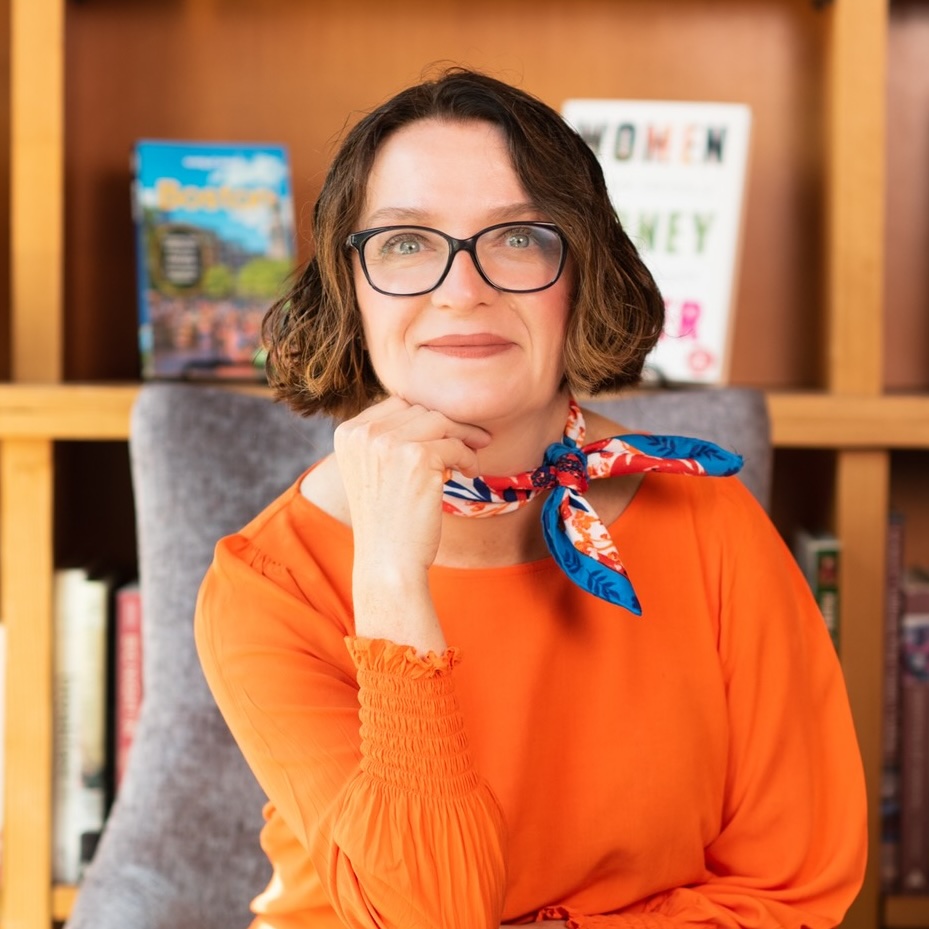
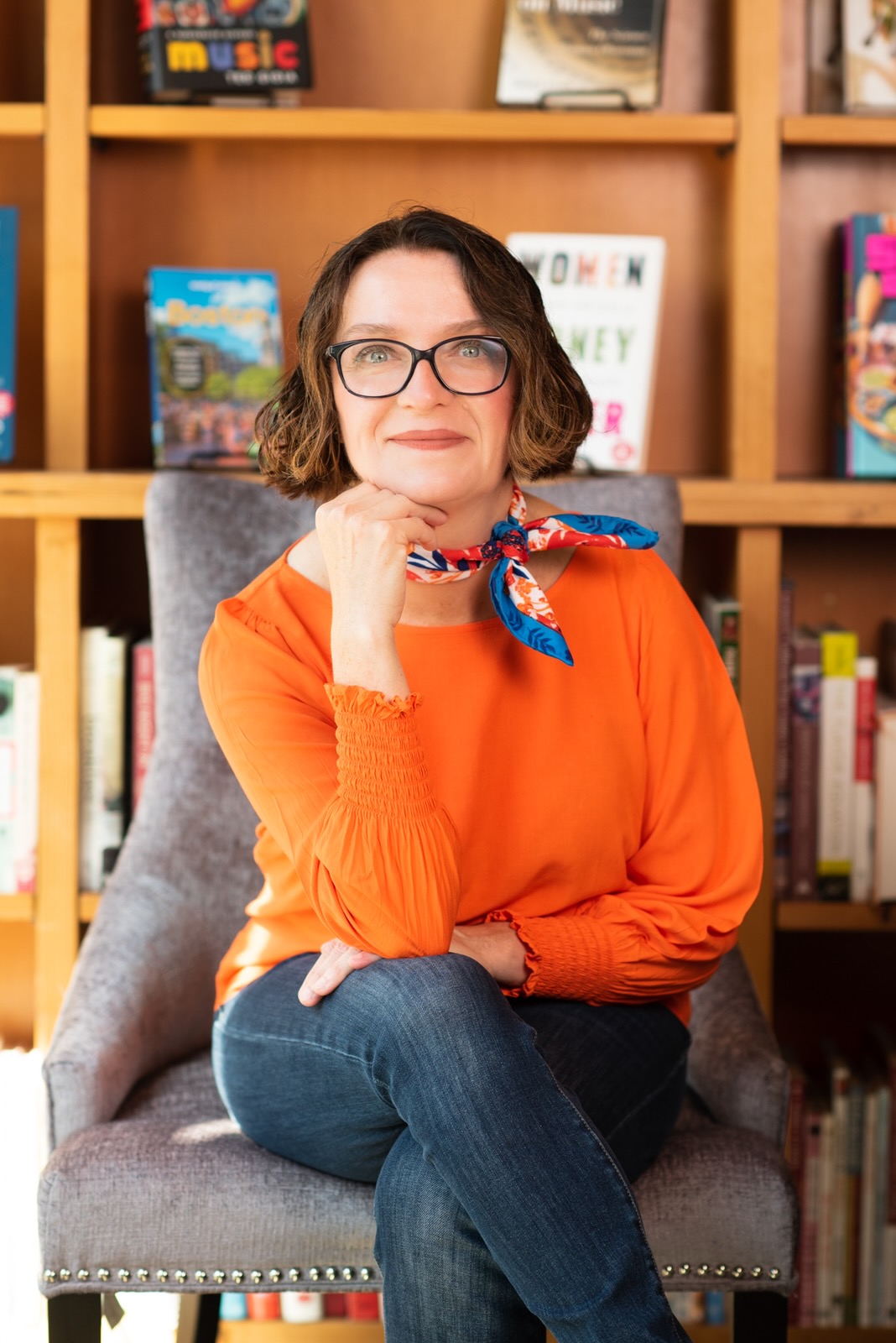
In this week’s conversation, I’m talking with my good friend Katie DeBonville. Katie is an emerging author whose new book, Grace Notes, explores the intersection of music, memory, and the courage it takes to speak your mind.
Katie shares the story of her legendary stand-off with a high school guidance counselor, her journey from wanting to be first-chair flute in the Boston Symphony to earning a writing degree at 50, and why she believes success is not a zero-sum game. We also examine the “audacity” required to follow a creative calling and why your creative spark never truly disappears—it just waits for you to give it permission to play.
I’m Nancy Norbeck, and I’m your Messy Muse Mentor. I help people feel alive again through creativity, curiosity, and play.
In this episode, we discuss:
- The Practicality Trap: Why creative careers are often discouraged and how to push back against the “shoulds.”
- The “Emerging” Author: The reality of starting a new creative chapter at 53.
- Finding Your Story: How the right mentors can help you see the patterns in your own life that you’ve been missing.
- Creative Community: Why having each other’s backs is the only way to beat the “plotter vs. pantser” politics.
Ready to send your inner critic to summer camp for an hour? We get together once a month for a relaxed, low-pressure session where you can work on whatever you want—without any pressure to do it “right.” Join the Creativity Circle.
Episode breakdown:
0:00 Introduction
1:05 Meeting Katie DeBonville: The “emerging author” at 53
2:53 The blank book obsession and the fear of the first page
3:51 The First Chair Dream: Ambition vs. Reality in the Boston Symphony
8:58 The Guidance Counselor Story: Fighting for a creative life
12:31 Why encouragement changes the data on creative success
17:07 Sibylline Press: Giving a voice to women over 50
22:40 The audacity of speaking your mind (and the Communion story)
30:57 Doing an MFA during the pandemic: The right time to commit
42:26 Finding Your Story: Lessons from three legendary mentors
50:24 Flash Fiction and the beauty of the 70-word piece
56:15 Plotters vs. Pantsers: Why there is no “correct” way to write
Show Links: Katie DeBonville
Katie’s Facebook
Subscribe!
You can subscribe to Follow Your Curiosity via the handy links at the top of the page for Apple Podcasts, Spotify, iHeart Radio, TuneIn, and YouTube. If you enjoyed the episode, don’t forget to tell your friends!

Transcript: Katie DeBonville
Please note: This is an unedited transcript, provided as a courtesy, and reflects the actual conversation as closely as possible. Please forgive any typographical or grammatical errors.
Nancy Norbeck [00:00:06]:
Welcome to Follow Your Curiosity. Ordinary people, extraordinary creativity. Here’s how to get unstuck. I’m your host, creativity coach, Nancy Norbeck. Let’s go. Welcome to the very first live episode of the Follow Your Curiosity podcast. This is gonna be an adventure. My power went out for about fifteen minutes just a little while ago.
Nancy Norbeck [00:00:31]:
It’s only been back for twenty minutes, so we are holding holding out hope and crossing our fingers that it stays on. And, so this this could be this could be an adventure. Any anything is possible here. Anything could happen. And, I’m just glad that I am here today with my good friend, Katie DeBonville, whose book just came out yesterday. It’s called Grace Notes. And I’m going to let Katie introduce herself because this is live, so I can’t tell you what we’re gonna talk about because we don’t know yet. So, Katie, go ahead.
Katie DeBonville [00:01:05]:
Sure. Well, Nancy and I go way back to our college days. So this has been a, you know, as as, like, so many people, we’ve reconnected over the interwebs. And so this is just kind of another extension of that reconnecting, which is really fun. And I think, you know, we we’ve both ended up going the pathways of of writing books and, ending up in creative fields. I have actually worked in fundraising for arts organizations for the last thirty years. But during the pandemic, I decided to get a master’s in creative writing, which, was just connected me with the writing community that I needed, gave me the gave me the mentorship that I was looking for, gave me the accountability that I was looking for, and I graduated from that in January 2023, with a thesis, that was a collection of 13 essays. And that collection of 13 essays has morphed into grace notes, which as Nancy said came out yesterday.
Katie DeBonville [00:02:08]:
And, I’ve just got a copy of it here because, you know, shameless plug. And that’s where I am. I am, you know, I’m I’m at the at at 53, I’m at the emerging author stage of my life.
Nancy Norbeck [00:02:21]:
Yeah. It’s funny when when these things happen later on. Right?
Katie DeBonville [00:02:26]:
That’s like, if somebody is 53, then I’d be emerging from anything other than, like, other than my bed. I’m not sure I would have believed it, but there you go.
Nancy Norbeck [00:02:36]:
So I was just thinking, mostly what I’m emerging from these days is a pile of blankets. So so I start everybody with the same question to try to try to maintain some sense of consistency here with this live thing, which is, were you a creative kid or did you discover your creative side later on?
Katie DeBonville [00:02:53]:
I was a creative kid. I was, I remember my dad coming home from a business trip somewhere, and I’m sure he’d picked up this gift in in what then probably would have been a Waldenbooks or something like that. What whatever bookstore happened to be at the airport at, you know, in the late seventies. But he came home with a blank book for me, and that began a long and obsessive relationship with blank books. You know, about about three years ago, I finished my first blank book, I think, because I would always get to the point where, yeah, I’d be writing and then I’d stop and suddenly feel like that that book was no longer good enough, and I needed to start over with a new book. So when I finally finished a blank book a few years ago, it was like this momentous occasion. It’s it’s been eight years, but it’s done. So that my my creativity started out with writing.
Katie DeBonville [00:03:51]:
And then at 10, I started playing the flute. And that yeah. I went from wanting to be a writer when I grew up to wanting to be first chair flute of the Boston Symphony Orchestra, not just a flute player, but first chair flute of the Boston Symphony Orchestra. I had no idea at 10 how unrealistic a dream that was, which was probably a good thing because, man, I practiced for a long time. And I went through, you know, majored in music in college, kept up with the creative writing, not so much in the in the you know, I’d always tried my hand at short stories, and I had a problem with plot, which probably why I do nonfiction now. But I I took a few creative writing classes in college, and all the while kept up you know, music was really my focus. And then when I I got a master’s in music history and started working in development for arts organizations and kinda figured that was how I was supposed to be involved in the arts. And, and it’s been good.
Katie DeBonville [00:04:50]:
I’ve really enjoyed it, but, you know, it was I always writing was always something that I was doing at some point. You know? Every New Year’s, I would make the res resolution to do more writing, and that would last for about six weeks, and then it would stop until I started the master’s program. And that that was I think it was a combination of having the structure of the MFA program, but it was also the fact that, yeah, that there was that was the stage of my life when I was ready to commit to writing. So here we are three years later.
Nancy Norbeck [00:05:23]:
Here we are. Yeah. Well, this is so interesting to me because I’ve known you, like, basically forever. But I was so surprised when you told me that you were gonna go get a writing degree because I’ve always associated with you with music. So I haven’t known you quite forever because I didn’t know about the writing part when you were a kid. And so when the when the writing popped up, I was like, woah. Where’s where’s this coming from? I mean, it was cool, but I was like, that came out of nowhere, but it clearly did not come out of nowhere at all.
Katie DeBonville [00:05:52]:
No. I, yeah, I was a still am, but I was an ardent reader as a kid. And, you know, to this day, I I hold Judy Blume responsible for my love of books and, you know, Margaret Simon. If there’s one character that I could bring to life and be friends with, it would be Margaret Simon from, are you there? God is me, Margaret. You know, she’s just like, she’s she’s the best friend I always wanted to have because she was, you know, she was insecure and she was cool and she had questions and she I don’t think the the cool thing about Margaret was that she didn’t know how cool she was. And I I loved that about her. But, you know, the the other writers I loved as a kid, you know, Beverly Cleary, I I thought I still think Ramona the past Ramona Quimby is one of the greatest characters ever created. Yeah.
Katie DeBonville [00:06:42]:
She’s honest, and she’s flawed, and she’s, you know, she’s not a perfect kid. She screws things up and, you know, to, like, ridiculous levels of screw up. But she always merges, you know, emerges with a smile. And, you know, those those are the characters I loved growing up, and those were the char those were the kind of characters I wanted to write, until I realized that I wasn’t good at writing characters. And then I realized once I got into once once I got into writing nonfiction, I realized, oh, I am good at writing characters. They’re just characters I know already.
Nancy Norbeck [00:07:16]:
Yeah. Yeah. Well and that’s the funny thing too. Right? Like, I think we we get these ideas about what writing should be, but there are so many different ways to write, so many different angles and so many different forms of writing. I don’t think I even ever heard of creative nonfiction until I started my MFA, and I was like, wait. Wait. Wait. What is what is that? How do you get to be creative with actual facts? Like, it did not compute for me at all when I first heard that, and in some ways, I’m still not quite sure because I haven’t explored it.
Nancy Norbeck [00:07:52]:
It’s not that it doesn’t make sense, you know, across the board. It’s it’s me. But, you know, I was like, wait, How how does how does that work? You know? But, like and memoir has a lot in common with fiction even though it’s a true story. You know, you can still use lots of of the same approaches that fiction takes to write a memoir. It’s it’s just that you’re dealing with actual actual facts and actual people as you tell the story. But there’s so many different ways to write that we don’t recognize in a lot of in a lot of different times and places in our lives. Just like there are so many different ways to be creative that we don’t necessarily recognize. You know, I was just just recording a video yesterday.
Nancy Norbeck [00:08:36]:
I was talking about, you know, the the people who think that they’re not creative because they think that creativity is just painting on a canvas. Right.
Katie DeBonville [00:08:44]:
And
Nancy Norbeck [00:08:44]:
it’s like, no. No. Creativity is this huge enormous thing and it’s everybody, but we define it so narrowly that we think it’s not for us. And and that sounds like, you know, what what you almost fell into with writing.
Katie DeBonville [00:08:58]:
Well, I think so many of us around our age, you know, creativity was a great thing to have, but not necessarily a great thing to pursue because it wasn’t practical. You know, and I actually one of one of the essays in my book deals with this. It’s called, Whatever You Want to Be. And it’s about an actual experience I had with a high school guidance counselor. You know? I was the smart kid. I was on track to be valedictorian. I wasn’t taking AP Physics because it met at the same time as music theory. You know, how how dare I, you know, forego AP physics, which I had less than no interest in for music theory, which I knew I needed to have because I wanted to major in music.
Katie DeBonville [00:09:42]:
The crux of this conversation with my guidance counselor was, you know, I I went in for my my college consult with her, and I was luckier than most kids. I had a father who was a college administrator, so he he knew what I needed to do and, you know, what what kind of stuff. You know? Yeah. It was great that I was gonna be valedictorian, but at the end of the day, that’s that’s just a placement in a word. It’s it doesn’t really say who you are. And, so I’m sitting in in the guidance counselor’s office, and she says to me, you know, the conversation is, by my accounts, not going well, because first of all, they’ve taken me out of band to have this conversation because band is expendable. You can, you can miss a half an hour of band, but you can’t miss a half an hour of math. So I’m sitting there with her and she finally says, you could be anything you want to be.
Katie DeBonville [00:10:32]:
Why are you gonna major in music? And there we go. And I I picked my bag up off the floor and, you know, slammed my backpack over my shoulder and grabbed my flute and prepared to walk out of her office. And I’m getting ready to walk out of her office, which is not something that potential valedictorians do too often. And I said to her, you know, the answer to what you just asked me is in the question you asked, and when you figure it out, call me back, and then we’ll talk. And I walked out of her office. And then I walked down the hall instead of going to band, because by this point, there were only ten minutes left in band. So I walked down the hall to the phone bank, and I called my dad at work. And once I assured him that I was fine and everything was okay, he was like you know, he wanted to know why I was calling him in the middle of the day from school.
Katie DeBonville [00:11:17]:
And I said to him, I think I just mouthed off to my guidance counselor. And he asked me what I’d said, and I told him. And when I was yeah. Don’t worry about it. Got you back on this one. And it’s only in it’s only in writing this essay, which was part of my thesis, so this is an essay that I wrote probably three or four years ago. In writing it, I realized, you know, how many kids out there didn’t stand up to a guidance counselor who discouraged them from, you know, a a creative career? How many how many artists or writers or actors have been lost because somebody told them it’s great that you do that, but it’s not practical?
Nancy Norbeck [00:12:01]:
Yeah. Yeah. And and I love that you said the answer is in the question. Yeah. Because I was just thinking, did you hear the word
Katie DeBonville [00:12:10]:
anything Yeah. When you said it? You said you could be anything. Well, not only that, anything you want to be. Right. Right. Right. And yet the fact that I wanted to be a musician appeared to mean nothing to her.
Nancy Norbeck [00:12:26]:
Right. Right. Because musician doesn’t count. She’s automatically filtering out musician.
Katie DeBonville [00:12:31]:
Exactly.
Nancy Norbeck [00:12:31]:
That that doesn’t mean anything. Anything you want as long as it’s on my list of things that you should want.
Katie DeBonville [00:12:37]:
Prescribed activities that that you should want. Yeah.
Nancy Norbeck [00:12:39]:
And and it, you know, it’s amazing to me because, you know, I’ve done basically eight years worth of interviews for this show now. And in that time, I’ve asked this question of almost everybody. And the pattern that has become clear, I mean, obviously this is not a scientific study, so I can’t like crunch actual data. But the pattern that has become clear is that the people who were encouraged have had so much of an easier time pursuing the thing that they were interested in than the people who weren’t. And that doesn’t mean that they were, you know, loaded up with false hope. It means that their parents or their teachers or whoever said, yeah, you’re good at this. You know, you should keep drawing. You should keep writing.
Nancy Norbeck [00:13:28]:
You should keep playing the the flute or the violin or or whatever their thing is. And what that does is that it it doesn’t put those mental and emotional barriers in front of them that they have to work through to to do the thing that they love, whether they do it professionally or just because they love it on top of the practical thing. And just makes their lives so much easier, and they have so much more confidence wherever they end up. And yet people are still telling their kids, no, no, no, you can’t do that. And I’m like, you are hurting your kid. Yeah. In in such a huge way. But again, I don’t have you know, I can’t present it to them with statistics and charts because it’s not a scientific thing, but the the pattern is really, really clear.
Katie DeBonville [00:14:16]:
Yeah. Yeah. It’s interesting. You know, I I, I feel really lucky, yeah, again, that that I had parents who encouraged me to do what I wanted to do and that that I did have a parent who was a college administrator who knew, you know, yeah, you’re gonna go to school and you’re gonna major in something, and you’ll probably end up doing something that will not be exactly what you planned to do, but will have something to do with what you studied, but maybe it won’t, and that’s fine too. You know, he his his whole attitude was that what was important was the four year college experience. And I looked at you know, it’s interesting. So after after Bucknell, I went to, a conservatory and got a master’s in in, music musicology. And it was at the conservatory that I kinda realized, you know, I saw all these kids.
Katie DeBonville [00:15:11]:
I I was there as a grad student. Most of my fellow grad students had done what I’d done and done the the really good music program in a liberal arts college as opposed to the conservatory. But the undergrads, you know, we’d look at them and we’d be like, these kids are just studying music. What what are they gonna do? Do they have a backup plan? Because in music, you do need a backup plan. I mean, unless you’re unless you’re Yo Yo Ma or Yuja Wang, and most most young musicians aren’t, you’ve you’ve gotta have something that you can fall back on. And conservatories have gotten better at at making sure their students are well rounded, but when I was there from, like, 1995 to ’97, you know, it the attitude was you’re talented and you’ll find something. Now when I went back to the this was at New England Conservatory, but I’m not I’m not prescribing this attitude to just New England Conservatory. I think it was pervasive of conservatories in general.
Katie DeBonville [00:16:08]:
Now years later, when I worked in fundraising at New England conservatory, there had been a mind shift to you’re talented. So is everybody else. What are you gonna do to set yourself apart? And I think that’s a much healthier attitude.
Nancy Norbeck [00:16:23]:
Yeah. Yeah. I mean, that’s, that’s healthier for everybody,
Katie DeBonville [00:16:28]:
healthier for everybody,
Nancy Norbeck [00:16:29]:
honestly, no matter what field you’re in, you know, I mean, even, even if you are a fundraiser, what how are you different from every other fundraiser, which could be a more difficult question to answer. But still, you know, knowing how you’re different and what you think about differently than somebody else regardless of what field you’re in Yeah. Can be really, really valuable and a great selling point even though most of us do not wanna have to think of whatever we’re doing in life as something we have to sell to people. The fact is we kinda do. We do. I mean, I’m I’m learning that now with the book. You know,
Katie DeBonville [00:17:07]:
I put post it I so on on Substack, I I’ve done a countdown. I did a countdown for, like, I think it was a hundred days into the book from a hundred days out from when the book was published to yesterday. And today I’ll be starting a new countdown because my launch is in twelve days. So I’m buying myself some time in countdown, but it really yes. I’m counting down and I’m talking I’ve I’ve talked about the whole experience of leading up to being published. But that’s also a way to kind of premarket what I’m doing as well because, you know, I’m I I have a great publisher. Sibleen Sibleen Press is amazing, and they they focus on, well, they don’t focus on. They publish works by women 50 and up.
Katie DeBonville [00:17:51]:
So it’s, you know, the the woman who founded the company saw that, you know, hey. There’s a group of writers out there who aren’t being heard because they’re not the next, you know, they’re they’re not the next young thing.
Nancy Norbeck [00:18:04]:
Mhmm.
Katie DeBonville [00:18:05]:
And it’s what Sibylline has done is put out put out there that you don’t have to be the next young thing. You just have to be the next thing with something to say. And part of the process, though, is that I I’ve done a lot of my own marketing, and it’s been yeah. I think, you know, women in our fifties, we’ve been we’ve been taught that we could be whatever we want to be. And I think the lesson that the lesson that we weren’t taught would be that if what we want to be isn’t necessarily on a prescribed path, We have to kind of lobby for it more. And I’m finding that as I get the book out there that, you know, as fighting to be, fighting with the guidance counselor to major in music when I was 17 was just my first kind of lobbying for what I really wanted to get out there.
Nancy Norbeck [00:19:08]:
Yeah. It does make sense. And I think, you know, those those moments, I mean, I’m sitting here going, man, I I wish I had had the guts to do that when I was 17. You know? Because I think when you do that
Katie DeBonville [00:19:21]:
Or, you know, share, I’m not gonna listen to you. La la la.
Nancy Norbeck [00:19:25]:
Yeah. Yeah. But I don’t know that that I would have had the courage to do that at that age because I was so busy. I did not have somebody who had my back that way. You know, I was being told you can’t put that you wanna be a writer on your application to Bucknell. If you wanna write, you have to say that you wanna be a journalist or that you wanna be a lawyer. And I’m like, well, the lawyer is not a writer, but that you know? But but lawyer is right.
Katie DeBonville [00:19:49]:
Right? Poetry, which is, you know, one of the preeminent poetry centers in the country. But how many students at Bucknell actually know that it’s there?
Nancy Norbeck [00:19:59]:
Probably not anywhere near enough. Right? But, but, yeah, I mean, that was that was the message I was getting Yeah. Was, you know, well, you can write as an avocation, you know, or my brother was told he could do music as an avocation, but that both of us had to come up with with the practical thing. But, you know, I couldn’t even put it on my application. Yeah. And and, I mean, in my case, the whole reason I was applying to that school was so that I could go sing in the choir. You know, I wasn’t I wasn’t picking the school because, oh, they have a great English lit program. No.
Nancy Norbeck [00:20:37]:
No. And when I was teaching, my kids would come in when they were doing their college application stuff. They’re like, how how many schools did you apply to, miss Norbeck? And I was like, yeah. This is the conversation the people in the guidance scouts thought. They don’t want me to have this conversation with you. And I would tell them, and I would be like, do do not tell them that I told you this because I applied to one. Yeah. And I was very lucky.
Nancy Norbeck [00:21:02]:
And I was I mean, it helped that my dad went there and all of that. But, I mean, I got in early decision, and, boy, when that envelope showed up that day, I realized that I had put literally every egg possible into a single basket and that if nothing hatched, I was in deep trouble. But, you know, and then the same thing when I went up there and auditioned for the choir and I was like, if I don’t get in, I don’t know what I’m gonna do. Because I applied to this school for all the wrong reasons. Right. But I got in, and it was okay. But, you know, the the English degree was just sort of like this afterthought. Yeah.
Nancy Norbeck [00:21:39]:
You know, which is why it’s still weird to me that I never majored in music. I’m still not sure why I didn’t accept that I didn’t have, like, the technical background. But well and also, I think it was because I was told that wasn’t a thing you do, and I’m not sure that I mean, even if I double majored, I’m not I’m not sure that that would have flown at home. So so I just kinda didn’t go anywhere near that. I could do choir for credit as a side thing, and that was okay. But, yeah, you know, I was I was getting those messages at home, so nobody was gonna back me up if I went into my guidance office and said, go pound sand, basically. That was that was not gonna be okay. And I think when you have that experience where you’ve gone in and said that when you’re 17 or 18 or however old you were, I think you’re in a much stronger state of mind than you are, you know, when you haven’t even decades later because it doesn’t occur to you that that’s even an option.
Nancy Norbeck [00:22:40]:
Yeah. So so you were you were in a much more powerful spot way sooner, which is awesome.
Katie DeBonville [00:22:47]:
I was lucky. And I looked back on it, and I realized that, you know, yeah, there was a certain audacity to that. But at the same time, you know, what what you describe as courage, it was just like it was just what I did. I mean, I was I was taught to speak my mind for better or for worse, and that that came back to bite both my parents of indications. But, yeah, I can remember one instance where, yeah, my dad was also an Episcopal minister and there was one Sunday when I decided I wasn’t going to take communion anymore. And I didn’t we didn’t have any discussion about this beforehand because I knew if there was discussion, it would not have gone in my favor. Whereas I knew that if I just didn’t go up for communion in church, there would be nothing anyone could do about it because my dad was up on the altar and my mom was sitting next to me and, you know, for her to say anything at that moment would have been creating a scene, and that was something we did not do. So I just didn’t go up for communion.
Katie DeBonville [00:23:55]:
And we get in the car to go home, and my dad’s driving, and he says, so what up? Not exactly what he said, but, you know, the gist of it. And I said, I wasn’t sure that I believed in I wasn’t sure what I believed. And as I understood it, communion was a sacrament that was something very important to people who did believe it. And, therefore, if I were to take and not sure that I believe in not sure that I believed in it, wasn’t I in some way diminishing it for those who did? And I could sort of see, you know, again, hindsight. Can sort of see my dad in the front seat of the car. On the one hand, he’s like, you know, she’s my daughter. She has to take me in. Yeah.
Katie DeBonville [00:24:38]:
I’m the minister. But on the other hand, he was like, damn. That is a well founded argument. The reason she’s capable of that well founded argument is because her mother and I taught her to develop well founded arguments. So damned if you do, damned if you don’t.
Nancy Norbeck [00:24:54]:
Yeah. Yeah. Yeah. Kinda kinda brought that one on yourself there, dad.
Katie DeBonville [00:25:01]:
Yeah. The perils of raising a smart ass kid.
Nancy Norbeck [00:25:05]:
Yeah. Yeah. I mean, I I suspect that that he was proud of you at the same time. Right? Because that’s what he wanted you to be able to do. Yeah. But but yeah. No. That’s that’s kind of a great moment.
Katie DeBonville [00:25:20]:
I’m still I you know, I mean, I’ve had a lot of wonderful moments in my fifty three years, but that was that was kind of a good one. Yeah. You know?
Nancy Norbeck [00:25:29]:
Yeah. Because I think I mean, it is a good point.
Katie DeBonville [00:25:31]:
It is.
Nancy Norbeck [00:25:33]:
Yeah. Yeah. So so when did you decide that that you wanted to get back to writing as a serious thing after spending all of your time in more musical circles?
Katie DeBonville [00:25:43]:
I toyed with the idea for a long time. And, yeah, I live in Boston and just across the river at Leslie College was this great, low residency program in creative writing. I say was because Leslie has recently killed it, and I am not happy with it. And that’s a topic for another time and place. But if anybody from Lesley is happens to be watching this, then I want them to know that they have put the kibosh on what was an incredible jewel for a lot of people.
Nancy Norbeck [00:26:12]:
Well, you know, Goddard College is gone. So that MFA program, which was low res, is gone too.
Katie DeBonville [00:26:18]:
Yeah. Well, one of the faculty members at Lesley had also been on the faculty at Goddard, and she’s just, you know, she’s now weathered her her second
Nancy Norbeck [00:26:26]:
Yeah.
Katie DeBonville [00:26:27]:
Second. I’m I’m reluctant to call it a failed program because the program didn’t fail. It was failed. Mhmm. But, anyway, oh, I just got a text saying my uncle’s watching me. So, where was I going there? So, yeah, I I had toyed with the idea of this low residency program because, Leslie’s program was created as a low residency program. So it was ten days on campus in January, ten days on campus in June, and then everything else was back and forth by with a mentor. And it had been that way for twenty five years.
Katie DeBonville [00:27:01]:
And I’d thought about it, and it was always, you know, oh, I’d love to do that, but I don’t have time. Oh, I’d love to do that, but I’m just too busy. And then the pandemic hit. And suddenly I had time and I wasn’t too busy. And I said to a friend of mine, I think I’m gonna apply to Leslie’s program in in creative nonfiction. And his response, he didn’t miss a beat. He just said, I’ve been waiting for you to make that decision. And I was like, well, why didn’t you say anything? Because you had to figure it out for yourself.
Katie DeBonville [00:27:31]:
And, he was right. He was exactly right. So I I applied and I got in, and they even gave me a little bit of money, and that set me on on the path to really you know, it was a it was a small cohort. I think my cohort graduated with probably 16 people. There were four four of us in creative nonfiction. There were a number in writing for young people. There were two in writing for stage and screen, and there were a number in nonfiction I mean, in, fiction. But we were all we were a fairly close knit group, and we ranged in age from, like, 26 to 70.
Katie DeBonville [00:28:07]:
But the one thing we had in common was that we were all at the point in our lives where we were ready to sit down and focus on writing. And there was, it was an incredibly supportive program. Yeah. I think somebody said I I I can’t remember which of the faculty members said this, but early on, somebody made the point of telling us all, you know, you’re gonna publish at different times. Some of you will publish before you get out of this program. Some of you will will get your play staged, you know, years from now. Some of you may never publish, but that’s okay. What’s important is that you’re here, and you shouldn’t you shouldn’t ever feel less than or you shouldn’t begrudge one of your classmates their success because they’re writing what they need to be writing and you’re writing what you need to be writing, and nobody else can write what what you can write.
Katie DeBonville [00:29:06]:
So it’s so, basically, somebody else’s success. It’s not a zero sum game. Somebody else’s success Yeah. And I have since learned that not all creative writing programs are that supportive. And I so I I feel really lucky that literally three miles down the road from me, I had a program that was just an incredible oasis of really talented faculty members, you know, people who have won prizes. One of the faculty members, in writing for young people, you know, Jason Reynolds, he is like this this young generation’s equivalent of, you know, Judy Blume or Beverly Cleary and that he’s, you know, he’s he’s the guy who’s writing what kids are reading now. And he’s, and while I didn’t study with him as a mentor because he was writing for young people, the program was geared in such a way that you would, you would have at least one seminar with every faculty member over your four semesters there. So I got to work with people who are in fiction.
Katie DeBonville [00:30:10]:
I got to work with people, you know, my mentors were all in in nonfiction, But, for three semesters, you’re required to take a or you were required to take an interdisciplinary program. So I did a program on ten minute playwriting, discovered I’m not a playwright. That’s the whole. If I am ever gonna be a playwright, it’ll be a test play because, again, plot. But, I took a flash fiction, class and loved it. I took a class on creativity and found that, you know, got so much out of that. So it it was just it was the right time for me to do it. And it was, you know, the circumstances I mean, yes, it was a pandemic, but circumstances were such that it was right to do it.
Katie DeBonville [00:30:55]:
And I’m so glad I did.
Nancy Norbeck [00:30:57]:
Yeah. I I have to say, I I’m glad that there are or were other programs like Goddard out there because when I I had never seriously thought about doing an MFA program. My my brother I wanna say he pushed me into it, and that’s somewhat true. It’s not it’s not strictly true. It’s not as as violent as it sounds. But he went and he did a master’s in architecture, and he’s he’s the kind of guy, he goes and he does something and he gets so excited about it that he decides everybody should go and do the thing. Right? And and actually, in a way, I can see where I’m sort of like that too. But, you know, he he was in Philly.
Nancy Norbeck [00:31:35]:
I went out and I met him for dinner one night and he was like, this is so great. You need to go to grad school. It’s the best thing ever, you know, and I was like, what what would I go to grad school for? Like, I had a degree in English lit. I had no interest in going back and doing a master’s degree in English lit because from where I sat, it was a whole lot of let’s pull out a bunch of things and make things up about them that, you know, to me, a lot of it just felt like we’re making up stuff about this that we can make up with impunity because nobody can really say that it’s necessarily wrong, and I know that that’s really reductive and that there were people who do serious work in all of these things. But to me as an undergrad, it really felt like I can bullshit my way through this and get a decent grade, and nobody is gonna tell me, you know, that I’m wrong because you kinda can’t with any great, you know, justification. There is an x k d a x k c d comic about this that is my favorite of all time for this reason. It’s called imposter, and it’s somebody who goes through and is, like, you know, making stuff up in three different fields. And one is engineering and one is, you know, science or something.
Nancy Norbeck [00:32:41]:
And then the third one is lit, and it’s like, I’ve been going for months and nobody’s figured this out yet that I’m faking it. And I’m like, yeah. That was my experience. And I just had no desire to do that at a higher level for a couple more years to get a graduate degree. Like, that just didn’t sit right with me. And I said the only thing that I would even think about doing is creative writing, but a lot of those programs are so cutthroat. And I’m just not interested in putting myself out there to be chopped to smithereens in a workshop every week. I mean, that’s not healthy for anybody.
Nancy Norbeck [00:33:15]:
And I had even, at some point, a couple of years before that, read an article that said so many creative writing programs are turning out writers who are writing exactly the same thing because they’re being chopped to smithereens every week. And and as a result, everything has the same style, and they just all sound the same. And you can tell what’s come out of a creative writing program because it’s all turning into this cookie cutter stuff. I was like, what’s the point of that? And so when I finally decided to do it, you know, it’s like, I’m not doing this at the places that are like that, though there’s not necessarily a really good way to filter out, you know, which which schools are are set up this way. And I applied to three schools. I only got into Goddard, and I am still convinced that somebody, somewhere, somehow was looking out for me because Goddard was not like that. And it was it was so supportive. It was so I mean, part of it is the low res model, I think.
Nancy Norbeck [00:34:18]:
It’s harder to be that way in a low res model when we were only on campus for eight or nine days, I think. But, you know, you had your advising group in the morning, couple days out of that week, maybe five or six. It wasn’t the whole week. And so it was only for an hour. You couldn’t slice and dice each other in that amount of time. And really, we were all working together and having each other’s backs. And so it just did not happen there. And I was so grateful for that.
Nancy Norbeck [00:34:49]:
And it, you know, I mean, we still critiqued each other’s stuff, but we did it in a really constructive way. And it made me a better writer, but it also really made me appreciate that kind of approach. And I’m and I’m glad that it exists in other places, hopefully, even without Leslie’s program, because I think that’s important. I think I really think creative folks need to have each other’s backs. I just was on TikTok and YouTube last week ranting a little bit about the way that in fiction writing circles, plotters tend to go after people who write by the seat of their pants and say, you know, that’s not really writing and you can’t really write a book that way. And somebody somebody replied to one of the videos that I put up saying that she had seen a comment just a couple days before that pantsers were writers who had not yet matured in their process.
Katie DeBonville [00:35:42]:
And I
Nancy Norbeck [00:35:42]:
was like, really? Would you like to have that conversation with Stephen King or Margaret Atwood or the ghost of Mark Twain or James Joyce, all of whom wrote by the seat of their pants? Like, seriously. Seriously. Are you trying to tell me that these people were not mature writers? Because if you can write The Handmaid’s Tale without plotting it out first, I think you’re a pretty mature writer. So how about we don’t do this to each other? And I think, you know, we need to have each other’s backs instead of having these bizarre little political fights with each other that serve no purpose except to bolster somebody’s ego because they’re the ones who feel insecure about their writing process. And so, you know, we need these supportive environments for our writing. We need not to be cutting each other down and the same in other fields too, you know, visual arts and drama and all of that. We, we need to have each other’s backs and not be tearing each other apart all the time.
Katie DeBonville [00:36:40]:
Great. And I look at the writers who are out there who are actively supporting other writers. You know, David Sedaris comes to mind. He’s a favorite of mine. I’ve seen him read or send so many times. And every time he has had an emerging writer open for him, or if not an emerging writer, a writer with with less experience than he has. And that’s just I mean, that’s really generous to give up part of his time on stage so that somebody who wouldn’t get that time on stage on their own yet can get out there and get their works heard by a sophisticated audience that sold out Symphony Hall in Boston. On the on the music side, I would I would like an this may be the only time we ever hear David Sedaris and Yo Yo Ma compared to each other.
Katie DeBonville [00:37:33]:
So let me be that person. Yo Yo Ma does the same thing musically. You know, he finds he finds young and interesting young, you know, ensembles that are just coming out and are doing great things, but, you know, can’t get a gig because you need a gig to get a gig. And if you haven’t, you know, it’s it’s this circle. And so Yo Yo will say, you know, come tour with me and, you know, be my, essentially, opening act. And suddenly, the Silk Road ensemble is is a thing now because Yo Yo Ma introduced it to the classical world. The goat goat rodeo sessions with, mandolin player, Chris Teal, you know, that they’ve been championed by Yo Yo Ma. So he doesn’t just he doesn’t just champion classical music.
Katie DeBonville [00:38:20]:
He finds, like, he’s he’s enough of an artist that he can spot the next great thing. And he knows, you know, that’s gonna be great, but they’re not they’re not gonna go anywhere without an audience. So I’m gonna give them their first audience. And I think artists, you know, whether they’re musicians or visual artists or writers, artists who share the stage with the next generation of artists, I mean, yeah. Those those Yeah. Those people are godlike.
Nancy Norbeck [00:38:51]:
Yeah. Yeah. Well, and it’s it’s about community. Right? I mean, the arts were always about community and and always should be. And the idea that, you know, as, as it happens with so many other things, you know, when, when artists become big and famous and prominent and, and we start to worship anybody of any field and any, any rank, bad things happen, and it happens in the arts too. And if you you inflate somebody to the point where their ego is the biggest thing that’s allowed to be in the room, then, you know, that’s that’s not community building. That’s ego building, and good things don’t tend to come out of that. Whereas if you sit there and you say, hey.
Nancy Norbeck [00:39:32]:
Yeah. Look. You’re doing a cool thing. I like that. What can we do to help you do that thing better? Good things are gonna come back to you too because that’s how community works and people like that stuff. And there’s there’s really no downside to that. Yep. And yet we forget that so easily in our modern era, and I think that’s a shame.
Katie DeBonville [00:39:53]:
Yep. I agree. Yeah.
Nancy Norbeck [00:39:56]:
Yeah. So I know. I know. So you you did this degree, and you I I mean, I remember I remember you had your virtual reading because it was it was 2023, so things were open. But Yep. But, of course, I was in New Jersey, so it was not exactly next door to come to your to your reading. But I do remember watching from afar, which was cool.
Katie DeBonville [00:40:22]:
Oh, wow. Cool.
Nancy Norbeck [00:40:23]:
Yeah.
Katie DeBonville [00:40:25]:
I did. And in fact, the piece I read, is the piece that gave its title to my book. So the the piece I read was, you know, a short essay called grace notes. And, and that’s you know, when I was asked when I was looking for a title for the book, I was like, you know what? That’s the one.
Nancy Norbeck [00:40:44]:
Yeah. So so even even with, you know, the the writing degree, the music is still there.
Katie DeBonville [00:40:52]:
You know, the writing, I don’t think, would be there without the music. I needed to go through the whole music process, to get fodder for writing. But, you know, it’s it’s so the one thing for for those of you that haven’t read my book yet, the one thing music is the through line. They are you know, it is a memoir. It is definitely about, you know, how I got to where I am today, although it is certainly not a chronological story. But music is the through line, and there is there is something about music in each essay, whether, you know, in some cases, it’s an essay entirely about music. In some cases, it’s an essay that maybe mentions a song, but music music is the common the common thread. And I didn’t set out to do that.
Katie DeBonville [00:41:42]:
Like I said, of, there are 13 essays in the book. 10 of them were actually part of my thesis, and three of them were written since graduating from the program. But but there’s been revisions to all of them in along the way. So it’s it’s not like I I plunked over my thesis and said, please make this a book. You know, I I plunked over my thesis and they came back with, we think these 10 will work and we think these three won’t. And do you have three other pieces that you could include, or would you be willing to write three more? And I was like, hell yes. Because when a publisher is asking you if you’re willing to do something to get your book published, you say yes. And so I, I’m I’m not sure where I was going with this.
Katie DeBonville [00:42:26]:
Yeah. What it came down to is that I didn’t set out to write a book with music as the through line, but that was what developed. And once it developed yeah. I remember working with my yeah. I I had three great mentors when I were when I was in the the program at Lesley, and it was funny. So the way the Lesley program worked was, you got to choose you you got to suggest which mentor you’d like to work with at any given point. And sometimes you got that mentor at that point and sometimes you didn’t till later. So when I started at Lesley, I had asked for, an an author named Pam Petro to be my my mentor.
Katie DeBonville [00:43:05]:
Pam is just you know, she’s an amazing person. She writes a lot about, whales, the country, not the animal. If you have any interest in whales, you need to read her book, The Long Field because it’s outstanding. But I put her down as my first choice for my first mentor because she was the one on the faculty that I’d met, and I didn’t get her. I got a Canadian Jamaican author named Rachel Manley. And Rachel was exactly who I needed at that time, and Leslie somehow knew that in a way that I didn’t. And I remember, first of all, criticism is always easier to take when it comes from a Jamaican accent. It’s like, oh, my dear.
Katie DeBonville [00:43:48]:
You are wrong. Let’s get you for trying. I remember I handed her a piece. You know, the line that she looked at. You know, it was a it was a seven page piece about my grandfather. And so we sat down to discuss it, and she’s like, this is a good start. Like, what a start? But, no, it’s done. She’s like, oh, no.
Katie DeBonville [00:44:07]:
It’s not done. You you need to find your story. She’s like, I remember asking her, well, what is the story? And she’s like, no. You need to find your story. I’m just here to tell you you need to find your story. And so Rachel taught me how to find my story. Second semester rolls around. I put Pam as my first choice because I know her better than the other choice, And I got the other choice, which was Kyoko Mori.
Katie DeBonville [00:44:32]:
And Kyoko is amazing, and I need to reach out to her because I haven’t talked to her for a while. But Kyoko is just this fabulous writer of memoir and novel, but all but also of memoir. And she also knits. So she works knit, and I knit too. So she works knitting into her stories. And, Kyoko taught me how to put myself back into the story. You know, she I remember handing her a piece and and her comment being, you know, this is a great piece, but you’re not in it. Oh.
Katie DeBonville [00:45:03]:
Right. And so Kyoko taught me how to put myself back in back into the story. And so third semester rolls around, and I get Pam because she’s the one who’s left. And Pam taught me how to make the story better. She also made me break up with the semicolon, and I have told that story any number of times. But, basically, she, you know, she’s like, you need you need to cut ties with the semicolon. I was like, can’t we be friends with benefits? And she’s like, that. And, yeah, that’s that’s you know, I I love her for it.
Katie DeBonville [00:45:35]:
And my fourth semester, you get to choose who you wanna work with again. So I I stuck with Pam, and so she was really the guiding force in in crafting what became this book. But I remember my reader, my thesis reader was Rachel, who was the first mentor. And the story about my grandfather that was seven pages is now the longest essay in the book. It’s a 25 page essay. And the first thing she said to me when I sat down for my conference with her on the, I think, the morning of my graduation was, you found your story. And I was just like, oh, you know, I have a Camden and Jamaican accent. So that was what was so great about this program.
Katie DeBonville [00:46:20]:
It seemed to know who I needed better than I did at the moment that I needed them. And each one of those women is, you know, each one of those women is a part of his book.
Nancy Norbeck [00:46:34]:
Yeah. Yeah. It’s interesting how that echoes my experience at Goddard. We didn’t get to pick our first advisers. And my first adviser I worked with for the entire first year, because we got to choose if we wanted to stick with or or change. And and it was it was Reiko Rizzuto who was really, really tough and scared the crap out of everybody else in my incoming cohort and and me a little bit. But boy, I mean, the the change in the way that I looked at my own writing and the writing of my students Yeah. You know, the day that I was looking at a piece of student writing and was just, like, put rearranging it and and, you know, putting all of these comments on it that I never would have put in before, and it had only been, like, two months.
Nancy Norbeck [00:47:25]:
And I was like, Reiko’s in my head. Yeah. Reiko is in my head. Holy crap. You you know? It it was wild how how quick that was. And then, you know, Rachel Pollock for the second year, who most people know as this tarot grand master, but she was, you know, massively into science fiction and and mythology. She’d won the world fantasy award. And, you know, I’m writing this book that has all of this fantasy and and myth wrapped into it.
Nancy Norbeck [00:47:59]:
And she was she was perfect. And we had, to the shock of no one, connected over doctor who before that. So when I asked for her, I mean, I think that was kind of a given it was gonna happen. But but just like you were saying, I mean, her her massive knowledge of all of this stuff and her influence on my reading list and, you know, I I would get these letters from her because we did everything over mail. I don’t know how you sent stuff back and forth, but, you know, I would get these process letters. And and it was just like this fire hose of information. It was just like, woah. I pulled some out two two years ago, three years ago, two years ago when when she died, and it was just looking at it again, I was like, holy crap.
Nancy Norbeck [00:48:40]:
She would she would fit more information into, like, three sentences than most people fit into three pages. And it’s like, man, you know, it was amazing. And and so it sounds like like it was very similar for you. And I it makes me wonder, you know, how much these programs, these low res programs, all somehow seem to tap into that same energy because we always they they always said, you know, the in our first semester at Goddard that the the program director, who was Paul Selig at the time, just seemed to know who to put people with somehow. He very rarely ever got it wrong. And and it it that bore out with us.
Katie DeBonville [00:49:22]:
No. I yeah. I laugh at the fact that it took me three tries to get Pam, but I got her exactly when I needed. Right. Yeah.
Nancy Norbeck [00:49:30]:
Right. Yeah. It was I I mean, I think all my friends thought that, you know, oh, she had Reiko for a semester, and she’s gonna be itching to work with somebody else. I was like, no. I’ve I’ve still got stuff to learn from Reiko, and she was my second reader. So when it came back around to her, she had similar comments. She was like, you’ve done so much with this thing. Yeah.
Nancy Norbeck [00:49:48]:
You know? But then she said, but you copped out at the end because I think you wanted to finish it and you need to fix this. And she was right. I saw the end in sight and I just finished it and had to spend my last semester actually writing a real ending.
Katie DeBonville [00:50:06]:
Yeah. Oops. It’s great essays. You can end them pretty much whenever you
Nancy Norbeck [00:50:13]:
Again, plot. Well, and I started out writing short stories, which is hilarious because I have never been short about anything in my entire life because I thought that that would be easier and I was scared to write a novel.
Katie DeBonville [00:50:24]:
Stories are hard.
Nancy Norbeck [00:50:26]:
Yeah. Yeah. And I was afraid that I
Katie DeBonville [00:50:28]:
would fashion. I love like, I I love playing with a 100 word pieces. I have a friend, Deborah Sosen, who has just published a book of seventy seventy word pieces, which was something she did to celebrate her seventieth birthday. And, Deborah, I hope you’re watching. But, will this be recorded? Because I will Yeah. Shameless plug for Deborah. Her book she’s she’s amazing. But the fact that you know, it I don’t think it ever occurred to me that I didn’t really know what flash fiction was until I got to Leslie.
Katie DeBonville [00:50:59]:
I’d heard the term, but it didn’t really mean anything to me. And so that was my entry into fiction because, you know, again, you know, you can’t have more you really can’t have more than two characters because any more than two characters, you just it’s too it ceases to be flash fiction. It becomes a short story, and plot. You can wrap it up pretty quickly. But I marvel at the fact that she has just like, I love playing with 100 word pieces. The fact that she wrote seventy seventy word pieces That’s amazing. Amazing. Escape Velocity.
Katie DeBonville [00:51:30]:
That’s the name of her book. Just came out a few months ago.
Nancy Norbeck [00:51:33]:
That’s so cool. And especially
Katie DeBonville [00:51:35]:
Don’t wanna read it in 1¢ one sitting. There are 70 word pieces.
Nancy Norbeck [00:51:40]:
Yeah. That’s great.
Katie DeBonville [00:51:42]:
Yeah.
Nancy Norbeck [00:51:42]:
Yeah. It’s a far cry from I’ve written this 350 page monstrosity, and I have to figure out how to end it, which which was my fear with writing a novel. I was I was afraid I was never gonna graduate because I’d never be able to finish it. Right. Because I had never finished a novel in my life. So I thought, I’ll write short stories. But like you, I was like, yeah, short short stories are just really not my thing.
Katie DeBonville [00:52:04]:
Nope.
Nancy Norbeck [00:52:05]:
You know, I sent my third one in, and Reiko wrote back and said, this is not a short anything. But it would be a great thesis novel if that’s what you decide to do with it. I’m like, oh, I have to decide now.
Katie DeBonville [00:52:20]:
I remember somebody saying to me, what what are you gonna do for your thesis? I was like, I don’t know. Yeah. Write a bunch of stuff, see where it goes. But, honestly, that’s kinda what I did. I wrote a bunch of stuff, and I saw where it went. And it did turns out there was a pattern there. I just didn’t you know, I didn’t set out. I’m a pantser.
Katie DeBonville [00:52:40]:
I did not set out with a I am going to do this, and it is going to be this number of pieces, and each piece is going to be this long. I’m like, nope. Some of the pieces are four pages. One is 25 pages. It all works out to, like, a 138, which is, you know, it’s quick read. You can do it in one sitting. You can spread it out over days. My mother’s read it four times.
Katie DeBonville [00:53:03]:
So I I let my mom read the manuscript, and I think she read the manuscript twice, and then she read the book because I handed her the book last weekend when I went to visit her, and she was like, yeah, like, mom, it’s the same thing. She’s like, yeah. But this is the first time I’ve read it in a book. Like, okay. I actually haven’t read it. I mean, I’ve preread it so many times, but I haven’t read it in book form yet. I think, you know, I I had a copy of it in the office because I have I have my complimentary copies delivered to me in my office because my mail carrier in Boston is Newman. And I right? I don’t get I don’t always get stuff.
Katie DeBonville [00:53:39]:
I wanted to make sure I got these, so I had them delivered at work. I remember I handed my boss who was also a a a good friend. I handed her a copy. She opened your random page and she went and she’s like, oh, you know, that word was spelled that way. And I was like, what? And she’s like, kidding. Not
Nancy Norbeck [00:54:01]:
funny. But you you made a good point a minute ago about how you a lot of the time, you don’t know what you have until you’ve written it down and see, you know, these are the pieces. Yeah. So what the heck is this? Whether it’s multiple pieces or whether it’s a longer thing to say, okay. This is what this is. And this is part of why plotting doesn’t make any sense to me because I know that I could sit down and I could sit down and write an outline. I could do it. I could come up with a perfectly respectable outline.
Nancy Norbeck [00:54:36]:
I would be bored the whole time I was doing it, but I could do it. And then I could write the story from it. I would be even more bored writing the story from it because I would know what was gonna happen, and there’s no fun in that for me, but I could do it. But I also know that somewhere along the line, I would want something else to happen or my characters, this was the other thing that came up on TikTok last week was the idea of your characters starting to talk to you. And the same poor soul was like, these people are telling me that there’s something wrong with me if my characters talk to me. I’m like, no, that’s the most normal thing in the entire world. You know, I’ve had characters literally tell me that they’re not gonna do what I want them to do Yep. Or that they’re not gonna be from where I want them to be from.
Nancy Norbeck [00:55:19]:
I know at some point that’s gonna happen. Yeah. And I want to have the freedom for that to happen because that’s when things get really interesting. And if I have this outline strangling all of that Yep. There’s, you know, it doesn’t it doesn’t work. And if I let all of these things happen, then I can sit down and say, okay. Now what is this? And where does it make sense? And where does it not make sense? And then I get to have the fun of figuring out how it fits together and what doesn’t fit together and what do I need to change and and solving this big puzzle. That’s fun for me.
Nancy Norbeck [00:55:59]:
Yep. And it’s basically outlining in reverse.
Katie DeBonville [00:56:02]:
Well, I was I was the kid in high school whose outlines always perfectly matched the term papers, but the reason they always perfectly matched the term papers is that I would write the term paper first and then do the outline afterwards because I was required to do an outline.
Nancy Norbeck [00:56:15]:
I knew you were gonna say that because that’s what I did too.
Katie DeBonville [00:56:20]:
Like, I I don’t know where this is gonna go. I don’t know what conclusion I’m gonna reach. You know? Yeah. I think I know where I’m gonna go with this, but it could go in a different direction. And so why turn in an outline and then get chastised for not adhering to it? You know? Do the so I I I fulfilled the requirement of doing the outline, which fortunately had to be turned in with the term paper and not in advance because the outline had had to be handed in advance, I would have been screwed.
Nancy Norbeck [00:56:47]:
If the outline had had to be handed in in advance, I would have just said, it turned out this way. Yeah. You know? And now it’s like this because it makes more sense. Or I would have said, you know you know, what which way does it need to be? Yeah. You know, which way makes more sense? Is the outline wrong or is the paper wrong? And and take appropriate action and maybe even gone in and see the to see the teacher and say, you tell me. Yeah. You know? Because I get why it’s taught that way. Yeah.
Nancy Norbeck [00:57:15]:
I get that, you know, writing is a thinking process. And so if you can do your outline, that’s that’s thinking. And so but so is the writing. And
Katie DeBonville [00:57:24]:
so yeah. And people think differently. Yes. And that’s you know, I I’m not sure that’s something that’s that’s probably been recognized more since we’ve been out of school than we than when we were in it. I mean, you know, if if you were, you know, in in my I remember in elementary school being taken out of class because I was in a gifted program, and so we would go off and do our little gifted thing. And and, you know, yeah, it was great. It it worked for me. I have friends who, you know, were very smart and and gifted in many ways, but, you know, lost out because they missed that one day in math where something crucial was taught because they were off being taught something more esoteric.
Katie DeBonville [00:58:06]:
And, you know, esoteric is great, but if you can’t multiply
Nancy Norbeck [00:58:10]:
Yeah. Yeah.
Katie DeBonville [00:58:12]:
It’s hard to catch up from that. And so it’s but it wasn’t. I don’t think people have realized yet. You know, we we didn’t have Howard Gardner yet. You know, Howard Gardner was off in grad school figuring out that people think differently and, you know, thank god for all of us that Howard Gardner eventually graduated and wrote books on how people think differently. But until, yeah, when we were kids, you know, this was how you were taught. And if you didn’t fit in the mold, you were a bad student.
Nancy Norbeck [00:58:37]:
Right. Right. And even the whole plotter versus pantser thing, you know, the plotters because it it’s never it’s never the pantsers telling the plotters that they’re wrong. It’s always the other way, which is really, really ableist and neurotypical. And, you know, like, really, it’s it’s whatever works for you is the way you should do
Katie DeBonville [00:58:57]:
it. Exactly.
Nancy Norbeck [00:58:58]:
And leave the other people to whatever works for them, and we can all do our thing and it can all be okay.
Katie DeBonville [00:59:04]:
All live happily ever after.
Nancy Norbeck [00:59:06]:
Maybe not entirely happily ever after, but much more happily than we do when we’re sniping at each other. But, yeah, I mean, there’s there’s multiple there’s multiple routes to get anywhere, and pretty much none of them go in a straight line. And that’s, I think, where we get screwed up is when we think that the path is a straight line. There’s almost always something in the middle that we have to get around somehow, some hill we have to climb, some some boulder we have to go around, something. There and usually more than one. But but yeah. You. But we get there.
Katie DeBonville [00:59:38]:
We get there. Exactly. We get there. Yeah. I think we’ve gotten there.
Nancy Norbeck [00:59:42]:
I think we have. And my power has stayed on for a whole whopping hour, which is amazing, because we were not sure when we started this if I was gonna end up in a dark closet and and a dark Substack Live. But but we got here.
Katie DeBonville [01:00:00]:
Got it.
Nancy Norbeck [01:00:00]:
And and we’ve had a couple of comments, which is great. And I don’t know if you have an a minute or two if anybody has a question, and I don’t know if anybody has a question. But since we’re here, if anybody does, but we’ve only got a couple of people here, so I’m I’m not
Katie DeBonville [01:00:19]:
gonna And I think two of them are related to me,
Nancy Norbeck [01:00:24]:
which is great. Which is great. So well, I think I think that we’re gonna we’re gonna call this the first the first live follow your curiosity episode. Hey. We made it with full power, and and we’ll hope that my power stays on after this today. And, yes. This will go out on audio and on YouTube on Wednesday, and I’ll also have it up on Substack on Wednesday as well. So it will be around in all the places for all the people, and, thank you for doing this this fun live experiment with me, Katie.
Katie DeBonville [01:01:02]:
Thank you for having me.
Nancy Norbeck [01:01:04]:
Always. This was great. And and, you know, good luck with the book and everybody. You can go go get it. All the usual suspects have it?
Katie DeBonville [01:01:12]:
Suspects. You can get it through Sibylline Press, which is my publisher. I have a a friend who has an online bookstore called The Perfect Page. And if you can I believe that you get a little discount if you go with her? So it’s theperfectpage. I’m not sure if it’s a.org or a.com, probably a.com. But go there. It’s great. They she’s got a, you know, she’s got my books my book and hundreds of others.
Katie DeBonville [01:01:41]:
So yeah.
Nancy Norbeck [01:01:42]:
That’s a great name for a bookstore.
Katie DeBonville [01:01:44]:
I love it. Yeah.
Nancy Norbeck [01:01:46]:
So alrighty. Well, thank you. Thank you to the to to the folks who are here live, and thanks to everybody else who is listening in all of the other places when this is available there. And, we will see everybody next time we do something like this and on YouTube and on the podcast. So Yep. Good. Alrighty. Thanks a lot.
Nancy Norbeck [01:02:06]:
Bye. Bye. If you’re tired of thinking about answering a creative call, but never actually doing it, come join me for an hour and start feeling like yourself again. The follow your curiosity creativity circle is a safe, welcoming, and encouraging environment where we send the shoulds and inner critics off to summer camp where they’re kept busy rather than getting in our way. You can find it at the link in your podcast app. See you there, and see you next week. Follow Your Curiosity is produced by me, Nancy Norbeck, with music by Joseph McDade. If you like Follow Your Curiosity, please subscribe, rate, and review on Apple Podcasts or wherever you get your podcasts.
Nancy Norbeck [01:02:48]:
And don’t forget to tell your friends. It really helps me reach new listeners.