
What happens when the “masterpiece” you expected turns out to be just the beginning of a very different journey?
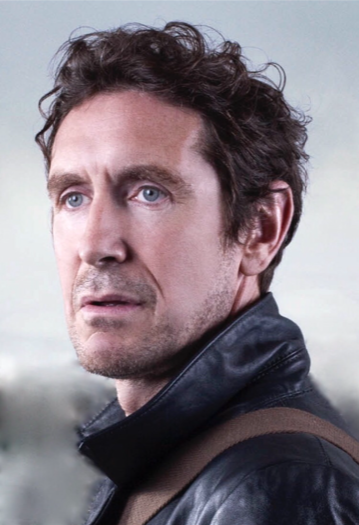
In this first part of a special release from the archives, I’m sharing the beginning of my landmark conversation with the legendary Paul McGann. Recorded in May 2020 and originally released in August 2020, this was Paul’s first-ever podcast interview. While he has hosted many shows since then, this remains the definitive look at the moment he first “went down the rabbit hole” to discuss his life and career with a fan.
To coincide with the 30th anniversary of the 1996 Doctor Who TV movie, Paul shares the story of his childhood Olympic dreams, his “acting family” business, and the “indifference” of show business. We talk about why the fans are the true custodians of the TARDIS and why stories are sometimes the only thing that can save our morale and tip the scales toward kindness.
I’m Nancy Norbeck, and I’m your Messy Muse Mentor. I help people feel alive again through creativity, curiosity, and play.
In this episode, we discuss:
- The 2020 Perspective: A snapshot of creative survival recorded in May 2020 during the first months of the pandemic.
- The Failed Athlete: Why Paul’s first ambition wasn’t the stage, and how he navigated the “brutality” of not making the cut.
- The RADA Turning Point: How a “confused kid” who nearly joined the Navy found his way to the Royal Academy.
- The Custodians of History: Why the fans, not the actors, are the ones who truly look after the Doctor’s legacy.
Ready to send your inner critic to summer camp for an hour and just enjoy some creative company?We get together once a month for a relaxed, co-working-style session where you can work on whatever you want—without any pressure to do it “right.” Join the Creativity Circle.
Episode breakdown:
0:00 Introduction
1:26 Paul’s first-ever podcast interview (Recorded May 2020)
3:24 The Liverpool “acting family” business
5:20 Childhood Olympic dreams and the “brutality” of sport
10:15 Auditioning for RADA and being a “confused kid”
13:38 Sharing an agent with three brothers
19:46 2020 Lockdown: Sanity, cycling, and simple things
23:02 Rehearsing with the brothers for a West End hit
33:14 Bruce Robinson’s advice: “Just take the next thing”
39:05 From convention skeptic to fan family
45:46 The 1996 Pilot and the 5-year Vancouver plan
54:32 The Power of Stories: Fables, mythologies, and morale
58:30 Reclaiming kindness: Lessons from the Doctor
1:13:58 Keeping the secret: The “Night of the Doctor” return
Show Links: Paul McGann
Paul McGann on IMDB
The BBC’s Eighth Doctor page
Big Finish Eighth Doctor stories
My list of 53 Things I Learned from Watching Doctor Who
Steven Moffat on Why We Need Heroes (and why the Doctor is an unusual hero)
Dave Chapelle’s Mark Twain Prize acceptance speech
50th Anniversary story Night of the Doctor
Subscribe!
You can subscribe to Follow Your Curiosity via the handy links at the top of the page for Apple Podcasts, Spotify, iHeart Radio, TuneIn, and YouTube. If you enjoyed the episode, don’t forget to tell your friends!

Transcript: Paul McGann Part 1
Please note: This is an unedited transcript, provided as a courtesy, and reflects the actual conversation as closely as possible. Please forgive any typographical or grammatical errors.
Nancy Norbeck [00:00:06]:
Welcome to Follow Your Curiosity. Ordinary people, extraordinary creativity. Here’s how to get unstuck. I’m your host, creativity coach, Nancy Norbeck. Let’s go. This summer, we’re marking the 30th anniversary of the 1996 Doctor Who TV movie. To celebrate, I’m reaching back into the vault for a conversation with the eighth doctor himself, actor Paul McGahn. Even though we recorded this in 2020, Paul’s thoughts on the family business of acting and his path to taking on such an iconic role are timeless, especially for anyone who understands the weight of perfectionism.
Nancy Norbeck [00:00:45]:
In this first part, we talk about his childhood Olympic dreams, his time at the Royal Academy of Dramatic Art, and the advice he received that helped shape his career after Withnell and I. We also go into the reality of that 1996 pilot and why Paul finds a kind of creative comfort in the indifference of show business. Whether you’re a longtime fan of the eighth doctor or you know Paul from his work in The Monocled Mutineer or The Hanging Gale, I think this first part of our conversation is a perfect example of why the path to a dream job is rarely a straight line. Here is part one of my conversation with Paul McCann.
Paul McGann [00:01:26]:
You know, today, finally, I get to do a podcast. I’ve never been involved in a podcast. I wondered about that. This is the very first time.
Nancy Norbeck [00:01:37]:
That’s so cool. I’m so honored.
Paul McGann [00:01:40]:
Well, me too, and I’m slightly excited. It’s only recently that, you know, particularly through the songs, I’ve got to listen to podcasts, and podcasts, of course, are now the, you know, the almost the spirit of the age.
Nancy Norbeck [00:01:57]:
Mhmm.
Paul McGann [00:01:58]:
And they’re kinda fantastic, aren’t they? I’m, I’m really enjoying finding those.
Nancy Norbeck [00:02:05]:
I it took me a long time to to come around to the idea of them, and then I suddenly was addicted overnight. And then here I am with my own, which still kinda blows my mind. So thank you so much for doing this. I’m really, really psyched.
Paul McGann [00:02:19]:
I cannot I’m I’m just worried that it took, But I mean, it’s typical me. I I rarely forget, but I rarely I’m I’m it normally takes a while.
Nancy Norbeck [00:02:32]:
That’s all right.
Paul McGann [00:02:33]:
To receive We
Nancy Norbeck [00:02:33]:
got here in the end.
Paul McGann [00:02:34]:
Yeah. I’m I’m I’m I’m not the quickest, as you will no doubt find
Nancy Norbeck [00:02:40]:
Oh, that’s all right.
Paul McGann [00:02:41]:
As we get to know each other.
Nancy Norbeck [00:02:44]:
So I usually start with just, like, you know, where where did you get started on your creative journey? How did you figure out that you weren’t gonna be a plumber or a tax accountant or, you know, whatever else you could could have done. You know, was was there something you did as a kid? I mean, I know you grew up in a fairly large family, and
Paul McGann [00:03:14]:
Mhmm.
Nancy Norbeck [00:03:14]:
Certainly, you are not the only actor in it. So I don’t know if it was just there was something in the water.
Paul McGann [00:03:22]:
I don’t know. It looks
Nancy Norbeck [00:03:23]:
more to it than that.
Paul McGann [00:03:24]:
It looks it looks that way. But, actually, nothing could be further from the truth. When I was a kid, and as you mentioned, the family and the siblings, there are, of course, you know, for those for those that may not know, there are four boys, in I got three brothers and a sister, Claire, who’s the baby. The boys are now or have been actors. We were all we all sort of became actors around the same time, back in so the end of the seventies, you know, the eighties. And I’ve been doing it ever since. For myself, and in answer to your question, I when I was a kid, I think my only my dream, I suppose, my my childlike dream, and probably my only ambition was in sport. That was my thing.
Paul McGann [00:04:22]:
I was that kid, you know. I was completely rapt, even from from a a really early age. You know, my mom tells this story. It was 1964, it must have been. The Tokyo Olympics was on. I was four years old, three or four years old. And she came down. She said she was in bed, and, she woke my dad up and said, I can hear a noise.
Paul McGann [00:04:49]:
You know? And they were they were worried that someone was in the house. Anyway, my dad being the brave one, he came downstairs. And me and my brother, my older brother, were watching the Tokyo Olympics three or four in the morning. I can even still remember the the, the the the tune, Good morning, Tokyo. Yeah. I can still remember the you know, we must have had this tiny, as as as people did in those days, this tiny TV set, you know. But there was there was something about it. I still remember it.
Paul McGann [00:05:20]:
I can still remember being hooked on the idea that Olympic games, what an idea, you know, for a kid like me. I was one of the converted to a kid like me. That’s that was kind of heavenly. And and, of course, the next one was in Mexico. I remember that well, and so on and so forth. And by the time I was in the big school, I was 12 years old. The Munich Olympics happened in ’72. And by that time, I just wanted to go.
Paul McGann [00:05:45]:
That’s what that’s that was my only ambition in life. I was blessed because I was, I’m not a big guy, but I was all but I’ve I’m I’m quite small, but but I was always strong and quick, and light. And I was I was quick on my feet, and I was a good runner. You know, I was probably the, let’s say, the fastest kid in the school, you know, when we were little. Then went to the big school, and the same thing happened. And, like, it got me into it. And, my dream, I suppose, was to was to do that. And I was a good kid.
Paul McGann [00:06:19]:
And and and to the the teenage, when, you know, 12, 13, 14, 15, I ran and I jumped, and I, that’s what I did. And that was, and traveled, got to travel a bit doing it. Did it to a pretty good standard, you know, so the sort of as opposed to kind of national school standard. So it was great. You know, it was it was exciting, and then there was possibilities in it. But, like, probably thousands, like, so many of us, by the time you get to wherever you are, wherever you grow up, you get to 16, 17, and that’s sort of combination of well, I said, well, let’s just call them extramural excitements and, you know, other things begin to creep in or impinge on your discipline or just or just, you know, are are are far more exciting at that time. The schoolwork goes by the board. That was me.
Paul McGann [00:07:18]:
I was typical. That that’s exactly what I did. Though I was talented, I probably lacked discipline or and the quality, and so didn’t make the cut. And and sport is like it’s a bit like showbiz in that regard. It can be pretty brutal. Mhmm. So I just it just didn’t happen. And I went instead, what I did at 17, and and and even in school, I was no high flyer, you know.
Paul McGann [00:07:45]:
My siblings are, you know, a couple of them particularly, if I go on them, pretty bright, you know, academic. I wasn’t. And anyway, I followed my brother down to London. We grew up in Liverpool. London was 200 miles away. He’d already gone. He was two years ahead of me. So I went down at him and knocked around.
Paul McGann [00:08:07]:
And it was only really then, two, three years after that, that, somebody persuaded me to audition for an acting school. And I did. And I was slightly embarrassed to do it. Well, I was. I just said it was because partly perhaps partly because I don’t know. Just something to do with I don’t know what it was to do with. I just, but I felt slightly nervous and embarrassed to be doing it. However, and I just did this one audition at one place on one day, and I got in.
Paul McGann [00:08:45]:
And I changed everything. And I became an actor. It’s amazing. Yeah. That’s how it happened. And and, I don’t know. I could I could if if that hadn’t have happened that day, I’d have probably done something else. I was even I remember even the same big brother.
Paul McGann [00:09:00]:
When I think back, actually, he was looking out for me, more than I even could more than I realized at the time. You know, I I would do things like I I don’t I also had a as a sort of side passion, maybe it can be called a passion. You know, I I I think because I sort of adored my father, my late father, and I guess I wanted to please him in some way. I remember my big brother almost physically stopping me from going into a recruiting office. Wow. Yeah. Yeah. That’s maybe 18.
Paul McGann [00:09:33]:
My dad had been in the Royal Navy. And so I wanted to do that. My brother said, no, no, no. You you stop me doing that. So, you know, you and I’m trying to create the picture of a confused kid. Mhmm. It’s because I was, you know, I I just was I was a bit half assed. I didn’t really know what I wanted to do.
Paul McGann [00:09:53]:
But like so many times in life, sometimes you you’re not just in the right direction. And when you find yourself somewhere, you think, oh, wow. Why didn’t I why didn’t I realize this before? Anyway, I I loved the train, and I enjoyed the time. That was in London. That was at the the RADA. That was, you know, the the World Academy. This is a great school, you know. Mhmm.
Paul McGann [00:10:16]:
And as soon as I was in, aged, what was I then, 18, 19, You know, and and essentially, what what what the schools are are it’s a company. You know, you’re in a group, maybe twenty, twenty five kids. You’re together for a couple of years, two to three years. You’re putting on all these shows. It’s kind of safe. Away you go, you know. And then, and I left there in ’81, aged 21, and I’ve been an actor ever since.
Nancy Norbeck [00:10:50]:
That’s fantastic. But then they they just throw you out into the the cold cruel world of,
Nancy Norbeck [00:10:55]:
the acting after that nice cozy experience.
Paul McGann [00:10:58]:
Showbiz ain’t so I don’t know. Showbiz ain’t so much cruel as, sports cruel, but but showbiz is, I suppose, indifferent. I said, that’s that’s not the it’s not the same thing. It simply doesn’t care about it. And, is it? And I don’t I don’t mean that to sound brutal, but showbiz, if it ain’t you, or or if you ain’t getting it, it’s because one of your rivals is getting it. Mhmm. Is getting the work. It’s not about you.
Paul McGann [00:11:29]:
You know, it’s you don’t need to worry about that. And that’s something kind of, I guess, I I quickly learned was, I suppose, a kind of comfort. And it runs counter actually to how a lot of people could easily imagine performers, actors, you know, and often how they’re portrayed, you know, that that it’s they’re egomaniacs, so it’s all about fame, celebrity, or something. But it goes, you know, for for 99% of them, it couldn’t be further from the truth. You know, most of us are I include myself, you know, ensemble people, company people. You know, that’s the buzz of it, the the joy of it. I’ve always enjoyed that the most. Yeah, of course, there’s a few empire builders and, star turns, you know.
Paul McGann [00:12:21]:
So, but that’s me. And that’s and and I just enjoyed it. I, like, I enjoyed it right from the off. And and the brothers, through some happy accidents, within a year or so, were also, were also actors. So, it’s now become a small family business.
Nancy Norbeck [00:12:45]:
That must be kind of kind of interesting though, when you when you put it that way. I mean, because you all have that shared experience in that environment, it must be very different than if, you know, you’re the the lone person who’s out here trying this thing that’s so completely different from everybody else. There must be a degree of comfort in that. Yeah. I just yeah. Yeah. We all get it.
Paul McGann [00:13:10]:
I agree. You know, yeah. I mean, had I been, like, the outlier in the family? It might yeah. It’s I don’t know. I can’t remember anymore, but it it of course, it would have been different, you know, to be the to to be the the individual, you know. You know, whereas in my family and in my siblings as well, but the particularly the boys, there are there’s four of us, but only five years between us. We’re all the same age, really. Mhmm.
Paul McGann [00:13:38]:
We even at the beginning, we even, I say, in the first few years, we even all shared an agent. The same agent represented all of us. And that’s and I only say that because what what that meant was, and this she, this agent wouldn’t have wouldn’t have taken it on, I guess, if if we were, same y. You know, what’s the point in having two the same? You know, this is how agents work, you know. No. I can’t I’m not taking I can’t take long because I’ve already got one of those, you know. That’s that’s how they take to recruit. Again, the indifference of it.
Paul McGann [00:14:16]:
But but, whereas, you know, we we were we were sufficiently different, though, almost exactly. We looked the same. We were the same age. But we all did different things, you know. So that was good. And we still do. Yeah. And it went well, you know.
Paul McGann [00:14:37]:
It went well from almost from the off. Now I sound like some old lag. It’s been forty years now, but and it it was, in Britain then, and the schools were stage schools, strictly. There was no, you know, because there were no lightweight cameras or, you know, the modern technology that we’re we’re used to now. I’m still attached to the school. I’m sort of, I go back to the school that I was at, you know, to to, for different reasons. Of course, you know, and I’m a bit envious of them now. They’ve got sort of film studios and different, you know, all the kit that we kind of wished we’d had.
Paul McGann [00:15:20]:
And I I say it because, you know, I I again, I can distinctly remember being 19, being at this place, unhappy to find, you know, the the a large proportion of the kids that were there in my in my year, in my term in in the group, were working class kids like me, you know, and, similar to me, you know, not many of us really had seen a lot of theater. Our parents have simply haven’t gone to the theater, they’ve never taken us to the theater. Yeah. Of course, there were one or two that were steeped in it, you know, perhaps come from a different background. Some kids knew opera and had been to shows. Maybe some kids had lived in London. But, I was probably typical, you know. We we became actors because of movie stars, films we’d see, you know, in in in the cultures, in the backgrounds, in the places that we come from.
Paul McGann [00:16:14]:
You know, your way in was TV and film. Though when you got when we got to train, it was classical theater.
Nancy Norbeck [00:16:22]:
Mhmm.
Paul McGann [00:16:23]:
Because and and it’s a great training. You know, it’s, anyway, I’m not knocking it. It’s fantastic, you know, and quick. But that’s different now. But, you know, it like I said, if I was that kid now, I would, you know, you’d be making short films and probably, you know, radio plays and the like, you know. So so now I do sound like old leg. But, and and really and the way that it worked was, again, back then, was that if you wanted to progress, so the only idea, the only conception of of of starting a career, firstly, the the the big obstacle was the union. The UK Equity Union was still in those days, and would be for another five or six years, a closed shop, so, until the Thatcher government stopped that.
Paul McGann [00:17:16]:
So you needed to get into the union. You needed to get going. And that was brutal because, probably eight out of 10 of the kids that I trained had never even started because they couldn’t get into the union. Anyway, I did, got started. And you if you wanted to be say, if you dreamt like, I was like, once I’ve dreamt about the Olympics, you know, suddenly now the the fixation became trying to get into somebody’s movie, say. That would like be that would be going to the Olympics. But to get in a movie, no one’s gonna give you a movie. So first of all, pop what you probably have to do is, try and get into somebody’s stage play, then onto the TV, Get into something on the telly, and hopefully somebody sees you and then puts you in a movie.
Paul McGann [00:18:04]:
And this was the sort of time honored way of doing it. And that’s what happened to me. You know, the old the the maxim is still true, but, you know, they used to say to us, just be good, be good in a hit. Mhmm. Let’s say it’s on the telly, then you might get a movie. And that’s what happened. I know I ended up in a movie. I know that was my only ambition enough that that and I was 25 years old, and I thought, well, what happens next? What do I do now? You know? It’s funny because, you know, my, I don’t know that I’m that ambitious really.
Paul McGann [00:18:40]:
I mean, it’s it’s been ambitious important, really. And and and I don’t know. I’m I’m asking. I’m asking for a friend. I’m
Nancy Norbeck [00:18:52]:
sorry. I think you’d get a lot of different answers to that question. So, yeah.
Paul McGann [00:18:56]:
And I mean, young ambition, you know, I mean, it’s, you know, maybe it’s, it fuels you, maybe it sort of drives you a little bit. But of course, you know, whatever. Like, you know, you can end up putting the ladder up against the wrong wall. As Joe Campbell would say, you know, you you can just you can go down the wrong thing. Anyway, so I’ve been doing it ever since, and I’ve been I’ve been lucky. I’m still doing it. I’m happy doing it. I’ll always do it because I’m not trained to do anything else.
Paul McGann [00:19:30]:
And the the hopefully, I’ll always enjoy it. You know? I’ve got to see the world. But, you know, I’ve raised a family on it like my siblings have. There.
Nancy Norbeck [00:19:46]:
So I was
Paul McGann [00:19:47]:
reflective. Maybe it’s this lockdown. It’s we’re we’re all in a lockdown. Well, I am. I’m in a lockdown.
Nancy Norbeck [00:19:53]:
I know. We all are.
Paul McGann [00:19:54]:
Certainly. But but, you know, the idea certainly, it’s like it’s become about, you know, the appreciation of simple things. You know, trying to suddenly, you’re you’re these these these strangest days and weeks, you know, now. It’s been weeks and weeks now. You know, suddenly, contentment becomes the thing, like, you you know, stuff you never thought about before. You know, just to have sufficient, just to have space, to have space and means, you know, enough just to have enough. It’s it’s okay. Right.
Paul McGann [00:20:25]:
Yeah.
Nancy Norbeck [00:20:25]:
Yeah. The bar the bar drops pretty quickly.
Paul McGann [00:20:28]:
Or it just all moves sideways or something. I don’t know if it’s
Nancy Norbeck [00:20:31]:
Oh.
Paul McGann [00:20:32]:
I don’t know if it’s
Nancy Norbeck [00:20:32]:
Yeah, that could be.
Paul McGann [00:20:33]:
Maybe it’s been raised. Maybe there’s a maybe there’s a there’s a way of thinking, you know, that in fact
Nancy Norbeck [00:20:38]:
Maybe it has.
Paul McGann [00:20:39]:
Or it’s crystalized or or I guess what I’m trying to say is that, you know, we’ve suddenly simple but better things have come in. Mhmm. A hoved interview. Yeah. And, all you hear most days here, I’m sure it’s the same way you are, you know, is that when this is over, when this has passed, you know, that it’s to be hoped that we can sort of hang on to a little bit of that. Remember Mhmm. Remember these things.
Nancy Norbeck [00:21:06]:
Yeah. Especially things like the pollution free skies and things like that, that nobody exactly expected.
Paul McGann [00:21:14]:
Yeah. The birdsong. Yeah. The moon. The moon last night was just, you know, just magnificent here. Yeah, clean air, cleaner air.
Nancy Norbeck [00:21:27]:
I know. What a concept.
Paul McGann [00:21:29]:
I’ve I’ve been so happy because it because, last year, I discovered rediscovered cycling. Somebody wrote me into a to, to to a charity cycling event. You know, and I’d had a couple of bikes down the years. I’d, you know, I’d I’d liked cycling as a kid, but this was a serious matter, you know. It was like a it was like running a marathon on a bike. Mhmm. So I had to train for a few weeks through it, but I bought this nice bike, and, and now the bike is in the hall here. And now it’s spring, of course, here.
Paul McGann [00:22:04]:
It’s been just joyous getting us around the hills. Where we live here, it’s although we live in a city, it’s, you know, five minutes. It’s one of those cities you can escape really quickly on a bike Mhmm. The countryside. So, I’ve maintained my sanity just by, you know, I’ve become that old git on a bike.
Nancy Norbeck [00:22:26]:
I think we all have, you know. I’m I’m going out
Nancy Norbeck [00:22:28]:
for walks as often as
Nancy Norbeck [00:22:29]:
I can just to get out of my house, you know.
Paul McGann [00:22:32]:
Yeah. Yeah.
Nancy Norbeck [00:22:33]:
So and and see other people to whom I cannot speak and now mostly can’t even see anything other than their eyes. So, actually, this is a great treat. You have an entire face. It’s great.
Paul McGann [00:22:45]:
Oh, thank you. I’ve never had any complaints.
Nancy Norbeck [00:22:53]:
So I’m I’m curious, since you said that your your parents never really took you to the theater, did they how did they react when all four of you ended up becoming actors?
Paul McGann [00:23:02]:
I think that they I mean, had they, I think had they had the means, then they would have you know, we we we might have gone to the theater. You know, Liverpool was a place it was, you know, it wasn’t inconceivable that people filled the theaters, you know, listened to music, and, you know, it’s one of those places, you know, it’s a great city for that. And my parents, you know, were were my mom sang in clubs, my dad was a musician, You know, so I I guess, that had things been slightly different. Maybe we had more money, or maybe they just thought theater was too expensive. I don’t think they thought it was an idle pursuit. That’s why I Okay. And I can remember going once with my mom. I must have been about 12, the only time we went.
Paul McGann [00:23:58]:
And we went to the to the local playhouse in Liverpool. And an actor called Richard Todd, an Englishman, who, bless him, had been amongst the first wave on Gold Beach. He he was in that glider squadron, I think, that that that landed on Pegasus Bridge on the June 6. Wow. The Equity members. It was the Equity members that started it. You know, don’t let anyone ever tell you different. It was it was the actors that spearheaded it.
Paul McGann [00:24:36]:
Anyway, but Todd, I guess, in a way, he was I know because there’s a statue of him now in Elstree, in the high street in Elstree, where the studios are here. And, I guess he would be like like the English Audie Murphy or something. Because after the war, they fitted him up for a film career, and he and he, you know, he shot war pictures. Anyway, there was a story called The Hasty Heart. And Todd, well, I met him probably in the fifties, they made this. Again, the film, it was a film my mom liked. She would have seen it. And years later, in the seventies, he was touring it.
Paul McGann [00:25:21]:
The same actor, probably 25 years too old for the role. Mhmm. And we went, and we went to see him. So, there he was, you know. So I saw Richard Todd, the English Aldi Murphy, at the Liverpool Playhouse. I remember being quite moved by it. I’m moved by my mom’s reactions to it. Mhmm.
Paul McGann [00:25:43]:
And not and I remember feelings like not really quite knowing how to behave in a theater. What did you do? You know? But kinda liking it at the same time. Yeah. But, in answer to your question, I think they’d have been happy. And I know when it quickly happened, and once we became actors, that is me and my brothers, within months, we were actually all working together. The only time we ever worked together on the stage. And we ended up in the West End Of London in this musical, together, playing brothers. And it was a hit.
Nancy Norbeck [00:26:20]:
How convenient.
Paul McGann [00:26:21]:
I know. It was a hit. I believe we’re in the West End for whatever, months and months. And, my dad, before he died, he died young my dad, he died in the in ’84, but but this was ’82, and he came and he saw it. So, and any skepticism, I guess, that he that he died before. And I’m not sure that initially that he thought it was the sort of job for a chap. Mhmm.
Nancy Norbeck [00:26:44]:
I think
Paul McGann [00:26:45]:
I don’t know that he thought it was man’s work. I don’t I don’t wanna suggest that he was, you know, just, he was a macho bonehead or anything. He wasn’t. Far from it. But, he did he was he was skeptical. But it but but he let us do it. And, the joy was seeing him there on the opening night beaming, you know. Then we were then we were in this silly hit.
Paul McGann [00:27:12]:
It was great, you know. And we could sing, it was where we were singing and playing and throwing ourselves around pretending to be dancers. And, and and and that’s how it happened, you know. And suddenly, that’s the younger brother, Steven, that was his first job. He he literally came down from school. His now his name’s in lights in London. He’s down in, you know, I remember my dad wasn’t pleased about that. Steven’s very bright, like my little sister.
Paul McGann [00:27:37]:
You know, nowadays, scientist, he’s an author, and, but he initially left school to run away to the circus effectively. Mhmm. So we could all be in the show. But it all worked out in the end.
Nancy Norbeck [00:27:50]:
I was gonna say, it’s it’s clearly worked out well for him too. I mean, he’s been on call the midwife now for how long, among other things. So Yeah. Yeah. That’s a great
Paul McGann [00:28:00]:
I mean, that’s a great thing for them, you know? I think that’s into nine or ten seasons now.
Nancy Norbeck [00:28:05]:
Yeah. I’ve lost track now.
Paul McGann [00:28:07]:
Yeah. Yeah. Yeah. Yeah. Good for them. Mhmm. You know, because because so I I suppose to find in this in this game, in this profession, you know, to to get anything, even remotely stable, is is rare. Right.
Paul McGann [00:28:27]:
And when it comes along, you know, you just grab it. So, anyway, there we are.
Nancy Norbeck [00:28:33]:
There we are. So so I guess, if if your parents were both musical, it was no great shock that you would have ended up in a musical. Must have done a fair bit of music at home when you were kids?
Paul McGann [00:28:46]:
We did. Again, you know, Liverpool was one of those places where, I guess, there’s a kind of expectation and a little bit of, fame attached to the place, you know, for that. So it’s a music city, you know. And the Beatles had been, you know, sort of taking the world on from there, just, you know, ten years before that. Kids kicked the football, played guitars. Again, you know, the point being that it wasn’t, even if you were working class, it wasn’t inconceivable. It wasn’t answered a question that you could think about doing something like that. It was okay.
Paul McGann [00:29:28]:
You know, like in some areas, you know, kids end up, I don’t know, boxing, or they end up, you know Mhmm. And often sports, it’s either sports or or showbiz, you know. These are good outlets for places like that. And, I guess it was, you know, one of us was gonna do it. Joe, the older one, he was, you know, when he went to London before I did, he was straight in the music business. You know, he was a songwriter, he was a player, he was turning a little record deal, you know, so we were and Mark eventually, you know, Mark gets his stuff, but Mark’s two years younger than I am, but he he became an actor before any of us. Because the in 1980, when John Lennon was killed, Mark played him. When the the local theater in Liverpool was looking for because they quickly, probably, indecently quickly, put a show on about Lennon.
Paul McGann [00:30:26]:
And they looked for kids to play Lennon. My brother got the show. Oh. You know, you know, someone from the theater literally came to a gig. He had a group at the time. He played this gig and somebody came up after you know, just like in a film. Some, you know, some from the theater came after the when the gig was over and said, do you wanna be an actor, you know, to him Mhmm. And the bass player.
Paul McGann [00:30:47]:
And, offered him an equity card, and he that was it. He was up and running. And he played John Lennon. That went into the West End, you know. So, and that’s because he he could play and, so so it was an advantage. It was an advantage to be able to sing a bit, play a bit. Yeah. And Mark still does, you know, to this day, Mark, who curiously is fifteen years older than John Lennon ever was, but still but still, puts on these a couple of times a year, puts on these fantastic, shows, international shows, you know, shows that groups, and sometimes orchestras, based on Lennon.
Paul McGann [00:31:31]:
Because he’s still Mark’s still the kind of preeminent Lennon voice, the Lennon in in impressionist, you know, and some, you know. There you go. I’m bigging up your brother.
Nancy Norbeck [00:31:46]:
You’re loud.
Paul McGann [00:31:48]:
Just don’t tell him. Just just make sure he he’ll never hear that.
Nancy Norbeck [00:31:53]:
I’ll I’ll find a way to upload it that says everyone but Mark can get this episode. So he mentioned that, you know, when you got the movie, then you were sort of like, well, this is what I wanted, so now what? So how, you know, how did how did that work after that? I mean, when you just kind of like now what do I do? Or or did the next thing come so quickly that it didn’t matter? When,
Paul McGann [00:32:23]:
the movie in question was Withnell and I Mhmm. And, Withnell was it was a good movie, really good movie. But but slightly strange, you know, but it wasn’t it wasn’t, later on, it found its audience and Yes. Become a kind of, you know, respected sort of almost a classic. Everybody watches it now. But but when it was first released, although we liked it, we thought it was great, you know, it didn’t get a proper release really and kind of disappeared for a while. And then found its feet later, you know, as the format changed. And, but when I when I made it, when we shot it, and and it had come out, And in answer to your question, I can distinctly remember Bruce Robinson, who made Whithnail, he wrote and directed it.
Paul McGann [00:33:14]:
Months later, he said to me he rang me and he said, he said, what are you doing? I said, well, you know, I’m I’m reading stuff, and your scripts are getting sent, you know, because, you know, it it sort of bumped our status up a little bit. So now I was being sent script. Nice. I was 26 years old, whatever it was. And I can remember him saying to me, listen, listen. He said, don’t wait for another one of them. Don’t wait for another one like we just did. It ain’t gonna happen.
Paul McGann [00:33:44]:
And what he meant was, you know, I suppose what he was saying was take don’t drop the ball. Get going. Take the next thing. Just take the next thing. And I was I I he he nailed it. I was waiting for something, just like the thing we just done. You know? And what suffices, I’ve never seen one since. So I’d have I’d have still been waiting, you know, the, staring out the window.
Paul McGann [00:34:09]:
But, so he was right, you know. So it’s like, just take the next one, just keep going. So in a way, that’s what happened. And, and I’ve just been that’s really just what I’ve been doing ever since. Like I said, you know, being a being an actor, being a pro, you just, you know, I’ve been jammy to, you know, that that I’ve been able down the years, able to to do different things, you know, go back into the theater, do radio and audio stuff, you know, get by on voice work, occasionally be in somebody’s film. You know, you never know more than a few weeks ahead. What’s coming down the line at you, where you’re gonna be. You know, you gotta get used to that first.
Paul McGann [00:34:55]:
So my dad was right, but, you know, it isn’t really a job for a sensible person. Never mind a never mind a man. But one gets used to it. I don’t know what I’m gonna be doing next. Except, you know, even in these lockdown days, in this room, this is my son’s. I’m sat in my son’s bedroom here. He was a musician. So he’s he’s he’s got he’s got a little recording facility here, which is great because it’s meant that I’ve been able to do some audio work during the lockdown from home.
Paul McGann [00:35:28]:
You know, how lucky is that?
Nancy Norbeck [00:35:30]:
Yeah.
Paul McGann [00:35:31]:
So, and I feel, you know, generally, as I’m talking generally, you know, that I’ve been I’ve been lucky, I’ve been fortunate, and continue to be lucky. You know, blessed in that way that, you know, I’m able just to keep going, because I still really like it. Yeah. I still really like it. And it’s sociable, you know. Let’s say I’ve got to travel the world. And I don’t just mean, you know, turning left on airplanes, you know. Yeah, that’s happened once or twice, but and that’s a hoot, you know.
Paul McGann [00:36:07]:
But just what I mean is, you know, just, you know, seeing things perhaps that I wouldn’t have done otherwise. It’s been great, you know. Long may it continue. When recently, when, just before we got locked down, if I come when I think it’s like another age now to to to remember, but it was only in March.
Nancy Norbeck [00:36:26]:
I know.
Paul McGann [00:36:27]:
I was at a show. We went to, we went to a convention in in Pensacola. And now when I think, it’s just whatever, just a few weeks ago, but it could it could be talking two years back. We got we we flew on planes. Yeah. We went to airports. We walked on the beach. We went out to restaurants.
Paul McGann [00:36:48]:
The show had 35,000 people at it. Everyone hugged, everyone kissed, everyone shook hands, we laughed and we joked. This is just a few weeks back. Mhmm. You know, mad.
Nancy Norbeck [00:37:01]:
Yeah.
Paul McGann [00:37:02]:
Strange times. And, but those shows and those and going to these, you know, which I do a few times a year, that’s what I mean. I think it’s it’s like it that’s got the spirits, I suppose, what I’m what I’m trying to describe. The that’s the these are things you can really enjoy. You know, you can enjoy this, like I say, the sociability of these things, the fun of it. You know, it’s work for some of us that’s as well. You know, you you gotta work when you get there, but, it’s joyous, you know. And and in Pensacola, I I traveled with and worked with, a fantastic actor, which is actor Sian Phillips.
Paul McGann [00:37:43]:
You know, Sian, in my view, is a great actress. She’s 87, I think.
Nancy Norbeck [00:37:50]:
Good lord.
Paul McGann [00:37:51]:
But and still with more energy than I’ve got, more, you know, more yeah. But but this and working in the spirit that I’m I’m I’m I’m trying to about I’m talking about, you know, it’s never gonna end. You can do this you can you can do this, Kate, for as long as you feel like. No one’s gonna tell you to stop. Anyway, we’re not we can’t stop. No one’s, you know, there’s no retiring for out of this. When is this there’s less retiring now for all of us, I think. But but I think you’re in but if you’re in showbiz, yeah, you know, you ain’t gonna retire.
Paul McGann [00:38:24]:
So, and that was lovely being with Sean. Anyway, just, and as a reminder that, you know, it’s okay. There’s years to go, you know, it’s just Yeah. It’s just enjoy it. Enjoy yourself, which I tried to do, you know. Initially, I was, particularly regarding the, the conventions and having, you know, first got into Doctor Who, and then, of of course, the conventions came via that. You know, ordinarily, I would never have gone to one of these things. Mhmm.
Paul McGann [00:39:05]:
If you knew me, you’d, you know, you’d you’d you’d agree. And I was skeptical and rather nervous about the idea of going even after I’d started doing Doctor Who. So it took a while. But once I was persuaded, and once I did one, and realized, actually, you know, it was kinda joyous, for the most part. I’ve been going back to them ever since and really having a ball, you know.
Nancy Norbeck [00:39:34]:
It’s interesting. When you were talking about, you know, how how social it’s been, I thought, you know, there are there are two things that jump out at me with that. The first is that I’m you know, I I know that there are stories of people shouting lines from Withnell at you as you’re walking down the street, which is obviously a social thing whether you’re in that moment you want it to be or not, and yet it is that simultaneous recognition and appreciation thing. And so that’s one thing that’s it’s kind of its own phenomenon. As far as I know, there are not with no conventions, though I could be wrong. And then you have the Doctor Who side, which is just exactly what you’ve just been talking about. In fact, this morning, I thought, yeah, two months ago, I thought I was gonna go to Long Island in November. Now no one knows.
Nancy Norbeck [00:40:23]:
Yeah.
Nancy Norbeck [00:40:24]:
But, you know, I’ve only been to a few
Nancy Norbeck [00:40:26]:
of those. But but even so, especially what struck me at Long Island last this past November is just how I mean, you actually said it that it feels like family. I think because everybody there obviously knows everybody so well because they’ve been doing this for so long. And so it’s it’s not just someone shouting quotes in the street. It’s, like, this whole shared experience, possibly also the rest of us being completely crazy about a TV show. But but Well,
Paul McGann [00:40:58]:
you’re right. But the but the sociability extends to the fans mostly, you know, down the years. And I’ve, you you know, countless fans, you know, when we speak have said and they’ve been in a in a group with other friend with fan friends. They said, no, we met at one of the shows, and they’ve known each other bigger. That’s that’s what I mean. It’s created all these relationships and these, you know, this this this kind of almost family bond. You’re right about the Long Island gig, Long Island Who. That’s a particular favorite of mine.
Paul McGann [00:41:32]:
It’s often nearly always in the week of my birthday. Well, yeah. But but it doesn’t Yes. Beside birthday cards. Yeah. So it’s so it’s a treat, you know, because they’ve figured that we can have a shindig, and no one’s gonna stop us. And, you know, the the few years that we’ve been going there, you know, that you like you say, it’s familiar faces. So there’s that.
Paul McGann [00:41:53]:
You know? There’s that. That’s that’s really that’s really nice. And it’s and it’s small enough to to control, you know, obviously, some of the big shows are fairly corporate and and and and aren’t the same. You know? They can be quite air racing. But the little ones, I just think it’s great, you know. And in a way, what a joy, you know, who whether it’s Doctor Who or whatever, what you know, whatever people are turning up for. For us, I mean, you know, I I find myself saying the same at the shows, you know, if if asked the question, you know, although we’re working, you know, the performers there, we’re all fans too. You know, we’re all fans to some degrees of lots of stuff.
Paul McGann [00:42:43]:
And there is a real joy in, say, with the Who thing, and getting together to talk about the thing that you all dig. Mhmm. And for for performers, like like, it’s quite normal for say you do a movie, as I actually say you do a movie, particularly a movie, it might be a year before anyone ever sees the thing. By that time, if you’re if you’re jamming like me, you may have done two or three other things. So it’s like it’s way done, and nobody really who’s gonna get together and talk about it? You know, aside from going on publicity junkets, that’s it. Whereas, you know, when when we get together in these fan conventions, you know, one of the things actors love and but, you know, when you’re in a theater, for example, it’s instantaneous, you know, you can you can talk to the audience in the bar after the show. Mhmm. Talk about the thing you’ve just seen.
Paul McGann [00:43:33]:
It’s gonna be, you know, again, there’s a joy in there. And it’s nice as a performer to hear feedback, you know, good, bad, and indifferent anyway. It’s just part of it. You know, because we’re interested. So so these fan so in that way, when they’re at their best, these fan shows and conventions are, you know, they’re they’re just a an intense version of that. We love talking about the work, actually. Well, people say, oh, you must get tired of it. No, actually, no, I don’t.
Paul McGann [00:44:06]:
Why would you? Because it kind of changes, and as as the weeks and the months and the years go by, you know, you it like look at with me, you know, you may have done something thirty years ago, but new people keep coming to it. New people are coming to it with huge enthusiasm, and and for them, it’s, you know, it’s it’s new. Mhmm. And then a question of time and distance from these things does does plays peculiar tricks on your brain. And, in the end, these people become, say, with with mail or anything that’s, like, decades ago, you know, you do you yourself begin to forget about these things. So it’s up to the fans to remember for you, I think. Oh, that’s not Some
Nancy Norbeck [00:44:47]:
of us are frighteningly good at that.
Paul McGann [00:44:49]:
Yeah. Oh, yeah. I remember that reminds me of, the, who was it? Who was it? A friend? Who wrote the David O’Nick, he wrote to he wrote a book about David Bowie, and Bowie actually wrote to him. And it was this book was so well researched, and Bowie actually paid him the compliments of writing him a letter. But chiefly, so thank him. He said thank he said, cheers, man. He said, there was, like, an eighteen month period between 07/1972. I can’t remember a thing, and you’ve, like, like, you’ve filled the gap in for me.
Paul McGann [00:45:29]:
You know, so you perform in a public service. You know? And sometimes fans do that and and put you right Yeah. Remind you, no. No. No. No. In fact, you did this then, and then you said that. And so there you go.
Nancy Norbeck [00:45:45]:
Yeah. Well I
Paul McGann [00:45:46]:
like that.
Nancy Norbeck [00:45:47]:
And, you know, I I feel like, you know, there’s plenty of things that come between with now and and doctor who, but since we’re there. So did so there were two yeah. Well, in a way, you know, I mean, I I because part of what I’m wondering is especially because, you know, it was, what, somewhere around ’94, ’95 since the movie aired in ’96, I would guess. Oh. If did you have any clue that whether or not that movie turned into anything else, you were gonna be doing this for the rest of your life. Well, how well
Paul McGann [00:46:25]:
well well, let’s let’s rewind. Of course, it’s difficult to remember how one felt, but but the fact of the matter was, in ’96, that we shot a pilot, a TV pilot, which was meant, had it been successful, to go to series. The idea was that the we shot it in the wintertime, and we turned up in January. And I think the idea was that if the thing had been successful, then a series would be mounted in the autumn of that year, actually October of the same year. So we were working under the assumption, partly, that we’d all return back to Vancouver, if this goes well. And I had signed again, just to get the facts straight, I’d signed a standard, contract. When you shoot a pilot, you have to sign a contract before you shoot it. Otherwise, you don’t you don’t get to shoot it.
Paul McGann [00:47:30]:
To say that if this thing goes, you’re you’re gonna go with it. And, basically, they’ve got you for five or six years, whatever it is. Mhmm. But that’s that and that’s standard. So, that could have happened. And at that time, we it it had it happened, we, that is me, my wife and children, would have relocated to Vancouver, for five years. The kids would probably have been little Canadians, and we’d have gone you know, they’d gone to school. Well, yeah, they’d have gone to school there.
Paul McGann [00:48:05]:
And and even while we were making it, I can I can remember that, you know, we were, in the little time that there was to do it, we we were asked to look at, or think about schools, look at the local schools? Mhmm. Couple of houses in the bay, this kind of thing. Because, when I think, now when I think back, I think, well, of course, that’s that’s that’s the only way to do it. Nobody, I don’t nobody said, This ain’t going. This ain’t going. But of course, the odds on a pile, any pile happening, are slim, any pile, because it’s it’s so competitive. But, of course, you can’t work in that spirit. You know, you have to assume that it’s all gone.
Paul McGann [00:48:51]:
So that was the feeling. That was that was how we worked. At that time, doctor who had in Britain had been when did it leave? ’89. So Mhmm. Well, it was a it was fully five, six years since there’d been anything. It that we’d shot anything. Of course, McCoy turned up, and we we did the transfer, so to speak, you know, the handover. The reason for the race, sir? My agent my agent, and I I I never tire of telling this story.
Paul McGann [00:49:23]:
My agent, was Janet Fielding. I’ve heard that. She was my she was she was at them working she at my agent’s office. She’d stopped working as an actor, she’d become an agent, and it’s just by pure coincidence, my agent was Teigen, which, was lost on me for the fear of when when we met, because we just didn’t talk about it. Mhmm. What was the point? And it was only really when we were shooting the pilots and Janet came over, she came to Vancouver, as agents do, just to check the five star hotels are all right, the gold taps are working or whatever it is. She, so she was there. And it was only then in the first few days as it as it began to, you know, and and amidst all the nerves, you know, that I was feeling, and, that she was able to help help the penny drop really, help me realize what I was letting myself in for.
Paul McGann [00:50:22]:
And I I I remember there was one night, forgive me if I told you this story, but there was one because it was all night shoots that that, that picked up ten minutes to midnight. So it was all night shoots. It was like a month of night shoots.
Nancy Norbeck [00:50:34]:
Right.
Paul McGann [00:50:34]:
So we were there one in the morning with some back street somewhere in Vancouver, and it’s cold. I remember the I remember distinctly the first time that I encountered a a teenage kid, who was interested, who stood and we talked on the set, you know, in between setups. And he was a Doctor Who fan. And Janet was there. I remember Janet was there. And he he was quietly sort of rapt and probably should have been in bed, he’s so but he he did he it was the first time that any that that I’d encountered a fan, a Doctor Who fan, reeling off without pause without stopping to breathe, a list of facts, all in chronological order. And then and in between while he was speaking, he twigged. And we we must have had, Parker hoods on here.
Paul McGann [00:51:30]:
We were dressed for the cold. Mhmm. But despite being dressed the way we were, he twigged who Janet was, and then began to tell her everything she’d ever done, kind of, you know what I mean, in about a minute and a half. You know, one of those situations where you know, you know what I’m talking about. And then he left, or we were called away. And I remember Janet looking at me and she said, now now you get it. Now you understand where where you’ve landed. And I laughed, you know, I’m thinking, wow.
Paul McGann [00:52:05]:
Wow. People don’t just love this thing. You know, there’s, like, serious, commitment, PhD knowledge of this of this, what what was then, what, thirty years of mythology and, you know, like, and I was amazed by that. I’m like, oh my god. And that’s really never that’s never changed, you know. You’re all you know, you you often one encounters these, how how can people hold that much history? And, I mean, I love reading history books myself, but, you know, I can’t I can’t retain it all, not not in that way. And now it’s gone to fifty odd years, and, you know, these people are just fantastic. A few years back, I was sat on a stage somewhere in, in The States at a show.
Paul McGann [00:52:55]:
And, you know, we had a panel, and there’s a Q and A or whatever. And I must have been asked some question, some perhaps with a bit of detail in it. And I simply said, I I don’t know. I don’t know. And the the young woman who asked the question from the floor said, then what are you doing here? And Wow. Yeah. And it was a there was a sharp intake of breath a little bit like you just said in the hall, and then raucous laughter. Right? Because it is funny.
Paul McGann [00:53:29]:
Yeah. I mean, this and she meant it. What do you mean? And that’s a perfectly good question. You know? No. You meant to you’re a Mona Cognaccente, you know, whatever. But if you Why haven’t you done your homework? I kinda love that.
Nancy Norbeck [00:53:47]:
Oh, my.
Paul McGann [00:53:48]:
But that happens. You’ve had it. You know?
Nancy Norbeck [00:53:51]:
You know, it’s funny when when you say how do how do people remember all of this? Because I’m sitting here going, I don’t know. How do I remember all of this? Because my one of my friends was a huge Mad Men fan, and we called her the walking encyclopedia of Mad Men, and I was the walking encyclopedia of Doctor Who. And and all I can guess is, you know, I started watching it when I was 13 or 14 and just was, you know, never stopped. So I think some of it must just be osmosis. I I don’t I don’t know. And there are some things that I’m sure, you know, other people would be like, no. It was this. And I’m like, yeah.
Nancy Norbeck [00:54:26]:
Okay. But but, yeah, it it is an interesting thing how some things stick with you and some things don’t.
Paul McGann [00:54:32]:
But, you know, when but like I say, to be so invested in it and hungry for it, Of course, that’s very human, and that’s a beautiful thing. Mhmm. I’ve I’ve always been thrilled at that idea. And, you know, we want stories. You know, we we were all those small children that said, you know, you get read a story and you again, again, again, again, again. You know, you just you want you wanna wanna hear it again. You, you know, you you wanna keep it close. You wanna remember it.
Paul McGann [00:55:00]:
You wanna, you know and years later, it sort of resurfaces when you least expect it. And you think, how did I remember you know, it’s just the way we are. Something really, really important, I think, isn’t there? Yeah. I mean, I’m talking way beyond my competency, but but but there’s something that there’s something important, isn’t there, to us about fable stories, you know, the attachment we have to them. You know, having them sort of refashioned, having them repurposed, having them told back to us. You know, we never really some of us never really lose that joy, that again, again, again, that sort of toddler childish joy and Mhmm. You know, even in the repetition of something and, you know, and to think whether it’s Doctor Who or, you know, anything like it, You know, these are these are these are fables and mythologies and hero’s journeys and stuff that, you know, we’ve we’ve long, and anyway, those of us that have got children have seen it again, you know, seen seen the kids do exactly the way we do. Mhmm.
Paul McGann [00:56:09]:
You know, it’s it’s becomes sometimes it’s all you have, you know, but there’s something something really thrilling about it. And so and and and when you and I can say what I can you know, the the one of the the the basic joy, of working as a performer is is the satisfaction is the wrong word, but is the is is to be telling stories, is to be part of it, is to be, you know, simply doing that.
Nancy Norbeck [00:56:52]:
Yeah.
Paul McGann [00:56:53]:
You pay to you know, in a way, you pay to do that. You pay to to be able to do that. You know? Wouldn’t it? I Yeah. Know what it feels like.
Nancy Norbeck [00:57:04]:
But, you know, I think it’s interesting that, you know, you you’ve brought this up because so Long Island in 2016, which was the weekend after a certain election, was the first WHO event that I’d ever been to. And I guess it was because of that that then a week or so later when November 23 rolled around
Paul McGann [00:57:33]:
Mhmm.
Nancy Norbeck [00:57:33]:
I thought,
Nancy Norbeck [00:57:35]:
I wanna make a list of all
Nancy Norbeck [00:57:36]:
the things I’ve learned from watching this show. And I thought that it would all be silly things like reverse the polarity of the neutron flow. But it turns out you run out of those in a hurry. Yeah. And then I think I had, I don’t know, maybe twenty, twenty five things, and I suddenly realized it was the fifty third anniversary. I’m like, I’m gonna see if I can come up with 53 things, which is such a phenomenally geeky thing to do. But but I was so intrigued by it as I did it because I realized when, you know, in the process and then when I was finished, I thought, you know, watching this show actually, like, totally made me the person I am. The things that are on this list, you know, like, always cheer for the underdog.
Paul McGann [00:58:30]:
Mhmm.
Nancy Norbeck [00:58:30]:
And the underdog may not be who you think it is, you know. And, plenty of other stuff that, you know, like, you can save the universe with a kettle and some string. Stuff like that. It I’m Everybody knows that. Right, you know? But I just thought, wow, you know, of all the things that I thought I learned different things from and that had shaped me into who I am, this is the one thing I never thought about, but it clearly has had so much more of an influence. You know, the whole don’t be afraid to question authority and, you know, all of that because because the doctor is so not your typical hero. You know, it’s like Steven Moffat’s description a couple years ago. You know, they they didn’t give him a gun.
Nancy Norbeck [00:59:18]:
They gave him a screwdriver to fix things. You know, they gave him two hearts. They you know? And and I thought, yeah. This this really is where a lot of my go out and do good things and help the people who need to be helped. And,
Paul McGann [00:59:32]:
you know, that
Nancy Norbeck [00:59:33]:
kind of stuff came from. And it Yeah. Really, really blew me away. But I think that maybe part of why that character in the show has lasted so long is just because it is such an unconventional hero that speaks to people in a way that Jack Ryan doesn’t.
Paul McGann [00:59:52]:
I agree. I agree with that. You know, he’s now she. You know, perhaps part fugitive. Trevor can’t can’t go home for some reason. You know, there’s already a distance. He’s out, you know, he’s out he’s out traveling. You know, the other day I was what was I watching? One of my kids showed me, a film of Dave Chappelle receiving the Mark Twain Award, in, where where would that have been? Probably Washington.
Nancy Norbeck [01:00:33]:
Mhmm.
Paul McGann [01:00:33]:
And, Chappelle was this great comedian, obviously, he’d be but in the the last thing he said, and the thing that he you know, amongst others, he’s he’s never lost for words, but but, he said, just remember, always remember, he said, be be kind and unafraid. And it was the way he said it. Mhmm. And I thought, I’ve heard that before. But I mean, in the end, it’s distilled into it’s the same thing, you know. Whether it’s the doctor, whether it’s, you know, whichever character, whichever mythological character, whichever whatever we’ve, you know, whatever we’re identifying with, with, the lesson seems to be the same, you know, and it’s reduced to that. And I’m quite right too, you know. Try not to be don’t be afraid, and just and tend to kindness.
Paul McGann [01:01:26]:
And that’s the doctor.
Nancy Norbeck [01:01:28]:
Mhmm.
Paul McGann [01:01:28]:
Isn’t it? Anyway, I just I just remembered that. But and when you said that, I’ve it reminded me again of the times that I’ve, particularly started the shows, you know, some of the big shows even, particularly the more crowded ones, and there you are, you know, there’s there’s a trestle table, there’s a line of people, there’s work to do, there’s a crowd, you know. And in the line in front of you, and and and you sort of get used to seeing them. There’s there’s a there’s there’s there’s there’s there’s there’s there’s there’s there’s a person, in the line who you’re gonna any minute now you’re gonna get to talk to, to whom it means something. But, but I mean, it means something heartfelt. Something’s happened, say. Something, and it might be and usually what happens is, what I like to try to do is I I really wanna talk to these people. So and it’s often impossible in in a in a crowd.
Paul McGann [01:02:41]:
So maybe you come around here, or we can go there, or we sit there, or and and and and in three or four or five minutes, you know, they can talk, and they and and one often hears the same thing. It’s like, you you may not realize, but without you, me, the doctor, without Mhmm. This got me through such and such a thing. When my father, you know, it’s it’s it’s this kind of thing. Now, the reason I’m mentioning this is because, you know, aside from the, you know, the the the the the attachment that that we were speaking about, that there’s some I find this incredible that people, really genuinely draw strength and inspiration. If I hadn’t seen it, if I haven’t met these people and spoken to you, I would perhaps have only read about such things. And I’m grateful is what I’m trying to I guess what I’m what I’m trying to say in mentioning it, that that, to hear it firsthand. Stories mean sometimes, the world to people.
Paul McGann [01:03:52]:
Yes. The the the difference between the power, the the the potency of them can be the difference between they can they can save your morale. They can they can tip you that way instead of that way. You know what I mean? And I only I can only set it because I’ve I’ve talked to these people. I’ve seen it firsthand. And it’s been an it’s been an education besides with anything else. And I’ve I say a vindication has nothing to do with me. But but but, again, it only increases the the kind of the sort of joy of doing this kind of thing, because it’s it’s all of a piece, you know, what a what a thrill to have and a privilege, actually.
Paul McGann [01:04:39]:
And I mean that to have to have landed in something, to be part of something, you know, that that, in fact, can be a source of you know? Mhmm. And, you know, before you know, that’s serious territory. But for the most part, it’s just a hoot. You know? You go to the shows, and the real spirit of the shows is the cosplay. It’s people dressing up. That’s what it is. It’s people dressing up in tinfoil and shaking nets. It’s great.
Paul McGann [01:05:10]:
That’s that’s it. Yeah. And that’s some of
Nancy Norbeck [01:05:12]:
the things that people do
Paul McGann [01:05:13]:
are That’s a level of it. Amazing. I love it. The show you can go and show off. You know? Yes. I’ve been in we were at one there’s one show in New Zealand. I think it’s in, well it’s not in Wellington. It’s in, oh god.
Paul McGann [01:05:28]:
I’ve got lockdown memory. Anyway, one of the in one of the towns, I was told about on on the Saturday, you know, there’s a Friday, Saturday, Sunday show, and on the Saturday, fully half of the town is there, including the dignitaries, probably there’s the mayor in his or her
Nancy Norbeck [01:05:47]:
history. Wow.
Paul McGann [01:05:48]:
And they all dress up. You know what I mean? And and that’s what I mean. It’s just a hoot. It’s a hoot. And then and let’s not forget, it’s meant to be a hoot.
Nancy Norbeck [01:05:59]:
Right.
Paul McGann [01:06:00]:
It’s meant to be a thrill, you know. You’re meant to laugh. It’s meant to be that’s how it’s meant to be. But like I say, in combination with, I’m trying to describe the experience from where the, like, me would sit, or, or whoever it is, would be, occasionally, you know, you’re it’s it’s it’s also you you see this this other side of it, this heartfelt side of it, which is kind of which is amazing, you know. That’s why we do it. That’s why we go back, and that’s why, you know, it’s it’s there there we are.
Nancy Norbeck [01:06:33]:
Yeah. Well, you know, at that that first Long Island, I had I had a picture taken with you and Peter Davison and Colin Baker.
Paul McGann [01:06:42]:
Smile. Actually,
Nancy Norbeck [01:06:45]:
you looked very intense.
Paul McGann [01:06:49]:
Did I?
Nancy Norbeck [01:06:49]:
You you were you were ready ready to go beat bad guys in that picture.
Paul McGann [01:06:54]:
I’ve I’ve got two settings. You you must it must have been a Friday. I’m a summer Friday.
Nancy Norbeck [01:07:00]:
Saturday, actually. But,
Paul McGann [01:07:03]:
Maybe it was the morning after my birthday or something. Anyway
Nancy Norbeck [01:07:06]:
But I did, you know, have to tell Peter Davison that he got me through high school, which got quite the reaction from Colin Baker. He’s like, he did. I’m like,
Paul McGann [01:07:16]:
no. No.
Nancy Norbeck [01:07:16]:
I love you all, but really. But it was
Paul McGann [01:07:21]:
one of those
Nancy Norbeck [01:07:22]:
things that was like, yeah. This is my chance to say that, so I’m gonna say it. I might not ever get a chance again. And, you know, there were plenty of people waiting, so I didn’t go into detail.
Paul McGann [01:07:30]:
Quite right. Quite right too.
Nancy Norbeck [01:07:31]:
Yeah. I mean, and it was when I started writing. You know, I started writing fan fiction before I knew what fan fiction was, and I put my best friend in it with me because that’s what you do when you’re 15. And, you know, I mean, I still write. So having having that other universe to play in, you know, gave me an escape from a whole lot of stuff when I was that age. So
Paul McGann [01:07:58]:
You see what we started?
Nancy Norbeck [01:07:59]:
I know.
Paul McGann [01:08:00]:
You know? And it ramifies and ramifies, and, you know, and, again, one of the joyous things, actually, about doctor who, particularly doctor who, is that most the the and probably the root the the biggest reason that it’s endured is that is that fans have looked after it. Genuine fans ended up running the shows, writing the episodes. Right. In Capaldi’s case, and Tenancy being in it, playing the doctor in it. You know, these are serious fans, you know, that that, the the the fans themselves became the custodians of it.
Nancy Norbeck [01:08:41]:
Which which is amazing to me in so many ways. I mean, you know, I I talked to Rob Sheeran in the first episode of this podcast, and here’s this guy who’s just, like, you know, writing stuff for fun, writing stuff for Big Finish, and and then he writes one of the best episodes of the new series. And and there it is, you know. And and the same with, you know, Nick Briggs will forever be the voice of the Daleks because he started doing it, doing goofy fan videos, you know, twenty, thirty years ago and and then moving into Big Finish. And and actually, I should say for anybody who’s listening who’s not a total Doctor Who geek, Big Finish does Doctor Who audio plays, and it started out as a bunch of geeky fans. And now they have a legit business, and they do amazing, amazing things. And if it weren’t for them, the Eighth Doctor here would have been on TV once and never heard from again. But you actually you you had the the, like, the most you’re the most ironic doctor because you’ve been on TV so little.
Nancy Norbeck [01:09:45]:
But you had the book series and the comic series and now the big finish stuff. And for a while, you were the longest reigning even though you had been on TV the least.
Paul McGann [01:09:54]:
They call me the longest and the shortest? Yeah. For various reasons.
Nancy Norbeck [01:10:02]:
And then there was and and I hadn’t realized this, I guess, probably until Human Nature and the Family of Blood aired with David Tennant, and they had the retrospective with the illustrations in the journal and all of the previous doctors. And you were in there, and there were people saying, see, he really does count. And I thought, you mean there was anybody who thought he didn’t?
Paul McGann [01:10:26]:
Oh, yeah.
Nancy Norbeck [01:10:26]:
I mean Oh, yeah. I had not realized that at all. I was horrified.
Paul McGann [01:10:30]:
Well, yeah. There was well, I’m here to tell you, there was, you know, after we after the pilot failed you know, it failed its its only function. There wasn’t a series there wasn’t a series made, and that was be before anybody called it the movie. But, you know, those next of course, you still had a decade before, Doctor Who came back on TV 2005, wasn’t it? Mhmm. So, you know, nine years. And in in in that time, it was easy to think that this iteration, this, number eight would probably go the way of Peter Cushing. You know? Yeah. If if this ever gets if this ever resurfaces, they’ll just nobody will talk about that one.
Paul McGann [01:11:25]:
They they because they wouldn’t have to. They just, you know, they’d be la la la la la. They’d just put their fingers in their ears and and get on with it. You know? And that was a I remember thinking, oh, well. And it was a mixed blessing in a way, you know, because, that’s okay. You know, when you work as an actor, some things work, some things don’t. You you you you quickly do something else, so that’s okay. Mhmm.
Paul McGann [01:11:47]:
One puts it down to experience. You know, my kids weren’t Canadians after all.
Nancy Norbeck [01:11:51]:
You
Paul McGann [01:11:52]:
know, you you just go you you just within a within a few weeks, you’re doing another thing. Mhmm. But, yet and when when it did come back or when there was rumor that it was coming back, 02/2023, whatever whatever. And then when it eventually arrived, I didn’t get a single approach. There was no phone call. Nothing. I’m only saying that because had had there been even a a thought of including the eighth Mhmm. In the new in the new thing, I would have been warned, primed Right.
Paul McGann [01:12:29]:
Sounded out about, you know, as was natural, but nothing. So I thought, okay. And like I said, I put that out. I’d assumed that it would go like that, that they would simply just bypass eight, go straight to something else, and never mention him again. Unbeknownst to myself, Russell t Davis, was actually a a great champion and was a was a a huge advocate of, of of the eighth doctor. And it was really under his aegis that, and and I read I I soon was reading in, you know, in magazine articles or hearing that, you know, that he he was making it explicit that they owed something to the to the so called movie Mhmm. You know, that without it. You know? So that was gratifying.
Paul McGann [01:13:20]:
It didn’t mean I was ever gonna be in it again, but but it was gratifying to hear that he, and that’s really how it happened. And and, but you’re you know, so you’re and I’m I’m only half joking. It could easily have been because they and they needn’t have ever mentioned the the the Vancouver pilots ever. And, like, say any more than they seriously talk about Peter Cushing. There’s no need. So they they because they can do it with the mythology what they like. But gratifying me and excitingly, they they, he turned up. He did.
Paul McGann [01:13:58]:
But And and I remember as well because the you know, once, Chris Eck and and the thing got up and running again, and there was Tenet, and, you know, suddenly now we’re into over, you know, years in. And the publicity pictures, I remember the first pictures. And, it was around that time that I started first, was persuaded to go to conventions, and Big Finish started, I think, 2003. I think it was the first time I was I was involved. And suddenly publicity photographs began to include the eighth doctor. Tentatively, at first, you’d see a bit like that child who misses his school photograph. And and they include them, you know, he’s he’s got a cold on the day, kinda like, and they include in little clouds, you know, you know, the he he would appear in the corner. Mhmm.
Paul McGann [01:14:51]:
You know, and and there’s 10, you know, doing handsome gurning in the middle.
Nancy Norbeck [01:14:55]:
And,
Paul McGann [01:14:58]:
and then suddenly, over the months and the years, the ape was working his way to the center of the photograph. You know, I mean, I’m joking now, but but that’s kind of that’s how it that’s how it happened, you know. Suddenly, there’s suddenly there’s the lineups, and there he is, you know. So it was, so, it took a while, but but, you know, he, he’s back. You know, he he was accepted. And the first phone call, the first approach that I ever received, so to speak, was when Stephen Moffat rang, and and, and we spoke, and he said, look and this is for the fiftieth.
Nancy Norbeck [01:15:37]:
Mhmm.
Paul McGann [01:15:38]:
And he said, you wanna do this six minute thing? You know, if I and that was the first phone call I’d had in all those years. Mhmm. That was it. And it slowly came full circle. And I said, yeah. Actually, no. I said I said, Tim, this is literally on the phone. I said, well, well, send me a script.
Paul McGann [01:16:03]:
He said, I haven’t written it. I said, when do you wanna do it? He said, next week. He said, he said, you say if you say yes, I’ll I’ll I’ll just I’ll write it. And And this is how showbiz works, incidentally. If anyone anyone that thinks, I know you don’t want every year, Tom Hardy, whoever’s saying, oh, I did six months of prep for this. No. That’s not you know, that that they’re they’re living on Olympus, those actors. Most of us, it’s like, are you available? We’re starting on Tuesday.
Paul McGann [01:16:29]:
That’s that’s that’s how showbiz works. And that’s so when we did Night at the Doctor, that’s how that took place in Sydney. And there it was, and then I was back in. Yeah. Deep joy.
Nancy Norbeck [01:16:40]:
Well and you got to be a fabulous surprise with that, you know, right up there. You you and Tom Baker were the great surprises that year.
Paul McGann [01:16:47]:
Well, we’re talking we’re talking about because, of course, that was November. Mhmm. You know, again, it was around the Long Island time. That that aired on my birthday.
Nancy Norbeck [01:16:59]:
Oh, right. I forgot about that.
Paul McGann [01:17:01]:
It went out on the November 14. So, of course, it should have been out on the twenty second, but but, Steven sent me a a text. It was about it was about 11AM, UK time. He said, look, he said, I’m forced. I have to put this out now, he said, because someone’s threatening to leak the thing. So Mhmm. So he said, brace yourself. Happy birthday.
Paul McGann [01:17:24]:
And he and he put it out, which which is great in a way because it in one sense, because it meant that it had, if you will, it had a it had a week to itself. It had a week clear. You know, there was but by the it should have gone, of course, with, you know, like a Mhmm. With the rest of the stuff on the twenty second, on the twenty third. And, you know, but by then it got two, three million YouTube hits. It it had a clear run, so it became a, you know, a nice thing. It it caused a celeb, you know. And it was a nice birthday present.
Nancy Norbeck [01:17:56]:
Yeah. And and I think it’s better that it, you know, wasn’t in with everything else where it would have gotten lost. I can tell you that morning, I was at work, and I started getting texts from friends who said, you need to go watch this link. And I said, I’m at work. I can’t watch it right now. They said, no. No. You need to go watch this, and you need to do it now.
Nancy Norbeck [01:18:20]:
Sneak into the ladies room, whatever you have to do. Just go watch it because I promise you, you don’t wanna be spoiled. And so I did have a fairly secluded desk at that point and my boss stepped out to go to a meeting. So there was nobody there, and I pulled out my phone and my headphones, and I turned it on, and I watched it. And the funny thing was, I, you know, I had no idea what to expect. So it’s like I recognized the voice, but I hadn’t connected it, and then there you were. And I literally stood up at my desk with my hands in the air where no one could see me.
Paul McGann [01:18:54]:
And I
Nancy Norbeck [01:18:54]:
was like, oh my god. Of all the things that I expected, this was just not one of them. And I think I probably watched it three times before lunch. But but, yeah, it was it was
Paul McGann [01:19:04]:
We had managed
Nancy Norbeck [01:19:05]:
That’s a fabulous surprise.
Paul McGann [01:19:07]:
To keep it secret.
Nancy Norbeck [01:19:08]:
Yeah. Which is amazing.
Paul McGann [01:19:10]:
It is amazing in the present era. Yeah. It is, you know, in the age of spoilers and which is which is a spirit I just don’t get. I don’t understand it. I know it’s out there, but, you know, and and the reason Yeah. I don’t either. The reason that Moffat put it up is precisely because, you know, a week early is because of that. But up until that point, we kept it pretty much secret, which was quite satisfying, you know.
Paul McGann [01:19:33]:
And it was great for you know, it was great all around, you know.
Nancy Norbeck [01:19:36]:
And I think You finally got to regenerate.
Paul McGann [01:19:39]:
Finally, we got the you know, when you think, like, Colin Baker’s never had one, you know, he’s he’s so sore about it. Yeah. Yeah. Yeah.
Nancy Norbeck [01:19:46]:
There is a hierarchy. Good one for him, though. Yeah. Big Finish did do a good one with that.
Paul McGann [01:19:51]:
Yeah. But He reveled in it.
Nancy Norbeck [01:19:55]:
Which isn’t really a great shot considering. But but yeah.
Nancy Norbeck [01:19:58]:
And Tom Baker at the
Nancy Norbeck [01:19:59]:
end of Day of the Doctor was also something I wasn’t expecting, so that that got to me too. But,
Paul McGann [01:20:06]:
In fact, you know, when, now I’m you’re making me remember because when when I spoke with Steven Moffat, I I we were in Australia. I was with Peter and Colin and McCoy, like some middle aged boy band. We were, like, we we four of us on doing these shows in Australia. And, also, of course, we had been picking up shots and making Peter’s thing, the the, example. Yes. The five ish doctors, which is fantastic. Yeah. Which, of course, is predicated on the idea that, you know, none of us have been included in the film.
Paul McGann [01:20:54]:
And and suddenly and, of course, and now Moffat’s on the phone to me going, okay. We’ll do it, but don’t tell the others kind of thing. Because, you know, I had to I had to swear to secrecy about, you know, putting up the money off. So now I’m shooting the five ish doctors thing, which is all about, you know, as you remember. Right. And yet, I can’t tell them that I’m actually in the fiftieth, and they’re not coming. But I think the reason that I got away with it was because none of us expected Tom. I think Tom’s crime was Tom’s crime was a capital crime.
Paul McGann [01:21:25]:
Mine was just a was a minor misdemeanor. But, how funny when you think, you know. But we were having to keep secrets from each other.
Nancy Norbeck [01:21:36]:
And yet it all worked out beautifully.
Paul McGann [01:21:38]:
It did.
Nancy Norbeck [01:21:39]:
I mean, it really, really did. And
Paul McGann [01:21:41]:
It did.
Nancy Norbeck [01:21:41]:
And, you know, a lot of people were, including me, were especially excited that, you know, Night of the Doctor made all of your big Finnish companions canon as much as doctor who has a canon.
Paul McGann [01:21:53]:
What a good touch. What a nice touch. You know, I’ve I’ve said it before and I’ll say it again. You know, rarely does one six minutes long it might have been, but I can tell you, you know, in the in the years that I’ve worked, I’ve rarely worked on something so well written. And I mean that because when you think what he managed to do to include in six minutes. Right. The way it’s structured, there’s a crash. He finds that code, the Jess, is it? You find, Jess? Cass.
Paul McGann [01:22:25]:
Cass. What am I saying? Yeah. Lockdown memory. And, what’s money? What day is it? That, you know, then, you know, that because he meets the the sisters. He gets bored he gets bored in the middle. You know, bring me missing. Yeah. Then there’s then there’s a regeneration.
Paul McGann [01:22:45]:
All in six minutes. All in six minutes. Yeah. And you and you never feel that you’re being like, it’s herring around. You never feel like it’s it’s having a period of life. It’s it’s it’s phenomenally clever. And I remember at the time when we did, or rather when, we shot it in Cardiff. I think we took it took us a day or a day and a better the next morning.
Paul McGann [01:23:10]:
And Steven actually handing me, a piece of paper with the with the list of names on it, you know, the the the companions and the
Nancy Norbeck [01:23:17]:
Mhmm.
Paul McGann [01:23:19]:
And said, Here, look, here. Say this. You know? And that’s how we were working. So the imports of it, I suppose, it it didn’t really occur to me at the time. It was only when I I think I was driven away over the next day thinking about it. I think, oh, wow. Yeah. I see what he’s done.
Paul McGann [01:23:38]:
And and I know people who are gonna be very pleased about that. You know?
Nancy Norbeck [01:23:42]:
Well, and especially in your case, because, you know, there there are all of the Eighth Doctor books.
Paul McGann [01:23:47]:
Mhmm.
Nancy Norbeck [01:23:47]:
But they’re just not the same as as the audios. You know, when a friend of mine told me about them and she said, you know, you’ve never heard of Big Finish? I said, no. And I went looking and I said, oh, wow. You know, it was just the this thing that I never thought we would get to experience was like like we were saying before, you know, you want the story. And it’s like, oh, look, he gets to have a story. I wanna hear the story. And I’m Yeah. Kind of patchy all over the place with what I have and haven’t listened to over
Paul McGann [01:24:14]:
the last few years. Funny you said about about the books, you know. Again, because it’s sometimes easy to forget, you know, that there are novels. Mhmm. You know, and I’ve again, I’m I’m I’m a sort of bookie person myself, you know, I love to read. But, and, you know, to say the novels as compared to the audios, you know, I like to think that, and there’s nothing wrong with this at all, that even in in some elements, in some respects, these are like alternative histories, you know, whether it’s about this this time wall or that strand of whatever or that Yeah. Family. You know, and there’s nothing wrong with that at all.
Paul McGann [01:24:49]:
You know, these are just, they’re not rival mythologies, but they’re Right. But but but but and and to me, they they have equal say and equal importance. There you go. Let’s hear it for the books.
Nancy Norbeck [01:25:02]:
Oh, the books are great, and the comics are great too.
Paul McGann [01:25:05]:
Yeah.
Nancy Norbeck [01:25:05]:
Yeah. But but it’s fun to have something that’s almost the TV show. And in many ways, you know, I think the audios are often better than the TV show just because you don’t have to worry about special effects. You could, you know, do whatever you want with them. And and they are so well written, generally speaking. So I
Paul McGann [01:25:25]:
I was thinking, you know, that that it’s you, the listener Mhmm. Supplies the special effects. Right. The, to work in radio is is is astonishing. You know, the, it’s it’s when it works, it’s it’s in fact, it can be the best thing, you know, to listen to Mhmm. You’re doing the work. You know, the world is as big as your imagination, or it’s it’s you know, it is what it is. And and, I remember Moffat saying, you know, that we just we were gonna just show, you know, he’s describing his process and describing his episodes and, you know, making his prophecies for the future.
Paul McGann [01:26:03]:
And, you know, and he was talking about this kind of thing, you know, that that often that it’s the special effects sometimes which which can hold he’s talking as a writer, I mean, speaking as a writer, you know, saying, sometimes it’s the special effects that he he he doesn’t dig so much. It’s not like the that’s just that’s just a special effect. You know, when he whereas, you know, we’d like we were just like I was just talking about the six minute thing that he wrote, it was it was just beautifully fashioned. And it’s just writing, and words and and, moving the story along. Anyway, and he was, you know, he was adamant about it. I remember him saying, in a Q and A, you know, that that he thought that perhaps the episodes, future TV episodes, because he was being asked about this, should probably go back to being, or might benefit from being much shorter again. Go back to twenty five minutes or thirty minutes, like they used to be back in the day. You know, take out what’s now become actually a bit of filler, you know, in case of that explosion.
Paul McGann [01:27:12]:
You know what I mean? Anyway, that’s another conversation. But but, you know, for writers, and for the likes of him, you know, I could see, again, going back to when we, the day that we worked on, Night of the Doctor, he really enjoyed it. He loved seeing, and I remember Mark Gatiss was there as well, just in the room, you know. And and they had really good writers, those men. And and they you could see them taking a real delight in that when writing works Mhmm. You know, for its own ends, you know.
Nancy Norbeck [01:27:49]:
Yeah. And it it it’s interesting that you say that with with Steven Moffat because when the show came back in 2005, I was really afraid that it was gonna be all big budget special effects, and it would lose the actual storytelling that had always Mhmm. Made it work in spite of the fact that it had bargain basement special effects at best back in the old days, you know, the green bubble wrap and the Yeah. Wobbly sets and all of that. But the stories were so compelling that it didn’t matter. And you were still scared and you would go hide behind the sofa and all that. And so I thought, oh, lordy, you know, if they give it a real budget and it becomes all special effects, then there’s no point.
Paul McGann [01:28:27]:
And this, in a sense, was part of the I mean, I get I remember thinking of the the the pilot we made in Canada. This formed part of the criticism of it, or at least the skepticism about it that it would oh, no. They’re gonna ruin it. They’re gonna spend loads of money on it. It’s going to be shiny and and North American, you know, when in fact, you know what I mean? Yes. And I I used to hear things like that. Oh, no. What are they doing? You know? But it’s not meant to be, you know, on 35 mil and all shiny with this, that, that, that, that, that, you know, so you’re right.
Paul McGann [01:29:00]:
You know, that this has always been a it’s been part of the I won’t say the charm. It’s probably happening now, but but it was part of definitely part of what, you know, what drew people to it was Mhmm. It was a little bit bargain basement, like you say, you know.
Nancy Norbeck [01:29:14]:
Yeah. But it worked in spite of it.
Paul McGann [01:29:17]:
Yeah. It worked because of it, I think.
Nancy Norbeck [01:29:18]:
Yeah. It’s always been the little show that could.
Paul McGann [01:29:21]:
Yeah. And also, you know, he’s only got a screwdriver and not a gun. You know? Right. It it it is like, how are we gonna get out of this? Uh-huh. Well, you know. Mhmm. It’s Make Their Own Men. This is what it is.
Nancy Norbeck [01:29:34]:
That’s this week’s show. I’m so grateful to Paul McGann, and to you for listening. I’ve assembled a list of links for Paul in the show notes that I encourage you to check out. Join me next week for the conclusion of our conversation, where we pick up with the eighth doctor’s permanent home in audio, Paul’s reflections on working with Richard E. Grant, and the book that convinced him to walk away from social media.
Nancy Norbeck [01:29:55]:
I hope you’ll leave a
Nancy Norbeck [01:29:56]:
review for this episode. There is a link in your podcast app, and it is super easy, and it really makes a difference. If you enjoyed our conversation, please do share it with a friend. Thank you so much. If you’re tired of thinking about answering a creative call, but never actually doing it, Come join me for an hour and start feeling like yourself again. The follow your curiosity creativity circle is a safe, welcoming, and encouraging environment where we send the shoulds and inner critics off to summer camp where they’re kept busy rather than getting in our way. You can find it at the link in your podcast app. See you there, and see you next week.
Nancy Norbeck [01:30:36]:
Follow Your Curiosity is produced by me, Nancy Norbeck, with music by Joseph McDade. If you like Follow Your Curiosity, please subscribe, rate, and review on Apple Podcasts or wherever you get your podcasts. And don’t forget to tell your friends. It really helps me reach new listeners.