
What is the one question that drives every single thing you create?
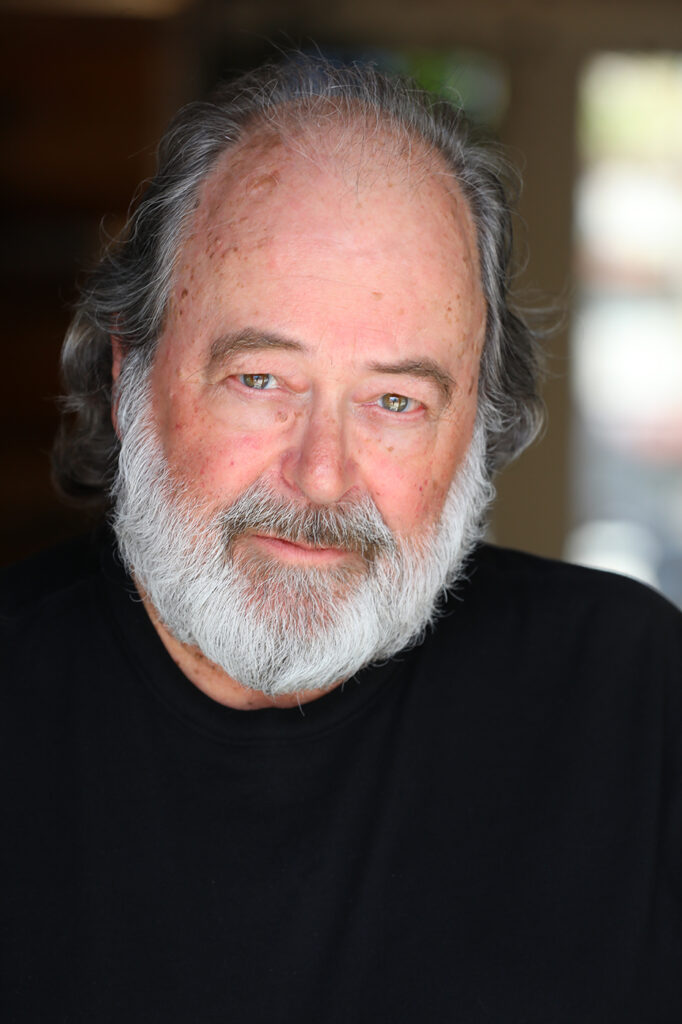
My guest this week is the self-described “happy hyphenate” Matthew Jacobs. Best known for contributing to major titles like Young Indiana Jones andThe Emperor’s New Groove and writing the 1996 Doctor Who TV movie, Matthew joins me to coincide with the 30th anniversary of the TV movie’s release.
Matthew tells me about his “No Rules” approach to creativity and his fascinating method for finding your “Creative Fingerprint”—the hidden linking tissue between the stories you love and the work you produce. And his definition of creativity is my favorite—ever.
Whether you’re a fan of the Doctor or an exhausted perfectionist looking to reclaim your own creative authority, this conversation is an invitation to stop performing and start feeling human again.
Ready to send your inner critic to summer camp for an hour and just enjoy some creative company? Join me for a free Creativity Circle.
Episode breakdown:
0:00 Childhood creativity and early acting origins
3:50 Transitioning from acting to directing and writing
7:15 The dream based approach to starting a script
11:00 Learning the craft by reading professional scripts
15:30 Why there are no rules in the creative process
20:10 The power of the childhood “why?”
24:45 How to find your personal fingerprint question
32:10 Bringing your unique voice to major franchises
38:20 The truth about the 1996 Doctor Who TV movie
45:45 From “The Llama King” to The Emperors New Groove
50:30 Dealing with creative backlash and legacy
54:00 Closing thoughts and appreciation
Show Links: Matthew Jacobs
Matthew’s website
Subscribe!
You can subscribe to Follow Your Curiosity via the handy links at the top of the page for Apple Podcasts, Spotify, iHeart Radio, TuneIn, and YouTube. If you enjoyed the episode, don’t forget to tell your friends!

Transcript: Matthew Jacobs
Please note: This is an unedited transcript, provided as a courtesy, and reflects the actual conversation as closely as possible. Please forgive any typographical or grammatical errors.
Nancy Norbeck [00:00:06]:
Welcome to Follow Your Curiosity. Ordinary people, extraordinary creativity. Here’s how to get unstuck. I’m your host, creativity coach, Nancy Norbeck. Let’s go. Matthew Jacobs has done just about everything you can possibly do in the world of film as an actor, writer, director, and producer. He is known best for his extensive career writing for television shows like Doctor Who and the Young Indiana Jones Chronicles, as well as his work on The Emperor’s New Groove. He also directed two prize winning TV movies for BBC films, Hallelujah Anyhow and Mother Time.
Nancy Norbeck [00:00:43]:
He also teaches screenwriting. Matthew talks with me about how he got his accidental start as a writer, his definition of what’s creative, his unusual advice for new writers, finding your fingerprint question, the thirtieth anniversary of the Doctor Who TV movie, and more. Here’s my conversation with Matthew Jacobs. Matthew, welcome to Follow Your Curiosity.
Matthew Jacobs [00:01:08]:
Well, thanks for having me.
Nancy Norbeck [00:01:10]:
I start everyone with the same question. Were you a creative kid, or did you discover your creative side later on?
Matthew Jacobs [00:01:18]:
I suppose you’d say I was a creative kid. Yes.
Nancy Norbeck [00:01:22]:
How did that how did that look for you?
Matthew Jacobs [00:01:26]:
Well, it’s kind of hard to remember. I have to remember. My first time the first thing I remember where I said to myself, okay, yes, you you might be creative, was when I was, a little boy, round about I suppose it must have been about seven or or or six, we moved to Devon. And my dad was going bankrupt, and the bailiffs were coming around into Dartmoor and to this little place we had in Dartmoor. At that point, as a seven year old, I was doing lots of painting, and and my dad was very encouraging about it. And when the bailiffs came round, he said, these will be worth more than anything I had and held up these paintings that I’d done, which actually weren’t bad paintings that I still have somewhere. They they they were around. So I think as you’re when you’re a child, the encouragement your parents give you, in some ways steers your creativity.
Nancy Norbeck [00:02:35]:
Absolutely. Absolutely. It makes a huge difference.
Matthew Jacobs [00:02:40]:
Yeah. That doesn’t mean parents should just go around saying, oh, you’re a genius. Right. I mean, it’s when it’s born out in some way. And and, obviously, as a child I was a child actor, not for long. But when I was 11, I did a, had, a BBC two classic serial, an adaptation of PointCounterpoint, and that was in 1968. Well, it came out in ’68. I think you shot it may have shot it in ’67.
Matthew Jacobs [00:03:11]:
But it was that was five episodes or four episodes, I can’t remember, playing little Phil in an adaptation of Aldous Saksley’s Point Counterpoint. So I suppose you could say I started quite young, and then I just kept going. I think the thing is is, when you’re a child actor, what happens is is suddenly you grow up. You know? It’s like suddenly you’re in in the company of all these adult actors, and there are no other children around. And so you you kind of lose your childhood a little bit. And I had lost my childhood anyway. You know? So it was kind of a natural, progression to to go from acting to to other kind of other kind of creativity. I I played a lot of music.
Matthew Jacobs [00:03:59]:
Yeah. I suppose you’d say I was a creative child. Yeah. I mean, but I had a whole family. We were all doing doing stuff. And it depends what you term as creative. It doesn’t have to be creative arts. You know, it can be creative.
Matthew Jacobs [00:04:14]:
You can be creative in anything really, I think.
Nancy Norbeck [00:04:19]:
Yeah. I agree with that. I think we’re defining creativity much too narrowly most of the time.
Matthew Jacobs [00:04:25]:
Yeah.
Nancy Norbeck [00:04:26]:
Yeah. Well and and your dad was an actor. So did that influence you? I mean, is that part of how you ended up becoming an actor as a child?
Matthew Jacobs [00:04:34]:
Yes. It’s exactly that. Yeah. I looked at my dad and I went, I wanna do that. And then, and then very quickly I realized well, no, it wasn’t very quickly. It was kind of I had to go through the go through the National Youth Theatre. And then at National Youth Theatre, I kind of realized, I’m not sure I wanna be an actor. I think I’d rather be a director.
Matthew Jacobs [00:04:54]:
I’d rather be the person who hires the actors. And then I didn’t realize that maybe there are people who hire the directors as well. Now, if my dad had been a banker, things might have been easier.
Nancy Norbeck [00:05:11]:
Ah, you never know.
Matthew Jacobs [00:05:14]:
But you never do. You’re right. You’re right, Nancy. You never know.
Nancy Norbeck [00:05:18]:
You never do. Never do. And then so so you you were acting, and then you thought you wanted to be a director, and then you wanted to hire the director. And somewhere in there, you started writing.
Matthew Jacobs [00:05:31]:
Yes. I, I, I fell into writing kind of by mistake, really. I’d gone to, I’d gone all the way through, you know, being a child actor and being a, and then being a sort of a young actor and then going to Hull University drama department and being, and doing more acting training and, and, and being a director. All that time I’d been working with other writers or working from old plays, or new plays sometimes. And, and then when I got to film school, there was a a stage play called Female Transport that had been written by Steve Gooch that I’d done a production of in in the North Of England. And I loved this play, and I thought this would make a great film school movie, you know, because it was all set in the hold of a ship. And, and it was about, you know, women being sent to Australia in the eighteen sixties. And every time I put the script into the to the approval panel, because National Film School was a a film school run by the government, and it was government money you were using when you made your films.
Matthew Jacobs [00:06:46]:
There was always a panel who would give or not give permission for the script to be made. And you had a budget, and, eventually, you’d get the permission. But in this case, I couldn’t. Even though I managed to get a bit of money out of the school to pay Steve Gooch to do a film adaptation of it, I couldn’t convince them to let me do it. So the head of writing there was a guy called John Bryce who had, been behind the original Avengers and ABC Armchair Theatre, some very sort of groovy nineteen sixties kind of guy. Well, this was the seventies. And he said, well, you know what, Matthew? You should just write your own write your own short film. And, I said, but I can’t write.
Matthew Jacobs [00:07:32]:
I really wasn’t very good at writing. So he said, well, just the next time you have a dream that you can remember, write it down as a movie Oh. Which I thought was a lovely piece of advice. And I often give that to people who I coach or consult with, if they’re stuck and they just wanna free up their the subconscious and their and their writing tools, as it were. So I just said so I had this dream about a, elderly blind man who had wandered into a forest. It was very much a dream. And he’d fallen over, and he was uncovering the the leaves to try and find something to hold on to. And his hand fell upon a a golden foot.
Matthew Jacobs [00:08:27]:
And so it was just this this pure gold, but it he couldn’t see what it was, and then he felt it. It was a child. Now is that Silas Marner, I suppose, you know, was having a dream of of whatever it was. But I woke up thinking, well, that’s a strange dream because I was outside the central character, and I was concerned and worried about, about the child. So I thought that’s a good subject. So I wrote this short story, first of all, which was just like two, two or three pages long, called Darkness from the Trees. And then I showed that to John Bryce and he went, okay, now write that as a screenplay. And I built it out into an old character.
Matthew Jacobs [00:09:13]:
He was a pianist, you know, and it became this lovely short script. It was very poetic. It wasn’t very well written as a screenplay, but as a piece of inspiration to make a film from, it was probably quite useful. Anyway, John Bryce was incredibly encouraging and, you know, stuck his head out of his office. Matthew, come here immediately. Come here. I was just, what you’ve done here is a work of genius. Here, have some champagne.
Matthew Jacobs [00:09:44]:
You know, would you like whiskey? You know, it was like, you have to remember, it was the early seventies. So, oh, mid seventies by then, I think. And then he was very encouraging, and I was broke as I, you know, as one one gets. And he said, I’ll tell you what. I think you’re really good. Anyway, I made that film, and it was very successful. Played all sorts of festivals and set me off at the National Film School to the point where people wanted me to write their short films for them. So then I wrote another thing called When the Rain Stops, for director for dancing.
Matthew Jacobs [00:10:25]:
Voila. And then because I was broke, John Bryce got me a job reading for Rank distributors. So Rank was the one of the main distributors in The UK at that time, and they would get completed scripts that of films that were being made quite often, Clint Eastwood movies or, you know, I don’t know what. And, and they would take the cover page off them, send them out to their readers, and I’d read two or three of these a month and get paid, you know, for me, a fortune, to read these. But I was reading screenplays that had had been greenlit and that were for the most part working. And I obviously hadn’t seen them because they were in the process of being made and their distribution deals were being done around the world, which is what I was involved in. You know, do do we want to buy this for for a British distributor? And from that, I would have to write, not just the synopsis of the script, but also, you know, opinions and ideas and things about where I thought it sat in the marketplace. That by itself, reading a screenplay, that worked, but where you haven’t seen the film, was the best education I could possibly get.
Matthew Jacobs [00:11:53]:
It made me realize this isn’t so hard. I can I think I can do this? And then John Bryce, bless him, actually commissioned me to do an adaptation of Pushkin’s The Queen of Spades, a Pushkin short story. And then he wanted it set on a boozh line steamer in the Amazon, sort of aiming for Jack Nicholson as the main character and all of that. And he gave me a princely sum of £300 so I did the work. So suddenly writing was this way of earning money. So while I was at film school, I would write for other other students, and sometimes produce as well, as long as I could keep 3 or £400, out of the budget. And so for me, it was a very down to earth thing. It was I can write and and, I can get people’s ideas down on paper.
Matthew Jacobs [00:12:51]:
And so I didn’t really start writing until I was in my sort of, I suppose, mid twenties. And then I wrote like crazy, and then I very quickly got hired. I got taken on to do some rewriting for Paramount and then started writing stuff that got made. Terrible stuff like Ninja Mission and Starship. Anything I could get. Anything that basically where where I knew it was gonna be made. Because once you became a writer whose whose work had been made and and had made a bit of money for film companies, you were like a horse that had won a race. So other people were prepared to bet on you.
Matthew Jacobs [00:13:35]:
That’s how it was then. It’s not like that now because the hurdles to making films now, or, you know, screen entertainment are slightly less. You know, we can make films without scripts now quite happily. I’ve made several. Or you can make documentaries. You’re writing in the cutting room. You know? So everything clicked upon the time. But in answer to your question, that was how I got into writing, basically, through necessity and and as a way to direct and make films.
Matthew Jacobs [00:14:06]:
I’ve never really written to be published. I’ve only just just finished writing what will be my first published short story, you know, which is to Doctor Who Magazine, but that’ll be in the special edition, with celebrating the thirtieth anniversary of the TV movie, that comes out in May. And that was lovely. Ironically, I got paid £300 for that as well. So so nothing nothing changes really. That’s that’s it.
Nancy Norbeck [00:14:41]:
There’s a certain poetry to that, isn’t there?
Matthew Jacobs [00:14:44]:
It’s the circle of life. You start with no money, you end with no money.
Nancy Norbeck [00:14:52]:
Oh my. Well but, you know, for getting into something backwards, I think, as you said, it it seems like a a kind of a good way to have have learned, you know, as as you said, great great on the job training into
Matthew Jacobs [00:15:08]:
something that worked
Nancy Norbeck [00:15:09]:
out well.
Matthew Jacobs [00:15:10]:
Well, I I, you know, if if the medium had been slightly different, I probably wouldn’t have bothered becoming a writer. I’ve just gone, you know. And I did. I carried on. I was directing just I I was directing more than I was writing, actually. So I was I was, you know, those early films, which I directed recently, you know, I’ve done several. Yeah.
Nancy Norbeck [00:15:31]:
So is one really more your thing than the other? Because it seems like you you blend so many different aspects of film in your career.
Matthew Jacobs [00:15:42]:
I like to I like to stay loose and not get too tied up with any particular aspect of production or casting or anything. I like to stay slightly under the radar because if you’re slightly under the radar, you can make more mistakes. And I think the trick, to enjoying, your mistakes, is knowing that there’s not too much hanging on them. And we only really learn by our mistakes. That those are the big lessons we learn from. And we learn we learn in all sorts of different ways. You know, it’s like, I think when we when we make mistakes, we go, oh, I don’t think I should do that again. Then more often than not, a couple of years later, we’ll we will do it again, but we’ll be better at it.
Matthew Jacobs [00:16:38]:
And and we do you know what I mean? I just think there are no rules. I think it’s as simple as that. There are no rules. The minute you accept that there are no rules, it liberates you to be more creative. If you spend your time trying constantly to find out what the rules are, And then sometimes that can stand in the way of actually having the confidence to create something new.
Nancy Norbeck [00:17:06]:
I think that’s so true. So true. And and I I can think of so many ways in which that keeps us stuck because, you know, when you’re in school, the teacher’s there to teach you the way to do the thing, to keep you from stumbling around and wasting your time doing it all the wrong ways. Right? The idea is save you all the time. Learn I mean, if I tried to learn long division by myself without a teacher there to help me figure it out, I would be a disaster. I am a disaster I still even with
Matthew Jacobs [00:17:44]:
the rules.
Nancy Norbeck [00:17:45]:
Right? Right? I’m a disaster.
Matthew Jacobs [00:17:46]:
I don’t even know what it is. How is it different from short division?
Nancy Norbeck [00:17:54]:
Right? I avoid it as much as possible. I I thank the gods every day that there is a calculator to do it for me. And yet, you know, that has its place. But I think when we grow up in that environment where it’s like, just tell me the way to do it. When we go out and and we really need to have the freedom to figure it out on our own, we forget that that’s an option. And that Yes. In many ways, it’s better to figure it out on our own because the way that works best for us might not be the way that works best for the person that we want to teach us. And, and that just leads us into
Matthew Jacobs [00:18:30]:
And there were different ways of teaching. I mean, more and more, I think, you know, in different eras, they taught things different ways. There’s this sort of mentor kind of way of being taught where you attach yourself to somebody who who kind of helps you through your creativity and things like that. There’s the learning the craft kind of way, which is kind of a bit what you’re talking about, which is, okay, this is the industry accepted way of writing a treatment. That’s, but you have to work out which way is best for what the market. It’s very, it’s very clear. Then there’s the kind of teaching that I really enjoy doing, which is getting people to feel more confident about their their own voice. And once that’s, happening, then that liberates the the student to to have that same kind of energy that a child has, which is I’m this is a game.
Matthew Jacobs [00:19:39]:
You know, it’s Mary Poppins with every job that must be done. There is an element of fun. You find the fun and the job’s a game. It that kind of that kind of teaching for creative stuff, and by creative, I mean stuff that comes from inside you. Not just a pretty pattern or anything like that, but something that only you can do. That’s true creativity. In my mind, that’s all about understanding, what drives you and and being proud of that. And so that kind of teaching, which helps people, have confidence in what they’re trying to express sorry.
Matthew Jacobs [00:20:29]:
It’s very important because once you have that confidence, then you find the right medium for what it is you’re going to express. So when you say, you know, I call myself a happy hyphenate, in as much as I’m proud of my hyphens, every time I add a new skill, I feel happier about about this. But I’ve got another way of saying what it is I wanna say. So so that business of finding what how you want to say things, what is the question that drives you as an artist or as a, architect or as a, you know, mathematician? But all of these things are creative. And, you know, math is math can be just as creative as writing a novel and and possibly more useful, in the long run. So, yes, I don’t know whether that answers your question. Yeah. I think so.
Matthew Jacobs [00:21:33]:
Whatever that was.
Nancy Norbeck [00:21:34]:
Yeah. Well, I love your definition of creativity. I think it’s great. I I might adopt that myself. It’s the the best way to to clarify without over defining. You know, it’s the thing that comes from you that nobody else could do. I think that’s Yes. The perfect encapsulation.
Nancy Norbeck [00:21:52]:
And I also love happily hyphenated. I think that’s fantastic. So I
Matthew Jacobs [00:21:56]:
think we have to be today because we can do so much. We can make films on our phones, or we can make them in iMacs. But at the end of the day, why are we making this film? You know? Or why are we making this TV show? Why are we making this streaming show? You know? What’s it about? Because that’s what you’re asking. When you go onto your channels at the end and you look through what you want to watch, what reaches out to you is either stuff that you know and love. Do you want more of it, which is the screen entertainment scene as a commodity? So no. As we know, we want to watch Ryan Gosling. He’s very easy on the eye. I can watch he’s funny.
Matthew Jacobs [00:22:38]:
He’s witty. But if we do, you know, Tom and Jerry with Ryan Gosling, everyone will watch it. And so it’s kind there’s that kind of thing. But then there’s another thing that goes on, which is, which is sometimes you’ll come across a show like Adolescence, or, Breaking Bad or, or sometimes Doctor Who or or sometimes, you know, different shows. You go, well, that’s an interesting idea. And then you get hooked on it. I think that’s what was the charm behind all those shows like Twilight Zone and and X Files and Doctor Who was you knew when you tuned into those shows that you didn’t know what you were gonna get. Yeah.
Matthew Jacobs [00:23:22]:
So therefore, it was an inspiring thing to sort of browse through these shows and and and go, gee, that’s a great idea. And it was something for you to talk about, with your friends and family.
Nancy Norbeck [00:23:39]:
Yeah. Yeah. You’re right. Because, you know, if you’re tuning in for The West Wing, you have a pretty good idea what you’re gonna get in that episode.
Matthew Jacobs [00:23:48]:
Yeah. A lot of people talking. Not much.
Nancy Norbeck [00:23:53]:
Yeah. Yeah. Talking talking about politics. And I love the West Wing, but it’s
Matthew Jacobs [00:23:57]:
That’s right. I love it.
Nancy Norbeck [00:23:59]:
Kind of show. Yeah.
Matthew Jacobs [00:24:00]:
They all had the same voice. It was it was no. No. I’m not disrespecting Aaron Sorkin or anything like that, but it was just the nature of his writing at that time. I could give, it all felt the same. Everybody said, oh, he’s a bit like Padichayevsky. But then the other day I saw, I saw a network on a sort of on a run at, at a local cinema because I wanted to see it with an audience. A network is, is this brilliant film where people are talking all the time, but they all have different voices and it works in a completely different way.
Matthew Jacobs [00:24:37]:
Anyway, so those, those are the most talky. Yeah. West Wing is a great show. Yeah.
Nancy Norbeck [00:24:43]:
Yeah. Great show. Yeah. But you had a pretty good idea what you were gonna get when you tuned in for Beach Week.
Matthew Jacobs [00:24:48]:
You do. You know, so basically it’s political procedural. And the idea behind a procedural, is that we, is that it’s like being told a fairy tale. You know, roughly, it’s gonna be what’s gonna go on. If it’s in a hospital, people are gonna be in jeopardy. And and then, of course, the doctors might be falling in love with each other or other people, and going through the soapy aspect of it. You know, if it’s a procedural, if it’s a crime procedure. I mean, that for a long time, that was what TV relied on was was the stakes are existential.
Matthew Jacobs [00:25:29]:
And, we’re gonna we’re gonna solve the problem each week.
Nancy Norbeck [00:25:34]:
So you’re
Matthew Jacobs [00:25:35]:
given these existential stakes. There’s a killer on the loose. We have to find him or her, and and then the world will be safer. That’s most most police stuff, isn’t it, really? Yeah. It’s fairly straightforward. And it’s not that hard to identify what people like tuning into and then saying, well, what is my voice, and how do I bring my voice to the things that people tune into? And so understanding your voice is is, in my mind, the key, because you will never understand it completely. If your voice is at all interesting, it’s gonna keep changing. Right? It’s gonna, there’s gonna be little variations on it.
Matthew Jacobs [00:26:20]:
It’s gonna grow as you grow older. And when you talk to a child, and a child asks you questions that are so, pure, like why? And the why’s a child, a three year old or a two year old comes, comes up with, are normally just as deep as anything that the Greek philosophers came up with, because their brain is more powerful than an adult’s brain. So because they’re having to use it to discover the world, they come up with these fantastic questions all the time. If you’re lucky enough to hold on to one of those questions, as you grow up, you you the questions become the the thing that guide you through whatever you’re creating. Because something, anything that’s any good, means that the audience is asking a question. If you think about all the films that you might love, there there’s you know, people love Star Wars. What’s Star Wars talking about? It’s It’s talking about, you know, what is the Force? What is the nature of good? And what is the nature of evil? That was what Lucas, you know, he was interested in that. Is there a way in which we can define that? And and, there probably isn’t.
Matthew Jacobs [00:27:42]:
So so we’re gonna keep on asking that question in different ways. The result is, you know, books and films and poems and got that as well.
Nancy Norbeck [00:27:51]:
Yeah. Well and and since you mentioned questions, you had told me that you have a fingerprint question that we should discuss, and I wanna make sure that we do.
Matthew Jacobs [00:28:00]:
Well, that’s kind of what I’m talking about. Okay. You know, it’s all of that. I told you that a couple of years back. And I I call it, we each have our fingerprint question.
Nancy Norbeck [00:28:13]:
Okay.
Matthew Jacobs [00:28:14]:
And identifying what your fingerprint, your personal fingerprint question might be is a first step on the ladder to whatever you might want to create.
Nancy Norbeck [00:28:26]:
Okay.
Matthew Jacobs [00:28:26]:
So so and and I’ve developed different methods of people finding their fingerprint question. I just call it your fingerprint. And so no matter what I’m teaching, because I teach at universities and and I teach on a sort of private, basis and, you know, a bit consult, I suppose it would be called consulting. But the first thing I do, no matter what I’m consulting on or no matter where I’m teaching, whether I’m teaching acting for camera, whether I’m teaching directing, or whether I’m teaching, screenwriting, the first thing we do is we we search for what our fingerprint might be individually within the group. And it’s a great way of all the students or everybody getting to know each other. And, what we do is is I I ask you you can’t think about it for too long. I ask you, well, the first two movies that you loved as a child, normally, people come back with with the movies that they were babysat with. You know? It’ll be safe if he just watches The Lion King.
Matthew Jacobs [00:29:40]:
You know? I can go have a bath and come back. And normally the second movie is the first movie that you loved that everybody else went, I said, I’m amazed that you loved that film. Do you know what I mean? And that and that’s normally a more sophisticated thing and more seeing a lot of the work. Then we get the original trailers on YouTube, if we can, and run the trailers. The trailers redefine those movies for you, in a historical context. But they redefine what it was about the movie that they could sell the movie with. So so it jogs your memory. And then I ask you, you know, well, what what do you think is the linking tissue between these two movies that means the most to you? Wow.
Matthew Jacobs [00:30:38]:
So that means that when you find that linking tissue, sometimes that takes time and it’s normally not what you expect it to be. And normally people say, yeah, no, they’re my first two movies. There’s no link between them whatsoever. There will be. And there inevitably there will be. And you suddenly realize it when you look at the two trailers. You should try it. Anybody listening to this, try this.
Matthew Jacobs [00:31:06]:
What is the linking tissue between these two movies? And just go deeper. When you think you’ve come up with something, then ask yourself why. Why do I think that? And then you’ll normally find there’s a deeper level to be found. Once you’ve found the linking tissue that means the most to you, And you can’t be wrong because it’s about you. And how do you turn that into a question? Is is the next challenge. And when you turn it into a question, you normally find that that question is your fingerprint is what you end up always saying. You can look back through if you’re ready if you’ve already been creating things, you can look back through everything you’ve done and you go, oh, yes. Even, you know, that chair I designed, that kitchen I landscaped, you know, that that book I wrote and that film I did, you’d be able to say, well, there is a link between all of them.
Matthew Jacobs [00:32:05]:
That is normally your fingerprint. That is the thing that’s just if you if if you’re just if if there’s nothing going on, for you and you’re doing it instinctively, that’s fine. You don’t have to have a fingerprint to do stuff. You know what I mean? It’s not a necessity. But what it is is it’s a tremendous help. For for example, for me, my first two films were, Walt Disney’s Jungle Book in the nineteen sixties, you know, the very racist, very kind of crazy, you know, animated adaptation of Kipling, who was equally racist. I went must have gone to see that three or four times. I loved it.
Matthew Jacobs [00:32:49]:
I loved so many things about it, but what I liked most was the relationship between Mowgli, and Baloo because Baloo was this wild character. He never knew what he was gonna do next, and it was fun. And he had this lovely philosophy, just the bare necessities and all that. And and then the next film that immediately came to mind was Stanley Kubrick’s 2,001, the Space Odyssey, which I’d gone to see with my dad, and and I completely understood it. My dad thought I was a genius because I understood it, and he didn’t. I wish I knew what I’d said at that time because now I watch it and I don’t understand it with the same kind of depth that I obviously did when I was 10 or 11 or 12 or however all that was when I saw it. But anyway and then I thought, what’s the connection between the two of them? And it it wasn’t very hard to find, actually. The connection was was that they’re both really about, you know, parental dysfunctional relationships.
Matthew Jacobs [00:33:56]:
But, you know, Mowgli’s gotta go back to try and find other human beings and is being taken back there by, a panther and, and a bear. And the bear is this wild character. In in 2001, the two astronauts are being looked after by a computer. And the computer is the parent. It’s not a very functional parent, ends up killing them. So so in many ways, you know, the the 2001 has a sad but optimistic ending. You know, I mean, because the astronaut gets regenerated as a star child, I think. And and, in Mowgli, the, the boy ends up becoming a man and, and goes after this girl who’s carrying her.
Matthew Jacobs [00:34:48]:
Go on, go on. You know, it’s all of that. And it’s great. So I ended up drilling my personal fingerprint being is how do you turn a dysfunctional relationship into a functional relationship? And that informs everything I’ve ever done.
Nancy Norbeck [00:35:06]:
Wow.
Matthew Jacobs [00:35:07]:
And and it really do you see what I’m saying? It’s I do. So I’ve so now I know when I’m given a book to adapt or when I’m coming up with a new idea, I know I’m on safe territory, when the story is about healing any kind of dysfunction in terms of relationship between people, especially parents. And so so it’s a kind of it’s a how do we turn a dysfunctional relationship into a functional relationship? It it that’s my question. I’m sure other people deal with the same question constantly, and it Mhmm. And it’s probably a trope for most stories. But, but when you feel like it’s your trope, then you feel more confident moving forward as you write. You know what you want to explore and you are able to find the drama at the heart of it because you’ve been inspired by your, what dramas inspired you. Do you see, do you see what
Nancy Norbeck [00:36:10]:
I’m saying?
Matthew Jacobs [00:36:10]:
So that means you end up in a, in a very strong position. Finding, what is your fingerprint is best done with other people. Do you know what I mean? You can do it by yourself, but it is best done with other people because all we’re doing when we’re creating stuff is expressing stuff from that’s come from inside or from what we’ve seen or that we feel other people need to know. So, so when we feel like people need to know this, that’s normally a better motive than I need 300 pounds. Ideally both. So it’s kind of like, anyway, I think that that answers what you’re talking about with the fingerprint. And that’s certainly what I focus on when I work with people. And normally it improves their game.
Matthew Jacobs [00:37:07]:
Sometimes it doesn’t. You know, sometimes people have different ways of working. Like I said earlier, I don’t think there are any rules really.
Nancy Norbeck [00:37:14]:
It’s it’s so interesting. And now I’ve I’ve got one movie. I’m not sure about the second one, but I’ll be thinking about that for a while for myself.
Matthew Jacobs [00:37:23]:
Don’t think about it too much, Nancy. If you just have to because the ones that come off the top of your head are normally the true ones.
Nancy Norbeck [00:37:32]:
Well, it’s just that I’m having trouble coming up with the second one. And I think it’s because I didn’t see a lot of movies as a kid. So I’m I may have to
Matthew Jacobs [00:37:40]:
be a movie. It could be a TV show.
Nancy Norbeck [00:37:42]:
That’s true.
Matthew Jacobs [00:37:43]:
It could be a TV show.
Nancy Norbeck [00:37:44]:
It might book. It it might be the very obvious blue box in the room. I don’t know. Yeah. But all all things come back to the giant blue box in the room with me sometimes. But but, but speaking of of which, I’m curious because, you know, when when you have that kind of fingerprint, but you’re writing for somebody else with someone else’s characters, like you did with young Indiana Jones and you did with Doctor Who. How does that fingerprint come out when it’s not necessarily your own your own playground, so to speak?
Matthew Jacobs [00:38:26]:
Well, you make it your playground by bringing your fingerprint to it. So if I have to write as I did for Lassie,
Nancy Norbeck [00:38:37]:
right,
Matthew Jacobs [00:38:38]:
You would say it’s not an original character, but in the end, I ended up writing about my dog. My dog was called Cindy, and my dog was around, when we were getting over my mother’s death and helped me get back on my feet as a child. And so I wrote a story about that. And then Lorne Michaels said, oh, yeah, that would be a great Lassie movie. Right? Because he owned Lassie. And so so therefore and then I said, well, do you wanna turn your do you see what I’m saying? It’s just like, so you bring your fingerprint to to whatever you’re being asked to handle inevitably. That means that, you know, when I pick up doctor who, doctor who becomes an extent. You have to be unashamedly egocentric, to a certain degree, I think, to be any good as a creative person.
Matthew Jacobs [00:39:32]:
In some ways, you’ve gotta be prepared to allow yourself to be egocentric as well as the the egocentricity is often about how you respond to everything else. It’s a double edged sword and that goes right the way through everything from you know, if you’re if you’re acting, you’ve gotta be able to be two things at the same time. You’ve gotta be able to hit the mark, do it do it again, do it again, do it again, And and then you’re there. You gotta be able to do roughly what the writers were writing. And so there’s a whole bunch of technical stuff there. And then you have to forget it all, do it like it’s for real and still hit the mark. So there’s a weird kind of duality that goes on, which I think exists when you’re being commissioned to come on board. You know, I had no shortage of doing franchise stuff in the nineties and early two thousands.
Matthew Jacobs [00:40:34]:
And so I think people knew that I was gonna bring stuff to the table. So George certainly knew that, and that was when he selected those six writers, six, seven writers for young Indiana Jones. He knew they were each bringing different things. And I ended up writing quite a few of the young, young Indies about the parents and things. So that was that was fun because the early childhood of of Indiana Jones hadn’t really been developed at all. So we were each able to bring our own perspective to the show. And, and there was a freedom there. And likewise with Doctor Who, the thing about Doctor Who was there’s no Bible.
Matthew Jacobs [00:41:20]:
There’s there really hasn’t ever been a Bible, I don’t think. And that’s what that’s what makes it attractive for writers. And that’s why you end up with very differing shows. They’re very, you know, differing in feel and intent and everything. That’s part of Doctor Who. Doctor Who is you don’t know what you’re gonna get. And it’s that’s why there’s no question mark. Yeah.
Matthew Jacobs [00:41:47]:
It’s just like Doctor Who, we just don’t know. We don’t care. It took me until recently to even understand that it doesn’t really matter who the doctor’s parents are.
Nancy Norbeck [00:42:04]:
All evidence to the contrary for a while three decades ago.
Matthew Jacobs [00:42:08]:
That’s right.
Nancy Norbeck [00:42:12]:
Yeah. And and I I wish we had more time. We only have a couple of minutes and it it feels wrong not to not to spend a little bit of time on the TV.
Matthew Jacobs [00:42:21]:
Let’s go. Let’s I I’ve got it down that we’ve been talking for forty five minutes. We’ve got another fifteen minutes. Let’s do fifteen minutes.
Nancy Norbeck [00:42:28]:
Okay. So, I mean, it is it is thirty years since the TV movie, which kind of existed its own weird little bubble and simultaneously kind of a bubble and a bridge between classic Who and and New Who, but in its own unique, wonderful little place. But it didn’t always seem like it was going to be considered a unique, wonderful thing. And it it also for for people who are listening who aren’t familiar, the TV movie is it was received very differently in The US than it was in The UK because people in The US didn’t really necessarily even know what it was, whereas people in The UK took to it much more readily than people here. But but Matthew was in the unique and somewhat unenviable position of being the person who wrote this US, UK hybrid Doctor Who that that was kind of a mixed bag at the time, but is generally pretty well loved now. And it it had to have been well, and and you’ve done the documentary doctor who am I, which Yeah. Is wonderful, and I highly recommend to anyone who has ever experienced any kind of creative backlash because it’s it’s an amazing look at that experience. But it was uncharted territory, certainly, for all of you going out and doing this thing that that was not strictly a UK production, produced in Canada instead of The UK, and you really didn’t know what you were gonna get in terms of creating it and the reception.
Matthew Jacobs [00:44:15]:
No. We didn’t. We had no idea. We we knew there were fans. And, I was at the end of you know, sometimes whether you end up writing something as a game of musical chairs, whether you end up getting the credit is a game of musical chairs as well. You know, so it’s kind of, it, you win some, you lose some. And, and, with Doctor Who, the, with the TV movie, the TV movie itself was a, a last ditch attempt, a hail Mary, if you like, to sort of get the show going again because they’d been developing it as a as a series at Amblin. And and Spielberg had finally turned around and gone.
Matthew Jacobs [00:45:04]:
He he just didn’t like any of the things they were doing with it, basically. So because he didn’t support it, it died at Amblin. And all of the stuff that had been developed for that went with it. And there was a last digit attempt, which was, you know, Philip Siegel had had this brilliant idea that Fox would do a backdoor pilot, you know, in the form of a TV movie, movie of the week. You know? So it wasn’t really a movie of the week. They called it the movie of the year. It’s still like that. There’s something they they I can’t remember what they called it.
Matthew Jacobs [00:45:43]:
But it was a chance to sort of make a backdoor pilot, which if Fox loved it, they would then, move on to series. And in fact, they wanted to when they got the pilot. They really liked it, actually. The people say it didn’t go to series because we didn’t get high enough ratings. That really wasn’t the truth. The truth was that it was that, it it got okay ratings. The the main thing was, was Fox actually wanted something to replace X Files in Vancouver, which is where we shot it. So they had a whole bunch of people up there ready to go.
Matthew Jacobs [00:46:23]:
And we were using basically the the X Files, craftspeople, you know, all the people who’d worked on it. And so they were they were itching to go to series. Universal, on the other hand, they had a time travel show, Sliders, which they understood. So they renewed that, did a second season of that. They looked at Doctor Who. They didn’t understand it. They just thought it was too weird. And seeing as Spielberg was no longer attached, they said, no, we don’t wanna make it.
Matthew Jacobs [00:46:58]:
So so it was really universal at that time that that killed it. Otherwise, it would have gone to series on Fox. You know, that would have happened. But then also, you know, the minute something doesn’t get picked up, everyone’s throwing blame around, and the easiest person to blame is the writer. So so I was being blamed, And in many ways, the whole production was kind of blamed in a way. But it didn’t stop it. At the end of the day, in 2005, it came back, and Russell did a fantastic job. And our doctor was there.
Matthew Jacobs [00:47:38]:
I don’t think I don’t think I think it may not have come back in in 2005 if it hadn’t been for the fact that that the audience had stood up and and accepted the TV movie, especially in The UK, where it did very well. And it’s still doing well, which is amazing because there’s the, you know, there’s the restoration that’s coming out in May, which is a four ks restoration where they’ve redone all the effects from the negative. I can’t wait to see it. I haven’t seen it yet. And, so that’ll be fascinating.
Nancy Norbeck [00:48:14]:
Yeah. Well, and it had never occurred to me until your documentary, and it’s so short sighted of me in retrospect that that so much of that blame would have landed so squarely on one person or even, you know, even if it hadn’t been directed at you, how that would have felt as the person who wrote it. Because we don’t tend to think about movies that way when when we’re the ones consuming them. And, you know, to have all of that kind of landing on the head of one person is appalling in retrospect.
Matthew Jacobs [00:48:46]:
It’s it’s okay.
Nancy Norbeck [00:48:47]:
You know,
Matthew Jacobs [00:48:47]:
it’s okay, Nancy. I think I think in a way, you you it goes with the territory, you know, that that if you’re going to stand up in fact, in a way, it’s kinda nice that you get the blame, because because it means that the people are accepting giving you authorship of of some degree. And and so so I’ll happily take the blame. I’ll take the blame for stuff I love, and I’ll try and push blame onto others on things that I don’t love, that I should get the blame for those things as well. Do you know what do you do so so if I Yeah.
Nancy Norbeck [00:49:23]:
I can see that.
Matthew Jacobs [00:49:24]:
So so it’s kind of so it’s just human, to to to want people to like what you did. But when they don’t like it, you know, you learn a lot from that. You do. And and and it affects the next thing. So and it’s always a case of everybody’s taste come and that’s what I love about TV and movies and all of these things is that it’s a communal process. And and Emperor’s New Groove, which started out as a, as a thing called Kingdom of the Sun and was was basically what I called the llama king and was Roger Allers, God bless him, who recently passed. He’d just done The Lion King. I’d just done done Young Indy, and and he wanted to do something said about the Incas, and so did I.
Matthew Jacobs [00:50:17]:
And and this was been a project that had been hanging fire at Disney since Walt Disney himself wanted to do something about the Inca Incan societies and all of that. But, of course, it didn’t happen because those Incan societies, they were they were fascistic. They they were constantly killing each other. They were constantly sacrificing people. They were they were a pretty scary bunch when they took over that area. So when when it came down to it, what would you actually be writing about? You’d be writing about the conquistadors, and they’d be writing about greed, and you’d be writing about gold. You know? So it became it became a really hard project to get right. And we were trying to do it as this beautiful musical.
Matthew Jacobs [00:51:08]:
And and the only thing we had, which stayed all the way through, was right from the beginning. The first pitch that we did was, this is the story of, of an arrogant emperor, who gets turned into a llama and has to understand the meaning of friendship before he can become a human again. It was, that story was always there. And we did the casting, you know, we had David Spade, we had Eartha Kitt, and it was gonna be a musical. And that’s when I, when I talk about musical chairs, this was literally the case, was we got to the end of doing the musical. We took a look at it. We took and of course, it you know, we’d been funded because Roger had done The Lion King, basically, and that had made more money than anything. At that time, it was very successful.
Matthew Jacobs [00:52:02]:
When we looked at the musical, the rough version of the musical, it just kind of didn’t work. It was really should have been called The Llama King, but it it just didn’t quite work. And so they retooled it, and David Reynolds did the final draft, which was I thought, great. I loved what he said. Roger of, you know, Roger’s vision. I think Roger was more hurt than anything. I think he was the most hurt person there because he really had, a a genuine vision of it as a musical, and it was very beautiful what he wanted to do. And we ended up with something that I thought was much more fun.
Matthew Jacobs [00:52:43]:
And and and I like the finished result just as much. So you never know when people don’t like something. Sometimes it can result in something that’s better than what you thought it was gonna be, which I think was the case with Empress New Groove. You know, and so I’m perfectly happy with the finished result and proud that I was just a part of it. And and it’s there’s so many people who are involved in getting something to the screen. Then if you’re picked out and they blame they decide to blame you, then that’s okay. You know? You just have to get used to it. The first couple of times it happens to you and you get the really bad reviews on something, it can it can hurt your feelings.
Matthew Jacobs [00:53:31]:
But but after a while, you just go, okay. I don’t care. And I know the people who love it are the people I listen to. And, obviously, actually, you really listen to the criticisms, the people who tear it apart. Those their words stick with you for in some some way. But, you know, we should all be that lucky to have those problems, to be quite honest. You know, you, you want to come up with a story and you want it seen as widely as possible. And then if, if everybody hates it, then it must be something.
Matthew Jacobs [00:54:04]:
You know, I like to think to myself, no matter what I’m working on, this could end up either at the Academy Awards or the Razzies that, that I, I, I, I would be equally proud if it gets a Razzie, as if it picks up an Academy Award to you, because all it is, is all that stuff is, is about a popularity contest. Yeah. Things can be popular when they’re really bad as well.
Nancy Norbeck [00:54:32]:
That’s true.
Matthew Jacobs [00:54:33]:
You know, so so they can be they can be loved for their badness.
Nancy Norbeck [00:54:37]:
That’s true. Well, and I think the interesting thing with the TV movie is that it is so loved now, as as we saw at Gallifrey one this year.
Matthew Jacobs [00:54:45]:
Oh, that was great, wasn’t it? Yeah. Were you there? You were there
Nancy Norbeck [00:54:49]:
I was there. For me. Yes. That was so much fun to have you all commenting on it live. It was great.
Matthew Jacobs [00:54:55]:
Oh, it was it was like watching it with a bunch of friends. Yeah. But in this case, it was, it was like watching it with a couple of 100 friends. And, and, and I think hopefully all, it did all of our egos good. You know, they’re not just the people who’d been involved in making it, but people who’d stood up for that movie, you know, were there or people who hadn’t seen it before maybe. Yeah. But it was, it’s, that was a great experience. And yes, you know, the doctor Who Am I? Experience, which is very much Vanessa’s film, Vanessa Ewell is the co director, that was equally a good experience.
Matthew Jacobs [00:55:37]:
You know, we, it took a long time to get it in front of an audience because because we were trying to do something that I don’t think had been quite done before, in terms of the documentary. People didn’t quite know where it fit. And at the end of the day, we did we got that documentary out and let people watch it. And it’s worth worth tracking down if you can.
Nancy Norbeck [00:56:01]:
It definitely is. Definitely is. It’s wonderful. So well, I know that you have to go, and I am so grateful that you have spent this time with me. I have really, really loved this conversation, and I think that other folks will too.
Matthew Jacobs [00:56:16]:
Thanks, Nancy.
Nancy Norbeck [00:56:19]:
That’s this week’s episode. I am so grateful to Matthew Jacobs and to you for listening. Matthew’s links are in the show notes. I hope you’ll leave a review for this episode. There is a link in your podcast app, and it is super easy, and it really makes a difference. If you enjoyed our conversation, please do share it with a friend. Thank you so much. If you’re tired of thinking about answering a creative call but never actually doing it, come join me for an hour and start feeling like yourself again.
Nancy Norbeck [00:56:49]:
The Follow Your Curiosity Creativity Circle is a safe, welcoming, and encouraging environment where we send the shoulds and inner critics off to summer camp where they’re kept busy rather than getting in our way. You can find it at the link in your podcast app. See you there, and see you next week. Follow Your Curiosity is produced by me, Nancy Norbeck, with music by Joseph McDade. If you like Follow Your Curiosity, please subscribe, rate, and review on Apple Podcasts or wherever you get your podcasts. And don’t forget to tell your friends. It really helps me reach new listeners.