
Have you ever faced a moment where your life was brought to a complete halt, and you realized you needed something deeper than distractions to survive?
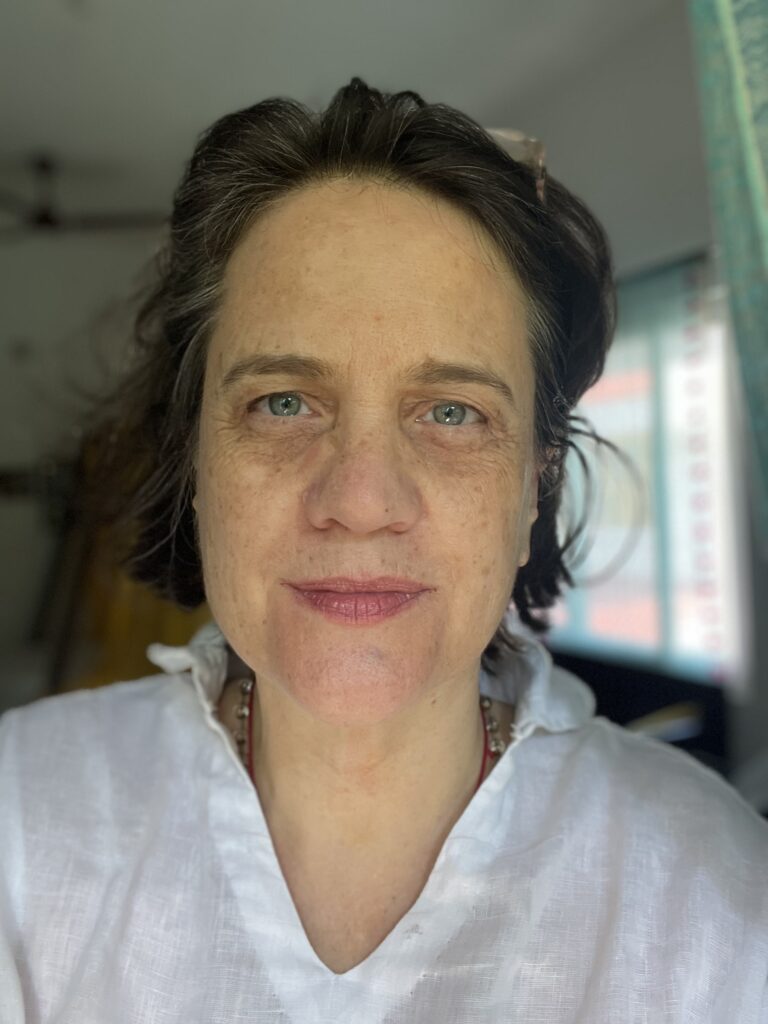
This week, my guest is documentary photographer and artist Nathalie Latham, whose life took a dramatic turn when she was diagnosed with stage-three cancer at age 39. Nathalie joins me to share her extraordinary story of how she used oil pastels and drawings as a literal confirmation of life during eight days of intensive, round-the-clock radiation.
We talk about the magic of growing up in a musical family, the power of having just one adult who understands you as a child, and the silent pressure of the “safe” career path. Nathalie also shares why it took fourteen years before she could bear to look at her radiation drawings again, and how she now infuses her mantra practice into drawings of prayers for peace.
It’s an invitation to stop overthinking your creative expression and start treating your creative practice as a vital act of self-connection.
I’m Nancy Norbeck, and I’m your Messy Muse Mentor. I help people feel alive again through curiosity and play.
In this episode, we discuss:
- The Power of One Person: Why having just one teacher stand up for your creativity can change the trajectory of your life.
- The Safety Tangent: Why we often choose the responsible path to please our families, and how we eventually find our way back home.
- Art Store Radiation: Why Nathalie packed a box of art supplies for her cancer treatment room and how drawing became her proof of life.
- Befriending the Trauma: The slow, patient process of healing and learning to find wisdom in our most difficult experiences.
- Prayers for Peace: How to combine spiritual practice with your creative practice to create a landscape of inner calm.
Ready to send your inner critic to summer camp for an hour? We get together once a month for a relaxed, co-working-style session where you can work on whatever you want—without any pressure to do it “right.” We send the shoulds and inner critics off to summer camp where they’re kept busy rather than getting in our way. Join the Creativity Circle.
Episode breakdown:
0:00 Introduction
1:21 Growing up in a musical family
5:12 Finding sanctuary in the art room
11:50 Choosing a "safe" career path
18:14 Following curiosity to filmmaking
21:11 Art supplies in the radiation room
32:40 Facing the trauma of the drawings
40:09 Infusing mantra and peace into art
42:05 How traveling shifts your perspective
Show Links: Nathalie Latham
Nathalie’s website
Nathalie’s Substack newsletter
Nathalie’s Instagram
Subscribe!
You can subscribe to Follow Your Curiosity via the handy links at the top of the page for Apple Podcasts, Spotify, iHeart Radio, TuneIn, and YouTube. If you enjoyed the episode, don’t forget to tell your friends!

Transcript: Nathalie Latham
Please note: This is an unedited transcript, provided as a courtesy, and reflects the actual conversation as closely as possible. Please forgive any typographical or grammatical errors.
Nancy Norbeck [00:00:06]:
Welcome to Follow Your Curiosity. Ordinary people, extraordinary creativity. Here’s how to get unstuck. I’m your host, creativity coach, Nancy Norbeck. Let’s go. Nathalie Latham was a documentary photographer based in Paris when her life was brought to a halt with a cancer diagnosis at age 39. After a long journey of recovery from cancer treatment, she reentered into the world with her book of drawings, I am Alive, creating resilience and healing trauma through art. This is a collection of drawings from over fourteen years.
Nancy Norbeck [00:00:41]:
Drawing was a vital act for her as she went through radiation and recovery. Nathalie talks with me about the magic of growing up in a musical environment, the power of having just one adult who understands you and gives you a safe haven as a child, the parental drive to push kids towards safety, how Nathalie used creativity to reckon with eight days of twenty four hour radiation and its aftermath, how we change when we travel and spend an extended time in other cultures, and more. Here’s my conversation with Nathalie Latham. Nathalie, welcome to Follow Your Curiosity.
Nathalie Latham [00:01:21]:
Thank you, Nancy, for inviting me. I’m very, very happy to be here.
Nancy Norbeck [00:01:25]:
So I start everybody with the same question. Were you a creative kid or did you discover your creative side later on?
Nathalie Latham [00:01:32]:
I was definitely a creative child and creativity. I actually remember actually asking myself, when was I the happiest? And this is as a child, and it was all it was when I’m making things. So creativity was definitely my key to happiness.
Nancy Norbeck [00:01:49]:
What kinds of things did you start out doing?
Nathalie Latham [00:01:53]:
Oh, like we I had a very musical family, so definitely through music. And, and I did a lot of theater, and I danced a lot, and I drew a lot and painted. Basically, anything I could get my hands onto. As long as I was in that zone, you know, that zone which everything else disappears and you’re just there in that joy of creating.
Nancy Norbeck [00:02:22]:
Yeah. Yeah. And since you had a musical family, I’m guessing that nobody looked at you and said, what are you doing that for? That’s a waste of time.
Nathalie Latham [00:02:31]:
No, definitely not. No, no, no. That we would definitely have that wacky side of this of like and, yeah, my mother was very creative and and and she always we always had music on in the house. There was always someone practicing a piano or cello or a violin or something like that. So there was always that definitely there. Yeah. That was yes. Which I’m very grateful.
Nathalie Latham [00:02:54]:
I I don’t I don’t think I actually realized with how, how important that was as a child, but it was definitely my my go to to to being to keep me happy.
Nancy Norbeck [00:03:04]:
Yeah. We always had music on
Nathalie Latham [00:03:05]:
in the house when I
Nancy Norbeck [00:03:06]:
was a kid too, and my mom taught flute. So I I know what you’re talking about with the always somebody practicing. I mean, I took piano and flute for a while before I settled on voice. My brother played piano and pipe organ and trumpet and lots of choral singing in my family. So, you know, I remember walking home from school and hearing my mom a couple houses away, practicing her flute and was like, oh, I’m almost home. I can hear mom, you know? So I, I totally hear what you’re saying with that whole feeling. And I, I do think it makes a difference, even if it’s just background music, having it on in the house. There’s, there’s that added presence there that I, I can’t quantify exactly what it does, but I, I think it does make a difference for you.
Nancy Norbeck [00:03:59]:
Yeah.
Nathalie Latham [00:04:00]:
And and there’s also been so many studies of just how important music is because you’re using both sides of the brain, but children anyway. So and yeah. And it’s and it’s just such a wonderful it’s just so wonderful to to listen to good music too and to to be able to go to concerts and that’s a yeah.
Nancy Norbeck [00:04:18]:
Oh, yeah. Yeah. We were carted off to orchestra concerts as small children when we were way too young to appreciate. My mother loves to tell the story of my brother and possibly me falling asleep and snoring in the middle of one of said orchestra concerts to our great chagrin. But I, I do think that, you know, it, it gave us a foundation to appreciate it, even though we didn’t appreciate it at the time. And I also think that that musical background gave me a love of sound that gave me a facility with language and wordplay, even though there’s not, you know, an obvious connection. I really do think that it’s there. So, you know, I, I think that it does more for you than it looks like it does on the surface.
Nathalie Latham [00:05:12]:
Absolutely. Yeah. Yeah.
Nancy Norbeck [00:05:14]:
So when did you start to move more in a visual art direction?
Nathalie Latham [00:05:22]:
I mean, I was always I remember even it’s when I was at kindergarten, I was I loved painting. Before I went to kindergarten, I used to paint a lot. And, and I remember actually arriving at kindergarten being really shocked because nobody could draw, and everybody was just drawing a stick man with two sticks out, you know, out of the bubble and then two sticks at the bottom. And I was drawing people with heads and bodies and legs and arms and and, and I realized that I was I was different. And so I started to like, I stopped drawing like that, and I started to draw like everybody else, which is horrible. And I remembered I remember the, one of my mother’s friend is when I was much older, I was in high school. And she had because I was sort of considered quite a, you know, talented child of drawing, and she’d actually framed one of my drawings. And I was appalled because it was one of these rustic men that I copied everybody else.
Nathalie Latham [00:06:19]:
I’m like, no, that’s not one of my real drawings. But yes. I was always I was always drawing visually. And then when I was in high school, I, I drew a lot because, my parents got divorced. My mom went off to France. So she was on the other side of the world. I was I was going through a very, very hard time, and I was very disruptive in class. And I was often kicked out of out of the classes, and I had a really great art teacher.
Nathalie Latham [00:06:46]:
And she just had, up at the back of the art room, a place for me. And so I could just paint, draw, or do play. So I always had that place. It was like my sanctuary where I would go to. And so I was always I was always doing arts, in high school, which, I was really, really grateful for.
Nancy Norbeck [00:07:05]:
I love t shirts like that.
Nathalie Latham [00:07:09]:
Yeah. I know. You just you just need one pill you need one person
Nancy Norbeck [00:07:13]:
One person.
Nathalie Latham [00:07:14]:
One person to stand up for you. Yep. Exactly.
Nancy Norbeck [00:07:17]:
Yeah. I’m so glad that you had that one person who got it. Yeah. So I and I
Nathalie Latham [00:07:24]:
loved I loved doing art, so I really wanted to go to art school. And I got the the art prizes at high school, and I had a huge portfolio because I spent so many so much time being kicked out of my classes that I was just in the art room, like, hours and hours every week. So I had a very, very good portfolio. I went to the arts college in the city where I was, growing up in Brisbane, Australia, and, and they basically told me that I had no talent. And I didn’t get I didn’t get into art college. So you can imagine the little, like, okay. I’ve gotta try something else. So as my mother was living in France, I thought, well, I’ll what I’ll do is I’ll try to go to art college art school in in France.
Nathalie Latham [00:08:14]:
And, and during that time, I actually got a position in in the university, so in Australia. So I actually went back to Australia, and I thought, well, I’ll I’ll do a degree because, my my father was sort of very much like you must get a good education, that sort of thing. So I I sort of closed my closed the door on on my creativity there and and went off to university. And I did art history and dramaturgy, but it was all very academic. So that that actual that desire of of the creativity, I sort of I sort of put it away, which was a little sad, but that’s what happened.
Nancy Norbeck [00:08:49]:
Yeah. Yeah. How was it for you to to put it away for a while? Was was it okay?
Nathalie Latham [00:08:56]:
Or No. No. I don’t think it’s ever okay to put your creativity away because I think even when it’s your own essence of who you are, it’s, yeah. But you’ve also I think it’s also difficult because when in within one’s environment, if it’s not encouraged like, my brother wanted to be a musician. My father said, no. You should be a lawyer. And so he went off to America to be a musician. Like, he he left, went very far away.
Nathalie Latham [00:09:23]:
So so it was it was sort of like and I at the time, I was I was only 16. So I I just got into university. I so I just sort of did it. And, I think, yeah, looking back on it, it was good to get a university degree, but, you know, maybe it was good that I didn’t go into art college, you know, so I had the freedom, LASER, to to do what I did. But, it was just an it was a very different route, and I ended up going to Japan for two years after I graduated and studied in Japan. So I I got exposed to, you know, to to life in Japan and to into Zen Buddhism and into, Shintoism and sort of the whole spiritual landscape of of the East, which, was very appealing to me. And, and then I went into yeah. Yeah.
Nathalie Latham [00:10:14]:
And then I started to train I translated a book. I did, no. I went back and did my masters, and then I translated a book. So I I basically did seven years of Japanese studies and translations. We’ve ended up teaching. And then, I got to this point of, like, what am I doing? Like, this is not at all who I wanna be. And and I, it was sort of like I’d gone up this route of of Japanese and got, you know, got got good at it. And I was definitely a good teacher, but it was not at all what I wanted to do.
Nathalie Latham [00:10:43]:
And I just had this, like, this knocking on my you know, within, like, through you know, you want like, what about the creative being that you are? And I really had to sort of call on in my internal self and say, you know, what am I going to do with my life? Because I really didn’t wanna be working in Japanese and in translation and teaching. So I really had to, like, search, and I’ve meditated a lot, and I prayed a lot for guidance. And and I I about eighteen months later, I just I basically got a voice saying, just do documentary film, And that’s what I did. I went back to Paris and worked in documentary film and sort of started as a production assistant and and went up the the ranks. So and through that, returned to my creative self and also got through inventory then. But it was not an easy journey. It wasn’t Yeah. I really it was really about listening to my like, really listening to the internal.
Nathalie Latham [00:11:44]:
So, you know, the internal voice, which I had really shut down when I’d gone to university.
Nancy Norbeck [00:11:50]:
Well and it’s interesting to me. I mean, there’s there’s so much in what you just said from, you know, the the parent saying, no. You shouldn’t be a musician. You should be a lawyer to your brother, which is very similar to what my brother and I were both told. I mean, I wanted to put on my college application that I wanted to be a writer, and I was told that I should put that I wanted to be a journalist or a lawyer, but not that I wanted to be a writer. Those things were okay because they were writing adjacent, but for some reason, a writer was not okay. My brother was my brother is one of those people who could pick up any instrument and figure out how to play it in seconds flat. To the point where a couple of years ago, my sister-in-law and I both had to tell him when he was trying to tell my nephews, well, you just do this.
Nancy Norbeck [00:12:41]:
And we’re like, no, you just do that. They don’t know how to do that. I need to explain it to him. And I don’t know if he could have explained it because it was just that easy for him, you know, but the idea of him going off and being a musician was the same kind of thing. And he’s an architect now. He’s very happy. It’s it, you know, he always loved to draw. So either one would have been fine with him, I think.
Nancy Norbeck [00:13:04]:
And he still plays the guitar and plays the piano and, and all of that. He’s, he’s just fine. But still it was that heavens know you couldn’t possibly go be an artist because you will starve to death and you have to go do the responsible thing and, and all of that. And I feel like I I get that impulse. I understand that. You know? I think parents
Nathalie Latham [00:13:28]:
Yeah. It’s it’s Right. Yeah.
Nancy Norbeck [00:13:30]:
They think that they’re not being responsible parents if they let you go do something that could end in disaster for you. Right? And they look at the odds and they say, you are not, you know, Bruce Springsteen or, or whoever. Therefore, you need to take the safe route when the safe route could, could or could not be the safe thing for you. If it makes you miserable, it’s not the safe thing for you. But even in your case, you went off and you got, you know, degrees in art history and dramaturgy, which were still adjacent to what you were interested in. They just weren’t what you were interested in. And then you ended up, you know, on this real tangent into the, the Japanese stuff. But eventually you still have to come back home.
Nancy Norbeck [00:14:20]:
I mean, it’s so fascinating to me how, how we go on these tangents, because we think that that’s the responsible thing to do or the smart thing to do. And in some cases, like my brother, there is a path that uses those things that we love that is that more responsible path. But in other cases, we we take that and we end up exactly where you were describing. We’re like, this isn’t where I wanna be. This isn’t gonna work long term and still have to find our ways back to ourselves.
Nathalie Latham [00:14:54]:
Yep. Yeah. It’s it’s a journey. But I think if you really, you know and and it’s you know, as I look back in in retrospect, I’m just I’m glad I’ve got a master’s degree. I’m glad I I’ve learned research skills. I’m glad I lived in Japan for two years and went to university there and lived with a Japanese farmer because I had all these experiences that that were very enriching, and it really taught me how to live in a different culture and, you know, which is very, very far from from the West and that sort of stuff. So so everything was enriching, but but there was a part of me that was like, oh, And, so yeah. So and and I feel that I always I’ve always thought I have a very, a very noisy soul.
Nathalie Latham [00:15:38]:
Like, if I don’t listen to my soul, it tells me that I’m not listening. So
Nancy Norbeck [00:15:43]:
I like that image.
Nathalie Latham [00:15:45]:
Yeah. Yeah. And and it was really after that a leap of faith. But the amazing thing is that once I did do that leap of faith and I sort of I went to got a job and worked, and so I had some money to, you know, to sort of back me up. And I went to Paris because, that was really where I wanted to to to work. And that was also the center of documentary from London and Paris were in the two places. You know, it was that leap of faith. But what happens with that leap of faith is that it was like the Joseph Campbell, always talks about if you jump those, you know, the invisible hands of God will always catch you.
Nathalie Latham [00:16:23]:
And I really felt that I was always, you know, I was knocking on many, many doors, asking for assistant work. And and every time it would, like, just happen when I needed it. So, you know, when I was running out of money or, you know, contract would finish, and I was just about, you know, just about to start eating faster, and then there would be I’d get another phone call. So I was, you know, so I was in a space of of a very dynamic space where I was also learning a lot about filmmaking, and I was doing a lot of photography within on the film shoots and that sort of stuff. And, so I don’t know. It just I just felt that once you do start you know, Joseph Campbell talked about following your bliss. Mhmm. Like, the world really does or the universe does conspire to support you in that.
Nathalie Latham [00:17:09]:
And I’ve, you know, I’ve I’ve I’ve lived that again and again. Yeah.
Nancy Norbeck [00:17:14]:
And and I’m I’m so fascinated that you still you’ve you’ve got all of these different creative dimensions going on at the same time. You know, you you’ve sort of seemed to go toward visual art, and then then you ended up with documentary filmmaking. And it, you know, it it’s so multifaceted with you.
Nathalie Latham [00:17:37]:
Yeah. But the documentary filmmaking makes sense because I was really fascinated about what it about humans and humanity and what it means to be a human being. And therefore, also my photography, which was very much portrait based, It was about giving me the opportunity to meet people and to to connect with them as so and documentary films are always about the stories of other people. So that’s it it actually made sense. It may may have been different to painting and that sort of stuff, but it was what resonated in terms of what my curiosity was about understanding what it means to be human. So it it did make sense.
Nancy Norbeck [00:18:14]:
Yeah. And it’s it’s funny how often the title of this podcast comes up in interviews, but you really were following your curiosity.
Nathalie Latham [00:18:21]:
Yeah. Absolutely. Yep. Yeah. Yeah. And then and and then what happens is I got sick. And, so, you know, I was out there in the world photographing and filming and traveling a lot and meeting a lot of people. And then in 2009, I got sick.
Nathalie Latham [00:18:38]:
And the the in the that sort of that reach that interest of the other stopped because I had cancer, and I suddenly was in doctor’s appointments, and then I was in bed. I was in radiation. And all of a sudden, I was, like, photographing myself in waiting in doctor’s rooms and, you know, at hospital rooms and that sort of stuff, getting blood tests. But you can only photograph so much. And then when I started to go into radiation, I was really stuck. And so I that’s when I actually and that’s another thing of the creativity is, my creative impulse basically said, well, if I’m gonna go to radiation for eight days and eight nights, it was an internal radiation. So I had to be in a in one place where there’s eight nights. And I knew I needed to have some form of creative output during that time.
Nathalie Latham [00:19:34]:
I knew it couldn’t be photography because I was gonna be in one’s place. And so I went to an art store, and I bought I bought a lot of acrylic paints. I bought canvases. I bought paper, pencils, oil pastels, clay, a whole bunch of stuff, and I took back to the radiation room. And when I was in radiation, I started to, I actually started to draw with oil pastels. So that’s what ended up back to the visual image that I was doing as a as a child. That wasn’t the clay. It wasn’t, you know, it wasn’t, it wasn’t the acrylic.
Nathalie Latham [00:20:08]:
Sorry. Yeah. It wasn’t reading or writing because it was sort of quite a hermetic process, but the actual act of drawing on my back while I was lying in radiation was something that really, really helped me. Yeah. And I can tell you I can tell you, I’m very, very grateful that I did have that creative impulse because it really helped me have a focus on, you know, on something where I could express myself and sort of deal with, you know, with the horrific experience that I was going through. Well and,
Nancy Norbeck [00:20:39]:
I’m glad you mentioned the horrific experience because the way you described it almost made it sound like it was no big deal, and it was anything but no big deal.
Nathalie Latham [00:20:48]:
Oh, no. No. No. It seems awful. Yeah.
Nancy Norbeck [00:20:52]:
Yeah. You were 39.
Nathalie Latham [00:20:55]:
39 years old. Yes.
Nancy Norbeck [00:20:56]:
And Yeah. And a massively surprise diagnosis that Yeah.
Nathalie Latham [00:21:01]:
I had stage three cervical cancer. Yeah. Yeah. And so that’s internal radiation. We are stuck in a room by yourself, radiated twenty minutes and then forty minutes off and twenty minutes on, and that’s twenty four hours a day. So when that’s happening, the only thing I could do I mean, I I’ve I’ve got a very strong spiritual practice, which is mantra, which I did also, but the drawing was really, really helpful just to focus, you know, just to and it was something I I keep it was at a time I couldn’t talk about it because it was so horrific. So but just to actually have, you know, some my oil pastel pad and the oil pastels and to be able to draw on them was, was really, really, really helpful to have, you know, the minds to be able to focus. And then when I got out of the radiation, I would just I just kept on drawing because then I got quite depressed since I went through, again, all these very complex emotions of what I of of post treatments and fatigue and I kept drawing.
Nathalie Latham [00:22:04]:
And then it I kept drawing because it was also showing me that I was still alive because I thought every time I finished drawing, it’s like, okay. I know I’m still alive because this drawing exists, so it means I haven’t left the earth. You know? I’m still in this body here. And then it became a confirmation of life. And so creativity then became something that helped me stay alive. It wasn’t just about my own expression. And I just did that call. Now I did that for months and months and months.
Nancy Norbeck [00:22:33]:
So Yeah. I I wanna go back to, first of all, the fact that it even occurred to you to go to the art store and buy all of this stuff and cart it into that treatment room with you. I mean, admittedly, if, if someone told me that this was what my life was gonna look like for what did
Nathalie Latham [00:22:57]:
you say? Eight, eight days? Eight days. Yeah. Eight days.
Nancy Norbeck [00:23:00]:
Twenty four hours a day. I can only imagine the horror that my own brain would conjure up. So I would be looking for, I would probably load up my iPad with as many videos and movies and whatever that I could think of to distract myself. I don’t know that it would occur to me to I mean, I’m more of a writer, so I probably wouldn’t think of art supplies myself, but I don’t know if it would occur to me to to do something more active like that. I think I and probably most people in our delightfully digitally distracted age would do something more like bring on the Netflix. Right. But it’s amazing to me that you thought I’m going to the art supply store, but I’m also thinking the looks on their faces when you walked in with all of this stuff must have been something, because I can’t imagine that many other people do that.
Nathalie Latham [00:23:59]:
No. I don’t think anybody does that. But I I did take my I did take books, and I did take movies, and I did take my journal. But, you know, it was it was I was definitely not in the mood to do any of that. That’s for sure. Like, it was really I so, so, I mean, that sort of like, I’ve had to put all of those aside. I put, I put a crocheting, you know, crocheting and, and knitting. And I’ve got a whole bunch of things, but it was really the, it was really the drawing that was, was, like, the exact form of expression that I needed at that time.
Nathalie Latham [00:24:34]:
Why did I do that? For me, it was like a completely normal impulse. My therapist actually had a good laugh at me. She said, who who goes to the art store before they go into radiation? I was like, I thought everybody would go into the art store before they start radiation. Like, why wouldn’t you? So that’s, you know, for me, it was a natural, a completely natural impulse.
Nancy Norbeck [00:24:55]:
Yeah. And yet, you know, what, what occurs to me is like, my impulse would be go dissociate myself from that experience as much as possible. And it, you know, put my brain somewhere else, pretend it’s not happening. And, you know, doing art during that could also do the same thing. But to me, doing something creative is connecting with yourself. So you were really connecting with yourself in that moment, even if it did also have something of a distracting effect. So you really were in that moment as much as you could be while also giving yourself something else to do, which is really remarkable.
Nathalie Latham [00:25:50]:
Yeah. I think for me, it just felt like, an act of so an act of life. I don’t think it’s the act of and and also a way to survive to survive it too. It was just yeah, it was important that I that I I I expressed the, you know, on the on the in terms of because I’ve I’ve released this book called I am alive, which has the drawings of of the whole process from radiation. And you can see that, you know, I’m going through there, I’m counting the hours and I’m putting like whatever emotions I’m having. I, I can’t put them into words, but I could definitely put the emotions of horror, of terror, of anger, of of despair into the drawings. And I needed to put them somewhere. Right? Because I couldn’t go anywhere and I was being burnt alive.
Nathalie Latham [00:26:37]:
So it was, it was an important, you know, it was a it was an important act for myself to do. But I I, you know, I think, you know, I’ve seen you know, if you look at I’m I went really in with the images of Frida Kahlo lying in bed, and she spent, you know, all this time in in in a huge amount of pain and painting portraits and that sort of stuff. So it was like there is this this part of the artist having, you know, needing to be expressive in whatever one is going through. And I do find that that it just I find that, you know, drawing, I do connect with my soul, and I it it is a way of connecting to myself very, very deeply in a way. I can’t, you know, in in any other way in the world. And so it’s something that I need to do every day, and and that gives me joy to today, you know, now that I’m with her and I’ve recovered and that sort of stuff. So the creative acts can be, you know, can mean so so many things depending on where we are in in life.
Nancy Norbeck [00:27:41]:
Yeah. Yeah. And but I think also, you know, you were acknowledging all of those things in a way that that most of us would not want to. You know? Just just like I said, my my impulse would be, I don’t wanna be here for this. I I wanna pretend that, you know, I’m on this beautiful island in Scotland or or whatever whatever movie I pick from Netflix. Right? And I don’t wanna experience this pain. I wanna pretend the whole thing is not happening. But I think it’s probably a whole lot healthier to acknowledge the horror and the terror and whatever is coming up, even though nobody wants to experience all of that.
Nathalie Latham [00:28:25]:
And and
Nancy Norbeck [00:28:25]:
then Yeah. You know, because in many ways, then you’ve dealt with that on a level that you’re not dealing with it when you’re sitting there with Netflix brain over here. And then later kind of going, I don’t know. Did that actually happen? Or, you know, did I dream this? And it it I mean, I I think it probably was better even though none of it was good is my guess as an an, you know, I’m not a therapist or
Nathalie Latham [00:28:53]:
anything, but that’s my guess. Yeah. Yeah. I think it it well, it definitely helped my mind stay focused in one place and not look out because I was really, you know, being going through heavy radiation like that. You, you know, you sort of think, I could go mad here, and I’ve gotta do everything that where I do not go mad. So I’ve been because and that’s why I really was, like, very, very focused. But I’ve also you know, I’ve done years and years before going into the radiation. I did had done music spiritual practice where I’d been meditating a lot.
Nathalie Latham [00:29:27]:
So I’ve, you know, so I was able to sort of sit in uncomfortable situations and just sort of keep returning to myself and my, you know, my difficult thoughts or whatever. But I’d never been through something as, as extreme as that. So I do think that that that sort of, yeah, would’ve definitely prepared me also. Yeah. That had to happen. But I’m, but also, I think, I think it’s also kind of a personality and I’m just someone I liked, you know, I like to look at life like front on. I’m I’m really no. It’s always got me into a bit of trouble, and I and, you know, I think, like, a lot of people find it a bit too much.
Nathalie Latham [00:30:01]:
But I I do like to sort of just be authentic about what I’m going through and just be real about it. And I don’t like to avoid I’d I’d, you know, sort of like to feed the truth one time, and that’s like, okay. Well, we’ve gotta go through this. And when you’re going through really difficult situations, the only way is to go through it. Because if you really want to fully heal some things, you really have to go through through it and just get to the other side and just trust that there is another, you know, the other side too.
Nancy Norbeck [00:30:29]:
Right. And and that’s what I think is so brilliant about the fact that each one of these was proof to you that you were still alive. You know, you don’t have that when you’re saying, oh, I, I clocked off another episode of slow horses or whatever, you know? I mean, I
Nathalie Latham [00:30:43]:
suppose, I suppose you sort of do. Right? Oh, I made
Nancy Norbeck [00:30:43]:
it to the end of season two. Suppose you sort of do. Right. Oh, I made it to the end of season two, but, but here you have something that you actually created that shows your experience, but also is like, okay, I did this on day two, hour three, or however it worked out. It’s like, all right. I’m I made it through this part. Here’s the proof that I made it through this part. I created this thing and, and I got through it.
Nancy Norbeck [00:31:17]:
So onto the next one, and I’ll get through that one too. And, you know, it’s kind of kind of like when I was teaching, I noticed that when I first started out for the first two years, I taught quarter length courses. So they were about two months long. And my years went really quickly because you started over again every two months. And then after that, I taught year long courses and the years felt like they took forever. And I have the feeling that, you know, when you have, okay, I just did another one. That one’s done. Now I get to go on, you know, whether it took you a day or an hour or whatever, that it must have helped to pass the time much more quickly because, okay, I’ve just done this one.
Nancy Norbeck [00:32:01]:
So your eight days was split into these smaller chunks that you could kind of go through and say, okay, I’ve done another one. I’m this much closer.
Nathalie Latham [00:32:13]:
Wasn’t I wasn’t thinking about that at all. And even after the treatment, I wasn’t thinking about that. I was just thinking about I was so in the present moment of what I was going through and just thinking I’ve just got to get through this and not and not lose my mind. Yeah. So it was more it was more a it was more of a really a life thing, like, surviving through the moment. And after that, I never looked at these drawings, you know, until, like, a long, long time after it’s because they were so horrific for me.
Nancy Norbeck [00:32:40]:
Oh, yeah.
Nathalie Latham [00:32:41]:
Yeah. Yeah. That makes sense. Yeah. Yeah. No. I did not. No.
Nathalie Latham [00:32:44]:
And, because people always encourage me, you should do a book. You should do a book. It’s like, well, firstly, I was like, I can’t look at these images. So so I had to really go through a lot of a process because every image, we had so much trauma in it that I had to be friends, like the whole process that I’d actually been through. So it was, it was a very slow, slow process. I think that I was not expecting to be that slow. But it yeah. It took me sixteen years before I could look at the images again.
Nathalie Latham [00:33:14]:
It was a long time.
Nancy Norbeck [00:33:16]:
What finally convinced you to pull them back out?
Nathalie Latham [00:33:19]:
I just I just kept trying until, you know, that’s like, about, yeah, five, year six, I, I pulled them out. So they’ll be like, no. And then that year nine, I pulled them out. So I was like, no. So I just kept on pulling them out, and it was just this visceral experience of, like, oh, I cannot look at this, and I would have to put them back again. And then and then it was about year fourteen. I say sixteen. It’s actually it’s now sixteen years, but it was actually year fourteen.
Nathalie Latham [00:33:49]:
There was a something that clicked, and I just think it’s just time heals. Like time really does heal. And there was a point where I was like, oh no, I can’t. I’m okay about this because I do and I also feel that I was within myself. I was heels too of all the process and I was able to look at them and say, okay, wow, that was very intense thing that I went through. That’s sort of extraordinary that I’ve been through all of that. And it was like it was I was able to really befriend each image and therefore the experience. And so I’d yeah.
Nathalie Latham [00:34:20]:
I would say time yielded and a lot of therapy and a lot of therapy.
Nancy Norbeck [00:34:27]:
That helps. Yeah. That helps.
Nathalie Latham [00:34:30]:
Yeah. What’s interesting sorry. This is notes the arc. What you you look you see all these drawings in the book and you actually see the arc of a person going through radiation, going through deep depression, and the anger and and then coming out of it. And so that arc in terms of drawing is actually quite interesting to to look at from, you know, from from a point of view of someone going through a very, very thick and difficult ex situation.
Nancy Norbeck [00:34:58]:
Yeah. I was gonna ask what it was like for you when you finally looked at them again. You may have just answered that question. I don’t know.
Nathalie Latham [00:35:06]:
As as I said, it’s like I felt like I could befriend I really I really believe that all the experiences we have in life, we even if we really don’t like the experiences is that we need to befriend them and really understand what they brought to us. And I really do see that all that difficulty brought to me an understanding of a profound appreciation of life and really understanding how press precious it is. And I could only really get to this point now because I went through all of that. And so so that means that all that pain or that difficulty was actually something that served me. It was like coming to do the hard yards, but now I can really see it and I can appreciate the wisdom that that it goes experience those experiences gave me.
Nancy Norbeck [00:35:57]:
Yeah. It’s interesting, though. You know, I think that might be why it needed that much time to be able to see all of that. You know, if you had looked at them a year later, you probably wouldn’t have had the distance
Nathalie Latham [00:36:14]:
to be able to see. Too angry. I was too angry to have yeah. At that time, I was too angry to have yeah. At that time, I was too angry to be depressed a year later and two years later. Yeah. And three years later.
Nancy Norbeck [00:36:25]:
That’s so interesting. Is how long did it take you to decide to actually do what people were suggesting and create the book?
Nathalie Latham [00:36:34]:
When when once I started to look at the be able to look at the drawings, which is the fourteenth year, it actually went quite fast. It was about a year but I was able to write the text and then put the images with help of a friend, you know, update it. So, yeah, it was about a year. I would say a bit under a year.
Nancy Norbeck [00:36:53]:
So as soon as you looked at them again, you pretty much said, oh, yeah. Okay. I see it now.
Nathalie Latham [00:36:58]:
Oh, yeah. Yeah. We can do this. Yeah. Absolutely. There’s nothing like healing. It’s so you know what? It’s like a wound. When a wound’s healed, it’s healed.
Nathalie Latham [00:37:06]:
Right? The scar’s still there, but it’s it’s healed. It’s like it’s quite extraordinary what humans can go through and what we can come through on the other side. It’s like extraordinary. It
Nancy Norbeck [00:37:16]:
is. It’s true.
Nathalie Latham [00:37:18]:
Yeah.
Nancy Norbeck [00:37:19]:
It’s true. So your case is is certainly a a more extreme example in many ways.
Nathalie Latham [00:37:29]:
Yeah. But we’ve seen we’ve seen we’ve seen, yeah, the power of art in in yeah. My my brother’s just done a a piece of about in the Holocaust, there was a a woman who, who got all the children to to draw, when they were in the camps, and they they drew their names and their their ages. And it’s all a brilliant thing to be, you know, to be in such horror, but to be, you know, drawing flower beds and things. You know, it’s just Mhmm. So there’s, you know, the part there’s definitely an incredible power of art everywhere. Yeah.
Nancy Norbeck [00:38:03]:
Yeah. For sure. For sure. I mean and, you know, these these drawings are raw and real, and and the text on them reminds me of a friend of mine who does or used to do creative art journaling. And she would use collage and handwriting and all kinds of stuff on there. And it’s similar, but not the same. You know? And and I think that probably makes sense. Everyone’s gonna approach something like that differently.
Nancy Norbeck [00:38:37]:
And and hers was more of an everyday kind of thing, not born out of a particular experience too. But to me, it just says, you know, there’s no there’s no one right or wrong way to do this, and you can take art and you can use it in the way that makes sense to you in any given moment. And it doesn’t have to be art as a thing you’re gonna hang on a museum wall, though you certainly could make an exhibit out of these. But that’s not necessarily what it has to be for as a primary purpose.
Nathalie Latham [00:39:12]:
Oh, yeah. No. No. The primary purpose is really the process that you go through as a human being Yeah. Creating it. That’s what’s important now. And, also, it’s for me, it’s changed now because we’re I’m still drawing because I I get so much joy out of drawing, but I’m drawing really, I’m drawing really, prayers for prayers of peace are my drawings out there that I wanna share with people. So so I feel we’re going through so much havoc in the world.
Nathalie Latham [00:39:40]:
And, and I’m really yeah. And so and I’ve also reached a place of peace within myself after I get all this process. So that’s like, well, now I’m my that’s what I’m doing with my art now, which I’m I’m really enjoying. So it’s like a group. Yeah. It’s the the inner peace experience.
Nancy Norbeck [00:40:00]:
Does that overlap with your mantra practice? Because you had mentioned that along with the art, and I’m curious how that works for you.
Nathalie Latham [00:40:09]:
Yeah. I do. My my like, I’m always always even when I was angry, I was always chanting my mantra. Now, now when I’m doing my my my prayers, my my drawing of prayers, then I’m always doing chanting my mantra. Because I really want that energy to be in the drawing so that when someone has that at home, that that’s, you know, that those that energy is is in it. So, yeah, it’s it’s always there. But, you know, for me, there’s not much difference because it’s like if if art is the expression of my soul and mantra is also the word mantra is actually soul and is man, and is through or a tool for the soul. So when you chant mantra, it’s a tool for the soul.
Nathalie Latham [00:40:53]:
It’s something that goes through the soul. So whether it’s my art or the mantra, my soul, it’s it’s all for me, the it’s all, experience of one’s as, it’s it’s all there. It’s all present.
Nancy Norbeck [00:41:10]:
That’s interesting. So is that something that you picked up in Japan?
Nathalie Latham [00:41:16]:
I think I really was I’ve always been connected to my soul since I was a little child. So, I really understood that arts was the expression of my soul, and I really understood, and I would have a very profound connection with nature as a child. So and when I went to Japan, it was like I was in a culture which it was definitely where they revered nature as as a god. And, so that I’ve really that I really connected with that. And and, yeah, of course yeah. And so so that that sort of the connection to Japan really helped me understand that I wasn’t too weird, That I was actually tapping into something that existed elsewhere, but outside of where I was growing up in Australia.
Nancy Norbeck [00:42:05]:
Yeah. Yeah. I’m I’m always curious how traveling, and in your case, living in other countries, affects people’s creativity, because I think that being in different places certainly changes how we see ourselves and how we see the world and the possibilities that come to us. So I’m curious to hear, because you’ve lived in Australia and France and Japan and now India and maybe others. So I would love to hear what you think about that.
Nathalie Latham [00:42:37]:
Yeah. It’s it’s a question I’ve actually never really thought of it is if the actual I mean, the travel always helps us to to to see different perspectives. Right? So that’s which is, like, very important as an artist. And it there’s always there’s always that extreme joy of just being able to see art on different places. You know, you go from, you know, Japan, you go into Europe or into Australia, which is much more about new world art. And, seeing all these different perspectives of of humanity, that I find fascinating. Has it had an impact on my own art for sure, but I wouldn’t be able to say that to you. I think that’s more like someone who’d have to look at it or them, because I feel, you know, I feel I absorb everywhere I go.
Nathalie Latham [00:43:27]:
I I I’m absorbing something from from a culture and that sort of stuff. I don’t feel my work is particularly of a particular culture. I just feel very unique to my soul. Mhmm. But, but I don’t know. I think I think I think the joy that I get from travelers to see different, you know, other people’s other other cultures’ art. And even here in Tamarindo, there’s, you know, there’s in terms of all of the village arts and all of the popular arts amongst the villages is is so beautiful. It’s and it’s and it’s so rich and it’s it’s so alive too.
Nathalie Latham [00:44:03]:
And it’s so connected to nature and it’s connected to the divinity to the, you know, the various gods that that are worshiped and and it’s, and everybody participates in it. You know? It’s, like, really, you know, so it’s it’s lovely to see. And I don’t know. Just I think it just shows you the richness of of humanity each time you cross a border and you see another another form of expression. Yeah. But it’s an interesting way maybe you asked me that in ten years’ time. I’m a different answer. Because I feel my my art is my all of my work is so internal.
Nathalie Latham [00:44:43]:
Right? It really comes from who I am within. So it’s I don’t feel it so much about my external. I’m not trying to copy a calligraphy or, you know, do other, you know, other things. So yeah.
Nancy Norbeck [00:44:58]:
Yeah. Maybe it’s more about how travel changes us, and that may be more difficult to put a finger on really. You know, I think whenever I go somewhere, I’m always more more in a state of awe and wonder at the things that are different and sometimes at the things that are the same. You know, when when I was in Australia in 2017, I was really amazed at how many things were the same. And then, you know, oh, but look, all the things that are different. Obviously, we don’t have kangaroos on the side of the road here, but, you know, so many things were shockingly similar that I didn’t expect too. So you, you kind of get to be in that place that is sort it it’s that kind of in between, you know, where, where it’s like normal and not all at the same time, which I always find kind of, kind of fascinating. And then Yeah.
Nancy Norbeck [00:46:02]:
You know, to go to a place like, like France, where I haven’t been for, going on forty years, where everything is different. And again, forty years ago, that was probably more the case because, you know, I was there on a French class trip, so I was trying to speak French. And in France, I think people are fussier about that than they are in other places. And, you know, you can maybe take a stab at reading the sign because the alphabet is the same. But when I was in Prague, it’s sort of the same, but a little bit harder to, to do that. If I went to Japan, I wouldn’t have a prayer. Right? So so there’s that kind of thing too, where different levels of feeling completely out of your depth. So so I always think that that kind of thing is is really fascinating.
Nancy Norbeck [00:46:54]:
Going to The UK is sort of, it’s it’s kinda like a free pass. Or Australia, I can read pretty much everything there, more or less. But, I mean, you know, Australia’s famous for its slang that you’re not gonna get from here unless you’ve read up ahead of time. But but most most things that you need to know, you’re gonna be fine. But Japan, probably not. It’s just
Nathalie Latham [00:47:21]:
Well, and and it’s also this, you know, places like Japan have to their culture so deep and so all the cults. Aye. The traditions. You know? Whereas Australia and America, you’ve got you’ve got lands which have been colonized, which, you know, where there’s basically the indigenous groups have been moved and are are quite away from the experience, and then you’ve got sort of, yeah, sort of one of the young cultures. So when you’re going into these places of young culture and then you go into these places like India or Japan where there’s Mhmm. Cultures just so much. You know, it’s just being under such a long, long time, and and it’s, that’s yeah. That’s very that’s like you’ve gotta just be an observer.
Nancy Norbeck [00:48:02]:
Yeah. Yeah. But I always, you know, the the more different it is, the more I always feel like, oh, this is this is really an experience because now I’m really out of my depth and get to do something that I can’t do at home.
Nathalie Latham [00:48:18]:
Right. Absolutely. Yeah.
Nancy Norbeck [00:48:21]:
That’s, that’s part of what I love about traveling.
Nathalie Latham [00:48:24]:
Yes. Yeah. It’s, it’s a very magical experience. I’ve never thought about it.
Nancy Norbeck [00:48:27]:
Yeah. Yeah. I’m, I’m a little bit jealous that you’ve gotten to live in, in so many different places, I have to admit. So so that’s why I just wanted to see how how that was for you, because I think, you know, especially getting to spend an extended time in different places
Nathalie Latham [00:48:50]:
Yeah. Yeah.
Nancy Norbeck [00:48:50]:
It kinda seeps into you.
Nathalie Latham [00:48:53]:
Exactly. And and then you have different relationships because you actually have relationships with the place and with the people. And And, yeah, when I go to my mother’s home, it’s like she’s been living there since I was a teenager. So I’ve seen all the children grow up there, and now I’m seeing you know, their kids are now growing up, you know, so it’s it’s sort of it’s it’s, you know, so and then here in India, I’ve been here for, like, eighteen or six six sixteen years. So I’ve seen that generation of kids grow up here. So once you once you start seeing generations grow, it’s like, woah. Okay. And then Australia, it’s the same thing.
Nathalie Latham [00:49:26]:
It’s like so that that’s, you know, having that connection to multiple places was was very special.
Nancy Norbeck [00:49:33]:
Yeah. Yeah. I mean, multiple generations in multiple places is definitely something most people don’t get to see.
Nathalie Latham [00:49:41]:
Yeah. That’s true. Yeah. I’m I’m in can amaze the food.
Nancy Norbeck [00:49:45]:
Yeah. You kind of belong to multiple places, which is really cool.
Nathalie Latham [00:49:50]:
Yeah. Yeah.
Nancy Norbeck [00:49:51]:
Yeah. Well, I I hope that this is not the last book that we see it from you, though I hope that the next one comes from better reasons.
Nathalie Latham [00:50:02]:
Oh, yeah. And I’ve I did another book. I’ve done another three books, the photography books. I don’t know what the next one’s gonna be. It’s a big question, but I will I’ll keep you posted. Yeah. It’ll be something it’ll be something more joyful and special.
Nancy Norbeck [00:50:14]:
Well, and I hope that
Nathalie Latham [00:50:15]:
The book is joyful. The book ends it’s the book is the book has a joyful ending. So yeah.
Nancy Norbeck [00:50:21]:
Yeah. Well and and I hope that you inspire anyone who has to go through something like this to take a different approach than the usual, I’m just gonna try to space out through it, because I have a feeling that, you know, you you created some meaning from something that nobody wants to experience. And I think that there is a lot of, of power in that if we allow ourselves to go there. So I, I appreciate that. I wanna say reminder, except that I’m not sure I would have gotten there if you hadn’t done it. So I can’t give myself any credit for prior realization, but I I appreciate the fact that you’re making us aware that that’s even possible.
Nathalie Latham [00:51:09]:
Yeah. Well, that’s my that’s my wish. That’s why I, yeah, I I really wanted to put the book together to give others courage and inspire others. I just yeah. It’s also to show that it’s okay to to go through difficult times and definitely to use your creativity as you go through difficult times because it’s really important. And and if there’s a spiritual aspect to it too, also very important. And that we can get through times through difficult times too. I think that’s also true.
Nancy Norbeck [00:51:39]:
Yeah. It’s it’s all part of a very powerful lesson. So I’m Yeah. I’m really grateful to you for bringing it to us.
Nathalie Latham [00:51:47]:
Thank you. Thank you so much. You’re very resilient humans.
Nancy Norbeck [00:51:51]:
Yeah. And thank you for coming and talking with me about it today.
Nathalie Latham [00:51:56]:
Thank you so much, Nancy. Been lovely to speak to you.
Nancy Norbeck [00:52:01]:
That’s our show. I’m so grateful to Nathalie Latham and to you for listening. Nathalie’s links are in the show notes and you can see her artwork on her website. So I recommend giving it a look. I hope you’ll leave a review for this episode. There’s a link in your podcast app and it is super easy and it really makes a difference. If you enjoyed our conversation, please do share it with a friend. Thanks so much.
Nancy Norbeck [00:52:28]:
If you’re tired of thinking about answering a creative call but never actually doing it, Come join me for an hour and start feeling like yourself again. The Follow Your Curiosity Creativity Circle is a safe, welcoming, and encouraging environment where we send the shoulds and inner critics off to summer camp where they’re kept busy rather than getting in our way. You can find it at the link in your podcast app. See you there, and see you next week. Follow Your Curiosity is produced by me, Nancy Norbeck, with music by Joseph McDade. If you like Follow Your Curiosity, please subscribe, rate, and review on Apple Podcasts or wherever you get your podcasts. And don’t forget to tell your friends. It really helps me reach new listeners.