
What happens when you realize the very things meant to connect us are actually stealing your creative spark?
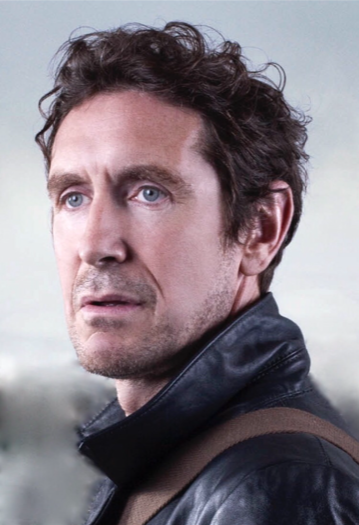
This week, we conclude our special 30th-anniversary archive release with actor Paul McGann. Originally recorded in 2020, this conversation remains a vital guide for anyone trying to navigate a creative life without losing their humanity to the digital machine.
Paul shares his prolific journey into audio drama with Big Finish, his reflections on the different regenerations of the Doctor, and the fascinating reasons he decided to walk away from social media entirely. From his “favorite” role in Our Mutual Friend to the “theatre of the mind,” Paul offers a masterclass in staying true to your own creative fingerprint.
I’m Nancy Norbeck, and I’m your Messy Muse Mentor. I help people feel alive again through creativity, curiosity, and play.
In this episode, we discuss:
The Next Story: Why for a professional actor, the most important role is always the one that’s coming next.
The Digital De-assimilation: Why Paul decided he didn’t want to be the “kind of person” social media was making him.
The Power of Audio: Why working in the “theatre of the mind” is qualitatively different and physically freeing.
Richard E. Grant: A look at their rare on-screen reunion and the power of natural enthusiasm.
Ready to send your inner critic to summer camp for an hour and just enjoy some creative company? Join me for a free Creativity Circle.
Episode breakdown:
0:00 Part 2: Celebrating the 30th Anniversary of the TV Movie
1:40 Digital recording & the “wooden rabbit hutches” of Big Finish
4:15 Working fast: How to record a script in 6 hours
10:20 Dropping the extraneous: Learning while doing
12:56 Why Paul never watches or listens to his own work
17:15 Revisiting old roles like “holiday snaps”
19:11 Reunited with Richard E. Grant in Always Crashing in the Same Car
28:30 Stepping into Tom Baker’s shoes for Shada
36:52 Jodie Whittaker: “She cracked it instantly”
40:10 Matt Smith: The “beautiful skinny 12-year-old” alien
46:33 The 1996 audition: Why Phil Segal couldn’t tell the brothers apart
51:00 Eugene Wrayburn: The role that “fitted” perfectly
1:09:10 “Are you on Twitter?” (The 2020 Social Media context)
1:15:45 The Jaron Lanier lesson: 10 arguments for deleting your accounts
1:20:20 How social media makes you a person you don’t want to be
1:24:45 Richard E. Grant: A master class in natural enthusiasm
Show Links: Paul McGann
Paul McGann on IMDB
The BBC’s Eighth Doctor page
Big Finish Eighth Doctor stories
Paul’s Eighth Doctor audition
Always Crashing in the Same Car
Scream of the Shalka trailer
Jaron Lanier’s Ten Arguments for Deleting Your Social Media Accounts Right Now
Richard E. Grant’s Withnail re-enactments and more
Much Ado About Nothing musical tracks
Subscribe!
You can subscribe to Follow Your Curiosity via the handy links at the top of the page for Apple Podcasts, Spotify, iHeart Radio, TuneIn, and YouTube. If you enjoyed the episode, don’t forget to tell your friends!

Transcript: Paul McGann Part 2
Please note: This is an unedited transcript, provided as a courtesy, and reflects the actual conversation as closely as possible. Please forgive any typographical or grammatical errors.
Nancy Norbeck [00:00:06]:
Welcome to Follow Your Curiosity. Ordinary people, extraordinary creativity. Here’s how to get unstuck. I’m your host, creativity coach, Nancy Norbeck. Let’s go. This summer, we’re celebrating the thirtieth anniversary of the 1996 Doctor Who TV movie by revisiting my ’20 20 interview with actor Paul McGann, who played the Eighth Doctor. In the first half of this interview, we talked about Paul’s childhood Olympic dreams in Liverpool, his journey through the Royal Academy of Dramatic Art, and the advice he received from Bruce Robinson after Withnell and I. This week, we continue that conversation exploring how he became the longest and shortest reigning doctor and how he found a permanent home in the world of audio with Big Finish.
Nancy Norbeck [00:00:52]:
We also talk about his reflections on working with Richard E. Grant, why the role of Eugene Rayburn in Our Mutual Friend remains his personal favorite, and the very specific reasons he decided to leave the world of social media behind. It’s a great example of what it looks like to stay true to your own creative voice. Here is the rest of my conversation with Paul McGahn.
Nancy Norbeck [00:01:14]:
I did wanna ask you, I mean, because there’s there’s such a huge difference between doing audio and doing actual video, TV, movies, whatever. And and I’m wondering, you know, when you first started doing Big Finish, I don’t know how much, if any, you know, audio only you had done before that, if that was, like, a a huge shift.
Paul McGann [00:01:39]:
It was a bit of a shift. I well, I’d worked, because I was trained to do it in radio drama. You know, we still have a that that is in in The UK. You know, there’s still a BBC still has a you can have a career in radio here. Right. As an actor, you know, there’s lots of radio drama made all year round. I’ve done a few radio plays, but the but the but the, you know, studio based things. It’s only later than, you know, you go out in fields and shoot.
Paul McGann [00:02:08]:
But but back in the day, there were, you know, you would do, you know, you’d do serialization of novels, classic this, Shakespeare, that. You do stuff on the radio. You know? So and I’ve done one or two of those things and quite enjoyed it. It was quite strict, actually, and old it still is. It’s rather it’s rather an old fashioned no bad thing for that. It’s rather an old fashioned thing to do, you know, the way the way that radio radio plays are still made here, and presented and enjoyed and consumed. But but somehow the audios, first of all, beginning on, in the early two thousand and working on Big Finish immediately felt, like, qualitatively different, physically different. Not least, for example, the the the the big finish studio, the main big finish studio in London, in West 10 is, at the Mouse House.
Paul McGann [00:03:12]:
You know, we’re we there, you have, isolation booths with glass windows in them. And I’m only saying this because this is how it works.
Nancy Norbeck [00:03:22]:
Mhmm.
Paul McGann [00:03:23]:
You know, and, again, this was this this is on this is this only happened because digital recording came. Whereas before you in analog, you’ve all gotta be in the same room and, you know, it’s like a it’s a sound stage. Whereas in whereas once you get digits on, you’re on different channels. You can be in the same space. But so long as you’re isolated, you can see each other. This is how we make Big Finish to to this day. We’re all in the same room, but in these little sort of wooden plywood rabbit hutches with with windows. You can also you can shout your head off on your channel and throw your arms around.
Paul McGann [00:03:53]:
It’s great. It’s great. It’s comical. You know? So so it was a different vibe. It was a different way of working. And, of course, you know, almost immediately, you were making box sets, working quickly, you know, with a radio play. So you’re doing, I don’t know, a a Dostoyevsky, whatever it is, an adaptation, a novel or something. That might take three days in a BBC studio, whereas, you know, with you can do a script, a whole big finished script, in about six hours.
Paul McGann [00:04:26]:
You can work really quickly. So that was different. And we picked it up and ran with it and modified it and have have made it, the way we want the way we wanted to to make it. So I guess an answer to your question, though, now I forgot what the question was. It was it well, yet it was different to it was different to anything, that I’d done to that point. Yeah. And no bad thing for that. It’s a great way of working.
Paul McGann [00:04:55]:
It’s a great way of working. And but, again, differently, we we do some more next week. I shall be sat in this chair next week, and we’ll go on Zoom or whatever it is, and we’re gonna we’re gonna do another box set, from our houses. And so, you know, what an age we’re living in.
Nancy Norbeck [00:05:11]:
That’s amazing. I I just saw their email about, you know, the one that they just did with Tom Baker. I thought, really? You did it over, you know, Skype or video or whatever?
Paul McGann [00:05:20]:
Well, I don’t I don’t know about in North America, but but already here, we’ve seen there are already visual plays out. Plays have gone out on TV, that actors have made at home. I saw Sheridan Smith, in a TV drama that they’ve made over either on Zoom or something else. They’ve already aired. They they were Mhmm. No. Oh, it’s fantastic. This isn’t it? You know? You know? Again, it’s it’s the spirit of the age.
Paul McGann [00:05:45]:
You know? You can soon as all it needs is for somebody to have the idea, get the feedback, get everybody at it, get everyone involved. The actors can rehearse it. They have to drop a load of gear off at their front doors about in the recording gear. I read about it in the newspaper. And then they shot it or that you know, or spouses and whoever partners are operating operating the camera. And suddenly you got yourself a TV drama. You know? This is how it’s gonna be from now on. I like it.
Nancy Norbeck [00:06:14]:
It’s it’s amazing how, you know, when you’re forced to rethink how you do things, it magically happens. You know? You come up with stuff like that.
Paul McGann [00:06:22]:
It’s true. You see what’s possible. And and perhaps, you know, part of the of course, it’s got its disadvantages, but may but maybe the simple advantage that you is that you can you you’re forced in a way to drop anything extraneous, anything Mhmm. That you that might have just been there for effect or you know what I mean? It’s it’s, Yeah. I know when we initially, when we did the the the Doctor Who audios, we were learning how to do it while we were doing it. And then this is how it should be as part of the thrill. You know? And then get I know Big Finish Big Finish are fond of saying, and it’s and it’s and it’s always been true, you know, that that that if you like the business model that Big Finish operates with is the more you buy, the more we can make. Essentially, that’s it’s a simple thing.
Paul McGann [00:07:12]:
So it’s so it’s grown its own audience. It’s found its audience, and now it’s, I won’t say, it’s boom time, but it kind of is, you know, particularly since the fiftieth. And people in The United States in their droves suddenly started listening to Big Finish, buying Big Finish, And that’s changed everything. And, you know, even just seven or eight years ago, we might meet once a year, twice a year max to do to do a bit of Big Finish. Now it’s five times a year. Four or five, you know, and they’re box sets and they’re
Nancy Norbeck [00:07:44]:
And we’re all so grateful to you for it.
Paul McGann [00:07:47]:
Well, you’ve got likewise, it it cuts both ways. But but the thing is but but in a way, the quality because, and again, Big Finish would say this, and and and it’s true, you know, that that it’s it’s a circular advantage. Mhmm. It means that more writers can be invited in. Better things can happen. The quality of stuff, you know, can improve. You know, the audience burgeons. It’s fantastic.
Paul McGann [00:08:10]:
You know? Because the appetite is is insatiable for these kinds of things.
Nancy Norbeck [00:08:17]:
Oh, yeah. Definitely. Continue. Definitely. And and I have to say, I I sat in on the, times of midnight tweet along, listen along, whatever they called it last week funny. Which was a blast. It was a little bit tricky trying to keep up with everything in time to figure out which comment would went with which moment here and there.
Paul McGann [00:08:42]:
Yeah. But
Nancy Norbeck [00:08:43]:
But but it’s still it’s sort of like you catch what you catch, and it’s and it’s all great. And you were definitely throwing out just the most hilariously random comments. So just I
Paul McGann [00:08:52]:
remember because I was having because because I because I’m not on social media, so I was having, and they said, oh, don’t worry. You know, we’ll we’ll figure out a way. So I was having to text somebody Oh. Who was then yeah. So he was then having to tweet immediately what I text. So so he in so Wow. So there was even a delay, I suppose, in that. I can tell you too that it’s the first time I’ve listened all the way through to a big Finnish audio
Nancy Norbeck [00:09:26]:
Really?
Paul McGann [00:09:27]:
Ever. Because, you know, when you do stuff, you don’t watch You don’t. Yeah. You don’t watch them. Why would you want to? Right. You don’t watch you don’t watch them or listen to. And that’s, that that lit it’s only when it was over. I thought, I’ve just listened to things in its entirety.
Nancy Norbeck [00:09:42]:
That’s interesting because Rob Shearman hadn’t listened to it or or thought about it much aside from people like me talking to him about it at conventions in eighteen years. So it was very interesting to watch his reaction to things too. Like, when he, you know, he’d said early on that he had modeled the house in his head on the one that he lives in, and then toward the end, he said, oh my god. I just realized I live in Edward Grove.
Paul McGann [00:10:08]:
No way.
Nancy Norbeck [00:10:11]:
Yeah. I sent him a message afterwards. I said, good luck sleeping tonight now that you figured that out.
Paul McGann [00:10:17]:
Your sins will find you out. But it’s true. You know, most of us, because there’s really no need. I mean, obviously, technically, you you will you know, if you if you shoot something, of course, you’ll have to watch it, say, to to fix it or put voices on or ADR stuff like that. You’re gonna see you’re gonna see footage. Sometimes you even see stuff, on monitors if there’s a problem or whatever. But but there’s no unless unless you’re a little bit strange, you know, and I’m I don’t wanna speak for every performer in the world, but there’s really no need to watch the thing you did or listen to the thing you made. So it was actually quite it was kinda great.
Paul McGann [00:11:03]:
I think because of the distance, it had been so long. And it’s a little like to do it, I know because I’ve I’ve I’ve actually seen with Nel and I, and I’ve seen another couple of things that are films that I’ve been in. And it’s years later, and and it has the quality of, I don’t know, getting out of box of photos or some holiday snaps or something. And suddenly you’re and to watch a film, say, you can’t you’re not following the story, but you’re looking you’re looking slightly to the left and look like you would with an old photo Mhmm. And seeing what’s in the background. I go, oh my god. I remember that. I remember that night we did that.
Paul McGann [00:11:42]:
I remember where we were staying, but, you know, so it’s all kind of, it’s kinda Yeah.
Nancy Norbeck [00:11:46]:
You have so much more than what’s on this.
Paul McGann [00:11:48]:
Yeah. Yeah. Yeah. So Yeah. It’s it’s like I say, it’s so initially, it’s pointless watching stuff because you can’t really watch it, because you can’t follow the story. And, anyway, you’re in it. So, but anyway, it’s a long way of saying I I did. I really enjoyed, Chimes of Midnight.
Paul McGann [00:12:03]:
It was funny. It made me laugh.
Nancy Norbeck [00:12:05]:
It’s such a great story.
Paul McGann [00:12:07]:
I mean, it’s good on it.
Nancy Norbeck [00:12:09]:
Yeah. I’m I’m one of the, you know, people who listens to it every year at Christmas because it just seems like the thing to do, which I know Rob kind of says really. To me. I guess so. But I have to tell you, there was one comment that I sent to a friend that somebody made while that was going on, and I don’t remember which which moment it was. But I read it and I thought, oh, that’s so incredibly true. Someone named John Arnold on Twitter said, McGahn has a magnificent line in sarcasm that only Davison of the other doctors really matches. And I thought, that might be why they’re my two favorites.
Paul McGann [00:12:47]:
Did did now, was he talking about what the character in in the audio? Was he talking about the the smiley sob that was tweeting? Or which was he No.
Nancy Norbeck [00:12:57]:
I think he he was talking about the audio.
Paul McGann [00:13:00]:
Good for him.
Nancy Norbeck [00:13:01]:
And and I have to say, there the line about, I guess I should preface this for people who are not familiar with the Chimes of Midnight. There are are servants in this house who keep dying, and then they keep coming back to life, and they they die in strange ways. And the presumption is always that they’ve committed suicide even though that’s clearly not possible. But when the, when the chauffeur dies and they say, oh, surely, it’s suicide. I don’t have the whole line in my head, but, you know, yes, obviously, he went out, got the car, ran himself over with it, put it back outside. It’s just that’s what I’m thinking of when I read that tweet. It was like, yeah. That’s that’s perfect because it’s so so deadpan, so perfectly eighth doctor, and so totally fitting with that entire
Paul McGann [00:13:47]:
Yeah. Yeah. Yeah. I agree.
Nancy Norbeck [00:13:50]:
Yeah.
Paul McGann [00:13:53]:
The lowest form of wit.
Nancy Norbeck [00:13:55]:
Oh, I don’t know.
Paul McGann [00:13:57]:
I think
Nancy Norbeck [00:13:57]:
when it’s done that well so since you mentioned Whitnall again, I’m curious because you sort of kind of well, you didn’t really revisit it, but you and Richard e Grant did a short film maybe a dozen ish years ago.
Paul McGann [00:14:17]:
Yeah.
Nancy Norbeck [00:14:17]:
And I’m wondering what what it was like for the two of you to to do that. Because wasn’t that also for handmade films? Kinda think it was.
Paul McGann [00:14:24]:
That was for a re it’s kinda weird reconstituted handmade. Handmade went out of business. Yeah. But, yeah, handmade took over it and the shorts. And I think it took us two, three days to shoot it. And it’s the only other time that he and I, got to work together, you know, since since with now. I’ve never seen it, but I hear it’s it’s good, you know. And it’s it’s an old one, isn’t it? Did you have you ever
Nancy Norbeck [00:15:00]:
seen it? It is. I have seen it. It’s called Always Crashing in the Same Car, and it’s if I remember, because it has been a while, I I think he’s Yeah. If he’s not the prime minister, he’s somewhere near that and accidentally hit someone, and I think you were his adviser trying to tell him how to stay out of trouble or perhaps get him into it
Paul McGann [00:15:18]:
a little bit. That’s right. That’s right. Yeah. He he kills somebody. Mhmm. He dry he he he drives over he’s driving too quickly at night in London, and he and he knocks somebody down. But he he it’s a hit and run, and he doesn’t stop.
Paul McGann [00:15:35]:
And there’s I think there’s some you know, it’s an important time. There’s an election coming up or something. And his his, his right hand man, his adviser says, don’t worry. I’ll take care of it. You have to do this, don’t you have to say this. And so, so it’s about that kind of skullduggery. The title comes from a David Bowie song on, Low just to fill you in. Almost crashing always crashing in the same car.
Paul McGann [00:16:03]:
And but that dates us. But, and it certainly dates me and Richard. No. But I’ve never seen him. Maybe I’ll see it one day. Maybe I’ll see it one day. Didn’t he someone said he, Richard, that is played the doctor.
Nancy Norbeck [00:16:20]:
He did twice. Twice? Twice. So he was in the Steven Moffat, Red Nose Day parody, The Curse of Fatal Death
Paul McGann [00:16:32]:
Oh, yeah. Yeah. Yeah. Yeah. Yeah.
Nancy Norbeck [00:16:34]:
For about two minutes, maybe. And then and I have to say, going back to what we were saying before, The Curse of Fatal Death is, like, a perfect example of writing Carrying the Day, considering that back when they did that, and I don’t remember exactly when it was, but definitely before the series came back, they had to, you know, borrow a fan built Tardis console and whatever in order to do it. But then he also did the scream of the Shalka, which I think they it it was an animated story. Derek Jacoby was in it as the master, but he was sort of like that doctor’s companion slash who was a robot.
Paul McGann [00:17:18]:
Complicated.
Nancy Norbeck [00:17:18]:
Android. Yeah. I I’m not really sure where that came from, but somehow it seemed to work. And I think that they did that around the same time that they did Shada, at least for the web, when they did the animated versions. I think they were up together.
Paul McGann [00:17:32]:
Oh, so it was that long ago? It was a
Nancy Norbeck [00:17:34]:
good long while ago. Yeah.
Paul McGann [00:17:35]:
Fifth about fifteen years maybe. Mhmm. Or even wow. Wow. Well, you know, he and I, we never discussed it. We never spoken about it. I that’s not unusual. I’m just saying that, you know, he he could but he kind of he just sort of did it.
Paul McGann [00:17:51]:
He didn’t he didn’t even mention it before he did it to me kind of thing. I’m, again, I’m just saying. You know, he’s just Yeah.
Nancy Norbeck [00:17:59]:
So he’s definitely like So
Paul McGann [00:18:00]:
I was never sure, you know, if, because because there are things I’ve never seen.
Nancy Norbeck [00:18:04]:
So Yeah. So he’s really the the doctor who gets overlooked and forgotten because he was technically the ninth doctor for, like, two hours.
Paul McGann [00:18:13]:
So he’s the guy.
Nancy Norbeck [00:18:14]:
And that was it. He’s the one. Him.
Paul McGann [00:18:17]:
He it’s him. It wasn’t me. It was him. He’s the one that Yeah. Okay. Well, good. That suits him.
Nancy Norbeck [00:18:22]:
You were neck and neck there
Paul McGann [00:18:23]:
for a while. Yeah. He he can wear he can wear that one.
Nancy Norbeck [00:18:28]:
But how was it when you got together to do the short film later on? Was it kinda like you’d never been apart, or was it Yeah.
Paul McGann [00:18:35]:
That was good. That was good. He it was intense. You know? The story was intense. It was quick. Shorts tend to be. And but I can remember we just enjoyed it. You know? Mhmm.
Paul McGann [00:18:51]:
So it felt good. I think I’d persuaded him to do it, so I felt kind of responsible. And I was glad that he, you know, aside from a few little grumbles, he he I think he enjoyed it as well. And then it was gone. You know? Mhmm. Yeah. But like I said, it was just a day, two days, if that. And, I wonder if we’ll ever work together again.
Nancy Norbeck [00:19:18]:
I hope so.
Paul McGann [00:19:20]:
I think we’re good at it. I mean, we can
Nancy Norbeck [00:19:22]:
Mhmm.
Paul McGann [00:19:23]:
You know? We we we we were good at it then anyway. I was, you know he was actually very good, and he was terrific. You know, he plays kind of unraveling panic particular world.
Nancy Norbeck [00:19:36]:
Yes. He does.
Paul McGann [00:19:38]:
You know, he does that really well. So Go on. No.
Nancy Norbeck [00:19:44]:
I can well, since since Shada came up, I am I am wondering what, since that story was originally written for Tom Baker, was it at all odd for you to step in and and do it? I know sometimes when I have listened to it, there are definitely lines that I can hear that I’m like, yeah. I can hear Tom Baker saying that. And yet they they also seem to work just fine for you. So I don’t know what it was like on your end.
Paul McGann [00:20:08]:
I can honestly say that at the time, it wasn’t I didn’t think of it because I I because it was new to me. I didn’t I didn’t understand the the the the connection or the imports of it. It was only afterwards when it was explained to me that this, in fact, did you know? Because I was someone mentioned it. This had been a, you know, a a TV script. But, in answer to your question, no. I I it was only afterwards that people would say, don’t, you know, don’t you think it’s strange? And and I had to have it ex yeah. I had to have it explained to me then, you know, and and questions like the one you just asked then, you know, were were asked at the time. But I can honestly say at the time, it wasn’t something I was I was even thinking of.
Paul McGann [00:20:54]:
And thing is when you if you if you do Doctor Who, particularly if you play the doctor, of course, you’re stepping into people’s shoes anyway. That’s what it is. You know? You know? A few people have done this before. It’s or or you might be it could be a Shakespeare play. You’re playing something loads of other people have played. It’s just a fact of life, you know. So you tend in a simple way, you tend to try and block all that stuff out and just do your own thing, you know, try and make
Nancy Norbeck [00:21:21]:
Mhmm.
Paul McGann [00:21:21]:
Just re coin it, refresh it. So, but, no, I didn’t think of Tom at all.
Nancy Norbeck [00:21:27]:
I I think it’s interesting because Robert is you know, I mean, it’s a Douglas Adams script, which is part of why it’s so great. And again, for people who aren’t familiar, it was something that they started working on in the in the seventies, and then there was a strike, and that was the end of it. So it was never Yeah. Never filmed. Though now they’ve done the animated version that I think may have some of the actual footage from the seventies in it. I’m not
Paul McGann [00:21:48]:
sure if
Nancy Norbeck [00:21:49]:
you haven’t seen it. I think so. Yeah. But, but in any case so when they couldn’t get Tom to come back for Big Finish, they gave it to you. But I think it’s a great example of how, you know, the doctor is still the doctor. Like, the doctor has different personality quirks in each regeneration, but, fundamentally, it’s it’s still the same character. So it worked beautifully. You know, they just retooled Romana to be president, but other than that
Paul McGann [00:22:13]:
You know, again, right, coming right to the present day, what the first when Jodie’s first episode screen, and I sat and watched it, remembering you know, rooting for her. I have no idea what it’s obviously, what it was gonna be like. But it did make me remember those first two days in Vancouver and, you know, all that other people who played the doctors spoke at this you know, of of similar things. It’s like, you know, you can’t help but be nervy because there’s a lot of pressure on you. You know? Again, for this reason, you you’re stepping into some big shoes. And those elements of characters, you know, the characterizations that have gone before you, you know, it can be quite a pressure. And there’s in within five maybe even less, fewer. Minutes, Jody I looked and just thought, wow.
Paul McGann [00:23:10]:
She’s cracked it instantly. She’s hit the ground running. She seemed she arrives fully formed. When I I guess the point being, when we when we when I know when I did it, Thomas said the same thing. I remember watching, Matt Smith, even Capaldi, who had all that time to think about it. Mhmm. It took I I get it took a while. It took of course, it would.
Paul McGann [00:23:38]:
It takes it seemed to take a little while before the the quality of the writing meets the quality of the act, and then the thing, you know, takes off a little bit. Mhmm. Jody seems instantly to be complete. Now that’s that’s in my view.
Nancy Norbeck [00:23:56]:
Mhmm.
Paul McGann [00:23:56]:
And, let’s never look back. She said, you know what I mean? I I don’t know if you agree or not, but but I just thought, oh god. Wow. How is she even doing this? She seemed to to possess and have, and in a way, kind of channel and let you and reveal, you know, elements, fragments of air, all the things that, that had gone before and just completely have it under control and be just be doing our own thing. What a joy.
Nancy Norbeck [00:24:23]:
It’s interesting because the one that made that impression on me was Matt Smith. I think because I was when I first saw a picture of him, I I I’ll be honest. My initial reaction was, oh, you have got to be kidding me.
Paul McGann [00:24:36]:
What are you crazy?
Nancy Norbeck [00:24:37]:
You know?
Paul McGann [00:24:38]:
It’s like it’s like it’s like casting Danny Bowie. I mean, you know, Matt’s a Matt’s a certified alien. You know?
Nancy Norbeck [00:24:43]:
Well, yeah. It was like this skinny beautiful. Skinny 12 year old. What are you thinking? You know? But but by the time the opening credits on his first episode rolled, I was like, okay. I’m in. I’m sold. I’m I’m I’m good.
Paul McGann [00:24:55]:
Oh, isn’t that funny? Where whereas I whereas I didn’t think that, and I I thought I thought it took him a couple of months. And that’s funny. But there you go. It’s in the eye of the beholder. Yeah. And and, again, this is how it should be. You know, I remember thinking I remember months in, thinking about Matt. That’s it.
Paul McGann [00:25:10]:
That’s it. That’s it. How and it was almost as if whoever was running it, then it was almost if they had to catch up with him rather than the Well,
Nancy Norbeck [00:25:18]:
that could be. Because he has that energy for sure.
Paul McGann [00:25:21]:
Yeah. But yeah. You know, so like I said, the quality of it. And and that’s to be expected. Whereas, you know, like I say, I didn’t think that at all with Jodie. I’ve just thought, you know, that I I really enjoyed. And then perhaps because and it helped, at least for me. I kinda need to talk to myself.
Paul McGann [00:25:41]:
It helped that the episode was set on Earth. Mhmm. Because I kind of enjoy it when the doctor’s on Earth. I mean, I enjoy watching it and listening to it.
Nancy Norbeck [00:25:52]:
Mhmm.
Paul McGann [00:25:53]:
And there it was, and they were in Sheffield or whatever. So you know what I mean? And, and she was and and, anyway, it worked. It worked for me. Mhmm. It it really worked for me. There you go. But it’s like you say, there we are. It’s in the eye of the beholder.
Nancy Norbeck [00:26:10]:
Well, and I think really, you you know, the the most important thing for that show is that you get the doctor right. You know, everything else can be falling apart at the seams and barely held together with bubblegum and duct tape. But if you have the doctor right
Paul McGann [00:26:23]:
On behalf.
Nancy Norbeck [00:26:25]:
They have. Yeah. Well, and and I think that’s what I what I learned from your TV movie, you know, because there were so many things that were kinda like, I don’t really know about that bit, and I’m not sure what this bit’s about. But they got the doctor right, and so it’s all okay.
Paul McGann [00:26:40]:
So Yeah.
Nancy Norbeck [00:26:42]:
So yeah.
Paul McGann [00:26:43]:
Yeah. Yeah.
Nancy Norbeck [00:26:44]:
And well, and do I remember correctly that you were up against one of your brothers for that?
Paul McGann [00:26:49]:
Well, when we did the For the doctor? Well, back in the day. Yeah. I was. Yeah. But he wouldn’t have known that, and I wouldn’t have known it either
Nancy Norbeck [00:26:57]:
Oh, okay.
Paul McGann [00:26:58]:
At the time, but it only emerged later. And I think now even you can somehow on YouTube, I think you can see the the little, audition tapes that we Yeah.
Nancy Norbeck [00:27:10]:
I think so.
Paul McGann [00:27:11]:
You know? But then we but but then he we would only have been among scores of actors that were doing the same thing. You know, wasn’t just about us. You know?
Nancy Norbeck [00:27:24]:
But there wasn’t a rivalry between the two of you.
Paul McGann [00:27:26]:
Well, we well, well, no. It was actually really unusual, in retrospect that he and I might be considered for the same thing. My own theory about that, and only Phil Siegel can refute this. But I’ve and I’m not joking. I think both of us were called in because Phil couldn’t tell us apart. You know, Phil Phil let me know that, the reason that I was considered for for the doctor initially was because he had seen in 1994, when the only time that me and my brothers worked on a on a a film serial, on a TV serial together. And it aired in ’94.
Nancy Norbeck [00:28:17]:
The Hanging Gale.
Paul McGann [00:28:18]:
The Hanging Gale. And it was it was an Irish famine story. So you’re in the eighteen forties. I play the priest. I’m in this long frock coat. My hair’s long. It’s doctor ish.
Nancy Norbeck [00:28:29]:
Mhmm.
Paul McGann [00:28:30]:
And Phil says, you know, wherever he was at the time, you know, probably in North America, he’s he he was watching, and he said, who’s that? Who’s that? That’s my that’s my doctor kind of thing or whatever. He he’ll tell the story better than me. But but, when it came to it, a year later, he couldn’t remember which brother it was because we look alike. So I think they trolled. He said he said you better you better get them all in. That’s the reason.
Nancy Norbeck [00:28:57]:
It’s so funny that you say that because I remember, and and this will undoubtedly say something about me, I suspect, but oh, well. I remember watching the Catherine the Great movie that you did.
Paul McGann [00:29:09]:
Oh, yeah. Around the same time.
Nancy Norbeck [00:29:11]:
And there is a line in there because I think it’s Mark and Steven are also in that. Yeah. But they’re not supposed to be related to your character, but there’s this line somewhere in there. And it’s been so long since I’ve seen it that I’m probably completely misremembering. But it’s something along the line of, you know, somebody’s like, why are they coming after us? And it’s like, because you all look the same.
Paul McGann [00:29:36]:
And we’re all in the same room. Yeah.
Nancy Norbeck [00:29:39]:
Because they can’t tell you apart. That’s all.
Paul McGann [00:29:41]:
Because they can’t tell us apart. Simple as that. Simple as
Nancy Norbeck [00:29:45]:
that. Fascinating.
Paul McGann [00:29:46]:
In fact, we went I think we went straight that year. We shot that’s Catherine the Great thing in ’94, and we went straight from that to Ireland, as I remember in that spring, and shot the Hanging Gale. So they’re they’re contemporary. They’re they’re, you know, it was the same. It was the same period. So we worked together a lot all that year.
Nancy Norbeck [00:30:06]:
And that was a project that that you all came up with together. Right? The Hanging Gale?
Paul McGann [00:30:09]:
The Hanging Gale was something, yeah, that that, my brothers, Stephen and Joe, had, had the idea for. Stephen ended up writing up into a document that, eventually, the BBC picked up and ran with, and it became this, you know, this six hour film serial, loosely based on the on the story of our own ancestors. Mhmm. These these famine Irish. So, yeah, so so, so we got to shoot, that for the rest of the year in Ireland. And unbeknownst to me, like I say, somewhere when that went out, one Philip Siegel is watching them. And, my life was never gonna be the same. No.
Paul McGann [00:30:57]:
Yeah. Yeah. Yeah. Because it’s funny. That’s just how things work. Yeah. But but but I know that year, there was already I remember that that time, there was already talk, every now and again, you know, that’s oh, you know, they’re planning a doctor who, you know, doctor who’s not dead at all. You know? And, it’s gonna come back one day, and and and sometimes you’d hear, well, it’s gonna be an American, you know, whoever.
Paul McGann [00:31:23]:
You know? Someone’s gonna do it. Or you you you know, you’d hear I remember distinctly hearing, you know, Eric Idle is gonna be the doctor. And when someone would say that, you’d go, oh, wow. Yeah. Oh, yeah. Oh, god. I can
Nancy Norbeck [00:31:37]:
see that.
Paul McGann [00:31:37]:
I can see that. Mhmm. You know, or Rowan Atkinson or you’d go, oh, yeah. Yeah. Oh, god. That would make sense. You know? And then you wouldn’t hear anything. So but but that’s just normal.
Paul McGann [00:31:46]:
This is this is what goes around. You know? And Doctor Who, of course, is something, even to this day, you know, it’s rumors and rumors and rumors and rumors, most of which never transpired. So, but but surprisingly, then suddenly, we’re getting a call. Whenever that was, 94, 95, 95. And there’s a real script, you know, and there’s a real casting agent. And suddenly, you know, when you come in and you know, and there it is. And even when Phil when it began to solidify, like I said, everybody went in. It was just one of those things, you know, the stacks of actors.
Paul McGann [00:32:26]:
So, we all went in. But when when they began to when it began to get serious and my agent’s going, actually, you know what? They want that they wanna talk to us now. You know, they wanna, you know, they’re really you’re on a short list, and it’s getting serious. And, and then suddenly, it stopped being a lark. I mean, in a you know, just in a in a professional way. Mhmm. And I started thinking, really? And and and I was quite I was mystified on well, I I was. I I thought, well, hang on.
Paul McGann [00:32:58]:
Whatever what happened to Eric Idle? What happened to well, yeah. You know? Because why are they coming why why would it be someone like me? Right. Who’s not a comedian and who’s not a not one of those actors, like, you know, Rowan Atkinson or Eric Idle or whoever. But he’s he’s he’s putting in comedians. Why are they? So and then I remember then conversate when I first met Phil Siegel, I asked him that question. He said, don’t worry about it. Don’t worry about it. You know? You know, it’s you we want.
Paul McGann [00:33:26]:
And I will you know? Because I was trying to talk him into talking me out of it or or or whatever. You know?
Nancy Norbeck [00:33:31]:
We Oh, wow.
Paul McGann [00:33:31]:
Yeah. It took weeks and weeks. I couldn’t see it. I couldn’t see it. I I was I didn’t I was nervous about it. Well, hang on. How is this gonna work? I don’t do that kind of thing. You know? Ain’t it funny? Ain’t it funny?
Nancy Norbeck [00:33:44]:
Yes. You do. Yeah. But yeah.
Paul McGann [00:33:46]:
And he was that’s what Phil would say. Oh, you do. Alright. Because I’ve seen it. And I’m going, well, you know and so it took weeks and weeks, and and, he wore me down. Wow. Yeah. That’s how it you know, that that sometimes has to happen.
Paul McGann [00:33:59]:
That’s how it happened.
Nancy Norbeck [00:34:00]:
Well, we’re all eternally grateful for that too.
Paul McGann [00:34:04]:
Yeah. Me too. Me too. Phil Siegel. Wonder whether he’s locked down. He’s locked down somewhere.
Nancy Norbeck [00:34:09]:
Oh, somewhere.
Paul McGann [00:34:11]:
Whenever he’s locked down, I hope his ears are burning because it’s because they’re talking about him.
Nancy Norbeck [00:34:17]:
So I’ve I wanna make sure since, you know, we’ve gone down the who rabbit hole here.
Paul McGann [00:34:23]:
Yeah.
Nancy Norbeck [00:34:23]:
But there there are two other things. One that I feel like I should definitely ask you about is the monocled mutineer
Paul McGann [00:34:32]:
Uh-huh.
Nancy Norbeck [00:34:33]:
Which, you know, goes goes back a good ways. And and I think wasn’t there even something about that where the DVD couldn’t come out until a certain amount of time had passed because of the fact that it was this World War one story?
Paul McGann [00:34:51]:
I don’t know.
Nancy Norbeck [00:34:51]:
I could be misremembering that, but I think there was
Paul McGann [00:34:55]:
I don’t know that there was the same. I can’t remember now we’re talking mid eighties now. I don’t I don’t remember that there was although it was a it was a series it was a big BBC series. It was
Nancy Norbeck [00:35:06]:
a it
Paul McGann [00:35:06]:
was a big one. You know, we all ended up at the BAFTAs kinda thing. It was one of those flagship things, and it took us six months to shoot it. And, it was it was a first World War story. And I played the the the young lead role in it. But I don’t remember and while the the the material and the reception of the of the of the film series itself, the way that the BBC put it out and publicized it and handled it, that was contentious for the then, the then establishment, the then government in the country whose, you know, we’re talking so we’re talking Thatcher’s second government at that time. So, anyway, there was they they they argued and rowed over, the the well, simply, the BBC breadth the BBC was was was then when you made something in those days, you know, you had the BBC, the the company that would shoot the thing. And, of course, the BBC had an entity, a branch of itself, which would then publicize it.
Paul McGann [00:36:14]:
I think it was called enterprises, BBC Enterprises back in the day. And this is a fairly new body, and, you know, they were charged with getting the thing publicized. You know, BBC’s a public broadcaster, so it has to work slightly differently. There’s no advertising. So anyway so this so they would be you know, when when the time came for this thing to to to go out and near the date and all the publicity had to be dealt with, you know, they were they had to handle that. And and this particular story, this monoclonal mutineer, which had come from a a a late seventies piece of a a book written by two journalists, which itself was sort of contentious. And there’s no footnote sitting there for something, you know, and and they were trying to tell a story. They were you know, anyway so, this book was dramatized.
Paul McGann [00:37:10]:
And then, anyway, hey. Look. To cut a long story short, when the BBC came to publicize this thing, around the release, the way that it looked, did you open a newspaper at the time? And I know because I’ve kept a couple of them. You know, they they I remember one, for example, there was a there was in in the big broadsheets of the day, you’d you’d you know, the beeps spent money, and they would they would have a full page, say. And it might be it was quartered into photographs, and it was production photographs. And, you know, it might be trench soldiers. You know, us actors playing. So and there might be a, a sort of attendant.
Paul McGann [00:37:46]:
There might be a fact or something, a phrase written underneath. You know? And and and and I’m and it would say, like again, I’m just remembering this now. So, it would say, you know, fact. You know, so and so and so many trench soldiers died, whatever. And then fact, you know, blah blah blah. You know, they would have some something purporting severe. They got it wrong because, you know, these things, the book, the the the initial piece of journalism wasn’t, as it turned out, wasn’t that factual anyway. Oh.
Paul McGann [00:38:14]:
And so it sort of well, no. But on or it wasn’t that let’s say it wasn’t that rigorous.
Nancy Norbeck [00:38:19]:
Ah, okay.
Paul McGann [00:38:20]:
You know, you could you could easily challenge it, and, and people did. And then and then another remove, you know, that that that ended up being traumatized. Hey, but but they got it wrong, which fell right into the trap of the then government whose interests were in, you know, rather than rather than telling up and shouting on, you know, Britain’s glorious military history rather than having it impugned, let’s say. Anyway, anyway, now I’m just getting too complicated. But but there was a row about it. Mhmm. But later on, people and and the fact that it never got a it didn’t get repeated for years. You know, I think, probably, you know, theories abounded around it that somehow it was being squashed and no.
Paul McGann [00:39:08]:
It wasn’t. I don’t I don’t think that it was. It just it just didn’t get a repeat. Anyway, it was a Coeur Select. It was the first thing personally, it was the first thing that I’d ever played. It was the big break that from from music as a young kid. You know? And out of that, because I was good in a hit as the
Nancy Norbeck [00:39:29]:
There you go.
Paul McGann [00:39:31]:
I got with Mel and I. That’s how that happened. Anyway, so so we’re going back to the beginning of the conversation. Now that’s so that’s exactly how that happened. I’ve never seen mutineers since, and I don’t know, maybe I will. Maybe I’ll look at it now. It’s been that long. But, actually, what you and I talking here on on what’s, VE Day, seventy five years
Nancy Norbeck [00:39:56]:
Oh my god.
Paul McGann [00:39:57]:
Today’s VE Day, victory in Europe. And that’s making me think of that. You know? Yeah. Because I you know, this morning here, in England, you know, we had fly pasts and, you know, sort of lockdown, shindigs, and, obviously, there were there were big plans before the
Nancy Norbeck [00:40:17]:
Right. Right.
Paul McGann [00:40:19]:
They were gonna do some street parties and the like. So it’s quite a day today. And, anyway, it is what it is. Britain’s one of those places.
Nancy Norbeck [00:40:31]:
Yeah. No. I hadn’t I totally had not realized that. But then every day right now feels like every other day, so that’s probably not even why.
Paul McGann [00:40:39]:
Yeah. Yeah. Yeah.
Nancy Norbeck [00:40:41]:
So and and I know you also did again, I’m testing my memory here, but I I know some somehow somehow I came across an an audio or two from this, a musical version of Much Ado About Nothing.
Paul McGann [00:40:58]:
Did I? I well If you’ve if you’ve heard it, I must have done
Nancy Norbeck [00:41:04]:
it. Yeah.
Paul McGann [00:41:06]:
Yeah. A a musical version, much of it. Yeah.
Nancy Norbeck [00:41:10]:
I I know I’ve I’ve heard a song or two from it. Unless I’ve got the play wrong, but I’m pretty sure it’s much ado.
Paul McGann [00:41:16]:
Then it must exist. What do what do I what am I playing?
Nancy Norbeck [00:41:19]:
I think you were Benedict.
Paul McGann [00:41:21]:
Stop it.
Nancy Norbeck [00:41:24]:
Now I’m gonna have to go look it up.
Paul McGann [00:41:26]:
Yeah. You are. I I don’t know what.
Nancy Norbeck [00:41:27]:
See if I if I still I have absolutely no idea how I found this audio file, but if I’ve still got one, I’ll send it to you.
Paul McGann [00:41:34]:
It’s plainly one I’ve blocked from my memory.
Nancy Norbeck [00:41:38]:
But, you know, the idea of a musical of Shakespeare like that just intrigues me. So but if you, you know, if I’m totally barking off the wrong tree, that’s actually
Paul McGann [00:41:47]:
intrigued me at one time if I did if I went and did it. How funny. I don’t remember a single thing about it. And I forgot.
Nancy Norbeck [00:41:54]:
Well, I’ll see what I can find, and
Paul McGann [00:41:56]:
I’ll send it to you. Old. But I what I do remember is is is the very first job I ever got as an actor the day that I left the school that I trained at. And I had to leave early in order to get this union card, you know, because you because being the closed shop, you you had to find somebody who would give you a card.
Nancy Norbeck [00:42:17]:
Right.
Paul McGann [00:42:17]:
And this this man who run a little theater company, in a place called Basingstoke, he said, come on. I’ve got a card. Come on. And I said, what are you doing? He said, what do you do about Nazi? Maybe that’s it. I said, cool. I said, what what am I gonna play? He said, the old man. Oh, okay. I was the oldest Vergis, the oldest character in it.
Paul McGann [00:42:41]:
I was 20, 21 years
Nancy Norbeck [00:42:42]:
old. Wow.
Paul McGann [00:42:43]:
Anyway but but it got me my union card, so I went. I can remember that.
Nancy Norbeck [00:42:50]:
Well, one would hope.
Paul McGann [00:42:52]:
I can just about remember that.
Nancy Norbeck [00:42:54]:
Pretty important. Pretty important. So the other thing that I wanted to mention, especially because I remember you saying in November that that it was if if I’m not misremembering that that, our mutual friend was your favorite part you’ve done, Eugene Rayburn?
Paul McGann [00:43:11]:
I think it was. Yeah. Pound for pound. I think that’s the yeah. Yeah. I meant it. You know, that was of all the things I’ve done, you know, both making it, then seeing a bit of it afterwards. Anyway, look, it was just it was the it it was the happiest time in that way.
Paul McGann [00:43:33]:
Yeah, it was a close run thing. You know, there’s there’s been other roles where I’ve been completely thrilled and happy, and it’s fitted, you know. You’re lucky when that happens. Mhmm. But Rayburn was really something. That’s my own personal favorite. Just to to work in that way, to work with you know. And there’s David Bradley.
Paul McGann [00:43:54]:
David Bradley, of course. I know. Was in it with, was in it all the way through.
Nancy Norbeck [00:43:58]:
And David Morrissey and Keely Moss.
Paul McGann [00:44:01]:
Keely Hawes, you know, Steve McIntosh. It was a fantastic time. A great company. But, like, but that role sometimes, roles fit in a way, that just at that time, at that age, the way that you’re working, you’re kinda ready for it. You’re trusted to do it. It just somehow just all just it happens off the bat. You know, it just works. You haven’t gotta try too hard.
Paul McGann [00:44:34]:
And even, you know, you might even I I even down the years, I’ve I’ve which is really gratifying, you know, people who love the book have said to god, you know, when I saw that, you were my idea. That was you you I thought I I I worried they were gonna mess it up, and then you were just right, you know. And that’s a lovely you know, because that’s that ain’t gonna happen very often.
Nancy Norbeck [00:44:57]:
Right.
Paul McGann [00:44:59]:
Either. You know, people love people have ideas about characters in books that they love. And, I know recently, I know because we just watched all 12 episodes, of Sarah Rooney’s book, Normal People. Do you know this book? Do you have any other this you will. No. You know? It’s it’s it’s phenomenal. It’s just aired on the BBC in Britain. I think North America’s gonna get
Nancy Norbeck [00:45:24]:
it. Actually, it’s ringing a vague bell, so maybe
Paul McGann [00:45:26]:
It’s an Irish story.
Nancy Norbeck [00:45:28]:
Okay.
Paul McGann [00:45:29]:
Young people. Anyway and this book was the the novel 2017, I think, was was a phenomenon. People loved the book. They loved the characters. Now they’re making it into a TV thing, and it’s like, oh, please don’t mess it up. You know? Don’t mess it up. Every young actor wants to play the roles. It’s the same.
Paul McGann [00:45:45]:
You know? It’s one of these once in a generation sort of, thrilling things. And it worked. You know? And, anyway, so so and it made me think. You know? Because I know because I read later after I’d watched it, that the young actors were saying, you know, how people had said, you know, that they were afraid. And then as soon as they saw them do it, they were completely hooked. You know, that they that they were that they were just like the characters in the book. And because people are, people get, you know, not so possessive, but you in a way, we can’t help it. We just can’t help it.
Nancy Norbeck [00:46:21]:
When when you love something in one format, you don’t want something in another format to mess it up for you.
Paul McGann [00:46:25]:
That’s right. And and it’s nearly always when you’ve read the book. Mhmm. You know, because the book the books, of course, are, you know, by their nature, they can they they can, you know
Nancy Norbeck [00:46:35]:
They’re a different animal. Well, it’s
Paul McGann [00:46:37]:
an interior world, you know, you can you know, which we can do on the page. You know? But when it comes to shoot these things, of course, there’s you know, it’s Yeah. It’s a trickier prospect. You know, and on this and I know and, of course, Rayburn in Mutual Friend, the book itself is so big. Mhmm. The adaptation, Sandy Welch’s adaptation, she said by volume, she said there’s only about half of the novel in there. She said you simply couldn’t afford to shoot the whole thing. It would take you two years.
Paul McGann [00:47:07]:
And these Dickens books are massive. So the so her her dramatization was a work of genius. But but the way and it was it was Dickens’ last completed novel. Ed and Rudy never finished. And and, you know, so this is thirty years, if you will, after the big his first big hits. You know, he’s he’s middle aged now, you know, almost old. He’s been doing it a long time. And now but now suddenly, it’s another era and the way of novel writing and the way of characterizing of, you know, of character writing.
Paul McGann [00:47:42]:
Mhmm. Anyway anyway, he apparently, he later confided either in a letter or to a friend or in a conversation. He said, you know, there was there were elements of Rayburn, this Rayburn character that were the nearest things to himself or elements of himself that he’d ever put down on the page. Anyway, so very gratifying. You know? So, yeah, that yeah. A long winded answer to a very simple question.
Nancy Norbeck [00:48:06]:
That’s alright.
Paul McGann [00:48:07]:
Yeah. That was that was the that’s the time I yeah. That was my favorite. That was the one. But you know what? I’m still hoping at some point in the future, something else will come along that will knock it off its purge.
Nancy Norbeck [00:48:19]:
Oh, well.
Paul McGann [00:48:20]:
When you work as an actor, it’s always
Nancy Norbeck [00:48:22]:
hope for that.
Paul McGann [00:48:23]:
It’s always the next one. It’s the next one. You know? And now I’m 60 odd now, you know, so the next one’s gonna have to be somebody’s granddad or somebody’s dad or whatever, or some old retainer. But but, you know, we as performers, you can never, It’s always about the the the one that’s coming. It’s always about, you know yeah. It was nice I did that thing, but Mhmm. The next one’s gonna be the one. Definitely.
Nancy Norbeck [00:48:49]:
So what is the next thing? Do you have any idea since the whole lockdown thing has started? Because I know it’s not like anybody’s filming anything.
Paul McGann [00:48:57]:
No. Well, like I said, we’re doing, we’re doing audios. I’m doing audios.
Nancy Norbeck [00:49:03]:
Right.
Paul McGann [00:49:04]:
You know, we’re all doing those. Even in the normal run of things, the way that I work, and I’m I’m a I’m a bog standard typical professional actor. As I described before, often the first you hear of something is the week or two weeks before they want you to shoot it. So the question, what’s happening next for you, which often we we do get asked. You know? Mhmm. We don’t we don’t know. I don’t know. I don’t know what’s gonna happen next.
Paul McGann [00:49:32]:
Talk to me in three weeks. I might be on to something. I might be doing something, that they might tell me about tomorrow or tonight. I don’t know. But, certainly, productions have stopped. I know that, you know, Wes also, we’re being asked to self tape for things. So notionally, anyway, things that you know, obviously, the film companies are looking to pick up again in the in the autumn. But, you know, watch this space.
Paul McGann [00:49:58]:
I don’t know. I don’t know what we’re gonna do. I’m just locked down here having a nice time. Like everybody else. Yeah. Reading books, talking to you, staring out of the window, which is what actors do when they’re not working, incidentally.
Nancy Norbeck [00:50:15]:
Stare out the window?
Paul McGann [00:50:16]:
Unless you can stare out the window, wait for wait for a telephone call. You can’t be an actor. That’s what you gotta learn to listen.
Nancy Norbeck [00:50:22]:
Good to know.
Paul McGann [00:50:23]:
Yeah.
Nancy Norbeck [00:50:23]:
Good to know. Though I did see that, that Richard e Grant is out refilming bits of with now at the moment and putting them on Twitter.
Paul McGann [00:50:31]:
Stop it. Is he? Because like I said, because I’m not on Twitter. I don’t see these things. I wouldn’t know. So you were. Were you and you’re not in I was. No. I was.
Paul McGann [00:50:42]:
And I got I got away from it. And I’m glad that I did, actually. I I was on Facebook. I was on Twitter, and, and then I stopped. It must be eighteen months, two years now.
Nancy Norbeck [00:50:52]:
Oh, okay.
Paul McGann [00:50:53]:
I was I was avid. I was it was taking up a lot of my time.
Nancy Norbeck [00:50:56]:
It does that.
Paul McGann [00:50:58]:
And I don’t mind admitting that, you know, it wasn’t an it was a it was actually a certain book that I read, about this very matter. It was Jaron Lanier’s book, 10 Arguments for Deleting Your Social Media Accounts. That’s your book. Lanier, I don’t know whether you know about him or not, but, you know, he’s a he’s a bit older than I am. He’s a he’s a tech pioneer, you know, still works in AI, what you know, he’s a public intellectual in The States. He’s a brilliant writer. And and, anyway, he reading this short book, you can read it in one sitting, which I did a year or so ago. The day after, I I deleted my social media accounts.
Paul McGann [00:51:40]:
And I’m about to say and again and perhaps many people would say this, but, I’m I suppose I’m typical. What his book made me realize, which and and I realized that I had an inkling that it was true anyway. Mhmm. That that that just the very the act of doing it, the way that I was doing it, the way that I was consuming it, the way that I was taking part was actually riling me and making me Yeah. Just the kind of asshole That
Nancy Norbeck [00:52:08]:
you don’t wanna be. That I didn’t wanna be.
Nancy Norbeck [00:52:11]:
Mhmm.
Paul McGann [00:52:11]:
And and it wasn’t till that reading Lanier’s book, and you can read it for yourself. I’m not gonna even I won’t spoil any of it for you, except to say that, it wasn’t till I till I I read his description of it, I thought, oh my god. He he’s that’s me. He’s talking about me. And he was saying that it that it suits a certain, cohort people out there, to rile you in the first place. It’s only it’s only when you’re riled that you become interesting, let’s just say. Anyway
Nancy Norbeck [00:52:42]:
Yeah. Well, it’s engagement. Right?
Paul McGann [00:52:45]:
No. But not only that, but the but there’s a commercial aspect to it. You know? Mhmm. He he opens the book by in the first page on the in the first paragraphs. You know, this man’s a scientist. You know, he’s he’s not this isn’t idle stuff. He, and he’s in he’s in the industry that he’s talking about, and he’s talking about some of his friends. And he says how the biggest personal fortunes that have ever been made in history are being made now, right now.
Paul McGann [00:53:15]:
I can believe that. That’s how he begins it. And and these fortunes are being mined and made,
Nancy Norbeck [00:53:25]:
on and Off of all of us.
Paul McGann [00:53:27]:
Let let me tell you how. Anyway, so he he persuaded me. He got me away from it. And I, and yet, you know, my family, still do it and enjoy it, but they don’t seem to to to to do it in the way that I was doing it. They don’t seem to it it’s not it’s not pulling up that same thread. I I plainly shouldn’t have been doing it. I miss it sometimes. I miss the kind of, you know, I miss the information.
Paul McGann [00:53:51]:
I don’t ever know what like like you said, like, I wouldn’t know what Grant is doing because I’m not on Twitter.
Nancy Norbeck [00:53:55]:
Well, I I’ve got, there have been a couple of little news stories, so I’ll I’ll send you a link because, yeah, there’s there’s the bit in the phone booth, and he’s got, you know, one where there’s a cow in the background, and the cow wants to go down. Yeah.
Paul McGann [00:54:10]:
Well, glitzy, you
Nancy Norbeck [00:54:11]:
know inevitably cracks up at the end of them. It’s hysterical.
Paul McGann [00:54:15]:
Well, that’s great to hear. Maybe I’ll get one of my kids to show me one of them. But that’s good. That’s good to hear he’s doing that. That’s generous of him anyway.
Nancy Norbeck [00:54:24]:
Yeah. Well, I think, you know, everybody is kind of doing their own thing to amuse themselves and try to amuse other people right now. But
Paul McGann [00:54:32]:
He’s out there having he is he he is out. He’s but he’s of Richard is one of the best enjoyers I ever met. And that’s a lovely thing. You know? Because it it’s never guaranteed. You know? Mhmm. It’s like it’s like half the world lacks natural enthusiasm. You know what I mean? Does somebody just the world’s the world. Richard, though, doesn’t.
Paul McGann [00:54:58]:
Richard is is a great enjoyer. He really just wants to you know? And it’s infectious, and it’s a lovely spirit. You know? He can wind you up as well, let me tell you, but, like like no one I ever met. But but but he’s, you know, he’s he’s hugely generous, and he’s and he like I said, that, I’m not surprised to hear that he’s doing that because he, he he loves it. He enjoys it.
Nancy Norbeck [00:55:24]:
Yeah. He’s clearly having a great time.
Paul McGann [00:55:26]:
He’s having a ball. You know? And I remember seeing, you know, a a a what was the film he was in a year ago? Yeah. The he got nominated for an Academy Award for it. Anyway, I saw the trailer of it, and it made me laugh, you know, because I could see there’s this one actor too, and then I could see behind the eyes. He was having a ball. You know? He was having a ball. And then and then you cut later to the and then when they, shot the when they, at the Oscar ceremony, you know, there he was, you know, and still having a ball. You know, he’s the premier to ear.
Paul McGann [00:55:59]:
You know? Come on. It’s this is how it should be. Absolutely. This is how it should be. If you can’t if you can’t enjoy that, what are you doing? You know?
Nancy Norbeck [00:56:07]:
Yeah. Make something out of it. You know, even when you’re locked down, might as well.
Paul McGann [00:56:12]:
Anyway, I hope I hope his ears are burning now more than Phil Siegel’s.
Nancy Norbeck [00:56:19]:
Well, you’ll have to tell him to keep an eye out for this podcast. We’ve been at this for two and a half hours. You realize that?
Paul McGann [00:56:26]:
Well, let’s stop then.
Nancy Norbeck [00:56:29]:
I mean, I’m having a great time, but I feel like I should let you go.
Paul McGann [00:56:33]:
Okay. So I I should let you go too.
Nancy Norbeck [00:56:35]:
Thank you so much for doing this. This has been so much fun.
Nancy Norbeck [00:56:39]:
That’s our show for this week. I’m so grateful to Paul McGann for spending so much time with me and to you for listening. I’ve assembled a list of links for Paul in the show notes, including those Much Ado About Nothing tracks, and I encourage you to check them out. I hope you’ll leave a review for this episode. There’s a link in your podcast app, and it is super, super easy, and it really makes a difference. If you enjoyed our conversation, please do share it with a friend. Thank you so much. If you’re tired of thinking about answering a creative call, but never actually doing it, come join me for an hour and start feeling like yourself again.
Nancy Norbeck [00:57:16]:
The follow your curiosity creativity circle is a safe, welcoming, and encouraging environment where we send the shoulds and inner critics off to summer camp where they’re kept busy rather than getting in our way. You can find it at the link in your podcast app. See you there, and see you next week. Follow Your Curiosity is produced by me, Nancy Norbeck, with music by Joseph McDade. If you like Follow Your Curiosity, please subscribe, rate, and review on Apple Podcasts or wherever you get your podcasts. And don’t forget to tell your friends. It really helps me reach new listeners.