
The Restorative Creativity Framework™ offers a way to reconnect with yourself through creativity—a fundamental part of being human that you don’t have to earn, prove, or turn into something impressive.
You can know exactly what everyone else needs and have no idea what you want anymore. Even when you finally have time to yourself, choosing something you’d enjoy can feel surprisingly difficult. And picking up a paintbrush or writing a few sentences can bring out a whole committee of opinions about whether you’re any good, whether you’re wasting your time, and who you think you are.
Following your curiosity, playing, and making something just because you want to can help you hear yourself again. Your own interests get to matter, even when nobody else needs anything you’re making.
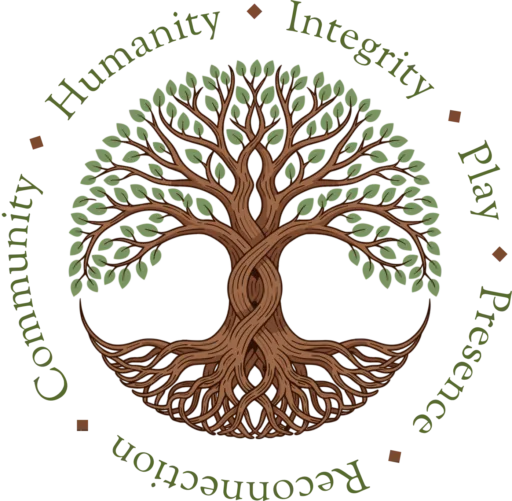
The Restorative Creativity Framework™ brings together six areas of practice that overlap and support each other.
Humanity
You’re not a machine, and you were never supposed to be one. Our creativity is our life energy in motion—the same thing that makes the birds sing and the grass grow. When efficiency becomes the measure of everything, needing rest or having feelings can start to seem like a defect. Humanity means making room for the person you are, including your limits, your curiosity, and the things you love for no practical reason whatsoever.
Integrity
Integrity is your inside and outside matching: what you believe, what you want, and how you live. It includes trusting your own judgment and giving yourself permission to act on what matters to you. You get to choose who and how you want to be. Nobody else gets to decide whether writing a story, learning to dance, or trying something new is a worthwhile use of your life.
Play
This is not school. There’s no grade, no gold star, no right way to do it. Put on the ridiculous voice, sing the song wrong on purpose, write the terrible poem nobody will ever see. Play gives you room to experiment without requiring an impressive result. Doing something badly on purpose can loosen perfectionism’s grip and let you discover what happens when you stop trying to get everything right.
Presence
Presence is noticing the fallen leaf, the music down the hall, the wonder sitting in an ordinary Tuesday. When your attention is pulled in twelve directions, even the things you love can become background noise. Paying attention gives you a chance to be interested again: to notice a color, follow a question, or hear something familiar differently. Inspiration can begin with something you would otherwise have walked straight past.
Reconnection
Reconnection means finding your way back to the parts of yourself buried under other people’s expectations. A hobby you gave up, an interest you dismissed as impractical, or an idea you keep returning to can offer a place to begin. Asking “Did I notice?” instead of “Did I finish?” makes room to discover what draws you in. You already know so much more than you think you do; reconnection is remembering how to hear yourself again.
Community
“It’s not just me” can be an enormous relief. Whether you find one person or a whole room, being with people who understand gives you room to experiment, ask for help, and share what matters without having to defend your interest in the first place. Our strength is amplified in company. We need people who will listen, make room for our imperfect attempts, and help us become more ourselves.
A place to begin
You don’t have to turn your life upside down to make room for yourself. Follow one small curiosity. Use the good supplies. Let yourself spend ten minutes doing something you enjoy without requiring a useful result.
What would you like to try if nobody were grading you?