
What if you didn’t actually lose your childhood imagination, but simply stopped giving yourself permission to use it?
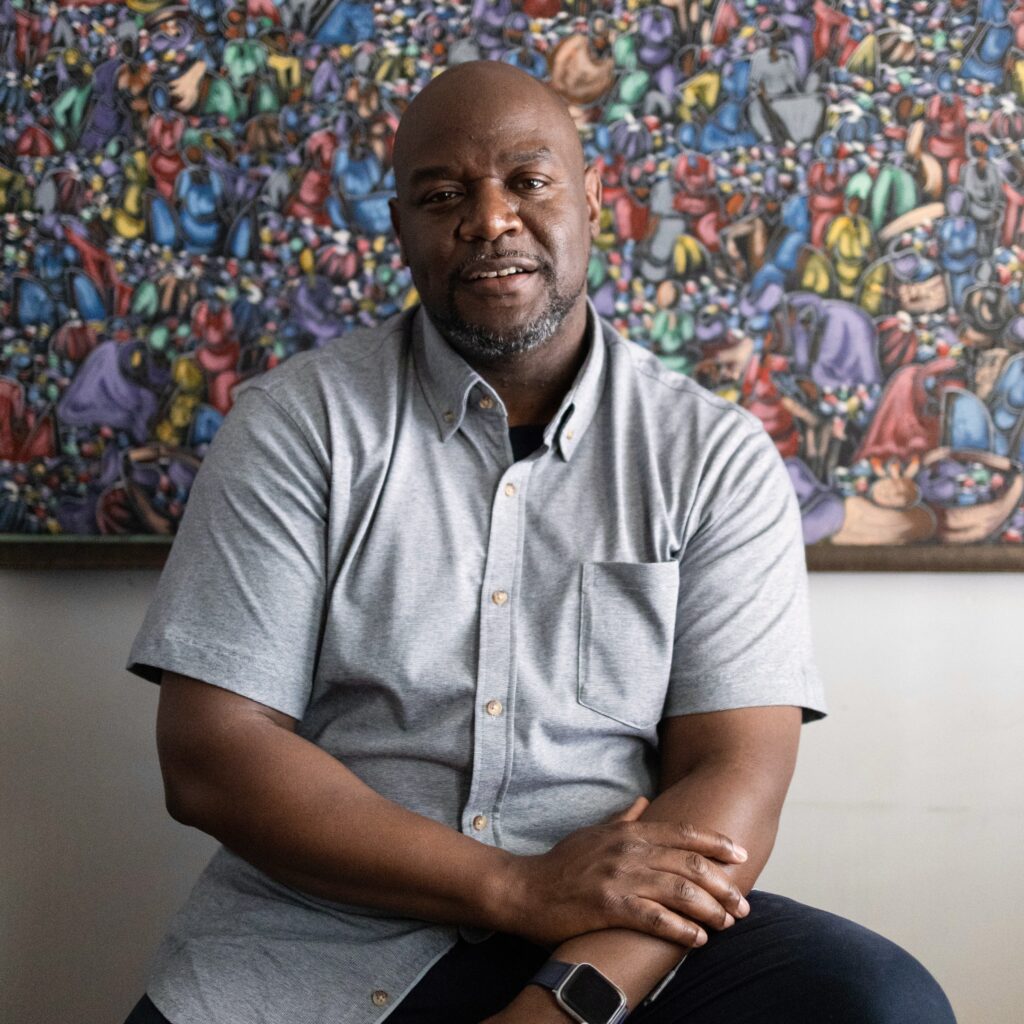
Welcome to Follow Your Curiosity! In this episode, I’m joined by Haitian-born poet, educator, publisher, and cultural curator Enzo Silon Surin. Enzo is the author of American Scapegoat and When My Body Was a Clenched Fist, the founder of Central Square Press, and an instructor at the Massachusetts College of Art and Design.
Together, we explore why adults tend to define their creativity away, what happens to childhood imagination as we grow up, how modern technology tricks us into consuming other people’s lives instead of living our own, and how viewing the world through a “poetic lens” can transform the way we ask questions.
In this episode, we discuss:
- The Dentist Chair Epiphany: Why adults do not lose their imagination, and how we confuse adult responsibility with a lack of creative spark.
- Consuming vs. Creating: Why we spend hours watching people on screens when we could be having real-world experiences ourselves.
- The Virtual World Shift: How algorithms and social media comment sections simulate connection while distancing us from reality.
- Tricking the Inner Critic: Why intentionally making “bad art” bypasses perfectionism and opens the door to genuine play.
- The Ultimate Reward: How sharing authentic, imperfect creative work helps others feel seen and understood.
Ready to send your inner critic to summer camp for an hour? We get together once a month for a relaxed, co-working-style session where you can work on whatever you want—without any pressure to do it “right.” We send the shoulds and inner critics off to summer camp where they’re kept busy rather than getting in our way. Join the Creativity Circle.
Episode breakdown:
0:00 – Welcome to Follow Your Curiosity
1:41 – Making kites in Haiti and childhood imagination
3:45 – The dentist debate: Do adults really lose their imagination?
13:58 – Consuming vs. creating: Why we watch others on screens
26:03 – Is technology warping our sense of reality?
37:35 – Poetry as a lens to ask deeper questions
45:29 – Writing “bad” art to trick your inner critic
51:03 – The real reward of art: Helping people feel seen
Show Links: Enzo Silon Surin
Enzo’s website
Enzo’s Instagram
Enzo’s Substack newsletter
Subscribe!
You can subscribe to Follow Your Curiosity via the handy links at the top of the page for Apple Podcasts, Spotify, iHeart Radio, TuneIn, and YouTube. If you enjoyed the episode, don’t forget to tell your friends!

Transcript: Enzo Silon Surin
Please note: This is an unedited transcript, provided as a courtesy, and reflects the actual conversation as closely as possible. Please forgive any typographical or grammatical errors.
Nancy Norbeck [00:00:06]:
Welcome to Follow Your Curiosity. Ordinary people, extraordinary creativity. Here’s how to get unstuck. I’m your host, creativity coach, Nancy Norbeck. Let’s go. Enzo Silon Surin is a Haitian born poet, educator, publisher, and cultural curator whose work bears witness to the quiet devastations and enduring resilience of the human spirit. The author of American Scapegoat and the award winning, When My Body Was a Clenched Fist, Enzo writes at the intersection of history, faith, and civic reckoning, exploring how we make meaning and mercy amid ruin. He is the founder and publisher of Central Square Press, which amplifies underrepresented voices and honors stories of resilience.
Nancy Norbeck [00:00:53]:
A visiting instructor at the Massachusetts College of Art and Design, he brings the same devotion to his classrooms and community workshops that animates his poetry, inviting others to see writing as an act of preservation, testimony, and repair. Enzo joins me to talk about how we lose our connection with our creativity, how technology improves our lives while distancing us from them, how poetry provides different lenses we can use to see the world and our questions about it, and more. Here’s my conversation with Enzo Salon Surin. Enzo, welcome to Follow Your Curiosity.
Enzo Silon Surin [00:01:30]:
Thank you so much for having me, Nancy. I appreciate the invitation.
Nancy Norbeck [00:01:35]:
I start everybody with the same question. Were you a creative kid, or did you discover your creative side later on?
Enzo Silon Surin [00:01:41]:
Oh, I love that question. I think it’s probably the best question to answer versus when did you start writing? I was always creative as a kid. I, I have these, these memories of making my own kites growing up. And, and I grew up in Haiti. I was born in Haiti and I would, you know, look, look through the yard to figure out where I can get different parts, you know, salvaging different parts for the kites. You know, clothes that people didn’t want. You know, I can use that as the tail for the kite, you know, pieces of clothing. And then they had these, dry cleaning, you know, plastic that you have over, and I figured that I could I can use that for the covering of the kite.
Enzo Silon Surin [00:02:30]:
And so then I would find, you know, twigs and yarn, and sort of, like, put it all together, and I would find, we used to have these glue trees and, bushes. I don’t know what they’re called, but I don’t know if they’re even called glues. But they almost look like when you broke them open, they look like Elmer’s glue, kind of. And so and I figured, oh, you can stick it on this thing. And so at the end of the day, I would have this, you know, self made, you know, height where it wasn’t store bought. Like, I I just made it out of different parts. And I would fly it all day, and but that wasn’t part of, part of it was just like sitting on that wall, flying the kite, and I started to think about so many different things. And so it didn’t matter what it was.
Enzo Silon Surin [00:03:14]:
I just was I never found myself bored as a child because I was always inventing and creating new ways of doing things. It just seemed to come natural to me.
Nancy Norbeck [00:03:25]:
That’s amazing. I love how you put the kite together. That’s that is so, so resourceful in a way that I think it’s not unique to kids, but I think so many adults lose that ability as we get older. So we feel like it’s unique to kids.
Enzo Silon Surin [00:03:45]:
Yeah. It and it’s funny. I was, I end up writing this essay recently about being, of all places, and the dentist at the dentist. Right? I’m sitting there, and they’re doing some, you know, some fillings. And I’m just they’re just having this big conversation, you know, my dentist and the dental hygienist. And they said, you know, kids are they were talking about Halloween and how creative, their kids were in putting costumes together. And she said something. She says, you know, but as adults, you know, we’re just not, you know, we just lose our imagination.
Enzo Silon Surin [00:04:22]:
We’re just not, that creative anymore. And, you know, with the drill in my mouth, I wanted to say something to, you know, And I want to say, no. It’s we refuse to acknowledge our imagination and creativity. We don’t lose it because as a parent of two boys, I I have to be extremely creative in how I parent them, especially because they’re young, you know, one is 12 and my youngest just turned eight. And so two different personalities, but just in general, you have to be creative. But more than that, even if you’re not a parent, as a human being, I think it it takes a lot of creativity just to survive, just to make it through, except we don’t call that creativity. We always think creativity is simply, you know, running through the forest, you know, barefoot, humming and singing, you know, with the birds, you know, or meditating with candles and so forth. And I said, no.
Enzo Silon Surin [00:05:23]:
Creativity is really tapping into that resilient part of ourselves that refuses to give in. I tell my students creativity is already embedded in you. It’s just a matter of helping you to identify it because you wouldn’t survive. Like, we wouldn’t survive as as a species if we weren’t creative, if we stopped using our imagination. And so I think what I’ve done is I’ve kept that going. You know, like, I’ve never lost it. And and I really work on helping people to identify where the creative aspects, the creative points in their lives are, or the possibility for those. It just means that we’ve we’ve shifted, you know, we’re not daydreaming all day about the same kind of thing that kids they dream about because we have responsibilities, but it doesn’t mean that we stop being creative.
Nancy Norbeck [00:06:19]:
Yeah. I I love how she says that to you when you can’t respond. That’s the thing about the dentist, right? They can say whatever they want to use because they have a captive audience. But it’s so true. I mean, we, we think we lose our creativity, but we can’t. It’s what makes us human. It’s, it’s under there, whether we realize it or not, but we’ve defined it away from ourselves. You know, like just like you’re saying it, you know, you can’t be a parent if you’re not creative.
Nancy Norbeck [00:06:52]:
You just, you just can’t. First of all, I don’t think you can engage with kids if you’re not creative because they’re going to be creative. So one way or another. But, you know, we, we hide it under words like problem solving or innovation. It cracks me up when I hear people talk about innovation. And I know that, you know, innovation has a slightly different definition, but I’m like, y’all innovation is just the corporate word for creativity.
Enzo Silon Surin [00:07:20]:
100%, except, you know, if they call it that, they can’t just they they have to justify the salary that they imply to that. Right?
Nancy Norbeck [00:07:30]:
Right. Right.
Enzo Silon Surin [00:07:31]:
So if someone says, what do you mean you’re you’re the head creative person there? Whether you’re making how much money? But they say, no, you’re the head innovator or whatever fancy title they come up with, then you can justify that. Right? And and it starts to and it and it becomes proprietary in some ways. It almost feels like you’re not as creative as they are, and therefore, you know, we need to buy on somebody else to do this. But, but I’m glad you you brought that up because I I look at that all the time, and I say we’re we’re surrounded by so many different ways, you know, to invent things, to, you know, and even innovate. How how many how much of this is really new? Right? So when we reimagine something or repurpose something, that’s also being inventive. That’s also being creative because and, you know, it’s repurposing what’s already there and figure out a a different way to apply it. And so even as we talk about that, you cannot tap into that without, like you said, the imagination. You can’t.
Nancy Norbeck [00:08:40]:
You, you can’t. I think any time we hear the words, how can I come out of our heads, We’re, we’re engaging our creativity, whether we realize it or not? Like as soon as you go toward how, there it is. You’re gonna have to do some sort of thinking that moves in a different direction, comes from from a different place, something that didn’t exist the way that it existed before, or the word how wouldn’t apply.
Enzo Silon Surin [00:09:13]:
Yes. Yes. Yeah. Very much so.
Nancy Norbeck [00:09:17]:
Yeah. So I I mean, and I I feel I feel conflicted. I feel both frustrated on the one hand and sad, empathetic, some, some combination for people who tell me that they’re not creative. Yeah. Because it’s like, no, no, you are, you are. Somebody lied to you, left you with some impression, intentional or otherwise. Something happened that convinced you that you weren’t. But the fact is you can’t be a living, breathing human being and not be creative.
Enzo Silon Surin [00:10:01]:
Yeah. And and and it’s funny because I I go into this in the essay as well. But in in the type of work that I do, even with doing poetry workshops or if I’m doing a speak you know, speaking engagement, The whole idea is I’m I’m I work with young folks, of course, k through 12, but, you know, I also teach at the college level. But when I’m doing these workshops in the community, they’re mostly, you know, when I’m talking with adult audiences. It’s it’s like, oh, I’ve never written a poem before. I never thought about writing a poem. And I said, well, if you call it a poem, you probably won’t write it because you already have an idea what that means. So let me just take you through a journey, and I would ask questions and prompting them.
Enzo Silon Surin [00:10:45]:
And and, of course, every single person end up writing about something. And I said, we just spent an hour together. Just an hour. What would you have done with this knowledge if I wasn’t here to give you permission to write about it or permission to engage your imagination. It would get pushed to the side. And I think part of our regular schedule, we’re thinking, well, an hour is way too long to do something. But we’ll spend an hour trying to figure out what show to watch on the streaming service. We’ll spend an hour just, you know, at a supermarket somewhere, you know, or, my favorite place, HomeGoods, you know, just rummaging through.
Enzo Silon Surin [00:11:29]:
You know, buying things that we don’t necessarily need. But other but we we’re engaged in that all day. But if we if we don’t label that as as, you know, as engagement of the imagination, then what we start to do is to diminish the contributions that we make in the world. And though we don’t value ourselves in the way that we should. Now I can see why in certain sectors, why having you devalue your contribution is beneficial to them. Right? Then it’s again, you can you can say this is not everybody’s doing this or you’re not able to contribute to that. But for me, I think if we’re looking at the longevity of our species, we need to be able to acknowledge each other as creative forces because we’re problem solving, but we’re also inventing. We’re also trying to do things that are very different.
Enzo Silon Surin [00:12:23]:
And, I’m grateful to be surrounded by friends who are artists. And, you know, and I and I teach at an art school. And so to watch the students create, to have those kinds of conversations, like, from scratch, from a basic idea or concept, and and it’s not about ability. And I found that it’s not about people’s lack of ability. It’s the lack of it might be interest at first, because it’s been taken away from them because the things have showed up. But it’s about just willing to be engaged with with the imagination and seeing what comes out of it. And I just provide them with a little bit of direction, not trying to invent or create thoughts for them, just a bit of, you know, some a few prompts to guide them and all of a sudden, it flourishes and it comes out. And I always wonder if they’ll write after that.
Enzo Silon Surin [00:13:19]:
And and I know it’s now I gotta go back to my routine. Yeah. And so there’s a structure that’s built in our society that I think that wants you to not be creative, to not be inventive. So you’re consuming more than you are producing. And as I tell my young boys, I said, yes. You can be logged into the screen all day, but you’re watching other people playing video games and talking about why you could be playing it yourself. You know? Or you could be engaged in the possibility of what would that look like in the real world.
Nancy Norbeck [00:13:58]:
Yeah. The this whole and I feel like I’m a thousand years old as I even think this. But the whole thing with watching other people play video games absolutely flummoxes me because go go pick up the thing and play it yourself like you said. I mean, at the very least, go play it yourself. I don’t I don’t get the appeal of watching somebody else do it when you could actually be at least slightly more active and have the experience for yourself. That seems so strange to me. And it kind of worries me a little bit because I think human beings are here to have experiences, even if they are screen based video game experiences. Not to just watch other people have experiences that I mean, yeah.
Nancy Norbeck [00:14:49]:
Okay. I’m gonna probably watch somebody else go explore some deep cave in New Zealand that I can’t get to and would be terrified I couldn’t get out of. Right? That’s fine. They can go do that. I’ll watch from my couch. But if it’s a video game that I can do myself or a historical site that I could go see myself in my own town, I’d rather go see it myself. Yeah.
Enzo Silon Surin [00:15:18]:
And I think, you know, when what you said about feeling like you’re, you know, you’re out of the loop, like, it’s a generational thing. Right? I think that that itself is something that’s, you know, fabricated to to distance us from from the true nature of what’s happening. Right? So it’s not that, oh, we don’t understand what this is like. I often hear people say, well, when I was a kid, you know, we just just go outside and there was no, you know, there was no marathon of video games. Like, you know, we can pick up a rock. And I love seeing these videos where people go back to their child, and they’re like, yeah. You know, we used to have a pet rock. You know? And so we we get nostalgic about some of those things.
Enzo Silon Surin [00:16:06]:
Right? But what we’re failing to see is that society wasn’t designed to compete, you know, with our imagination the way that it is now. And so, what we’re seeing with a much younger generation is not because, oh, it’s it’s a younger generation. This is what they gravitate towards. No. This is deliberate. Right? How something is designed. And they’ve been groomed with products. They’ve been groomed with production of shows.
Enzo Silon Surin [00:16:34]:
I talked to my boys about sound. And and and some of the shows that they’re watching, I realized for me, hit a particular decibel that gives me a headache. I can’t even focus. And the reason that’s the case is because I have a voice in my head that’s always narrating things. Right? And so it interrupts that flow, and I fight against that. Whereas, if you can get someone to get used to somebody else doing the talk, somebody else doing the narration for you, then you kinda look forward to that. And so, it builds upon that, I think, from, you know, whatever it is that they’re watching as shows to now, I’m gonna watch a video for an hour about somebody playing a video game. And when I did that, it was to learn how to play it better, and then I would go and play.
Enzo Silon Surin [00:17:26]:
But that’s not what’s happening. Right? It there’s no interest. So then the video itself tricks the brain to thinking that they are experiencing the game itself. And I think that’s a very deliberate thing, and we see it happening with a lot of social media as well. Right? The proliferation of this whole, oh, I have a community. I’m interacting with people. But it’s not they’re not real people. I mean, there might be real bodies behind it, but some of them, you know, are not real.
Enzo Silon Surin [00:17:56]:
They’re bots or, you know Yeah. Or versions and versions of somebody else. But we’re made to believe it’s a simulation of a conversation, a simulation of a connection. And if we buy into that, then the brain registers it as, oh, I’ve had an interaction with someone today.
Nancy Norbeck [00:18:14]:
Right.
Enzo Silon Surin [00:18:15]:
I’ve done something today when we’ve actually have not gone anywhere, and that and we have not had any meaningful interactions.
Nancy Norbeck [00:18:23]:
Yeah. And, you you know, I think I think you’re right about that. And you this this whole conversation is reminding me of one of the very first conversations that I had on this podcast with doctor Kelly Flanagan. And he mentioned that, you know, this is the first generation that is absorbing other people’s creativity more than it is creating on its own, and that we have no frame of reference for what that’s going to mean in the long term except to be pretty sure that that’s not a good thing.
Enzo Silon Surin [00:19:01]:
Yeah. And if you catch them early enough, right, then then you don’t have the kind of experience that I just described that I had as a kid. Right? The opportunity to create on my own. And I think Yeah. Being a a creative person, I find I find myself in competition with what other people are creating. Meaning I see them create something. I’m like, oh, I could have done that. Right? And so therefore, I’m not as engaged for as long for a period of time because as soon as I see it, my imagination says, oh, we can do this.
Enzo Silon Surin [00:19:36]:
Oh, we have done this. Why aren’t we doing this? Why are you watching a video about this? Let’s do it ourselves. And I think a lot of the conversations I have all around that, about how to mute, it’s a consumer. Right? It’s consumerism. Right? And so now it’s changed from, you know, getting simply getting products, but you are consuming other people’s knowledge and and it’s tricking yourself into thinking, oh, I’ve acquired some knowledge, when we don’t even know what they’re sharing, if it’s true or not, if it’s for entertainment purposes or not. But it seems like it’s information. So we feel like, oh, we know stuff. We know a lot.
Enzo Silon Surin [00:20:19]:
But I think what we’ve done is acquire a lot of information and maybe even a lot of skills about things that we never apply to our own lives. And so we’ll become hoarders of these videos, hoarders of information, of things that we would never put to use. And I think that’s the disservice, really, is are we inspiring each other to do things? If somebody’s diving off, you know, a cave in New Zealand, you know, into a water, you say, well, I may never do that, but there is something that I’ve always wanted to do that can challenge me in that way. Right? But there’s never that conversation. There’s never that type of inherent friction that exists that says, hey, I could be doing this in a different way in my own life with something else. So maybe I should spend more time doing that, because I’m watching someone walk through the woods. Right? I’m in nature, they say. And I remember watching this clip, and I said, why so many like, a million views of watching someone simply walking in the woods and saying, look at me.
Enzo Silon Surin [00:21:25]:
I’m in nature. And I’m like, why did that get so many views? It’s like, well, I wish I was out in nature. I was like, just look out the window. You know? There’s a local park somewhere. Like, this could be you. And can we do that without the purpose of, I don’t know, the algorithm sending people your way so that you you get more likes? Can we do things without having to depend on that that, you know, that dopamine hit as people would say. Right? It’s like, oh, somebody liked that I went outside and I shared it. You know? It’s like, no, we did things just to do them.
Nancy Norbeck [00:22:01]:
Yeah. We weren’t worried about how many people liked it and if we did it just, just right. So that more people liked it than less and how many people watched it and all of this is a very strange sort of voyeurism, honestly. It’s, it’s weird. And I noticed it in myself, you know? Oh, how many views did that get? What did I do that’s different this time? It’s like, really?
Enzo Silon Surin [00:22:27]:
And that word voyeurism is a great one because I think it is that. Right? I was having a conversation with a friend about the idea that someone could log in, or they can go to work and spend all day at work doing whatever job that they’re doing. And then as soon as they get home, they log on and and turn on. Let me see what everybody else is doing. And in any video, you could be in someone’s kitchen. You could be in their bedroom. Right? They could be doing a dance video. It’s like, oh, I see laundry on the floor behind you.
Enzo Silon Surin [00:22:58]:
Right? Or, you know, or there’s a kid behind you. Some people involved their families as well. Right? But when was that time for us? I think in different generation that you could see into everybody’s life. Those existed in TV shows. Right?
Nancy Norbeck [00:23:12]:
Mhmm.
Enzo Silon Surin [00:23:13]:
Where even those were dramatized, reality TV wasn’t as much. But then when that became a thing, it’s like, oh, I get to see how other people live temporarily. Right? Right. Like, well, you know, it’s entertaining because I get to see it. I said, yeah. Step outside. You get to see how people live all the time. And just sit in the park and you can listen.
Enzo Silon Surin [00:23:35]:
You can people watch and you can listen or you’re on the train, you know, instead of having the headphones and the music and tuning yourself out. You get I mean, there’s more entertainment than I found on buses and trains and being out in the world than that I have on the screen. And that has helped to inform my writing because I don’t need sometimes, I don’t need to invent characters, you know, because they’re in the world and they inspire the type of characters that I write about, or even the types of poems that I write about, the type of experiences that I write about. And that way, it’s based on, it’s based on a dose of reality that I think is, is slowly becoming, at least for some people, irrelevant as it relates to the virtual world. Right? So it’s like virtual reality versus real reality, and then real, r e a l, versus r e e l. Right? Mhmm. It’s like the brain has no way of distinguishing the two. It’s like, oh, you are talking to a person.
Enzo Silon Surin [00:24:35]:
You are engaged with that. Okay. Good. Let me help you out with that. And there’s nowhere within your own self other than the conscious telling you, you know, this is not a real person. Right? You know, this is not real. Right? But other than that, I think it’s it it is that. It is this disconnect with the real world that we have around us, and it seems like it’s taking a back seat to, to what’s going on online or, you know, and on video really.
Nancy Norbeck [00:25:06]:
Yeah. Evermore every single day, I think. But yeah, I used to suggest to students that they, they go sit at the mall or at an airport or, you know, anywhere where there’s lots of people and just listen to how people talk and the kinds of conversations that they have because you’re right. There there is so much drama happening everywhere and you may only get little pieces of it, but that’s okay. You can imagine the rest to go around it. But, but yeah, now it’s just, it’s on your phone every, every second of the day. But then, then there’s always the, you know, oh, everybody’s so upset about this video, but no, no, it was fake. No, it wasn’t.
Nancy Norbeck [00:25:50]:
It was real. And, and nobody knows what’s real anymore. Yeah. And it’s only getting worse knowing what’s real and what isn’t. Oh. And that kind of makes my head hurt every time
Enzo Silon Surin [00:26:03]:
it happens. As it should. As it Yeah. I think and this is not a war against technology. I think the one of the greatest things, even the conversation that we’re having being in two different states. Right? It wouldn’t have existed.
Nancy Norbeck [00:26:19]:
Right.
Enzo Silon Surin [00:26:19]:
You know? At this so it’s not even a knock on technology. It’s it’s more about I kinda feel like we never really got the chance to decide how to use it. I think it wasn’t like, here’s a phone. Use it in whatever way you see fit. It was more like, no. Here’s what we want you to do with that phone. And then a whole infrastructure was built around that. And then around that was built a village.
Enzo Silon Surin [00:26:48]:
Right? And then everybody had the same rules and the same type of, you know, tactic that’s used to sell you goods and products was used to sell you how to use a particular thing. It’s like, well, do I get to decide how I get to use this?
Nancy Norbeck [00:27:02]:
Right.
Enzo Silon Surin [00:27:02]:
And it’s like, no. This is this is how it is. And so then, I’m conforming to how to use it, but then it also directs me towards specific groups of people. Right? So whether you are on Facebook or Instagram, that’s two different audiences, two different types of users. Right? But each platform is telling you how to use it and how to connect to people. And so when do we get to the side? When do you opt out? Right? You know, I don’t wanna keep drumming on the whole matrix aspect of things. Right? But when do you unplug from that matrix? Right? Do you even know you’re in the matrix? But to speak to your point, I think we’re at the point where we realize, okay. I know this is fake, but it’s funny.
Enzo Silon Surin [00:27:48]:
Mhmm. And I’m just gonna forward it. I know this is this might be fake, but it could be real. So now we’re having a third layer to this. This. So there’s the real world, there’s the virtual world, and then there’s this it doesn’t exist. It’s not real, but it might exist. So now we live in this hypothetical world, and I’ve seen people get into heated debates online with what ifs.
Enzo Silon Surin [00:28:15]:
Yeah. And I said, you know, this didn’t really happen. Right? The question was posed. And then, all of a sudden, a whole belief system, you know, well, this is why we hate these type of people. This is why we don’t trust this. And I said, that wasn’t real. Someone created a scenario for you to engage with just to get likes or just to get, you know, some ads, you know, revenue or something like that. But we start to believe that it’s real.
Enzo Silon Surin [00:28:42]:
And when we do that, we disconnect from our own reality. So now when we get off the screen, we come back to the real world. We start to perceive people in those in that light.
Nancy Norbeck [00:28:52]:
Mhmm.
Enzo Silon Surin [00:28:52]:
Even though it was hypothetical. All of a sudden, you say, but I’m real. I’m in front of you. I’m not a hypothetical person. We don’t know how to disconnect with that because the brain is is engaged with that. It actually sometimes even prefers that than a real conversation. So I think that’s part of the challenge is we were never given a manual for how to use it. You know, the Internet was really wild, wild west.
Enzo Silon Surin [00:29:19]:
Right? It was a frontier, you know, to be explored. And the powers that be eventually saw that as a great opportunity to not just engage minds, but to walk them into, to control them in some way. Right? I’m not gonna be tinfoil hat conspiracy theories here. Like, this is what’s actually happening. So you want people to conform, you want them to, to deviate from their regular schedule. They tell you that’s what the algorithm does. And one way to interrupt that is to sit in the real world and to engage with real people and real conversations.
Nancy Norbeck [00:29:57]:
Yeah. And and especially, you know, with all of this, like, AI delusion and psychosis that, you know, where people are and and, you know, I I mean, I haven’t used it a whole lot, but I’ve used it enough to know that it’s really easy to forget that those words on the screen are coming from a machine and not some other person somewhere, because they’re made to sound like they’re a person. So your, your whole sense of reality is, is getting warped in that respect too. And, you know, I mean, I have nephews who are roughly the ages of of your kids, and I kind of they’re going, I hope you don’t think this is normal, because this is not normal. And this is this is not reality. And how do we how do we teach you what’s reality and what’s not when you’re at these ages and it’s brand new and we’re still figuring it out? And yikes.
Enzo Silon Surin [00:30:57]:
Yeah. You know, with young people, the world is virtual. Right? Until they get experiences to prove otherwise. Right? So for them, everything is hypothetical. You know, I’m gonna jump off this bed, and I’m gonna fly. Right? And until they jump off the bed and land on the floor and they hurt themselves. They’re like, oh, okay. Oops.
Enzo Silon Surin [00:31:21]:
Oops. You know? There goes gravity. Right? So they’re testing out the world in that way, and I think it’s very different, right, to be engaged in that for the sake of testing things out. And I think even with AI, it’s a great opportunity to engage with something that, oh, let me see what the possibility of that is. But, again, when we talk about it being the only thing, right, the the one thing that you feel like, oh, I I think I can I can really spend more time in that world and in that space because you preferred it, then there’s something within us that’s saying, okay? Something is not quite right when we favor, you know, alternate realities versus our own life. And it’s not just a form of escapism. I think there’s a form of addiction that’s connected to that as well, where the brain is registering some of these things, and we start to feel like, oh, I like this. I like how this makes me feel more than I like how the real world makes me feel.
Enzo Silon Surin [00:32:19]:
And so then we never correct what’s wrong with the world. We just say, oh, let’s just build a bigger database.
Nancy Norbeck [00:32:25]:
Yeah.
Enzo Silon Surin [00:32:26]:
In the virtual world. And so then it gets bigger it gets bigger, but we never take care of the initial, you know, problem which doesn’t go away, and it doesn’t get resolved, you know, unless we have human engagement. Like, we need to be active in our relationships. We need to be active even within ourselves, the kind of things that we tell ourselves. With children, we can see it and we try to teach them what’s real and what’s not. But as adults, how do you do that? How do you engage someone with they know what they know. Oh, no. I know what I saw.
Enzo Silon Surin [00:33:02]:
That was, you know, Arnold Schwarzenegger singing that song. You know, it seems so real. I need to find that song. You’re like, no, it’s not it’s not real. You know, but
Nancy Norbeck [00:33:13]:
I find myself having to repeat to myself, that is not real. That is not real. That was made by a machine. That was said by a machine. You know, what, whatever it was because otherwise, it is so easy to start to believe that it was a video of a real person said by a real person, whatever it, whatever it was.
Enzo Silon Surin [00:33:34]:
Yeah. I I I think about the, you know, the movie Inception all the time. Right? And and and there’s a portion of the film. It’s like, well, how do you know you’re not dreaming? And it’s filled with with so many layers, and it says there’s a dream within a dream. And I don’t know if you’ve ever experienced this, but, being a vivid dreamer, you know, I’ve had dreams where I was waking up from a dream. And I think one time I had a it was triple layer. I woke up twice, and I was still dreaming to the point where when I woke up, I needed something to tell me that this wasn’t a dream. And I just remember inception.
Enzo Silon Surin [00:34:15]:
Right? Like, you carry some type of anchor with you that wouldn’t exist in a dream world, you know, something, you know, something else. I’m I’m grateful that I have my dog Jasper because he’s he’s real. You know? So when I wake up, I’m like, oh, wait a minute. I know exactly where I am. But I think there’s that notion too that how do you know and how do you disconnect? And I think that’s where the danger really is, is you get lost in that reality. Now, when you read a book, the the author is great at engaging you, you know, engaging your imagination. But you can walk away from a book because it’s a product. It’s something that you’re holding on.
Enzo Silon Surin [00:34:59]:
Right? Or if you’re even listening to an audiobook, at some point, it stops. Right? It doesn’t keep going. Whereas, when we’re talking about the virtual world, it doesn’t go off.
Nancy Norbeck [00:35:13]:
Right.
Enzo Silon Surin [00:35:14]:
Like, it’s always on. And no matter what and then your brain says, I wanna see what else is happening. It’s 3AM. And you can watch a video of somebody somewhere around the world. Right? And it could be a fresh new video. And if that’s not the case, you get prompted to to engage. And I used to get these text messages, an email that says, hey. We have not seen you online for a while.
Enzo Silon Surin [00:35:41]:
You should check out this video. I’m like, no. I took a break for a reason. It’s like, oh, no. You’re missing out on I was like, okay. Let me I need to get back, you know, Or in the nature of jobs as well. Right? Making social media, I think as writers, soon as become more as authors, that’s become more prevalent. Like, you need to be engaged in that virtual world no matter what the cost.
Enzo Silon Surin [00:36:04]:
And so then you feel like, I actually wanna be off so I can create. Right? So I can write, so I can have my imagination engaged in that. But then sometimes you feel like you’re pushed toward towards something that’s not necessarily healthy. Because, again, we’re still trying to figure out what this space is. It’s like, well, just sign up for something right now and post something. It’s like, I don’t know what I’m doing, or I don’t have a desire to do it. You know, that kind well, just do it anyway because it’s a great way to engage with people. And so I think we’re still trying to figure this stuff out, and I think we still have time to, you know, to ground people in something that that feels real to them, that feels authentic.
Enzo Silon Surin [00:36:49]:
And you you can feel good with all of this content, and it’s meant to be. It’s entertainment. But at the same time, how else can we feel good in the real world? How else can we engage each other so that when somebody says, hi, good morning, or they smile at you, it resonates in a completely different way than it does in a virtual world.
Nancy Norbeck [00:37:10]:
Yes. Yes. And, you know, I’m I was thinking before we got on this call that I often feel like poets are the people who put into words, the things that the rest of us notice, but can’t articulate. And I think that you have just done a whole lot of that right here. I think probably most people who are listening to this have had at least one moment in the last half hour or so where they’ve said, yeah, I’ve noticed that, but never quite knew how to say what they were feeling about it. And I’m I’m curious to know, like, were you, were you this deep a thinker before you started writing poetry or did it come as a result of delving into poetry? Or how how did that all come together for you?
Enzo Silon Surin [00:38:05]:
That’s a very good, very good question. I think I was in trouble as a kid because I would always ask deep questions. Like, I was never satisfied with, you know, surface level things because I was curious. And I think that that level of curiosity was fed by poetry because it became a safe place to interrogate these things. Right? Sometimes I say that poetry is a mask. It’s a great mask for me because if I existed in the real world without poetry, I’d probably be locked up as insane. Right? Because of the questions that I was asking, the things that come up, or the connections that I make. Right? And because it’s almost like we feel like we need a end up a preapproved vehicle to be able to feel certain ways, to think in certain ways.
Enzo Silon Surin [00:38:58]:
And and so but I always refuse to be categorized. I refuse the restriction. And so as a kid, I was asking profound questions. I was, you know, I didn’t I always joked that it, you know, I I got into a lot of trouble because I grew up I grew up Catholic, and I got into a lot of trouble because I was asking questions. You know? And you’re not supposed to ask questions. I’m like, but, you know, I was like, well, you know, if we’re talking about God, why wouldn’t God want me to ask questions? You know? Like, I’m a kid. I’m trying to figure this stuff out. And I realized that, you know, we have a lot of institutions that that don’t necessarily encourage people to question because it disrupts.
Enzo Silon Surin [00:39:42]:
Right? And becomes rebellious. And I think as a kid, I figured that out right away, and I was asking deep questions. You know, sometimes my group of friends was different because I thought too deeply about things until I found the right people. And most of those and, you know, some of those folks were artists because they were just roaming around entertaining some of these ideas, you know, or I’d have these conversations and I watch people have them with me. But then the rest of the time, they sort of, like, abandon those thoughts. Right? Or or and I and I realize it. Right? Social structures are built in that way. But when I looked at poetry and I read I read the books, but also listening to hip hop as well, listening to rap music when I was a kid, you know, coming of age with hip hop in in Queens, New York.
Enzo Silon Surin [00:40:34]:
Like, the rappers are asking profound questions and they were making some, you know, profound statements, you know, like, don’t push me because I’m close to the edge. You know, I’m trying not to lose my head. And I was just like, wait a minute. What it that’s very different. You know, that’s very different. The person is telling you about their psychological state and what’s going on in their neighborhood. And so I saw that we can use those as as, wonderful vehicles for exploring things. More than anything, Nancy, I think it’s I didn’t think a a definitive a definitive answer existed.
Enzo Silon Surin [00:41:10]:
And I think the beauty of poetry for me is that it’s not trying to provide you with answers. It’s interrogating some questions, and it’s entertaining some questions and possibilities. But at the end, it’s like, how do you feel about that? What do you think? And it invites for that conversation, you know, that I hope will keep happening, which is, hey. Do you see what happened? Can you do something about it? Or, because I think, you know, sometimes obvious observation happens at a distance. Right? When we’re talking about witnessing, which is a form of observation, but you’re experiencing something, and it affects you in a way that’s emotional or psychological, right, or mental. And you start to say to yourself, Well, how do I process this? What does this mean? Posture became a safe way for me to do that because I couldn’t go up to people and ask those questions. Whereas the page was always a safe place for me.
Nancy Norbeck [00:42:07]:
Yeah. Necessity really becomes the mother of invention, doesn’t it? Yeah. Yeah. Yeah.
Enzo Silon Surin [00:42:13]:
I don’t know what came first, you know, the poet or the interrogator, you know. But I I do think that, I’m I’m fortunate that I found it as a vehicle, and and and it has stuck since I was a kid.
Nancy Norbeck [00:42:29]:
That’s awesome. And and I think, you know, you you’d mentioned before we had this conversation that it’s kind of become a way of life, and I think that is probably the best anybody can hope for.
Enzo Silon Surin [00:42:46]:
Yeah.
Nancy Norbeck [00:42:49]:
Yeah. I mean, to have not only a creative life, but have that, that creativity influence you and have the work that you do influence your creativity and have it all kind of become that continuous circular process. It’s pretty amazing.
Enzo Silon Surin [00:43:10]:
It’s and something that I, I, I challenge myself as well to, to remind myself that I poet because I’m a poet. Right? And it’s, and it’s a way to remind me that it’s not just a position or a title. Like, I have to poet. And so then I ask myself, what does it mean to poet? Well, the first part is eventually you have to write something. Right? But before you can write it, how you perceive the world as a poet is very different. And and I talk a lot about this on my podcast, It’s A Poetic Life. I also deviate into a substack as well, talking about the poetic life, because I wanted to reveal the mystery, right, behind this. What does it mean to be poetic? And the poem itself ends up being the final product.
Enzo Silon Surin [00:44:01]:
But before that, I’m writing because I’m thinking in the way of a poem, you know, why did this person say that? Why did they choose that word? You know? And how did that other person feel when they heard that word? You know? Or why did I feel this way when I heard this or when I saw this? Does anyone else feel that way? Should I and then all of a sudden the poem starts to build itself because I’m asking all of these questions. And if I’m not constantly engaged in that, there will never be a poem, you know? And so I always think about how I don’t, and this is not probably popular, you know, like, because I don’t fully engage in writer’s block, you know, as a concept, because I believe it’s a mental block, right? That if I’m not, if my mind is not free to think about something, then I cannot write about it. And if that’s the case, sometimes I may need to take a break because there’s a lot going on in my brain, you know Mhmm. Open my mind. And so I I think of poetry in that way sometimes. It’s not about writing a poem in particular, but a way of entertaining possibilities, a way of harnessing your creative energies to figure out who you are and how you are, and also to enjoy the world in its entirety of how it is, you know? And I think poetry becomes a great vehicle for that.
Nancy Norbeck [00:45:29]:
I love that definition of poetry. Thank you. I mean, I think, you know, so many people get intimidated by the idea of poetry, but I don’t think I don’t think it has to be that intimidating. You know, it’s, I’m not primarily a poet, but I certainly have written poetry. And as we record this, this is gonna go out when it’s very warm out in the summer. We’re recording this in December when it’s bloody cold. But I’ve just finished a couple weeks ago doing 30 bad poems in thirty days on YouTube, just as an experiment to see what happens. Because when you sit down to intentionally write something bad, you get your inner critic out of the process.
Nancy Norbeck [00:46:23]:
And I mean, obviously, nothing that I wrote in those almost thirty days is gonna win me a Nobel Prize for literature. Right? But still, it is interesting to see when I do sit down to write a poem, everything seems to work differently in my brain. It’s like, oh, it’s poem time. It’s time to put on the poetry lens. The world looks completely different, even if it’s only for five minutes. And it is a place I like to visit, I have to say, because everything looks different. Everything looks kind of heightened and more vivid and more interesting, and and as you say, more curious, more more, oh, what’s this about? What’s happening over here? And and that’s just, to me, more human. It’s it’s kind of like going back to being that five year old that’s asking questions every twenty seconds because they’re trying to figure everything out.
Nancy Norbeck [00:47:22]:
And yet we look at it and we’re like, oh, it’s a poem. Oh my God. I might not understand it. And I don’t know how to write it. And I’m afraid of it. It’s like, you know, I don’t think it has to be that big scary thing.
Enzo Silon Surin [00:47:35]:
Nope. You’re right. And I I’m glad that you did that because in in many ways, it’s it’s tricking your brain into tapping its into its own creativity. Right? Exactly. It says, no. I’m not gonna allow us to write a bad poem. I know we’re supposed to write a bad one. Wait.
Enzo Silon Surin [00:47:51]:
What is a bad poem? Right? Then all of a sudden, like, I don’t okay. Let’s see. Let’s write one to see if we can write a bad poem. And now your brain is like, okay. What does it mean to write a poem? Period. So you go from bad to what is a poem to, okay. What are some of the things I want to include in a poem before it becomes a poem? And then you start to entertain all these different things and all these stories that you find in your own life or your personal preferences. You know, I like this word.
Enzo Silon Surin [00:48:20]:
I like this rhythm. I like this song. I like this melody. And all of a sudden, now you’ve tricked yourself into entering the poetic life. Right? And so it’s not necessarily centered on the product itself. And I love how you said that it you don’t consider yourself as someone who could write a poem. And I said, well, it’s like many other things. Like, I’ve never walked in, you know, with, you know, snowshoes before.
Enzo Silon Surin [00:48:53]:
Right? I’ve never been snowshoeing. And it’s like, okay. That could look intimidating, but let me put a snowshoe on, and let me try it. And so now you say, I’m snowshoeing. It’s like, no. You just put snowshoes on and you’re walking. You’re like, oh, that’s what snowshoeing is? Yes. And all of a sudden, it be it doesn’t become a thing.
Enzo Silon Surin [00:49:14]:
It doesn’t become as intimidating. Right? Skiing, that’s very different. Right? Because if you define what skiing is, it’s like, oh, I put these metal things on and I slide against icy snow, And sometimes there’s a hill, so no. No. Thank you. Because then it becomes like, I I don’t wanna go down a mountain. You know? And I look at it.
Nancy Norbeck [00:49:36]:
Myself doing that one. So maybe not.
Enzo Silon Surin [00:49:40]:
So, you know, when other people say, no. I like that. And what they’re tapping into is there’s a part of themselves that like doing that. Right? That it doesn’t matter what the risk is of injury. Right. Right. To do it, then all of a sudden, it was already in there. And we don’t know who the quiet people are, who the more adventurous people are until a scenario pops up.
Enzo Silon Surin [00:50:05]:
Right? And it tells you, hey. I think I like this.
Nancy Norbeck [00:50:09]:
Yeah.
Enzo Silon Surin [00:50:10]:
Can we do more of it? We’ve never done this before. You know, similar to when people try new foods. Right? Yes. Sometimes you’re just like, I didn’t think I was going to like this, but now this is all I want. And then sometimes we decide, okay, because I like this and this one place, that’s where I’m going to keep going. And we forget that the initial, right? Curiosity led us to that one place. What if there’s other things that you haven’t tried yet that you might enjoy? And I think for me, that’s, that’s what the presence of all of this is, right, in this world is figuring out all the different ways that I can extract joy from life, or I can process something, you know. Because at the end of the day, you said, you know, you’re not gonna win a Nobel Prize, but what is the prize? Yeah.
Enzo Silon Surin [00:51:03]:
All that, you know. Before I was winning awards for my work, the best until this day is still the best compliment that I ever gotten, best reward that I’ve ever gotten. When someone said this was back in junior high school and they had I’d given them a poem I had written, and they had tears coming down their eyes. And I thought, oh my gosh, this poem is so awful. I made them cry. And, and then when they were finally, you know, able to, you know, to console themselves, the, you know, and said, this is an experience that I went through. And then I didn’t have the words in reading your poem. Like, you you did that.
Enzo Silon Surin [00:51:45]:
And I wasn’t writing about them. I was writing about something that I went through, and I thought, wow. So you can connect to other people in this way. Like, we go through similar things. And I think, for me, more than anything else, it’s it’s about being seen and helping other people feel seen because we go through we have so many similarities. We go through all these shared experiences, but we never get a chance to actually connect on that level. And I think when I engage with that, it it’s it’s a it’s a feeling I can’t even describe because, one, the first level is, oh my gosh. I created this.
Enzo Silon Surin [00:52:30]:
Like, this came from me. Mhmm. You know? So there’s all this private joy and celebration. And then when the work makes it out into the world, to watch people interact with it is one of the best gifts, you know, that that I’ve been given with poetry is that it’s given me a chance to find communities and to connect with other people and to make somehow their existence valid.
Nancy Norbeck [00:52:54]:
Yeah.
Enzo Silon Surin [00:52:55]:
That you are a person, that you matter, and that someone is thinking about you and your experience somewhere out there that you don’t know. And more importantly, like, you belong here. You deserve to be here. It might be more challenging, but let’s figure out how to support each other in this way and how to curate a better world together. And I think I use my art in that way. Anytime I attempt to not use it in that way, I gain zero satisfaction.
Nancy Norbeck [00:53:22]:
And what and there’s something so powerful just in seeing someone and in that feeling of being seen. And that’s clearly what that junior high poem did.
Enzo Silon Surin [00:53:35]:
Yeah.
Nancy Norbeck [00:53:36]:
You know, you, you saw them without knowing that you saw them. They, they knew that you had seen them. They felt seen maybe for the first time ever and understood. And, you know, like I was saying earlier, poets are the people who give us the words for the things we’ve never been able to articulate. I think that’s what happened. And and there’s there’s something so incredibly powerful in in that. And that’s not to say that, you know, music can do a lot of that, and dance can express a lot of that. But sometimes I think that each one of them has their own particular magic in the way that they do it.
Nancy Norbeck [00:54:20]:
And and so, yeah, there’s there’s a lot of magic in in poetry.
Enzo Silon Surin [00:54:26]:
There it is. And I’m hoping that’s the, that’s what it does. Right. It opens people up to, you know, kind of like we talked about if I’m not cliff diving, you know, what other, what are some other things I could do in my life to add that level of adventure. Right? Or so the poetic life for me is you think like a poet, you think creatively, but then it could be anything. You end up parenting like a poet. I always say that I parent like a poet. Right? And I, I teach like a poet.
Enzo Silon Surin [00:55:01]:
I, I make friends. I have conversations like a poet, because I’m always looking at possibilities. I’m looking, always looking for bridges between words and what people are saying, but also their experiences. Not, you know, in data mining form. You know? I’m collecting all of this, you know, because people always joked, are you gonna write about this? You know? It’s like, I don’t write about everything, you know? So don’t feel like you can’t tell me stuff because you think I’m going to write about this. It informs who I am as a person, and it may inform my trajectory to the world because now I’m seeing it in a completely different way. And I think all those are, again, possibilities and opportunities for engagement. And it doesn’t exist.
Enzo Silon Surin [00:55:51]:
It doesn’t have to exist in the way that we think because we have not completely evolved. We’re not done. We’re still trying to figure out how to better connect with each other. And I think when you have a type of vehicle, whether it’s poetry or, you know, songwriting and music, I’m always writing with music on. There’s always music playing in my head. You know? You know, since this is gonna come out in summer, you know, someone somewhere in summertime by Simple Minds is is playing through my head all day today, and I kept thinking about, oh, that that song puts me in a particular mood. And it’s great to play it on a day where it’s 15 degrees and it feels like five degrees. Right? But even the title, Someone, Somewhere in Summertime, it’s like, there’s a possibility.
Enzo Silon Surin [00:56:42]:
Right? The idea of warmth. And that it could that could exist in someone or it can exist in a place. Right? And in a particular season, like and how I can harness all three. And you say, oh, I didn’t mean to write a poem about this. So to think about it, but a person could be a place of warmth as well as a location, as well as a season. Right? And so then that’s the poetic aspect of it for me is that I’m always tapping into that, even if I’m not sitting to write a poem.
Nancy Norbeck [00:57:14]:
And it’s a great song.
Enzo Silon Surin [00:57:16]:
It is. It
Nancy Norbeck [00:57:21]:
is. Yeah. It’s it’s so interesting though, how, you know, those little things, like the song that you’re listening to suddenly bring something together for you. I mean, I think so much of creativity is serendipity because of those little things that influence what’s already happening inside our heads and and just kind of bring it together that way for us. Not always, but sometimes.
Enzo Silon Surin [00:57:43]:
Yes. Yes. There’s there’s a whole lot that we don’t know.
Nancy Norbeck [00:57:48]:
Mhmm.
Enzo Silon Surin [00:57:49]:
Even about ourselves. And and I believe all those, you know, poetry is one one portal, right, to enter, to gain knowledge about ourselves. Music is another. Art, dance, movement, you know, that’s another. And so I think, you know, we’re still really trying to figure out who we are. And as we’re doing that, this I don’t think we should limit ourselves with the types of things we engaged in. Again, that’s why I say technology is not to be scoffed at or to even be, you know, villainized in that way. I think it’s an opportunity.
Enzo Silon Surin [00:58:28]:
And when it becomes the one and only thing and there’s no independent thought, you know, I always talk about how social media I wish there were social media cafes in which, oh, I saw this posted online, and now we’re having a conversation about it.
Nancy Norbeck [00:58:47]:
Mhmm.
Enzo Silon Surin [00:58:47]:
Because the comment section is not a place for those as I’ve learned on many occasions. It’s like, we don’t care. We no one here cares about what you have to say about this. And I was just like, but everything on here is fake. Like, you do know this is not a no one cares about we’re having and I just said, oh, this is not the room I belong in. Right? And then how do you figure out that room with so many rooms on there? And I think what the room we’re looking for is in is inside of ourselves sometimes. It’s let me take a, you know, let me take an entry into something that I’m experiencing and what can come out of that? What can come out of it?
Nancy Norbeck [00:59:29]:
Yeah. Isn’t it funny how you can have the comments and the comments. Yeah. They’re not at all the same thing.
Enzo Silon Surin [00:59:40]:
Nope.
Nancy Norbeck [00:59:42]:
Yeah. Yeah. I, I remember going way, way, way back to the days before most people even knew that the internet existed when I was an undergrad and seeing on an early, very local precursor to like AOL instant messenger, where someone had a comment in their profile about how important it was to remember that there was actually another human being with a brain just as real as yours on the other side of that screen. And I feel like that person who wrote that was onto something that I wish. I wish we not only had been more aware of beyond just that person, but you know, the as as all of this stuff from instant messenger to Facebook and everything else has grown, I feel like that is the thing that has been the easiest thing to lose. You know, I don’t know who, you know, user bunch of numbers is on Twitter or Instagram or whatever. And they may be a bot in this point in our internet evolution, but there might be another human on the other end. And if there is, would you treat that other human the way that you speak to the person on the screen.
Enzo Silon Surin [01:01:33]:
Yeah. Yeah. It’s I mean, you have the avatars. Right? But I think the essence of you’re a whole different person online than you are in real life. Right?
Nancy Norbeck [01:01:44]:
Yeah.
Enzo Silon Surin [01:01:45]:
For some people, it might break them out of their, you know, their way of moving, you know, through the world and, you know, their shyness. Right? And social anxiety presents a type of, you know, debilitation that doesn’t allow them to interact with people. But, you know, people will throw that out there. Right? Kind of like online shopping. Right? And folks said, oh, you know, they’re destroying the stores and everything else. And I said, yeah. But the pandemic really showed us that a number of people didn’t live comfortably in the world in the way that we did. So and then people with different physical ability as well, like an online shopping experience provides them where the stuff comes to them.
Enzo Silon Surin [01:02:31]:
Right? Whereas, them to trek to a store. But that’s those are outliers, right, in terms of that. Like, the core people who are experiencing social media, and and there’s a lot of them. We interact with them in the real world, and we kinda say, wait a minute. You’re a completely different person
Nancy Norbeck [01:02:50]:
online,
Enzo Silon Surin [01:02:51]:
and it’s jarring to see that. Right? How very different. And you said, you wouldn’t say that to someone, you know Right. In real life. Right? And and I always think about that in in New York standards. Right? You know, about, you know, used to say faking the funk. Right? But how people put on a different type of air about themselves, you know, in an online environment. Whereas in the real world, you’re asking yourself, are you really that mean in the real world? Are you really that bold in saying things? And the disturbing part that I discovered through those comment sections, right, when someone admitted, well, I don’t really care about any of this.
Enzo Silon Surin [01:03:38]:
Like, but you took a strong position about that. Oh, I just come on here to, you know, to instigate. I just come on here to, like, that becomes a form of entertainment for them. So Yeah. They have their nine to five, and then as soon as they get home, now it’s time to terrorize people, you know, and time to troll people. And so you’re right. What is coming out of this? Right? Would those people exist in the yeah. They do exist in the real world, but I think the opportunity for them to engage in that way is very different in the real world because the consequences are very different.
Enzo Silon Surin [01:04:12]:
They’re almost immediate. No one is gonna come up to someone on the train or in the middle of group conversation and say what they say in the comment sections. Right? But in the virtual world, anything goes. And so I think we need to to really pay attention to how uncomfortable we are in those spaces and to honor that about ourselves. You said something that made me think about that in terms of this is not me. This is not made for me. I’m not a better person, right, as a result of this. This interaction is altering something in me that I may never get back.
Nancy Norbeck [01:04:48]:
Mhmm.
Enzo Silon Surin [01:04:49]:
I found myself, like, ugh, like, typing, typing, typing. I said, but no one is listening to this. I said, yeah. They don’t care in that. The person already said they’re not even there for your comments. They’re there to instigate or get off my post. You know? So but you posted it so people could respond to it. And I it’s like, no.
Enzo Silon Surin [01:05:12]:
We we want particular types of comments, and yours, it takes the air out of it. Right? Because I’m not there to contribute in a way that they want me to contribute. And so then you say, where do I find myself? And I can start to say as I started to say that, no one cares about what I think, or there’s no community out there for me. And but when I took some inventory, I said, no. That’s not true. It’s just that this space is not for you. This is not the medium for the type of work that you wanna do. Know how you want to engage with people.
Enzo Silon Surin [01:05:46]:
And so and there’s plenty of people in the real world that are like that. They’re not on social media. Right? They’re not quick to say, oh, I’m on social media. And so I think, you know, in starting a podcast, I wanted to reach a different group of people, and I want to say, hey. Here are the conversations that I’m having with friends or with different people that I meet, and I think I should share those with you so that you’re not just listening to Yeah. People chasing sound bites. Like, you’re actually listening to real people and not a corporate sponsor that’s trying to get a particular message out either. Right? Like, I’m a real person sitting in my writer’s studio at home, you know, much like you’re doing this podcast.
Enzo Silon Surin [01:06:29]:
Right? And say, I just wanna connect with different people and then have real people tell you about other people that you should connect with, versus the algorithm telling you, hey. This is the person to to connect. You know? Our reality has changed. It’s been altered, But I think we still have all of our we have the full capability of reclaiming our lives, and I think, you know, one way to do that is by these genuine connections. And for me, I do that through I do it through my art as a way of reminding us that we are human.
Nancy Norbeck [01:07:07]:
Yeah. And as you say, it’s not all bad. If it weren’t for Zoom, we wouldn’t be having this conversation. If it weren’t for podcasts, we wouldn’t be having this conversation.
Enzo Silon Surin [01:07:15]:
Exactly.
Nancy Norbeck [01:07:16]:
So, you know, there there’s the upsides and the downsides. And if you want the one, you probably have to figure out how to navigate the other. And that’s just just probably how it’s always been. So, yeah. But that strikes me as a pretty good note to end on, but I have loved this conversation. I’m so grateful to you for coming and talking with me today. It’s been great.
Enzo Silon Surin [01:07:39]:
Oh, thank you. I appreciate it. It gave me a great, you know, opportunity again to make a new connection. Likewise. And I love how we got to talk about all the things that we discussed today.
Nancy Norbeck [01:07:51]:
Yeah. This is fun.
Enzo Silon Surin [01:07:52]:
Thank you. Appreciate it.
Nancy Norbeck [01:07:55]:
That is this week’s episode. I’m so grateful to Enzo Silon Surin and to you for listening. Enzo’s links are in the show notes. I hope you’ll leave a review for this episode. There’s a link in your podcast app and it is super easy, and it really, really makes a difference. If you enjoyed our conversation, please share it with a friend. Thanks so much. If you’re tired of thinking about answering a creative call, but never actually doing it, come join me for an hour and start feeling like yourself again.
Nancy Norbeck [01:08:27]:
The follow your curiosity creativity circle is a safe, welcoming, and encouraging environment where we send the shoulds and inner critics off to summer camp where they’re kept busy rather than getting in our way. You can find it at the link in your podcast app. See you there, and see you next week. Follow Your Curiosity is produced by me, Nancy Norbeck, with music by Joseph McDade. If you like Follow Your Curiosity, please subscribe, rate, and review on Apple Podcasts or wherever you get your podcasts. And don’t forget to tell your friends. It really helps me reach new listeners.