
Have you ever talked yourself out of asking for an opportunity because you decided in advance that the answer would be no?
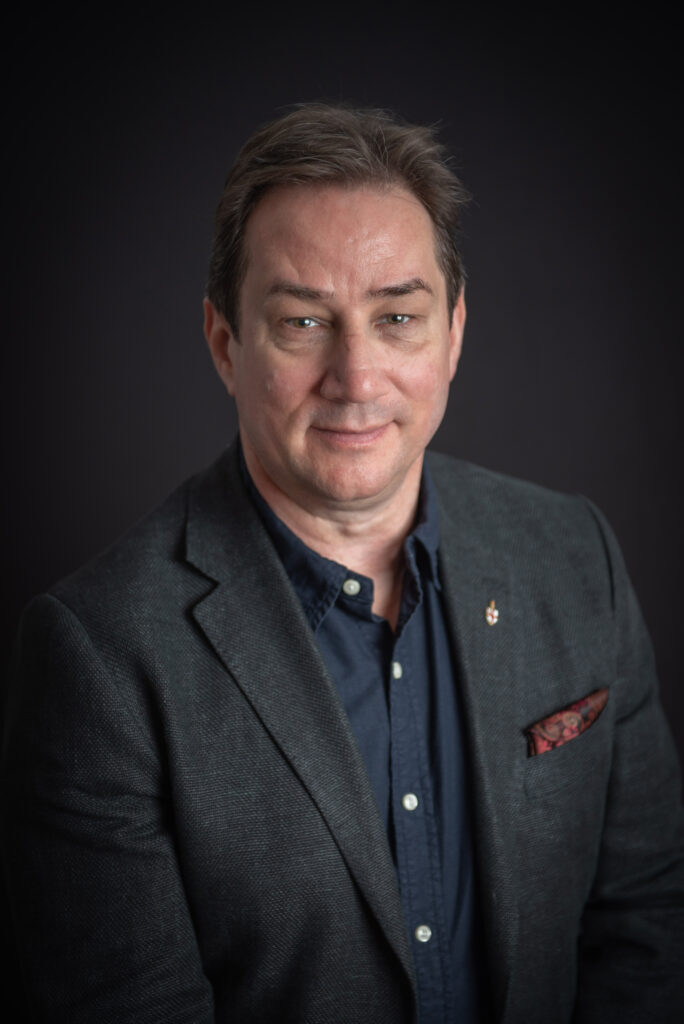
Welcome to Follow Your Curiosity! My guest this week is #1 New York Times bestselling writer Tony Lee. With nearly forty years of professional writing experience across comics, television, audio dramas, and novels, Tony has written for iconic franchises like Doctor Who, Spider-Man, X-Men, and Star Trek, and has sold over a million crime novels under his pen name Jack Gatland.
In this conversation, Tony and I explore what happens when you stop letting fear dictate your choices and start asking for what you want. We discuss how he landed meetings with both Marvel and DC Comics on the same afternoon, how he pivoted during the pandemic to write and publish 55 novels in five years, and why striving for perfection is the fastest way to keep your art trapped on your computer.
In this episode, we discuss:
- The Power of Asking: Why assuming a no in advance is the only guaranteed way to fail, and how asking bold questions opens unexpected doors.
- The Marvel and DC Hustle: How Tony leveraged a single afternoon in New York to kickstart his comic writing career.
- The Publisher Mindset: Why viewing yourself as a “publisher who writes” gives you complete creative authority over your work.
- The 25 Stages of Publishing: Why writing the text is only one step in a larger process, and how breaking it down removes perfectionist overwhelm.
- Perfectionism vs. Momentum: Why readers care about relatable characters and good storytelling rather than pristine, five-star perfection.
- Community over Competition: Why independent publishing is “the land of the Smurfs” and how finding your tribe makes all the difference.
Ready to send your inner critic to summer camp for an hour? We get together once a month for a relaxed, co-working-style session where you can work on whatever you want—without any pressure to do it “right.” We send the shoulds and inner critics off to summer camp where they’re kept busy rather than getting in our way. Join the Creativity Circle.
Episode breakdown:
0:00 - Storytelling on exam paper backs and camping trips
5:47 - From computer programming to game reviews and street performing
8:28 - Pitching Marvel and DC in a single New York afternoon
10:37 - Why you should never assume a no in advance
17:45 - The pandemic pivot: From comics to 55 novels as Jack Gatland
21:49 - Self-publishing as a publisher who happens to write
28:58 - Writing for Doctor Who, Star Trek, and Marvel
37:57 - The 25 stages of publishing a book (and why writing is only step 1)
48:05 - Why perfectionism kills books and what readers actually care about
53:08 - Why indie creative communities are the land of the Smurfs
56:40 - Finding your way into the room (and what to do when you get there)
Show Links: Tony Lee
Tony’s website
Tony’s Instagram
Tony’s Twitter
Subscribe!
You can subscribe to Follow Your Curiosity via the handy links at the top of the page for Apple Podcasts, Spotify, iHeart Radio, TuneIn, and YouTube. If you enjoyed the episode, don’t forget to tell your friends!

Transcript: Tony Lee
Please note: This is an unedited transcript, provided as a courtesy, and reflects the actual conversation as closely as possible. Please forgive any typographical or grammatical errors.
Nancy Norbeck [00:00:06]:
Welcome to Follow Your Curiosity. You didn’t lose your creative spark. You were taught to leave it behind. I’m creativity expert Nancy Norbeck, and I’m here to help you get it back. Let’s go. Tony Lee is a number one New York Times best selling writer with almost forty years of professional writing experience across all media. A million selling author, Tony has written for DC Comics, Marvel Comics, the BBC, and ITV, and a host of major publishers and broadcasters on iconic licenses, including Doctor Who, Spider Man, X Men, Star Trek, Battlestar Galactica, Wallace and Gromit, and Shrek. As Jack Gatland, Tony has become an Amazon number one bestseller writing crime thrillers and procedurals.
Nancy Norbeck [00:00:51]:
As Tony Lee, he’s written primarily urban fantasy. He’s also the founder of Hooded Man Media, a digital first publisher with an exclusive Amazon deal, and its subdivision, Caliburn Comics. Tony talks with me about how he got his start in storytelling and comics, making the switch to writing novels, the importance of asking, not assuming a no in advance, why community makes all the difference in independent art making, and more. Here’s my conversation with Tony Lee. Tony, welcome to Follow Your Curiosity.
Tony Lee [00:01:24]:
Thank you for inviting me.
Nancy Norbeck [00:01:25]:
I start everybody with the same question. Were you a creative kid, or did you discover your creative side later on?
Tony Lee [00:01:34]:
So I was definitely a creative kid. From a very early age, I was coming up with stories. And I actually credit this to my father, who was an Irish immigrant who’d left school before he did his exams. He wasn’t a reader as such, and so when he would tell me bedtime stories, he would make them up. So he would ask me what I wanted to hear a story about. He was incredible at improvising, And that was something that I, regularly got. And and as I was a kid, I would come up with my own ideas and stories and things like that. And I, you know, had imaginary friends.
Tony Lee [00:02:10]:
I was always coming up with things. So when I got married, in 2011, my dad did a speech as well because we’re Irish and your your dad does speeches when he’s Irish. And he started by saying, I always remember when Tony would, when the kids would turn up to their tent when we went camping and ask for Tony to take them into the woods and tell them stories. And everybody sort of went, what? And I had to go, I was eight. I was eight, dad. This wasn’t last week. Because when I was a kid, we would go, camping every weekend. We we were poor.
Tony Lee [00:02:49]:
We only had a tent. We’re in a car. So every weekend, our our chance to get away was to leave London to to go to a little campsite that was very cheap and basic. But Friday to Sunday from April to October, we were there. But it meant that my friendship groups were kind of my school friends were there Monday to Friday or Monday to Thursday or Sunday to Thursday. But weekends, I was barely around unless it was winter. And then on weekends, I was in Hurley, and it was a continual rotating friendship group because a lot of these kids were same as me, often turning up at the same time. Many of them were new, so I was constantly with new people.
Tony Lee [00:03:26]:
So you’ve got to know you had to learn very quickly to make friends. And I found that storytelling was a way of doing that, so I became the storyteller. So I was always very, very physical in that respect, you know, making up stories on the spot, telling them as I went along. And it just kind of continued. I I even failed my exams when I was 16 because, in The UK when you had o levels, you had three hours and you had to do your exam. You couldn’t leave. So even if you took two hours, you had an hour of just sitting there waiting quietly. So I started sketching out little comic strips on these spare bits of paper to the point where by the time I was finishing my exams, I was hurrying through the exam to do the little strips on the back of the paper.
Tony Lee [00:04:13]:
Suffice to say, I retook my exams the, following year. But, but, yeah, I’ve always been a storyteller. Wow. As seen by me waffling away for five different minutes there.
Nancy Norbeck [00:04:24]:
Wow. I feel like there’s there’s a little Genehugh blood going on there. Definitely. Definitely. That’s that’s really cool though. I mean, that’s that’s such a great, great origin story sitting there after the exam, drawing drawing comics on the on the page because I mean, what else are you gonna do with an hour? Well, the the other problem I
Tony Lee [00:04:49]:
had is I can’t draw. I’m rubbish. So I was drawing stickmen, and it was a I still remember it to this day. It was a script strip called Space, and it was kinda like Flash Gordon. And Flash Gordon character was a stickman. The aliens were stickmen with antennae, so little like radio antennas, and the leader was a stickman with an antennae and a cape. And all I seemed to do is have him karate kicking them from high areas because I’d worked out how to make a karate kick. It was completely silent.
Tony Lee [00:05:20]:
I wish I’d kept them.
Nancy Norbeck [00:05:22]:
Well, yeah, because I’m picturing, like, an x k c d comic here, and and look what he did with stick figures. You you know? I mean, that’s Yeah. You you were onto something. You just didn’t know.
Tony Lee [00:05:32]:
I know. Before my time. Before the nobody realized.
Nancy Norbeck [00:05:36]:
Really? Really? So so when did did all of this start to kind of gel into something that that started to look like a career path for you?
Tony Lee [00:05:47]:
Honestly, I never I was never supposed to do this, and that’s genuine. I was, when I was 15, 16 years old, I wanted to be a computer programmer because and, again, with the the way I am, I’d seen Superman three, and I came out of there thinking, if I can learn computers, I can control the world. So I decided I wanted to to learn computers, and we’re talking 1985, 1986. Our computer at school was an Acorn, BBC micro two, which is a really you could literally go 20 say hello. Yeah. 10 say hello, 20 go to 10. But I wanted to do this. I thought this could be fun.
Tony Lee [00:06:34]:
My I come from a family of geniuses. My eldest brother, Chris, ended up becoming the chief scientist of the UK space agency before retiring. He was a genuine rocket scientist. My other brother, became, an expert in touch screen technology. If you’ve got an Apple iPhone, that technology was my brother was involved down the line. So I had a high bar. So I’m sitting there thinking I I can be a computer programmer. You know, everybody else is doing this.
Tony Lee [00:07:03]:
And then when I was, 16 years old coming up to 17, I was doing work experience, and that was, like, two weeks in a job that was of the type. In 1986, there wasn’t much. It’s not like now. I couldn’t just go find a social media company. And in the end, I couldn’t find any work experience, and I had to find something. So I contacted a Sinclair Spectrum magazine called Your Sinclair and said, hey. Can I do anything that’s related to computers? And they allowed me to be a games reviewer. So because I had a Spectrum, and so they sent me some games, and I reviewed the games, and I sent them the games.
Tony Lee [00:07:38]:
And it was fun. I enjoyed it, and they paid me money. So by the time I was into college, I was doing this almost full time. I was writing games reviews and and doing magazine articles, and and that just kind of led me down this route that took me into journalism and then into, doing marketing. Then I became a Covent Garden street performer because why not? Then I became paralyzed so I couldn’t be a Covent Garden street performer. Because I couldn’t do much, I was working from home so I started doing radio sketches for radio for comedy shows. And then the next thing I know, I’m back into marketing, and I’m just working in radio. And it was only about 2004, which sounds ages ago now, but for me, I was 33 when I had an opportunity to pitch for for comics.
Tony Lee [00:08:28]:
And it was something I’d always wanted to do, and I said, I’m gonna give it a go. And I was in New York City on on Easter two thousand and three, and I landed at 1PM on the Thursday before Easter. And I remember contacting Marvel and going, hi there. My name is Tony Lee. I’m a British writer. Here are some sample scripts. I’m in New York for meetings. I’m seeing DC Comics at 04:00.
Tony Lee [00:08:54]:
I’d love to come and see you guys at 01:00. And I got a message and they said, come along. Come and meet us. That’d be great. And once I had that, I then contacted DC Comics and said, hi. My name’s Tony. I’m a British writer. I’m seeing Marvel at 01:00.
Tony Lee [00:09:08]:
Can I come and see you at four? And they gave me a meeting as well. And DC Comics spent an hour telling me that writing comics would just destroy me, and I’d become bitter and twisted. And Marvel were looking for people at the time and gave me an opportunity, and that opportunity was an X Men, a half the 11 page X Men story. And from that, I was off to the races because every time someone said, do you have something? I’d go, X Men unlimited number one. So bam, straight away.
Nancy Norbeck [00:09:38]:
I I love I love that story.
Tony Lee [00:09:41]:
That’s I’m very good at falling upwards, and that’s that’s how I’m gonna explain it.
Nancy Norbeck [00:09:45]:
But, I mean, how how completely clever and, you know, something that so many people would think, oh, I couldn’t do. I couldn’t possibly do that.
Tony Lee [00:09:56]:
I was six months in Covent Garden as a street performer where you have to stand in the middle of nothing, convince people to not only stand in front of you for twenty five minutes watching you do whatever you wanna do, usually making fun of the people, but it didn’t give you money. So realistically, this was easy compared to everything else I’ve been doing.
Nancy Norbeck [00:10:17]:
Well and, you know, it it there’s so many things in life where I feel like the prospect of no stops people when it’s not the end of the world. You know, and, and the prospect of yes isn’t enough somehow to get them to try.
Tony Lee [00:10:37]:
And that’s really Yeah. My life has always been based on the idea of if if I don’t ask, I’ll never get it. And if I do ask, they could say no, but I’m still never getting it. So I’m not really losing out if I don’t. And that’s kind of it has kind of been my mantra through my life because as a as a sort of as a writer of comics or, you know, if you’re doing, any kind of writing, you’re constantly going to new people and saying, hello, would you like to hire me? You have to get that thin skin and just tear it off because otherwise, you’ll never get anywhere.
Nancy Norbeck [00:11:10]:
Well and and also, if it’s just no as opposed to, you know, no, you are a worthless, horrible human being.
Tony Lee [00:11:18]:
I’ve had those.
Nancy Norbeck [00:11:19]:
Right? But but, like, if it if it’s just a simple yes or no, no is really not the end of the world. No is, okay, it’s time to go on to the next thing. It’s it’s not that bad. Like, this
Tony Lee [00:11:33]:
And no can and no can become a yes. And I’m not saying that in a bad way, but Right. Basically, when when you’re pitching I mean, I Doctor Who was a case in point. I pitched Doctor Who, because I was pitching something else to IDW, and then IDW got the license and asked me to pitch. And I didn’t get it because it went to Gary Russell. But because I’d been chatting to them, and I was and when they said, I’m sorry. It’s Gary Russell. I mean, I grew up with Doctor Who.
Tony Lee [00:12:01]:
Gary Russell quest my I have no ego. If Gary Russell’s getting a job, I’m not gonna go, well, I think I’m better. He’s amazing. He’s a he’s a he’s an immortal in the line of Doctor Who writers, you know, next to Terrence Dicks. So as far as I’m concerned, I was like, that’s great. You know? Let me know if there’s anything I can do. And it was six hours later, they came back and said, actually, we’ve got a spot for something else. You were kind.
Tony Lee [00:12:23]:
You were kinda polite. Let’s have a chat.
Nancy Norbeck [00:12:26]:
Right. Right. It can be a starting point, not the end of the line. And I feel like people people don’t get that. I mean, this this is a little bit of a of a thing for me because, you know, part part of the reason that I came up to you at Gallifrey one is because many years ago, I realized I had the chance to ask Paul McGahn to be on this podcast, and that if I didn’t take it, I was gonna wonder for the rest of my life if he would have said yes. That’s exactly right. And so I knew that I had to ask, and he said yes. And that kind of was the moment when I realized what the heck was I waiting for? And so now I just ask everybody, and if they say no, they say no.
Nancy Norbeck [00:13:08]:
And if they say yes, here we are. And I feel like people don’t understand because they decide in advance that someone is gonna say no.
Tony Lee [00:13:16]:
Yes.
Nancy Norbeck [00:13:17]:
And and so I just feel like I can’t tell that story often enough not to be like, hey, I got Paul McGann on my podcast, but to say, just ask the question. You don’t know what it might open up for you.
Tony Lee [00:13:28]:
Exactly. Yeah.
Nancy Norbeck [00:13:29]:
So, You know, I mean, you’re you’re just another example that it’s an important thing to do. Go ask the question. And if it’s no, move on to the next thing and hope that something else might happen. Yeah. I mean, that’s that’s fantastic. And and to to sit there and play play them off of each other that way is such a clever, clever way to do it.
Tony Lee [00:13:51]:
I I it was cheeky, and I probably would have never got it. I mean, I was very, very lucky. I will be honest with the comics. And but to be honest, I didn’t care because I was gonna be in New York. I was a comic fan for, like, all my life. I mean, you can’t see it here, but beside me, I’ve got six, CGC, comics that, are all actually you know, I because we can because I can move this so I can show you. So we’ve got I’ve got, Crisis on Infinite Earths which is, obviously, Marvel Wolfman and then Marvel Wolf has signed it a couple of Gallifys ago. I’ve got a Star Trek signed by them.
Tony Lee [00:14:26]:
I’ve got a Doctor Who number one that’s, signed by the creators. Over here, I’ve got Captain Britain. I’ve got Star Wars. I’ve got Shield. I comics was my thing. Comics was absolutely my thing. And the opportunity to go to New York is sit in the Marvel bullpen to to sit with DC people. And and the best bit about it was the people I spoke to.
Tony Lee [00:14:50]:
I mean, I was talking to Bob Shrek and to, Mike Khan in the DC. Those guys kept talking to me my entire career. You know, they they still offered me things. I’m still dealing with, books and and, projects that were because of those guys. So even if just meeting them was all I cared about. Right.
Nancy Norbeck [00:15:12]:
Right. You don’t know where those initial meetings are gonna lead you.
Tony Lee [00:15:16]:
Exactly. And I apologize to anybody who now has motion sickness. Spinning spinning that around.
Nancy Norbeck [00:15:25]:
Yeah. I mean, did your family kind of look at this and go, wait, what happened? How how did you end up here? Yeah.
Tony Lee [00:15:32]:
Oh, absolutely. My my entire life were people going, so when are you getting a real job? You know, I mean, I start as I said, I was a good I was a magazine, writer, feature writer, then I became a journalist, and that was kind of, you know, local journalist was kind of respectable. Then I was working for theater, and again, respectable. When I got into comics, I mean, the worst thing about it, and I have talked about this before, is my mom, passed away with cancer, in 2004. And my mom was my biggest biggest, fan. She was, you know, she was my support on everything. And I would in the three years where she was fighting it, I would come and visit and I would sit down with her and I’d tell her the stories that I was gonna tell. And I was, I’ve got a folder full of books that I was writing that never finished because I wasn’t able to carry on telling her the stories.
Tony Lee [00:16:28]:
And when she passed away, I was lucky that when I got my X Men, it was about seven, eight months before she passed. So I was able to say, I’ve done it. I’ve done what I needed to do. And that to me was like, you know, a massive thing. But my father, the biggest thing my father who doesn’t read, as I’ve mentioned before, he wasn’t really a reader unless it was, you know, the cowboy books by Zane Grey or, you know, something about horses. He he read my books. When I started writing as Jack Gatland a few years back, he was reading my books, you know, all the way to the point his eyes started to fade. So, you know, it’s it’s a big thing for me for that.
Nancy Norbeck [00:17:11]:
Yeah. So they got there eventually. Yeah. Yeah.
Tony Lee [00:17:14]:
But, I mean, now it’s a family industry. I mean, my my brother, Chris, the rocket scientist, is now one of my editors. You know?
Nancy Norbeck [00:17:21]:
Oh, wow.
Tony Lee [00:17:22]:
He he he deweeds them and goes, I don’t understand how this happened. And I’m like, okay. That’s logic. We’ll work that one through.
Nancy Norbeck [00:17:31]:
That’s the kind of reader you need.
Tony Lee [00:17:34]:
Exactly.
Nancy Norbeck [00:17:35]:
Yeah. Yeah. So how did you end up moving from comics to novels?
Tony Lee [00:17:45]:
Oh, abject fear and desperation, to be utterly honest. And that that’s just a that’s the general answer. So I was at the time as the pandemic hit, I was writing comics still. I’d be I dropped off Doctor Who, I think, in 2014. I was working with at the time, I was working with Joe Satriani and Oney Press and do some other bits and pieces. And I’d started doing some things where I was working with rock stars. So I did things with Megadeth and Ozzy Osbourne, stuff like that. But you’re still constantly going for the next job, the next job, the next job.
Tony Lee [00:18:27]:
You’re still kinda chasing it. I was working in film and TV. I had a couple of films that were being put together, a couple of TV shows that were being done. And then I was also going to schools. I was talking to reluctant readers. I was running, comic conventions. I do the comic zone of the London film and comic con. In fact, there’s one this weekend.
Tony Lee [00:18:45]:
I still do it even now because I enjoy it. And there was audio dramas. I was doing full cast audio dramas. I did things with Big Finish. I’d just done a Robin of Sherwood, one for, Spider Man, Poor Puppet, and then a pandemic hit. And film and TV stopped instantaneously. Comics stopped because comic stores shut. Some never opened again.
Tony Lee [00:19:09]:
No one went to schools. No one went to stay to a comic conventions because you couldn’t. And suddenly, everything stopped. And I was literally I mean, the only the only gig in town was writing audio dramas, and everybody was doing it. It was saturated. And I sat down one day and looked at it and thought, if I don’t get working again within six months, I’m done. I, you know, I I was 50 coming up to 50 years old. I was 49 at the time and I realized I’m done.
Tony Lee [00:19:40]:
50 years old and that’s it. I’m gonna have to go work in, you know, a supermarket or something like that because I’ve got this massive blank space in my seaweed that just says writing weird stuff. And I was stressed about it and I was talking to a friend of mine and I’d known they were, independently publishing. They were, you know, writing books and publishing them. And they were kind enough to explain me how they did it all. And I suddenly realized that this was something that I could do, and I’d never really written many books. I’d written books for reluctant readers and written books for teenagers, but I’d only ever written one novel. And that was Dodge and Twist, And that was mainly to stop Ahmed Zappa, son of Frank Zappa, stealing my idea.
Tony Lee [00:20:21]:
Genuinely, he’d I I had my manager contacted me and said, is this you? Columbia have just taken a a book called Dodge and Twist. I’d mentioned it to him at a convention a couple of years earlier. I wrote the book very quickly, uploaded it just purely to stop it. Genuinely, I was on my way to a Gallifrey, honestly. Two years later, I was on my way to Galley again, and my agent contacts me and says, he’s done it again. And it was this time, they actually had in it not to be confused with Tony Lee’s dodge and twist. And then the third time was two years after that. It was, I think Edgar Wright had been hired to write this version.
Tony Lee [00:20:59]:
By now, it’s completely different. It wasn’t anything like my story, just the title. But I didn’t care because I’d written a story. It had gone on Amazon. Amazon then asked me to create this 13 part audio drama, which I did. I then redid the book. And as I was redoing the book for the, the new version, I thought, I can do this. This isn’t as hard as I thought.
Tony Lee [00:21:18]:
And it is hard. Don’t get me wrong. But my years of writing comics had shown me that I could write my books in a different way. I didn’t have to start with once upon a time. I could start with put the gun down, she said. You know, it gave me a completely new way of playing and it wasn’t scary. And I had a ton of screenplays and TV shows that had never been done. I was doing a show called Dead Letter with Mark Shepherd, as in Crowley from Supernatural and obviously a Doctor Who alumni himself.
Tony Lee [00:21:49]:
And we’ve been playing around with an idea for years. It never had done anything. And I’m sitting there looking at it and thinking I can turn that into a book. And so I within a space of about a week, I just jumped into it. And when I jump into something, I go feet first. I look at everything. I work it out. I had nothing to lose.
Tony Lee [00:22:05]:
But back into that, they can only say no. And within a week I’ve created my pen name which was Jack Gatland and that was because everything that Amazon does, if you release a book Amazon will send it to the people who bought your last book. My last book was a book called Mr. Clipclop Intergalactic Space Unicorn and was aimed at eight year old kids. I didn’t want their parents to be shouting at me because they’d had this full on procedural crime drama sent to them. But Jack Gatlin had no basis. The algorithm had to go on something else. And so I took about three or four ideas and just started writing.
Tony Lee [00:22:43]:
And it was desperation because I thought I’ve got nothing to do. I’ve got no work. I can sit and watch TV and do what everybody else is doing or I can get off my ass and do this properly. And I knew I could write. I knew I could do this. And by the time the world got back to normal in 2021, I was three or even four books in. And at that point, I’d understood how it worked and how you’ve got two types of independent, writer, and I’m I might be jumping ahead, and I apologize if I am.
Nancy Norbeck [00:23:14]:
No. It’s fine.
Tony Lee [00:23:15]:
But you have a lot of people who go, I’m a self published writer because I write my book and then I publish them. I realized very quickly that the way to make things work here was I’m a self published writer because I’m a publisher who also writes. And when you realize the amount of things you have to do to make a book come out, that helped me because I can do those things. I can do covers. I can do marketing because these are things I did in thirty four years of working. And altogether suddenly meant I was doing fine. I was doing great. I could make these things.
Tony Lee [00:23:47]:
And I’ll be honest, you know, I’m five years last November, so I’m more five years, four months now, five years, three months. I wouldn’t go back if people paid me. I’m having so much fun. I’ve got so much creative freedom. I sold a film, back in 2014 at Galley, which was kind of an urban fantasy involving, like, playing cards and stuff like that. They gave me a lot of money. I paid them back in 2022 to get it back so I could turn it into a book. So, you know, it it’s the most enabling thing I’ve ever done.
Tony Lee [00:24:26]:
So yeah. I mean, that’s I won’t I’ve I have waffled. I apologize for that. No. That’s really interesting. Books was absept abject desperation and realizing that if I didn’t do anything, I would not be a writer.
Nancy Norbeck [00:24:39]:
That’s amazing. I mean, it really, really is. Terrifying. You know? Well yeah. But, I mean, it’s it’s incredible to sit there and say, this is the abyss that I’m staring into, but these are all of these skills that I have. And I can take them and I can turn it into this thing. And I mean, as as someone who did an MFA program and in two years turned out one book to I’m just sitting here thinking you did how many books in in, you know, it like, that’s incredible to me. I know.
Nancy Norbeck [00:25:22]:
I know you have this enormous
Tony Lee [00:25:26]:
about 55 books in five and a half years, which sounds stupid, but I was trying to explain to somebody else is I did 90 Doctor Who comics, you know, in total with all the various things, and people don’t even blink an eye at that. But, you know, you’re still the the hardest part is actually coming up with the idea and the plot and making it work. The actual writing bit, that’s just muscle memory. You know, I write eight to 10,000 words a day.
Nancy Norbeck [00:25:50]:
Well, that that explains a lot. Yeah.
Tony Lee [00:25:52]:
Yeah. No. This is it. You can absolutely do it. It’s it’s just getting yourself into that system. I also dictate, and as you can tell, I talk quite fast. So my typing speed is slower than my speaking speed, which gives me a lot more. So if I’m walking the dog, that the moment, obviously, my nine month old spaniel takes a good hour to wander around, I’m writing 3,000 words before I’ve even started my day.
Nancy Norbeck [00:26:18]:
That would make a huge, huge difference.
Tony Lee [00:26:20]:
It does. Very much so.
Nancy Norbeck [00:26:22]:
Because I I was gonna ask you exactly how how you did it. Because, you know, when I looked at your catalog, I was like, oh, this has taken decades. And when you started seeing this in the last five years, I was like, wait a minute.
Tony Lee [00:26:34]:
Yes. It has. No. Genuinely, this is the thing. Yes. It has. Letter from the dead, I started in, like, 2017. You know, my neighbor spades in the playing card war, I sold it as a film in 2014.
Tony Lee [00:26:46]:
You know, these things have been around for decades, and I’ve been slowly working them. I’ve just started a new cozy crime series, and that was a TV show pitch back in 2016. You know, Ellie Reckless, which is my reckless series of crime books, she was originally Eddie Reckless. And at one point, she was gonna be, turning into a TV show by Unstoppable Entertainment, which was Noel Clark. You know, it was way back, like, you know, twenty twenty eighteen he was gonna be doing it. You know? So these things have not been, like, instantaneously thrown off the top of my head. A lot of these have been repurposing old projects. So it’s not like I’m I mean, probably of these books, half of them are based on original ideas and things I’ve already had.
Tony Lee [00:27:29]:
And I have raided my graveyard files a lot.
Nancy Norbeck [00:27:32]:
That helps too. Yes. Yeah. Yeah. That that makes it make much more sense for sure. But it’s still impressive to be able to, you know, turn it out that quickly. Though, as you say, if you’re writing 10,000 words a day, that does make it go a whole lot faster.
Tony Lee [00:27:48]:
It it it well, I mean, on average, I would say. Some days I do very well, some days I don’t. I have a nine month old spaniel.
Nancy Norbeck [00:27:58]:
And and you’re still human. Right? You know, we all have better days and worse days.
Tony Lee [00:28:01]:
And I and I do have a lot of travel stuff. As I said, I’m running a convention this weekend. So Friday, I’ll be going off to set that up. You got things like the London Book Fair I’ve got to be there at. I’ve got, an author conference in Ireland I’m I’m at in March. So you do find yourself bouncing around. I mean, I missed Galley this year because of deadlines, and that crushed me because that’s that’s definitely one of my traditions and to not be able to make it even with America as it is at the moment. To not be able to make it there was hard, but I genuinely just did not have the time.
Nancy Norbeck [00:28:33]:
Yeah. Well, I’m I’m curious because you have, you know, all of these different formats. You have the comics, you have the screenwriting, you have the novels, and and, you know, obviously, you started with the comics and then you’ve you’ve kind of moved in between different different things. Like, how have they all influenced each other? Because they they must have.
Tony Lee [00:28:58]:
Oh, absolutely. I mean, writing the comics, I was primarily writing, licenses. So I was writing, you know, for Voxstars. I was writing Doctor Who. I was writing Star Trek, DC, Marvel. Places where you had people who would regularly come along and tell you what to write by committee. Because, you know, the editors at DC would say we’re going to do this, and then the marketing people would go, well, actually, we want to do this. I mean, a story I have mentioned before was I was actually hired to write, Booster Gold.
Tony Lee [00:29:30]:
This was back in twenty twelve, twenty eleven, around that time. And I was hired to write Booster Gold. Dan Didio himself had called me and we wanted to work it in. My Doctor Who stuff had got them really excited, and they sent me a pitch document for what they had so far. And Booster Gold at the time fighting a a bad guy called Harvest who was in DC Comics at that time, and no one knew who Harvest was. And you find out later when the Harvest is a futuristic version of Superboy from an alternate world. And I’m reading this and going, okay. I get that.
Tony Lee [00:30:03]:
And then by page three, you realize that the harvest is actually Booster Gold from a future world. And I had to go back and go, which one is it? And I went, oh, no. We’ve changed this boost to gold. And I said, it’s a three page document. How hard is it not to fix this? And they were like, oh, yeah. But marketing said this and this had to be done by this. And so when I did this, I I probably spent about a good year back and forthing, with a dozen different people, all working them. And I was paid for doing it.
Tony Lee [00:30:33]:
And in the end, they came back to me and said, we love what you’ve done. It’s absolutely brilliant. But marketing had a choice of either your book or Superman Wonder Woman. And that one won. And I was like, okay. Fine. I get that. Again, no ego.
Tony Lee [00:30:51]:
Can’t complain. And then about, oh, about two years later, I was at a galley and I was doing a signing with Lee Davies’ loss off. It was when my MacGyver cock book came out. And, Joshua Howe Falcov came over, and he’s done some Doctor Who stuff, but he was also a big DC writer. And his first line and I’ve known him for years at this point, and his first line was, so I hear you were one of the other Booster Gold writers. And I said, what do you mean? He goes, there was five of us. We were all being paid to create a book. And every time we came up with a great idea, they would give it to the other writers and go, here’s another idea we’ve had and try and get the best story because that was how books were being made by committee.
Tony Lee [00:31:31]:
But because this was taking so long and how traditional writing was being done, even with comics, which is fast, you’re still working slow, I learned very quickly how to turn on a dime. You know, I learned very quickly when they said this does not work to go within an email back, this is how it fixes. And because I learned to turn on a dime so fast, that helped me with what I’m doing now. Because now if I realize I’m going the wrong direction, I have no ego. I can go fine. We alter it. Case in point is Doctor Who the forgotten, which was one of the first things I ever wrote for IDW. It’s the tenth doctor in a museum.
Tony Lee [00:32:11]:
It’s all the Doctor Who stories. The original plan was is it’s actually a clone created from the hand of the doctor that is the bad guy, because, you know, no one had done anything with it. And we’d sent it to Russell t Davis and to BBC, and they said, yes. All fine. All good. All great. We were writing episode six. We had written episode five.
Tony Lee [00:32:35]:
It was about to go to print in about two weeks’ time, and the episode turns up with the meta crisis 10. And we can’t and I contacted Gary Russell who at the time was script editor. And I’m like, dude, this is literally my story. How could you not have told us? And he was like, oh, I know you’re a fan. I thought you’d enjoy the surprise. And I’m like, you’re a writer. You know what this is like. And he was like, I I couldn’t.
Tony Lee [00:33:03]:
I wasn’t allowed. But in a space of a weekend, we then had to change the entire story because we then had to explain that it wasn’t the meta crisis 10. It was something completely different. And we had issue five, I could change some, I could literally change some panels, but not all panels because half of it was drawn. Issue four, I could change some lettering, some dialogue. And so we were going back and changing dialogue and adding stuff in that wouldn’t fit with the story. So that by the time they got to issue six, which had rewritten, you went, oh, it’s not that, it’s this. But I had people contact me going, you’re an idiot.
Tony Lee [00:33:44]:
You don’t understand how doctor works. You’ve you’ve you’ve mentioned the Medusa cascade with the fifth doctor. You know, you’ve you’ve you’ve had the, the doctor’s cane drawn and it’s not that doctor’s cane, it’s a different doctor’s cane. And, of course, at the end they’re like, oh, oh, okay. So it’s not, oh, yeah. We get you now. But that was a weekend. You know, we had, Charlie Chaplin was gonna be the first story in the ongoing.
Tony Lee [00:34:10]:
And at 11PM, I’m coming out of a a concert. I can’t even remember what concert it was. And I knew that you were phoning me saying, we’ve just been told with day before print, we can’t use the little tramp. He’s copyrighted. Charlie Chaplin’s fine, but we can’t use the little tramp. So we had to sit down and create Archie Maplin who didn’t have a bowler hat. He had a big top hat because you could draw a top hat over a bowler hat, and he didn’t have a little mustache. She had a handlebar mustache because you could draw a handlebar mustache.
Tony Lee [00:34:42]:
Everything else was exactly the same. We just changed the name. But you’re having to go bam bam bam bam bam bam. Amazing learning curve. It’s better than any university because you come out of those trenches and you’re like, I’m ready for anything, and I am. You know, I mean, at the moment, I’m writing about three different books in different stages. One’s in edits, one’s in plotting, one’s being done. I’ve got a publisher who wants me to do another series with them, which we’re discussing in a month.
Tony Lee [00:35:13]:
I’m writing, a monarch tie in story for Apple, That’s a comic. And I’m doing the, the Mandrake Project with Bruce Dickinson, who again is a guy who’s writing a comic, then he’s doing his own album, then he’s touring with Iron Maiden, then he’s running over there, then he’s buying GK Chesterton’s house. There’s an element of just everything I’ve done beforehand has meant that I can just sit back and go, yeah. This is fine. I can do this. It’s all good.
Nancy Norbeck [00:35:45]:
But you know what I’m really hearing here is how true it is
Tony Lee [00:35:49]:
Flying for
Nancy Norbeck [00:35:50]:
help. That well, possibly. But it’s also so true that like, you know, your creativity is a muscle and the more you use it, the more ready it is to be used even more. Yeah.
Tony Lee [00:36:05]:
It you know? There there is a line that says you but by the time you’ve re written your millionth word, you know how to write. But that’s not correct. By the time you’ve reached your millionth word, you understand how to fix the wrong words, which is a completely different muscle. You can look at it and go, yeah, that’s cocked up, but I know that all I have to do is change one line there and then all of this works. That’s what you have to learn, not how to create an enduring character. You know? I mean and, again, with self publishing, I’ve I mean, yeah, I’ve I’ve I’ve mentioned before, I’m a million seller. I’ve sold over a million books as Jack Gatlin. I’ve got over a 100,005 star ratings as Jack Gatlin, but I’m writing three star books.
Tony Lee [00:36:49]:
I don’t care about writing a five star book. Five star books are usually nonfiction. No one gets a five star book because you’ll get one person go, Amazon sent me my book, and it was raining one star. Bam. That’s it. No longer five star. You know, Fahrenheit, four five one is like 4.1. The Great Gatsby is 3.8.
Tony Lee [00:37:12]:
You know? So I’m happy to be around four point two, four point three. I’m not worried about that. So therefore, it’s easier for me just to go, this is good. I can just move along. I’ve got the experience to do what I do and not try to fall out of my comfort zone.
Nancy Norbeck [00:37:31]:
Yeah. And that’s incredibly valuable, you know? And difficult. Yeah. Yeah. But but it’s also, you know, that detachment from the perfectionism because like you say, you know, the the perfectionism is so attached to the ego and they’re they’re two sides of that same coin. So if something changes, it’s just like, okay, fine. Move right along and don’t get hung up on all of that stuff.
Tony Lee [00:37:57]:
I will say, I mean, I did a keynote at a conference last year and I was talking about this and I did say that if you if you want your five star book, that’s not that’s not a wrong answer. You know, go for the five star book. But with Midi, I had to be in a situation where I wanted to make money because I wasn’t making anything else, and I needed to keep my mortgage going and stuff like that. And a three star book is making money. It’s selling. If your five star book is still on your laptop, it’s not doing anything. And with my books, I mean, I’m I’m still buying to my three star book and then I’m sending it to two different editors. They’re coming back to me with notes.
Tony Lee [00:38:36]:
I’m changing them. That’s now a four star book. Now I’m sending it to another editor. They’re coming back to me with more notes. That’s become a 4.2 star book. Now I’m sending it to beta readers. They’re coming back with their notes. I’m still pushing every stage, but the writing of the book is only one stage.
Tony Lee [00:38:52]:
I have 25 stages in every book I release.
Nancy Norbeck [00:38:57]:
Yeah. Yeah. Because the number that I’m just sitting here thinking, yeah, that’s the number that just broke everybody’s brain. You know?
Tony Lee [00:39:06]:
There is. I mean, I literally I I have to source the artwork for the cover. You have to if you’re doing the same if you’re doing it yourself, you’re creating the Amazon page, you’re writing the blurb for the Amazon page, you’re creating the, geo link that means that people don’t get lost when they’re finding your Amazon page, you’re looking after your Instagram or your adverts or your bits and pieces like that. You’re creating the the book itself. You’re all these editing ranges. You’re yeah. It’s it’s a lot. Yeah.
Tony Lee [00:39:34]:
And only one of the 25 things is write the book. It’s just the biggest one.
Nancy Norbeck [00:39:40]:
Yeah. I mean I mean and and that’s the thing, you know, you hear, you know, oh, you can just self publish your book. And even just the process of getting it up onto Amazon is a multipart process.
Tony Lee [00:39:52]:
Oh, yeah. KDP is deliberately made to be difficult. Yeah. But but again, though, I mean, I don’t want anybody who’s watching this to think, oh, he’s gatekeeping and saying you can’t do it. Right. You could absolutely do it. I did my first book, Dodge and Twist. I wrote it in Word.
Tony Lee [00:40:07]:
I converted it in Word. I whacked it up with a very basic cover. Made no money, but I had a book, and I could have it printed if I wanted it. Right. You can absolutely do it. It’s just different levels in the same way that you can make your own comic, you know, preferably without AI, but you can make your own comic. You can draw your stick figures. You can have it photocopied and put it in a shop.
Tony Lee [00:40:27]:
You’re a comic seller. Yeah. You know, it’s simple as that. I’m doing a comic convention this weekend. There’ll be about a 100 people doing that, you know, just selling books that they’ve made.
Nancy Norbeck [00:40:39]:
Right.
Tony Lee [00:40:39]:
It’s amazing. It’s great. It’s the best thing in the world. You know, but there, you know, there are levels to where you’re doing it. Once once you’ve hit a point, go for the next one. See what else you can do.
Nancy Norbeck [00:40:50]:
Right. Right. And it’s and it’s really it’s not gatekeeping so much as just brace yourself for the fact that when you publish the book, it’s gonna be a little more daunting than you think it is because there’s all these parts you haven’t thought about before.
Tony Lee [00:41:04]:
So I’m going to tell you I’m gonna give you a story. Mostly, I’m aware I’m a little bit off track here, but I’ll give you a story.
Nancy Norbeck [00:41:11]:
Okay.
Tony Lee [00:41:11]:
So before the pandemic, my wonderful agent, James Wills, was trying his best to sell a book that I’d written. And it was called The Lionheart Curse, and it was basically The Da Vinci Code kind of thing, but in England involving Plantagenets and Templars and blah blah blah. And for three years, we were trying to get this book published, and no publisher would take it. They were kinda like, oh, we know, but we’re not too sure. The market’s not right. The writing might feel a bit old. Can we change the way this is done? A little bit more action. All these things are being said.
Tony Lee [00:41:43]:
And I was doing it every single time and nothing happened. And then the pandemic hit and then, I then realized that, yeah, I wasn’t doing this. And I spoke to James at one point and I said, yeah. At best, what am I looking at with a publisher? And he said, realistically, a publisher, you’re probably getting 5 or $10 as an advance, and then you probably won’t make much more, but the book will be out and we’ll work it through. And then about 2022, I was do I have to enter 2021, I turned to him and I said, look, I wanna put this out, but you guys have obviously done this. I I had to to move away from my agency because they weren’t getting to do much. I’m I’m still with them, but at this point, I walked away. The day after my sixty day no compete, I released the Lionheart curse as Jack Galland completely on my own.
Tony Lee [00:42:36]:
Did it as it was. That book has done five times what I would ever have made as Tony in those things. And now I’m actually getting the same publishers are coming back to my agent and saying, how much to get the rights to do this book ourselves? The same ones you were saying no before. So sometimes you do have to just go screw the world. I’m gonna do this myself and see what happens. You know, this this is how it works. Sometimes you have to prove you can do it, and it’s the same with, you know, the people who wanna make a movie. Make a movie.
Tony Lee [00:43:13]:
Get an iPhone. It’s better than the films that the cameras that are being used twenty years ago. Now go and do it. Get do a YouTube channel. Just get yourself out there because you you’ve only got yourself to stop you.
Nancy Norbeck [00:43:26]:
Exactly. Exactly. And this is this is just like what we were talking about before we started recording. I’m sitting here in my closet doing this because if I had waited to have a studio, I would still be waiting. Yeah. No. Exactly. I I mean, don’t wait for the perfect thing.
Nancy Norbeck [00:43:44]:
Use what you have and go do it. You never know where you might end up.
Tony Lee [00:43:48]:
100%. 100%.
Nancy Norbeck [00:43:50]:
Yeah. So I I mean, I think this is this is great. And Lord knows, not everybody who self publishes a novel is gonna end up selling a million copies, but you’ll learn something from it. You might go on and do something else. It might lead you to somebody else who just randomly buys your book and ends up, you know, leading you to another connection, another career, another Oh, no.
Tony Lee [00:44:11]:
Absolutely. They will bounce you around something chronic. And don’t get me wrong. There are people I know who look at me when I say, you know, how how many books I sold except, and they just pat me on the head and go, oh, bless you. And what did you make the following month? You know? Because these guys are like, you’re making millions upon millions, and I just sort of, oh, okay.
Nancy Norbeck [00:44:33]:
Yeah. But, you know, like you said, you wouldn’t go back. So that’s that’s the important
Tony Lee [00:44:39]:
It’s a weird one because I I I am going back in a way because I am still doing comics for people, and I am still doing, I mean, as I said, I’ve I’ve got London Book Fair. I’ve got two different publishers who want to take various things and do things with me. And both of them, I’m looking at them and going, I don’t care how much this is giving me. I only care now if it’s fun. You know, working with Bruce Dickinson was fun. And when we had our meeting and I was at Galley and he happened to be in LA, And so they got us together in a meeting, and at one point, he said, why do you wanna do this? You know, why do you think you’re the person to do this? And I said, have I, at any point in this meeting, asked you how much I’m getting? I don’t care. I can I’ll do it for free. I don’t need the money.
Tony Lee [00:45:24]:
And it’s such an empowering thing to be able to turn out to these people who for twenty years, I’ve been constantly added contact and saying, hey. Have you got everything? Hey. Have you got anything? What’s the page rate? Hey. Because page rates for comic people hasn’t grown. You know, if I do a thing for Marvel right now, I will get about a $100 a page. When I did X Men in 2004, I got a $100 a page. You know, it hasn’t moved and artists are even worse. You know, I’m aware that, you know, it’s not moving up with inflation.
Tony Lee [00:45:55]:
But they don’t care because if you leave, someone else will turn up because everyone wants to do comics. But now I can just do them. I don’t have to worry. I can actually create my own comics properly. I mean, I’m getting all my licenses back from the books I used to do and I’m gonna put them out this, this year as Caliburn Comics because I can. And to have that ability is life changing, but it still means I can still go back to these people and work with them. It’s just I do it on my terms.
Nancy Norbeck [00:46:23]:
Right.
Tony Lee [00:46:23]:
And that for me is important.
Nancy Norbeck [00:46:26]:
That’s huge. Yeah. Absolutely. It’s absolutely huge.
Tony Lee [00:46:30]:
And it also gives me it gives me the chance that I could just say no. And the amount of times I have done, yeah, it sounds fun, but no. And they’re like, but you always do these. I’m like, yeah, but not anymore. I just don’t have the time because you’re looking at it and going, I could I could spend a month doing this one tiny thing or I could write a book, which is mine.
Nancy Norbeck [00:46:53]:
Mhmm.
Tony Lee [00:46:54]:
And I can absolutely do it. And I’ve had you know? And and doing that for me, that is just it’s great.
Nancy Norbeck [00:47:01]:
Yeah. Totally.
Tony Lee [00:47:03]:
Now I’ve got a book out today, and I haven’t even mentioned it yet because I’ve got so many things I’ve been doing. You know, as we’re talking today, my second prince charming book’s come out.
Nancy Norbeck [00:47:14]:
That’s fantastic.
Tony Lee [00:47:15]:
And it’s just like this time last year, I wasn’t writing these books. They were in a file somewhere. I’m now booked two, Sal. And, you know, I’ve got one of the best cover designers, you know, in the industry who’s done them for me. Because why not? If I don’t ask, I don’t get it.
Nancy Norbeck [00:47:33]:
Right. Right. Here we are again. Yeah. I you know, I’m I’m wondering because this is such an amazing story.
Tony Lee [00:47:45]:
Mhmm.
Nancy Norbeck [00:47:45]:
And I’m sure that there’s gonna be somebody who’s listening, who’s thinking, okay, but how do I do that? If you were gonna tell someone, or even if you were gonna tell your younger self, you know, something like the most important thing, what what would it be?
Tony Lee [00:48:05]:
Don’t strive for perfection because readers don’t care. And I mean that with all the heart in the world. The people who will read a book because it is the greatest book of prize winning Pulitzer prize winning book in the world are very small compared to the amount of people who just want a book they can read today. So I work in crime and cozy and stuff like that. The average reader of one of these books will read it on Kindle Unlimited, which is like Netflix or books, and they’ll read a 75,000 word book in a day. And then tomorrow, they want the next one, and then the next one, and then the next one. And the reason I do so well in this industry is because I’m bringing them out fast enough for them to read. And they don’t care about the plots.
Tony Lee [00:48:49]:
They don’t care about the murders. They care about the characters in the same way that we all do about TV shows and stuff like that. So when you’re writing your book, don’t be precious. Don’t stress about the language. Don’t look at what your rivals are doing and write like that. I mean, there’s a wonderful there’s a there’s a galley person, called Cherry Coble who’s been going for years, and she’s also been from Chicago. I’ve known her since she was a kid. Known, yeah, but known her parents for a long time as well.
Tony Lee [00:49:17]:
She writes as Clara Sutton. She she now writes fantasies. Because of me talking about it, it’s inspired her to write it. And now she’s kind of the same sort of author events that I’m going to. I go to Las Vegas in November to author nation. She’ll be there. You know, she’s building up a fan base. You know? And that’s she’s now doing something that’s completely under her control.
Tony Lee [00:49:38]:
And she was working in LA, and they were having to, like, drop her hours because of the way that the the film industry was going. She was never in control of anything, and now she’s doing it because she went, I’m not gonna focus on the the stress of I need to have it exact. You can do what you want. You can just play it however you need. And the best thing about it is if it’s not right or someone complains, you can fix it and reupload it. And then the version is fixed. You just put second edition, and it’s done. It’s it’s, you know, ta da.
Tony Lee [00:50:11]:
Everyone gets it
Nancy Norbeck [00:50:11]:
redownloaded. That’s something that I think people don’t realize about self publishing a book. You know, it’s so easy to fix it. It’s almost as easy as fixing a website.
Tony Lee [00:50:22]:
But that’s the thing. Because I talked to somebody the other day, and they were saying, oh, yes. But, you know, it’s just self publishing. It’s not real books. And so this came out today. This is my charming. This is charming book two. It’s a real book.
Tony Lee [00:50:38]:
It’s, you know, it’s a proper book. And there’s an element of, you know, it’s the people out there who are now doing some of the biggest books in industry were self published, who have now been hired to now do these things, to now be the biggest names.
Nancy Norbeck [00:51:00]:
Yeah. It’s changed so quickly.
Tony Lee [00:51:02]:
Yeah. It’s crazy. It’s totally crazy. West right now. Definitely. So get out there and do it. You know? There’s nothing stopping anybody from doing it apart from just making sure you know the software. And for advice, obviously, don’t ask for protection, for perfection, but also find your tribe.
Tony Lee [00:51:21]:
Find the writers of the books you do and find out what they do. Listen to what they’re saying. There’s Facebook groups like indie author mastermind or Successful Indie Author or 20 Books to 50 k. All these places you can join and go, hey. How do I do this? And they’ve got years of posts. You know, they’ve got YouTube channels filled with how to do stuff. There’s nothing you can’t do.
Nancy Norbeck [00:51:46]:
There’s Well,
Tony Lee [00:51:47]:
I really have to turn this into a TED talk, haven’t I?
Nancy Norbeck [00:51:49]:
Well, I asked the question, so, you know, it’s fair. But, you know, it’s funny because as as you’re talking about, you know, reading reading the other books in in your market, When I started my MFA, some of the people that I know who write were like, you know, they’re they’re making you read other people’s books. I was like, well, yeah. And it because there there’s such and you’re nodding your head because you know what I’m about to say. There there is such a perception among so many people who wanna write that, like, if I read other people’s books, then it’s gonna influence my writing and it won’t just be my writing. And like, how are you gonna learn how a book works if you don’t read other people’s books?
Tony Lee [00:52:29]:
So there’s a thing that I always remember with traditional publishing, which is very much there was an element of, you know, basically, you didn’t really talk to your rivals because, you know, you didn’t want their book to be going against it because you’re both going for the same publisher, and they’ll get the deal and you don’t, or you’ll get the deal and they don’t. When you’re self publishing, your rival is Netflix. You know, because the other writers, well, great. You’re reading them. You’ll possibly read me. You know, there’s no thing. And there’s a a a friend of mine who’s a screenwriter, a guy called Thomas Dean Donnelly, who was involved. He wrote like Sahara and Sapphire Band, I’ve, Doctor Strange at the store.
Tony Lee [00:53:08]:
He basically was talking about this, and he said, screenwriting is a knife fight in a phone booth. Indie publishing is the land of the Smurfs because everybody helps everybody else. And it is the most I mean, and I’m part of the Gallifrey Doctor Who community. You know, I’ve seen this community. But indie publishing is an even more inclusive and warmer community. Everyone’s welcome. Even if you’re not good or you’re learning or if you’re not happy with what you’re doing, everyone’s welcome. You know, because how else will you learn? How else will you work at?
Nancy Norbeck [00:53:46]:
Right. Right. These things don’t happen in a vacuum.
Tony Lee [00:53:49]:
Yeah. Well, some people, it does because they don’t realize there is this world. I’ve Right. Spoken to people who are $6.07 figure authors who have done incredibly well, and they talk about how hard it’s been. And I’m like, well, don’t you talk to people about this? Well, who can I talk to? Here are all these people. And they’re like, oh my god. I didn’t know these people existed. And it’s like, suddenly, ta da.
Nancy Norbeck [00:54:11]:
Yeah. Yeah. It can be so much better. Almost everything is better in a community. Yeah. You know?
Tony Lee [00:54:18]:
I absolutely agree.
Nancy Norbeck [00:54:19]:
Yeah. You don’t have to make it so hard on yourself.
Tony Lee [00:54:23]:
Unless you really want to.
Nancy Norbeck [00:54:24]:
Unless you want to.
Tony Lee [00:54:25]:
Unless you are one of those martyrs that needs to have that pressure to to do it.
Nancy Norbeck [00:54:30]:
But but most of us do not need to add extra pressure to ourselves. It just makes it harder to do things. It’s it’s where we get blocked because we’ve added pressure to ourselves an awful lot of the time. Not all the time, but an awful lot of it. Yeah. So, well, this is just such a fabulous story, and I hope that it will
Tony Lee [00:54:50]:
be fine. I’m sorry I’m fully throwing most of your podcasts out the window by just going off on one in various directions.
Nancy Norbeck [00:54:56]:
No. This is this is a conversation that goes wherever it wants to go, and that’s completely okay. And I think that it has gone where it needed to go. So I I hope that it inspires people to go and try the thing, whether it’s writing a book or making a movie or recording their first album, whatever it is. I really hope that, you know, people will go out and find that community for whatever it is that is their thing and give it a whirl and ask ask the question.
Tony Lee [00:55:25]:
We’re we’re in a world now where there are no well, there are still gatekeepers, but people just ignore them. You know, I mean, you I mean, as I said, I mean, you you go on YouTube and, you know, twenty or ten years ago, Casey Neistat was one of the first proper vloggers who really showed how YouTube could work, made millions of followers and became the blueprint for people. And the amount of people who followed what he did and became megastars because of it, you know, is is is it measurable? And suddenly, YouTube became everything. And, you know, and there’s so many people I know who were like, I want to make films. I want to show that I can edit stuff. And it’s like, well, go do it. Mark Cordon, who’s a friend of mine for absolute years, used to film, dance schools when they did their end of year presentations. You know, he then became, was it first or second assistant director on doctor who because of what he’d done.
Tony Lee [00:56:20]:
You know, he he played Omega. You know, he got to go and do all the things he wanted to do. He’s a massive doctor who fan. He’s been at Galley. But this is a guy who wanted to be a director. He still wants to be a director. He will still push to do the things he wants to do, but he had to find his own way in the room. Because there are many ways to get into a room.
Tony Lee [00:56:40]:
You know, you could once you get through that door, they’ll find a way to close that door, but there’ll be another door and another window. Everybody can get in the room. It’s what you do in the room that matters.
Nancy Norbeck [00:56:51]:
Exactly.
Tony Lee [00:56:53]:
And if you just do enough to get yourself kicked out, then you’re probably not supposed to be in that room. Well, there’ll be another room, and then another room, and then another room. I was in a room that did, journalism. I was in a room that did street performing. I was in a room that did, theater. I was in a room that did comics, that did audio dramas, that did novels. I don’t know what my next room’s going to be. You know, is it another film and TV room? Is it VR? I don’t know.
Tony Lee [00:57:20]:
And until I get to that door and open it, we’ll see.
Nancy Norbeck [00:57:26]:
Yeah. And that’s what the adventure is.
Tony Lee [00:57:29]:
Yeah.
Nancy Norbeck [00:57:30]:
That’s what makes it so
Tony Lee [00:57:31]:
much 100%.
Nancy Norbeck [00:57:32]:
Yeah. So I hope I hope that people will go and find their adventure after they listen to this. I really do.
Tony Lee [00:57:39]:
I hope they don’t die on the first roll of their dice.
Nancy Norbeck [00:57:42]:
That too. But if this conversation doesn’t inspire them to, I’m not sure what will, but I hope that, I hope that it’s given them a lot to think about.
Tony Lee [00:57:52]:
Thank you.
Nancy Norbeck [00:57:54]:
That’s this week’s episode. I am so grateful to Tony Lee and to you for listening. Tony’s links are in the show notes, and I hope that you’ll leave a review or a comment for this episode. There is a link in your podcast app and it is super easy and it really, really makes a difference. If you enjoyed our conversation, please do share it with a friend. If you’re tired of being productive and just want to feel alive again, come join us in the follow your curiosity creativity circle. It’s a free hour each month to stop overthinking, make something just because you want to, and reconnect with the part of you that remembers how good it feels to play. You can find it at the link in your podcast app.
Nancy Norbeck [00:58:35]:
See you there, and see you next week. Follow Your Curiosity is produced by me, Nancy Norbeck, with music by Joseph McDade. If you like, follow your curiosity, please subscribe, rate, and review on Apple Podcasts or wherever you get your podcasts. And don’t forget to tell your friends. It really helps me reach new listeners. Thanks so much, and see you next week.