
What if the very thing you’re trying to avoid—making a mistake—was actually the signal that it was finally time to rest?
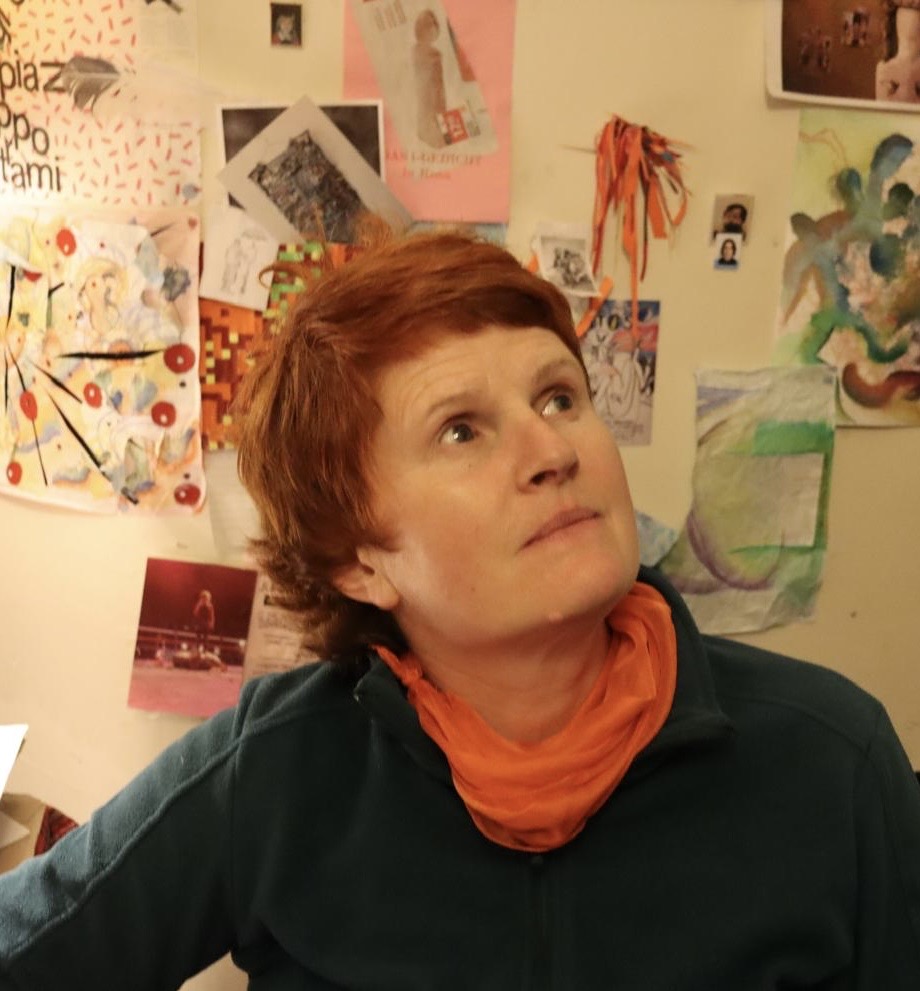
In this week’s conversation, I’m talking with artist Jackie Haynes. We talk about why the rigid discipline of adulthood often makes us fear the very “rinsing” of our skills that leads to new growth. From her more than seventeen years building an “indestructible” costume business in Manchester to her “handbrake turn” into a PhD in experimental art, Jackie shares why making mistakes is a fundamental part of the creative “medicine” we all need.
It’s an invitation to stop overthinking your way to a creative solution and start finding the creative oxygen that lets you breathe again.
I’m Nancy Norbeck, and I’m your Messy Muse Mentor. I help people feel alive again through curiosity and play.
In this episode, we discuss:
- The Mistake Rule: Why Jackie only allowed herself to stop working once she messed up—and how it saved her from burnout.
- The Handbrake Turn: Why closing a successful business to pursue art was an act of self-trust, not failure.
- Merz Pies: How Jackie uses local landscapes and found objects to tell stories through experimental art.
- The Power of Play: Why Jackie’s 800-costume inventory is now a “hands-on archive” for community research and curiosity.
Ready to send your inner critic to summer camp for an hour? We get together once a month for a relaxed, co-working-style session where you can work on whatever you want—without any pressure to do it “right.” We send the shoulds and inner critics off to summer camp where they’re kept busy rather than getting in our way. Join the Creativity Circle.
Episode breakdown:
0:00 Introduction
1:33 A Creative Kid & The Orange Elephants
4:11 The "Mistake Rule": Working until it breaks
6:40 Starting the Costume Business in Pre-Digital Manchester
11:31 The Yellow Pages Advantage
15:24 Building an "Indestructible" Inventory
25:54 Digital Revolution vs. Accidental Discovery
33:38 The "Handbrake Turn": Closing the Shop for an MA
38:54 What is an Art Practice-Based PhD?
45:41 Merz Pies and the Spirit of Kurt Schwitters
55:09 Making the Examiners Work for It (The Humor Section)
1:03:57 The Costumes as a Community Resource
Show Links: Jackie Haynes
Jackie’s website
Jackie’s thesis
Jackie’s Instagram
Artist A and Artist B on Instagram
Subscribe!
You can subscribe to Follow Your Curiosity via the handy links at the top of the page for Apple Podcasts, Spotify, iHeart Radio, TuneIn, and YouTube. If you enjoyed the episode, don’t forget to tell your friends!

Transcript: Jackie Haynes
Please note: This is an unedited transcript, provided as a courtesy, and reflects the actual conversation as closely as possible. Please forgive any typographical or grammatical errors.
Nancy Norbeck [00:00:06]:
Welcome to Follow Your Curiosity. Ordinary people, extraordinary creativity. Here’s how to get unstuck. I’m your host, creativity coach Nancy Norbeck. Let’s go. My guest this week is Jackie Haynes, who established House of Haynes fancy dress hire in the Northern quarter of Manchester, United Kingdom, in 1995. For seventeen years, she developed a business of making and hiring costumes to the public alongside bespoke commission work such as making costumes for performers and a wholesale range for other costume outlets. In 2012, she changed direction creating an art practice from her existing costume making skills.
Nancy Norbeck [00:00:47]:
She also works as part of a collaborative duo, Artist A and Artist B, with Heather Mullender Ross. Jackie talks with me about how she started and grew her costume business, including the advantages of beginning in the pre digital era, how she made the decision to change direction and the art practice based PhD that was part of that decision, the importance of experimentation, and how her costume collection is becoming a hands on archive and resource for community groups. Here’s my conversation with Jackie Haynes. Jackie, welcome to Follow Your Curiosity.
Jackie Haynes [00:01:24]:
Thank you for inviting me.
Nancy Norbeck [00:01:26]:
I start everybody with the same question. Were you a creative kid or did you discover your creative side later on?
Jackie Haynes [00:01:33]:
I was definitely a creative kid and, I used to make, clothes, things out of fabric, for as long as I can remember really. My grandma and my mom taught me how to sew and, you know, probably like a lot of people. There’s a sewing machine in the house around those those times. People used to sew a lot more. And, I was I was allowed to use a sewing machine as well and sort of take up space in the kitchen. And, you know, I’ve encouraged to just experiment really.
Nancy Norbeck [00:02:08]:
That’s cool. Did they guide you a lot or did they just kind of let you play and figure things out on your own? Or was it both?
Jackie Haynes [00:02:14]:
Well, both really. Because I remember I I remember getting a kit to make, an elephant that came with the cut out pieces of fur. So, what I did was before I suppose must have been about, I don’t know, seven or eight at this age. But before I sewed it all up, I I drew around the the shapes. So I had a pattern then thinking, oh, I’ll make some more of these. So I was sort of thinking ahead a bit, and then Beyonce gave me masses of felt, orange and yellow felt. So there’s a lot of that orange and yellow elephants knocking about after. So that that sort of thing kind of kick started my interest, really.
Jackie Haynes [00:02:58]:
So once you’ve done one thing, you get an idea for another. Isn’t it funny how that works? Yeah.
Nancy Norbeck [00:03:05]:
Yeah. When when did you start to think maybe this could be something you would do with your life?
Jackie Haynes [00:03:12]:
I I don’t think I ever thought it wouldn’t be. It was just like, this is what I do. This is me. And this is what I’m gonna do one way or another. And I suppose if, something else had come along that piqued my interest more, I might have, like, gone off and done something else. But it it just, like, has always been there. So, I’ve just pursued it following my interest really. Very lucky, obviously,
Nancy Norbeck [00:03:39]:
to have
Jackie Haynes [00:03:40]:
to do that.
Nancy Norbeck [00:03:41]:
Yes. Did anybody object to you trying to to do this professionally? Or were they just like, yeah. This is obviously your thing. Go do it.
Jackie Haynes [00:03:49]:
Yeah. That no. Not really. No. Could probably because one thing led to another and I followed the you know, educationally, I followed the path. I didn’t I didn’t, like, go off and do something. I I chose I mean, I took my options and chose that that pathway. So that probably wasn’t too alarming for my parents because, you know, they could see what I was doing.
Jackie Haynes [00:04:11]:
I suppose when I started my own business, they might have been, like, hoping that it worked out the way. You know, I was hoping it would do, but, they wouldn’t I think by that point, they probably wouldn’t want to undermine me by saying so, you know, saying saying that they’re worried. But, no. I think they were, like, very supportive, really. I remember, I used to, when I was still living at home before I left home, I’d work until I made a mistake. I had that this rule, so I’d be making something and I’d I’d only go to bed if I made a mistake. So I could be working quite late, but they never said, you know, you’re going to school tomorrow. You need to get to bed.
Jackie Haynes [00:04:52]:
So, you know, they just let me get on with it really.
Nancy Norbeck [00:04:55]:
Yeah. That’s that’s a really interesting rule to impose on yourself. I think a lot of people would hear that and be like, man, I’m gonna be going to bed really, really early tonight. Because they would just assume that that mistake is gonna happen so quickly.
Jackie Haynes [00:05:13]:
Yeah. I think as well because it was like the dining room table I was working on. I knew I couldn’t leave the stuff out. So to, you know, to be packing stuff away is quite a pain, really. So, you know, I thought I’ll I’ll I’ll work as much as I can until I can’t anymore, and then I’ll then I’ll have to pack it away because I’ll need a table in the morning.
Nancy Norbeck [00:05:33]:
Yeah. That’s an incentive. Yeah. So did you start out with your own business or did you work for someone else first?
Jackie Haynes [00:05:44]:
Yeah. I I always worked for myself. I I well, I I was brought up with, you know, constantly being told about the 3,000,000 unemployed and how there’s no jobs anyway. So, I just thought, well, I’m gonna I’m gonna have to make this up myself then. And also the what I wanted to do doesn’t really exist as an employed, you know, as employment for somebody else. So and I I also thought that if I did get a job, I’d get used to a regular income, which would be very difficult then to, to Yeah. You know, backtrack with. So it’s like, do it now and or or don’t do it at all kind of thing.
Jackie Haynes [00:06:24]:
So I’ve never entertained the idea of not doing it at all, but I did have that kind of thing in the back of my head, like, just keep going.
Nancy Norbeck [00:06:32]:
Yeah. So how was the experience then of of starting your own business from scratch at a pretty young age?
Jackie Haynes [00:06:40]:
Yeah. Well, what happened was, once I finished my BA, I did BA clothing at well, it was Manchester Polytechnic at the time. It’s it then it was, well, it’s now Manchester Metropolitan University. So it’s gone through various iterations itself. So I was at Manchester Poly doing BA clothing, and, I started doing I used to work in the bar, which is actually not how I know Lizzie Hopley. So we both do yeah. Who you introduced me to. So we both worked in the Corner House bar, and that was an arts center, in the middle of Manchester.
Jackie Haynes [00:07:21]:
And, it was a great place. I would’ve, you know, I would’ve been going there anyway. There’s a cinema and art gallery and everything. And, it was just like a really great center. And I worked in the bar there, and there’s constantly loads of interesting people coming in for a drink. And you just I just got to know loads of people. And the people who work behind the bar as well, such as Lizzie, practically everybody was doing something creative. It was a really great time, sort of late eighties, early nineties in Manchester.
Jackie Haynes [00:07:49]:
And I just started working, making, costumes for extremely low budget, fringe theater events, but part of the deal would be that I’d get to keep the costumes after. So the business kind of grew from that. I started, amassing all of these costumes thinking, you know, they’ll come in for something. I used to do these fashion shows, with a a guy, John Mansell, who’s, an artist. He did paintings, and he used to come into the bar. And he said, do you want to do should we do a do? We used to call them do’s. Do you want to do a do? So I said, yeah. Okay.
Jackie Haynes [00:08:29]:
Like because he wanted to sell his paintings, and I could showcase me, costumes with all these costumes that I had. And so, it just kinda grew from there. More and more costumes, more and more people asking me to make things for them. So I kind of started with this bespoke, costume making service, really. And, another key factor as well was I didn’t have any overheads at the time because, college make me college where I did my BA, it was pre health and safety. And so I could I could say to them, can I come in and use the machines? And they’re like, yeah. Yeah. Great.
Jackie Haynes [00:09:11]:
Yeah. Come in and use the machines. You can’t you can’t imagine that now because everything you know, you’ve got to be fully signed up, inducted. Everything’s got to be, you know, i’s dotted, t’s crossed and everything. But it was absolutely brilliant that so I could, use all these machines, that, you know, I was kinda stuck without really. Buttonhole attaching machines, buttonhole making machines, and also a lot of, expertise from the technicians who are in the studio, and they were quite happy to help me, you know, because quite often I’d be the only person in the studio. Like, students would come in to use a studio for certain modules or certain lessons, but then they’d go out. And quite often, I’d be the only person in there when they’re showing around prospective students, and I’d be invariably doing something a bit wild looking.
Jackie Haynes [00:10:02]:
So it kind of worked for everybody, really, that they’d have, like, something interesting going on that they could say. And here’s Jackie. She’s one of our, former students. And what are you making? I was quite happy to talk about what was making, and it just sort of worked, really. And I just learned loads from, like, the technicians, like pattern cutting, garment construction, garment garment finishing, especially, like, how to make things to last, like, make them indestructible. And that came in really useful when I had me dance dress shop, which was, like, the inevitable consequence of all of this because I was making costumes and you don’t wanna spend all your time mending costumes that you’ve made. So make make them as, like, well as possible, and they last as long as possible. So, yeah, the, the the health and safety thing did kick in eventually, and then I had to, like, not go there to work anymore.
Jackie Haynes [00:10:57]:
But by that time, I was kind of ready to, look for a studio and be sort of more professional facing really. So I then, moved into Manchester Craft and Design Centre, which is in the centre of Manchester. It’s it’s an old market building. It’s really lovely building that used to be like a I think it was like a fruit and veg wholesale market. It’s a very charming place. It’s bloody freezing. It’s really cold. And, yeah, we we did have a good rent.
Jackie Haynes [00:11:31]:
We had a good deal, from Manchester City Council, like a peppercorn rent, which made the overheads manageable, which gave me the capacity to be able to build up the business. So, I did that’s what I did. I I I started off by, sort of putting me put myself forward as a bespoke costume maker. Or not just costumes, actually, any sort of clothes that you can’t just buy off the peg. And, the big the big thing, the big crunch came, really, during the yellow pages telephone directory. So, I mean, that got thinner and thinner, that directory. I don’t even know if it still exists. But when I started, it was, like, really, really thick, and everybody used it for everything.
Jackie Haynes [00:12:18]:
And fancy dress was an absolute classic. So, when it came to sort of committing to being in the craft center and, deciding whether to because this is predigital, deciding whether or not to actually get a phone line put in, I decided I would, and I put the phone line in. And because it was a business, I was offered with anybody with a new business account. You’re offered, like, a free line entry into yellow pages. So I was like, what shall I what shall I put my number under? I thought, well, there’s no point putting it under fashion designer because because nobody’s gonna really look for fashion designer in the other pages. And I thought, I’ve got all these costumes. I might as well just put it under, fancy dress, put the number under fancy dress and just see what happens. And that that was amazing.
Jackie Haynes [00:13:07]:
That just absolutely it just started to snowball from there. So I’ve got yellow pages to thank for a lot of Oh, wow. Yeah. And, actually, yellow pages used to come in higher costumes for me. And I’d always like to say, if I wouldn’t mind my business if it wasn’t the yellow pages. So I sounded probably like a yellow pages advert. But they they they actually had, in The UK anyway, they actually had, yellow pages adverts featuring fancy dress because it’s so visual and personable. And, yeah, it was, like, really it was just spot on advertising, really.
Jackie Haynes [00:13:45]:
So, that that was good in the sense that, people started to turn up. And Halloween, I think it’s almost as big as it is in The States now, but it didn’t used to be that big really back in the sort of early nineties. It was more of a child’s, like, thing rather than a an adult’s thing. But, I noticed around that time in Manchester especially, people were getting into dressing up to go into clubs and not just in, like, fashion wear. They’d wear, like, flared trousers and then they start wearing wigs and then, you know, they start, like, getting more and more towards fancy dress and away from fashion. So that that was good as well because people would come in and say, you know, have you got any seventies costumes, which I I didn’t have many to start with, but I just, started to respond to requests. And that went down really well as well. So I’d be like, no.
Jackie Haynes [00:14:43]:
I haven’t got that, but I’ll make it for you. And they’re like, what? Said, yeah. Yeah. I’ll make it. I’m building my stock up. And as long as there’s enough time for me to make it, and I just I just charge them a little bit extra maybe for the fabric if I didn’t already have it so I won’t be out of pocket. And then just charge a regular higher price. And that that’s how I built up my stock, and I’ve got about 800 costumes now.
Jackie Haynes [00:15:08]:
And, you know, they’ve, been used for all all sorts of things. Mainly private parties, really, not so much theater, but a lot of work parties actually, but, you know, very, like, social social and sociable purposes really.
Nancy Norbeck [00:15:24]:
Wow. There there is there are so many clever things in in what you’ve just said. You know, the the yellow pages ad, the using the machines at the school while you could to keep the cost down, you know, all of that. And then, you know, the decision to say, Yeah. I’m gonna make this costume and it’s not gonna cost a lot, but then I get to keep it, I think was was so brilliant. Did you realize at the time that that was gonna build up this inventory that you could hire out over and over again, or was it just that you wanted to hang on to it? Yeah. Yeah.
Jackie Haynes [00:16:06]:
It was very organic. It wasn’t planned. Nothing nothing really was planned. It was just like, how can I keep going? Because it wasn’t always that easy. But, it’s like, how can I keep going? And I was, you know, still doing costume or clothing, commissions, bespoke commissions alongside it. So I was just constantly looking to keep it going and and to grow it, to keep it sort of dynamic, because I didn’t I didn’t I didn’t really want to feel like I was bored with it either, which I never did. I mean, I I got to a point where I’d kind of filled the space. I didn’t have any more space.
Jackie Haynes [00:16:47]:
And then I learned of, a trade show called a Halloween and costume party show, which was a a big exhibition center, the NEC in Birmingham. And so I decided then to branch out into wholesale, and that meant I could, design and sample up, arrange, say, about 10 or 15 costumes a year and take them to to the trade show. And then other people with fancy dress shops who didn’t necessarily make their own stuff, some did, but not everyone, they’d come and put orders in. So I started doing that as well, and that that was really good fun. And, you know, sort of, started to build up regular clients, for the for the wholesale side as well. So the wholesale side and the retail hire side and the bespoke costume side. So, you know, it kind of, like, kept going like that. The you know, it was like, there was quieter times and busier times during the year.
Jackie Haynes [00:17:48]:
It definitely had, like, a a flow to it. And that’s probably the nearest I’ve got to, you know, any sense of, like, regularity really apart from the shop hours. Yeah. Like, once you commit to shop hours, you have to be open when you say you’re gonna be open and not so much back in ten minute signs and that kind of thing. Because where where the, craft center was, it was really quite out of the way. It isn’t out of the way now because the whole area is being developed into what’s called the Northern 0.25. But at that point, it was, like, you know, a bit of a stride out of town. So, you you know, last last thing you want is people going out of the way and then you’re not there.
Jackie Haynes [00:18:29]:
So, I had to really stick to that. But within that, you know, still creatively free to do what I wanted and creatively free to sort of guide the business into where, you know, in a in a way that I still enjoyed.
Nancy Norbeck [00:18:46]:
Yeah. Well and and when you were doing wholesale, were you still able to make all of that yourself, or did you have to contract someone else?
Jackie Haynes [00:18:54]:
See, I did, once yeah. I did I did start a bit, getting help. Like, once I got quite a big I think at one point, I was the only person that I’m aware of anyway who’s making some more wrestler costumes. And I know you can get them so easily now, but at the time, I knew everybody’s like, I’ve never seen a sumo wrestler costume. It’s like, well, I’ll have one of those. In fact, we’ll have two of those because you need two, so that was a really good one. And then, yeah, I did go to a local cut make and trim manufacturer and asked for them, but I hadn’t really costed in, paying other people to make it. So I’ve always tried to just make it myself really.
Jackie Haynes [00:19:33]:
So keep keep it not, you know, I don’t think it would ever have gone massive, but the capacity always tried to keep it so that I could manage it. So it was, so it didn’t kinda run away with itself. It is like keeping an eye on the creativity. That’s like the main thing, like being able to make things because I’m interested in making them.
Nancy Norbeck [00:19:58]:
Yeah. I was just wondering, you know, does your inspiration come from things that you see in your own life mostly, or has it gotten to the point where it’s or did it get to the point where it was things that other people were asking for, or did it kinda balance itself out?
Jackie Haynes [00:20:14]:
Yeah. I mean, I really liked being able to make things that people asked for. And be because I they could see in the shop that things were made in a certain way. They don’t they wouldn’t say, can you make it like this? Can you make it like that? They just say like, can you make a tomato costume? So I’d make make the tomato costume in a in a way that I wanted to make it. So I wasn’t sort of doing that in a bespoke way. It was just like a basic, instruction really, and then I’d make it in me on when in fact, the fruit and veg, that was probably one of the most successful lines as well because, again, there wasn’t anybody. Well, what do I know? But it seemed like fruit and veg costumes weren’t that readily available.
Nancy Norbeck [00:21:00]:
Can’t imagine why.
Jackie Haynes [00:21:03]:
Well, it the like the Sumo’s are very easy to get hold of now. Yeah. Yeah.
Nancy Norbeck [00:21:09]:
Wow. I mean
Jackie Haynes [00:21:11]:
And research wise sorry. No.
Nancy Norbeck [00:21:13]:
No. Go ahead.
Jackie Haynes [00:21:14]:
So re research wise, because it was pre digital and I was committed to shop hours, it wasn’t that easy for me to say go to the library or do some research, into, being, like, either historically accurate or if it was some sort of, character being, like, faithful to that. So everything was very approximate, but I think that kind of added to the look of it now. Whereas or even if if it was a film character, it’s like what I could remember. It could have been completely inaccurate, but it kinda didn’t matter really. Whereas now, it’s so easy to do that kind of research. And I really do wonder I’m not because I’m not doing the anti dress hire anymore. And I’m not really up to date with what’s happening in the world of fancy dress, but I think, because you can buy packet costumes really easily now. I do wonder how much of an element of surprise there is at fancy dress parties now.
Jackie Haynes [00:22:16]:
If it’s something that everybody’s seen online and if that has an an effect on how often people want to do fancy dress costumes because, like, the element of surprise maybe has dwindled a little bit or maybe not. I don’t know.
Nancy Norbeck [00:22:29]:
It’s an interesting question. A really interesting question. And I’ve been, you know, when when you mentioned that the costume could have been inaccurate because, you know, there wasn’t enough to go on, but that it didn’t matter. Immediately, what I thought is if somebody showed up, you know, dressed up like Dumbledore for something right now and something was off, everybody would say, but the wand isn’t right or, you know, this thing isn’t right. And and I
Jackie Haynes [00:23:01]:
think I
Nancy Norbeck [00:23:02]:
don’t I’m not sure that’s a good thing. You know, I think that takes the fun out of it when it’s like, yeah. Okay. But I’m also actually not Dumbledore. So, you know, can can we just have fun with this and not get all hung up on it has to be exactly right?
Jackie Haynes [00:23:19]:
Yeah. I
Nancy Norbeck [00:23:19]:
mean, that seems like perfectionism on a cultural level when perfectionism is a hard enough thing to deal with on a creative level. Yeah. And when you kind of let it off the leash like that, I’m not I’m not sure we do ourselves any favors.
Jackie Haynes [00:23:33]:
Yeah. Yeah. A bit too exacting. Because the other thing as well, because it was predigital, the photographs that were taken, you know, on a film that would then have to go and be developed or, say if it was a digital camera, no smartphones to share the images that easily. I think it’s, become, you know, more about optics now, generally. But I think the the fancy dress parties then would have been less about optics after the event. It will all have been optics at the event, what it looks like, and the hilarity of, like say, you’ve got your Dumbledore costume wrong. The hilarity of that would have been important in the moment and less so, after the event or even during the event while people are sharing images as soon as they’ve, like, appeared.
Jackie Haynes [00:24:24]:
You know, it that must be very different as well.
Nancy Norbeck [00:24:27]:
Yeah. I mean, this this whole conversation so far is really bringing up for me the contrast between pre pre Internet and post Internet. You know, like, the way that the yellow pages made such a huge difference to you. And just hearing you talk about it, I was thinking, when was the last time I even thought about the yellow pages? And yet it was how you found things.
Jackie Haynes [00:24:50]:
Mhmm.
Nancy Norbeck [00:24:50]:
You know, I need somebody to do a, you know, some some body work on my car. I’m gonna look in the yellow pages and then ask a couple of friends, have you used any of these people? You know, it’s, it’s not the immediate, oh, I’m gonna go to Google and I’m gonna type it in and see what it tells me. And so there was more of that opportunity for accidental discovery. You know, especially since, as you said, you know, if you had a a picture in the yellow pages, that was gonna catch people’s eyes even if that wasn’t what they were looking for. Whereas now we have, you know, this specificity of being able to go and search for exactly what we’re looking for. And and there’s huge potential in visibility with that too, but it means that there’s not that accidental discovery because, you know, just like when you think about going to a bookstore. You know, I I will admit I mostly read on my Kindle now, but what that means is that I’m not accidentally stumbling over a book that might be really interesting because it happened to be there on the shelf next to what I was looking for.
Jackie Haynes [00:25:54]:
Yeah. It’s, Yeah. See, like, the the rummage. The office of rummage. And also, like, people putting things together themselves and accessorizing, you know I mean, mainly people came because they wanted a full outfit, but there’s also the other side of it where people have a go and just put it together themselves. Obviously, I wouldn’t come across them because they probably you know, people can make costumes themselves, you know, like a good imagination. I suppose I mainly got the people who, didn’t have a good imagination, and they wanted some help. So that you know, that’s all fine, isn’t it? But, if everything is polished and looks in a certain way, that is maybe a bit inhibiting for people who want to have a go.
Jackie Haynes [00:26:45]:
And, you know, does it matter? How much does it matter? It’s like kind of missing the point, really. It’s all very good natured. Really, really good natured. Dress just dressing up and having fun with your mates and your family and that.
Nancy Norbeck [00:26:58]:
Yeah. Yeah. I’m I’m thinking back to when I was in undergrad, and there was a Halloween party and I had no costume. And one of my friends did, I thought, the cleverest thing ever. She came to my room and she looked through my closet and pulled out everything that clashed with it with each other and handed it to me. And she said, you are going as a headache. Just put all of this on and you are a headache. Yeah.
Nancy Norbeck [00:27:25]:
And I just I still think of that as just like, how did how did she even think to come up with that? It was just so clever. I didn’t need something fancy. I just needed to pull out all the things that didn’t match and give it a cute name. And it was it was really funny, you know? And and now, I don’t I don’t know how many people would do something like that. I think if you were in a jam, you know, and the the party’s tomorrow, and I don’t have time to go get a costume, so I’ve gotta make something up, I think maybe then you might. But if you had a lot of lead time, I’m not sure how many people would.
Jackie Haynes [00:28:00]:
Yeah. Or, like, it costs as well, doesn’t it? You know, if you’ve not got time and you buy something online. And then, again, there’s the, issue of, like, what do you do with it after if it’s not very well made? It ends up in landfill. Mhmm. I mean, it’s just it’s not great, really, is it? So, but it did it I did carry on trading through, like, the digital revolution as it was. And though I do remember a moment when, I was sort of thinking I think peep people are realizing now that, okay, you can buy things online, but they’re not that great. And it doesn’t actually cost that cost that much to hire something, and you don’t really need to keep it, afterwards anyway. So I always felt like it was kind of an early uptake.
Jackie Haynes [00:28:50]:
Hiring was kind of an early uptake of being, sort of aware of climate breakdown and reducing waste, like hiring things out. I wasn’t thinking in those terms then because it was kind of, you know, not as much of a spoken about thing as it quite rightly is now. But looking back and also, I used to, buy plastic bags, you know, because if people are hiring a costume that’s been worn before, they want a smart looking bag to take it out, and they don’t want, like, a a plastic bag that’s been used many times because it all starts to look a bit, you know, scuzzy or something. And that’s not the look we’re going for. Yeah. So I just got overrun at one point with, plastic bags because people would invariably bring the costume back in the plastic bag that it went out in. And so I ended up making some bags, which I suppose were a precursor to the bag for life, which I could wash in the in the machine. So even the bags got washed.
Jackie Haynes [00:29:52]:
So everything was, like, fresh. And also when you came into the shop, because I have my washing machine in the shop, it smelled of washing. Because quite often, secondhand clothes shop don’t smell the washing necessarily. So, you know, yeah, all all those things to bear in mind, really.
Nancy Norbeck [00:30:10]:
Yeah. But and I’m also thinking, you know, going to Doctor Who convention and seeing all of the costumes there. And there have been times when, you know, I’ve thought, oh, can I find Romana’s coat or something like that? But every time I look things like that up online, yeah, you can buy them, and it’s a couple $100. And are you gonna be happy with it when you get it? Because, like, when you look at the pictures, a lot of the time, they look like, yeah, this was made in a factory somewhere. And Mhmm. And it’s it’s not meant to be something that you can wear multiple times necessarily or anything like that. And so I think I think that is why I don’t think I’ve ever seen very many, you know, pre made costumes like that at one of those events. But also, I think people take such joy.
Nancy Norbeck [00:30:59]:
The people who are really into cosplay are really gonna put a lot of effort into it and come up with something that’s really nice, even if it’s not exact. And I think that that is its own joy too.
Jackie Haynes [00:31:12]:
For sure. Yeah. I wondered if doctor who might come up. I mean, I’ve I’ve got one doctor who story, which goes right back to even before sewing at home on the kitchen table. And then the first thing I ever knitted was a doctor who scarf. And I used to wear it every day to school. And the the beginning of it was full of holes. It was like, you know, I was lit you can literally see how I was learning.
Jackie Haynes [00:31:40]:
And then by the end of it, it was kind of okay. So I I was really I really got into that. I’ve I don’t know. I think the penny just dropped really about wearing clothes that you’ve made and the thrill of that. So I always used to make that was the other thing as well. I always used to make everything that I wore myself, from quite an early age, really. And the other thing that I thought of then when you were speaking is, like, people coming into the shop sorry. Jumping back to the shop now.
Jackie Haynes [00:32:10]:
But, people will come in and see the costumes being made, and then that that would go down really, really well. Or see patterns being cut or fabric being cut out with pat you know, they just the whole process is, like, laid bare, really. And that that went down really well.
Nancy Norbeck [00:32:28]:
Oh, I’m sure. As well. I’m sure. I would have wanted to come in and watch for a bit if I had been there. That would have been really cool.
Jackie Haynes [00:32:36]:
Yeah.
Nancy Norbeck [00:32:36]:
Yeah.
Jackie Haynes [00:32:37]:
So there’s come a point, though. Sorry, Kwang.
Nancy Norbeck [00:32:40]:
No. No. No. You go ahead.
Jackie Haynes [00:32:42]:
It it might be the next question anyway. I don’t know. But the, the next thing that happened after we’d I’d sort of weathered the digital online sales thing, and people were still into fancy dress. Around that time, I started to think, do I need to do something else now? Because, you know, I was saying before about, like, directing it. And I felt I felt I started to feel like I’d kind of thoroughly exploited and and explored everything that I’d learned at college and all all the cutting making, pattern making. You know, all of that, I really felt like I’d rinsed it big time, you know, and I was, like, ready for something else. So, I just started thinking about it, not done anything about it. And, most of the people who worked in the shop with me, like, you know, like one day a week, two days, we call a bit more when it was peak times like Halloween and New Year.
Jackie Haynes [00:33:38]:
They were mostly off, the BA embroidery course also at Manchester Metropolitan University. I started this thing where somebody came in and said, have you got any Saturday work going? So I used to play hockey, field hockey, and I thought, oh, that’d be so good. So once it started, you know, picking up, I really wanted to be playing hockey on Saturday. So I took somebody on for the Saturday. And then when they finished their BA embroidery course, they handed the job to the person the year below. And it carried on like that for many years. So I had, like, there’s this whole, like, succession of people, creative people, who didn’t necessarily know how to make clothes, but what were interested in making clothes. So that was how we rolled really.
Jackie Haynes [00:34:22]:
Like, they’d come in, help in the shop, and then help with making the costumes and learn stuff as well. And and then one day, Nina, who was working in the shop with me, she’d just done an MA in fine art. And she said, Jackie, have you ever thought of doing an MA? And it’s like, oh, oh, but that’s a really good idea. And it just took root. The idea just took root. I didn’t do fine art. I did textiles, but I really felt like I need some more input now. I’ve, you know, I’ve, like, exhausted everything I’ve learned so far.
Jackie Haynes [00:34:55]:
I’ve done tons with it. Now now I’m ready to learn something new, really. So, I quite quickly started putting that into place and moved out of my shop into, this building place in Manchester well, it’s Salford actually called Islington Mill Art Academy. Islington Mill. We have Islington Mill Art Academy. Totally impressive artist led space. So I moved into there and, I tried to keep my business going from there, but it it just wasn’t working really, because you need to be properly set up. You need to be accessible with business hours and all the rest of it.
Jackie Haynes [00:35:32]:
Mhmm. So I kinda gradually wound that down while I was doing my MA. And the MA was a bit of a a handbrake turn, it felt like, from going from design where you’re like somebody asked you know, you’re given a brief really even if it I kept it quite so that I could interpret it, to, like, right. I’m not I’m only going to do what I want to do now because this is art now. This isn’t design anymore. I’m gonna repurpose my skills for, you know, to do artwork. And so that that’s what I that’s what I did, and that’s what I’ve been doing since, really. So it’s still, like, cutting, making, constructing, but not to be worn necessarily.
Jackie Haynes [00:36:18]:
Sometimes it is, but not always. Lots of different kind of, roots. And, so I was very glad that Nina pipes up and suggested that. I am quite suggestible. If somebody said something and they it just like, the penny just drops, I think, oh, yeah. Because I wouldn’t have necessarily thought of that myself, you see.
Nancy Norbeck [00:36:37]:
Mhmm.
Jackie Haynes [00:36:38]:
Yeah.
Nancy Norbeck [00:36:39]:
Yeah. Was I mean, that that had to be a really interesting transition for you. And, yeah, obviously, you described it as a handbrake turn, but, you know, first of all, in the the need to close down the business and then moving in this related but different direction, Was it jarring or was it more like, oh, kid in a candy store, I get to try something new?
Jackie Haynes [00:37:07]:
Yeah. Very much so. Yeah. I really, really enjoyed it. It was like the right thing at the right time. I did hire some cost I remember probably the last thing I hired was a Father Christmas costume. At one point, I had two phones. I had my own phone and then a shop phone.
Jackie Haynes [00:37:23]:
And I was in the library, and you got to switch your phone off. So it was a bit of a mess, but I do remember meeting somebody outside the library to give them this Santa suit that they’d hired. And they, like, pulled up, opened the boot, I shoved the Santa suit in, they gave me 30 quick cash, and off they go. And I thought, this has got to stop. I can’t work like this. So, yeah, it was it was more or less like a cutoff, but, yeah, I did I did have to sort of wind it down a bit gradually. But it it definitely felt like the right thing, and I I just loved it straight away. It’s twenty five year gap in education.
Jackie Haynes [00:38:02]:
And, you know, obviously, everything had changed about educational places, which I I just found absolutely fascinating. Where you become, like, a customer, not just a student. And all of that, I just found it fascinating, really. Terrible, but fascinating. But, you know, I could work within it. Yeah. Probably because as a mature student, I could handle I could I could see what was going on and and work work work with it or against it even. So, yeah, it was a lot of fun there.
Jackie Haynes [00:38:33]:
Yeah. And then, you know, just developed an art practice, which led to the, PhD. So I stayed for another seven years in education.
Nancy Norbeck [00:38:44]:
And I’m fascinated by your PhD because I have never heard of the kind of PhD you have, and I would love for you to tell us about it.
Jackie Haynes [00:38:54]:
Do you mean because it’s an art practice based PhD? Yeah. Yeah.
Nancy Norbeck [00:38:57]:
Yeah. And maybe they have existed around me, and I just haven’t heard them described that way. But
Jackie Haynes [00:39:02]:
Yeah. Yeah. I’d be really interested to know if they happen at all in The States. Basically, it’s, half half practice, a new body of artwork, and half written. So I I wrote a 30 thou no. Sorry. 40,000 word dissertation and made a a brand new body of work, which I I wrote about, you know, in in dissertation. So, I studied Kurt Schwitters, the German Dada artist.
Jackie Haynes [00:39:32]:
So it’s quite funny to go from being a a fancy dress shop run somebody who runs a fancy dress shop, I mix costumes, to studying a German Dada artist. It it’s, like, not the most obvious path, but it’s also quite fitting in a way in that it’s, like, not that obvious. So, basically, what happened was I was experimenting with, using text on, artworks. So, and I’d I’d the use of a gallery. I went back to MMU, went back to the same university, which is near where I live. And at the time, there was the, gales, and I can’t remember what the the storm was called now. But anyway, there’s a gale that knocked a tree over in our park. I live right near the park.
Jackie Haynes [00:40:22]:
And, I was really fascinated that, the tree was sort of lying down on the on the ground in like it was lying in state or something. Mhmm. And we could walk around the top end of the tree and have a really good look at the top end of the tree, which you can’t normally do because it’s high up in the sky and only birds and insects can see it usually. So this felt like a really unusual, you know, opportunity and situation. And so I decided, you know, you can get I I really like making pies with a pastry crust. And quite often, they have things written on the top, don’t they, in in pastry? You know, saying apple pie or whatever it says. So I decided I’d make a tree top pie. So I picked some, twigs off the top of the top end of this tree and, baked a pie with the, twigs poking through and then wrote treetop pie, in pastry on the top and put it in the exhibition on a plinth and sort of really elevated it alongside these other works.
Jackie Haynes [00:41:24]:
It also had, text on them in different forms as, you know, quite diverse, selection of stuff. Because, you know, like I said, I was, like, experimenting with, how how how text text can appear on artwork. So I did that, and then, there was a call out for an exhibition, to do with constructed landscapes. The exhibition was called constructed landscapes, and I fancied that the top of the pie kind of looked like a landscape because it was kind of undulating with these twigs poking out of it. And so I proposed to, make a a a pie, for the exhibition, and they accepted the proposal. And I said, I’d like to make it on-site as well because it was, and do you know I’ve I’ve heard about the Lake District in I’ve heard of it. I haven’t been there. It’s really gorgeous.
Jackie Haynes [00:42:20]:
It’s, you know, obviously, not on the scale of the state, but it’s it is really popular, lovely place. And it’s not far from where I’m from originally. We used to go there camping as kids, you know. So it’s a place I I basically just wanted to go to the lakes and make this pie. So I said, can I can I come and make it on-site? So they said yes. And the site happened to be, called the Merzborn, which was the site where Kurt Schwitters, did his very last piece of work. And, Schwitters was basically, chased really out of Germany via Norway by Hitler, by the Nazis for being a so called degenerate artist. He had to flee.
Jackie Haynes [00:43:05]:
So he fled with his son through Norway and then took the very last icebreaker across from Norway to Scotland, to Leith in Scotland. And when they arrived there, they were them there’s a whole lot of them. They were immediately arrested as enemy aliens and, transported through, York, Manchester even, and then across to the Isle Of Man, and interned on, in a prisoner of war camp. So Schwitters was, in the, what, the Hutchinson Camp, I think it was called. I should know really. I’m pretty sure that’s called it. On the Isle Of Man with a lot of other it’s a very famous, you know, wartime story. And when the war ended, he then moved to London and met a companion called.
Jackie Haynes [00:43:56]:
She was from London, and they both, started to go up to the Lake District for for breaks. And he loved the really loved the Lake District because it reminded him of Norway, where he also spent a lot of time. And, he they decided to relocate. So they moved to the lakes. That’s how Schwitters ended up in the lakes. And then he’s he, used this barn to make his last piece of work. He had his practice is, I don’t know if you know him, but his practice is really, like, super creative. Every he’s like like a multidisciplinary artist, like a really early on multidisciplinary artist.
Jackie Haynes [00:44:37]:
Lots of different art forms and texts and poems and plays and very famous for collage. And he made these interiors as well called Merzbaum, Merz Buildings. And so he got this, this barn, this little barn in the middle of the Lake District, and he was making his last piece of work and it was damp and he wasn’t well and basically he died, you know, quite early really. And and so the the Metzbern site was kind of taken over and, ran as a an arts kind of art center somewhere that you could go, and that’s where this exhibition was on. So that was a really long story, but there’s a lot that was obviously a short version of it, but, basically, I ended up going to this fascinating site, to make this well, I decided then I’d call them Merz pies after shritters. So the Merz pies are now a series of pies, and I just made one this weekend actually. I went to Keswick, which is also in the Lake District. They’re not always in the Lake District.
Jackie Haynes [00:45:41]:
I’ve made five and, they’ve they’ve all been in The UK in different places except for one that was in Germany. So I kind of when whenever I get the opportunity, I make a Merz pie. And there is a recipe which is, local rocks. It’s not an edible pie. You know, it didn’t set out as an edible pie with the twigs. So I use local rocks to to create this sort of landscape quite often with the rocks poking through the pastry as well. And, all the bits and pieces of found objects and, you know, construct this kind of site specific pie. And then I further, anchor it to place by using a stack of local newspapers as a as a, like, a plinth.
Jackie Haynes [00:46:24]:
So I I use a newspaper in some way as well. And then beyond that, it’s kind of responding to what happens in in the area or on the, in in the in the location. Like, if something happens, I can kind of build that into the pie. So that that’s an example of this kind of work that I’ve started to do, as a as an artist, you know, before and after the PhD. So I really like continuity. I like you might have gathered. I like seeing things through, you know, allowing them to go in whatever direction, but with, you know, fairly light touch parameters so that it’s not just everything all over the place. There’s, you know, there’s some sort of narrative or thread running through it.
Jackie Haynes [00:47:11]:
Probably so that I can, direct it a little bit and not not let loose sight of it.
Nancy Norbeck [00:47:18]:
Yeah. No. I’m I’m fascinated by this. I I’m gonna I’m gonna have to go look up some pictures of these Martz pies and throw them in the show notes so that everybody could take a look because I I’m just it’s so intriguing to me that, you know, you’ve you’ve taken the landscape and baked it into something that looks like something else and, you know, really kind of made it I’m not sure what the right word is. I mean, yours, obviously, but, you know, kind of telling a story through through this thing that’s made of rocks and twigs and yeah. It’s it’s unexpected and very cool.
Jackie Haynes [00:48:03]:
I had a really great revelation at the Keswick Metz Pie. That was like a performance actually. There was a call out and it was this thing called Cumbria Fest, which is a weekend at this lovely theater by the lake. So it’s by one of the lakes in the Lake District. So I applied with the Casimir’s pie idea and I was selected. And, so it was a performance of how people were, having their food. It’s called in the soup. I actually thought, the idea might be a bit revolting for them while they’re eating food, but obviously not.
Jackie Haynes [00:48:40]:
They they they like the idea. But I I, took along basically, because I couldn’t cook on-site. I was staying at a youth host a youth hostel, the YHA in Keswick, and there’s, like, a self catering kitchen. So I prebaked some of the pastry, and took it along, but I I also needed really to be showing the pastry making process. So I had a mixture of baked pastry and unbaked pastry, but I, had a pile of the newspapers shredded up and a pile of cut up pieces of felt. But I also had a pile of tissue paper, and that that worked out really well. So I basically had three different types of pastries, mixed I made it, you know, how you make pastry. But the tissue paper mixed in and rolled out looked amazing.
Jackie Haynes [00:49:31]:
So I’m definitely gonna pursue that. I haven’t baked it yet, because I wasn’t sure if it was set on fire in the oven. So if I maybe if I bake it at a low temperature. But I really felt like I’d found something there. So that things like that, you know, unexpectedly come come along just just by putting materials together, and that’s that’s what I like. It’s like, what happens if I put that with that? And I don’t know. And that’s why I like the PhD research angle because it’s like, what happens if I do this? I don’t know that’s why it’s research. So I’m gonna do it, and I’m gonna find out, and then I’ll write about it.
Jackie Haynes [00:50:07]:
So I ended up on my PhD doing all sorts of stuff. And, you know, it’s very experimental. I had a really good supervisor, Mark Wilson. He was, like, very happy to, allow me to, you know, experiment just sort of trusting that I’d, you know, stick you know, there was a research question to answer the research question, which is how can art practice, re, you know, re re have another look at the legacy of Kurt Schwitters because he’s obviously got a very distinct legacy. But it’s like, let’s have another look at it, but through the methods of our practice. So, you know, you’re you’re asking me about what is, you know, a practice based PhD. It’s kind of that really. It’s like
Nancy Norbeck [00:50:53]:
Yeah.
Jackie Haynes [00:50:53]:
Regarded as a re the research methods as are lots of other research methods. But they may be more unusual, but it doesn’t mean that they can’t unearth things that wouldn’t otherwise be unearthed by using that particular method. It’s like realizations, you do something, you know, realizations kinda bubble to the surface. So you just have to be really kinda perceptive to what to what’s going on.
Nancy Norbeck [00:51:20]:
Yeah. And I I think perception and paying attention are so important. But also that question, what happens if I put these things together? I try it this way. I put the light in a different place. You know, I play music while I’m doing something. What whatever it is that comes after what happens if, I think, is so key to having that sense of openness and, like, I don’t know. I’m playing around with this. I’m exploring it, and I I’m gonna try it and see what I get.
Nancy Norbeck [00:51:54]:
And and I think, you know, if if you’re gonna do something creative, you really need to start out from that perspective. What happens if I do this?
Jackie Haynes [00:52:04]:
Mhmm. And that really commit to it. In fact, kind of over commit to it as well, especially, with a PhD because it was funded as well. And that was probably the first time in my life I’d had a regular income of any sort because I’ve always been, like, self employed and, like, you know, hustling a living together. So that that was you know, I’d really really recommend it to somebody who wants to develop the practice. And if there’s funding attached to it, then and you get a good supervisor. All all these things have to align, obviously, because it’s like a big undertaking.
Nancy Norbeck [00:52:35]:
Mhmm.
Jackie Haynes [00:52:36]:
And then there’s a written work as well. I mean, I’d I’d done some writing on my, on my MA, and I hadn’t, you know, really written anything formally, for years, like twenty five years since I was doing BA. But I really quite I really enjoyed the writing, but writing on the MA. I think if if I any in any sense thought that I had a writing practice before I did my PhD, I would have had to deconstruct it and reconstruct it to write about the artwork because, you know, the the writing has has to be kind of properly enmeshed, to the to the artwork. It’s you know, it can’t be prescriptive. You know, I this is how I write, so this is how I’m gonna write about it. They both kind of went along together. So, like, the the writing was as experimental as as the artwork really, and that that’s the way it kinda had to be.
Jackie Haynes [00:53:31]:
And, I found that process really enjoyable and and now I still write. So I feel like I’ve acquired the the makings of a writing practice as well as, you know, develop my art practice, which was unexpected. Because when quite often when people talk about the written element of practice based PhDs, it can be a bit like, oh my god, the writing. And it is. It’s like but maybe not the thing that people enjoy the most. But I I really I I felt like the more I wrote, the more malleable the words became. It it started to feel that actual material even like pastry or something. You know, like, you’re literally, you know, manipulating the words and making it like the it was all about the clarity.
Jackie Haynes [00:54:17]:
Because obviously somebody’s gonna read it and they’re not you know, the idea is that they have no idea of your practice prior to, reading your work. And they can’t really see your work because all the projects, have been done previously. I mean, I did do, a thesis exhibition, but it wasn’t like all of the work as it as it existed. A lot of it was ephemeral anyway. So, yeah, I I was really lucky though with me, examiners. You get to it. I was lucky with my supervisors and also with my examiners, who were very, on board with the practice elements of what I was doing. And what what I did for the thesis exhibition, I was studying in Carlisle, which is in Cumbria.
Jackie Haynes [00:55:09]:
It’s like a lovely old city, and it had a really fantastic bookshop with a a secondhand big secondhand section, a really tall, like, townhouse type of house with a humor section. So So I thought I’ll put it in the humor section. There’s literally a a sign saying humor this way with a pointy hand that looked a bit like a dada, kind of pointy hand. So it kind of fitted in with and the Avant Gardener, the things I’ve been writing about. And I’d taken photographs. I must have done about 50 odd, distinct projects over the seven years. I did it part time in PhD, and they were all public facing as well. So everything I did, it was either, for a live event or with some other people or for some other people.
Jackie Haynes [00:55:54]:
So it was all very kind of, rooted in, bit like the costumes really. There there needs to be other people activating Yeah. In some way. It’s a lot to do with that. So I have photographs, and I made up this book. So, you know, I did sew. I did, like, use fabric because, you know, I do go back to my sewing machines. But a lot of the time, I was using sticky back plastic.
Jackie Haynes [00:56:18]:
So I practically made my PhD on sticky back plastic. And that’s stuff that I go and collect from, you know, you get these signage shops that do, like, car wraps and signage. They they quite often throw away a lot of the material like ends of rolls or botched up jobs or just like scrap, basically. So I kind of intercepted it on the way to landfill and used it for me PhD, and it was free as well. And and lovely colors. And then, you know, matte, glossy, you know, all the different qualities that you can get. So I really got into that. But, yeah, on this occasion, I used fabric and made this book of chapters, and each each, project was a chapter.
Jackie Haynes [00:57:01]:
And it had this curly spine sticking out of it. So I put each chapter in between books in in the humor section of the, shop. And I I wasn’t allowed to be there, which I kind of played into as well. So I set up the examiners a task of retrieving all the chapters off the shelves, which they could see from the orange curly spines. And then they had to, you know, lay lay the chapters down. And I made this, like, portfolio for them to go in, and I left instructions with the chair of the, of the the viva that was happening that day. So it’s a thesis exhibition followed by the viva, and the chair was there to sort of make sure everything runs smoothly. And he said, you know, you can either, fold up you can leave the chapters just there on the side or you can package them back up into this portfolio.
Jackie Haynes [00:57:53]:
And they did. They, like, packaged it back up in a really sort of careful and thoughtful way. So when when I realized because once they’re gone, I went back to the shop. I got I got the message through, you know, like, they’ve gone. They’ve gone. You can go back now. So I went and retrieved it, and I thought, oh my god. This is great.
Jackie Haynes [00:58:11]:
They’ve, like, you know, they’ve they’ve gone to the trouble. That must have meant that they’ve they’ve liked it. So that that set me up really well for me, That that sort of positive thing that I can see that they’ve, like, enjoyed this. So, you know, the the Viva is, like, it is terrifying because you put so much work into it and, you want it to go well. But, you know, that that was that that’s like the practice sort of setting the tone for the Viber, which is the way it should be really because the practice based PhD is really about the artwork and and the written bit is an exploration of the artwork. So that felt good.
Nancy Norbeck [00:58:52]:
That just sounds like so much fun to put all of that together and kind of say, okay. So this is my examination, but I’m gonna make you work for
Jackie Haynes [00:59:02]:
it. Yeah. Yeah. Exactly. Yes. Yeah. Exactly. But in a cool
Nancy Norbeck [00:59:06]:
fun kind of way, not in, I’m gonna make you work for it.
Jackie Haynes [00:59:10]:
You know? Yeah. So it might be passive. Yeah. Be active.
Nancy Norbeck [00:59:14]:
Yeah. I mean, it sounds like it was so much more than an art program because you you got to devise that. You got to, you know, play with writing. It was it was beyond maybe what you might have expected going in.
Jackie Haynes [00:59:29]:
Well, there’s another thing that I wasn’t expecting was how much performance I’d have to do. Mhmm. Because prior to that, I don’t I hadn’t done any at all. You know, I mean, when I say performance, I mean, in the broader sense, which is basically activating your own work for an audience in whatever situation that is, usually live, you know. And because it you know, it’s like if I don’t do it, who else is gonna do it? Yeah. You know, I’m not making objects really that just sit there on their own. Sometimes I do, you know, but I’d I’d prefer it if it can be activated. And then, you know, if it’s through an exhibition, obviously, it’s gonna sit there and do it do its own thing on its own.
Jackie Haynes [01:00:07]:
But I do like it if there’s, like, a an opening or a closing event where you can, like, add an extra dimension to it. But it’s not necessary because the work does have to speak for itself as well quite often. But I do yeah. I’ve I’ve enjoyed, branching out into that as well. And, I also, collaborate, with somebody else who, by coincidence, was also doing a PhD, practice based PhD at the same time more or less on Kurt Schwitters. And as as far as I know, myself and Heather Mullinder Ross are the only two people to date who have completed art practice based PhDs on Kurt Schwitters. So we we were, like, you know, it’s kind of accompanied each other along the way. And then we started collaborating, and we still collaborate now as artist a and artist b.
Jackie Haynes [01:01:01]:
That’s our collaborative name. And, we, you know, again of, Heather Heather wouldn’t describe herself as a performer, but like me, she’s kind of, like, encountered the need to do it, to activate work. And so we do that quite a lot. With our collaborative work that we do together. That’s like a very much a live project at the moment.
Nancy Norbeck [01:01:26]:
That’s so cool. It’s it just it, it just feels like this all around creative sphere is sort of how I’m picturing it in my head. You know, you’ve, you’ve gone in and you, you went for this thing and it turned into this and all of these other things. And then to have somebody else that you’re working with at the same time and to bring other people into it, it it it just feels so so beyond what most people think of as their creative practice in a way that I don’t think has to intimidate other people who aren’t doing all of that. It’s just kind of like, yeah, I’m doing all of these things, but I’m experimenting and saying what happens if, and and that’s, you know, seems to be the the core philosophy under a lot of what you’re doing is just what happens if I do this in this context and play with the words and play with how I set up this exam and and the exhibition and all of that. And it’s just it sounds it sounds so playful. It sounds almost like something that you would have designed for yourself as a kid. You know? I’m gonna do all of this stuff, and I’m gonna do it all together, and it’s gonna be fun.
Jackie Haynes [01:02:46]:
Yeah. It is a continuum of, like, what what I was doing as a kid, really. You know, it’s a definite trajectory there. And, you know, it’s it is a lot to do with, the public. It is a lot to do with, like I’m not I’m not sort of stashing myself away in a studio just doing something. I wanna share it. You know, it doesn’t exist until people are, you know, seeing it really. Apart from the kicks that you get when you’re making stuff, you know, like the pastry with a tissue paper, you know, all those moments where something happens that’s really exciting.
Jackie Haynes [01:03:23]:
But, yeah, I mean, I still do have the costumes and I I I stopped having a studio actually. When I when I was doing my MA, I brought all my costumes home and put them in the loft in holdalls, like, about 40 holdalls. And they’re fine up in the loft. It’s warm. They’re dry. You know, nothing nothing they’re not gonna get damp. Nothing’s nothing bad’s gonna happen to them. Well, it hasn’t they’ve been alright because I, I I wasn’t sure what I was gonna do with the costumes because, you know, they’ve been made in the shop by myself and the people worked in the shop.
Jackie Haynes [01:03:57]:
They’re like one offs. It’s like Mhmm. Nobody and also, I never felt minded to try and sell it either because, you know, for a start, probably nobody want to buy it unless they wanted to open a fancy dress shop. But like I said before, I’m not sure what this scenario is now with a fancy dress shop industry. And so I don’t know. I just didn’t wanna get rid of them really. So but I I have started using them for various commissions and projects and residences, and, I’ve actually got quite a major idea bubbling under now that I’ve been looking into that I really hope can take shape, which is using all of the costumes, as a, like, a a resource per like a community resource, like a public research resource. Because I’ve, you know, that yeah.
Jackie Haynes [01:04:49]:
I’ve I’ve seen how people react to them, you know. Well, I’ve been hiring them, and I’ve also made not massive inroads, but I’ve experimented a bit with using the costumes for projects where people have been able to use them for whatever they want to do with them. So, I worked with a fantastic organization on a residency they’re called Venture Arts based in Manchester, and they work with learning disabled adults. And we had this, like, six month, residency. And I proposed that I would come along with my costumes and, make them available, and just see what happened. It was quite experimental, really. And at the end of that, there was a big exhibition that the Lowry, which is a big, art gallery that, you know, l s as in l s Lowry, is a well known, artist, UK artist from, turn of the turn of the century. Not this century gone the one before.
Jackie Haynes [01:05:51]:
I’m I’m not an art historian. I I can’t say the date. But, like, about maybe maybe similar to Shrut about a 100 years ago. Anyway, he’s really well known, and the the gallery in Whole Arts Complex is named after him. And so it was quite a high profile exhibition, at the end of this residency. And for my, work, it was a curator’s idea, actually, Zoe Watson. She said, why don’t we put all of your costumes from floor to ceiling on rails and just like a block of color and texture and, you know, let’s try that. And it looked really, really good.
Jackie Haynes [01:06:26]:
Wow. And yeah. So I’d used the costumes in the residency, and we’d had a green screen set up. And people were, like, playing with the costumes, acting out little scenes, acting out quite, in, durational scenes, like, coming back to it because it was there. You could just keep adding and adding and adding to it. So we we had, like, films made. We did photographic, exhibit, you know, sort of, studies. You know, it’s just very imaginative and lively.
Jackie Haynes [01:06:57]:
And then and then this big, like, installation on the wall. But I also did a workshop, where, this group of young people could, pick a costume from the wall and I’d get it down for them. And it was just instant, like, icebreaker stuff, great for, like, a a couple of hours workshop where they’re doing whatever it is they want to do, but using the costumes as, like, you know, a research tool as it were. They’re a prop or something. So I thought this this has got my this has got some mileage in it for for sure, you know. So that that’s kind of what I want to do now, is set up. Like I say, I’ve got it’s a big job to install it. So go somewhere for, like, a month at a time, set up the costumes, and set up a program of workshops.
Jackie Haynes [01:07:44]:
And I can facilitate, and I can be getting on with my own work whether it’s writing or doing artwork or whatever, and sort of keeping an eye on what’s going on and kinda gathering gathering what’s going on as research. Because I think it’s really interesting what the costumes do, in in a given situation. Obviously, a lot of the time, it it would be confidential. But if I if I gathered lots of information, patterns would start to appear. So that’s that’s kind of my next big project that I want I want to work on, really.
Nancy Norbeck [01:08:14]:
Oh, that sounds so cool. I I hope that it comes together, and I hope that you make all sorts of fabulous connections with it, because it just sounds kinda magical.
Jackie Haynes [01:08:26]:
So Thank you. Yeah. Yeah. Yeah.
Nancy Norbeck [01:08:29]:
Well, and thank you for for coming and talking with me today. It’s been such an interesting conversation.
Jackie Haynes [01:08:36]:
Oh, thank you. I enjoyed it.
Nancy Norbeck [01:08:39]:
That’s this week’s episode. I am so grateful to Jackie Haynes and to you for listening. Jackie’s links are in the show notes, and you can see her artwork on her website, so I recommend giving it a look. I hope you’ll leave a review for this episode. There’s a link in your podcast app, and it is super easy, and it really makes a difference. If you enjoyed our conversation, please do share it with a friend. Thank you so much. If you’re tired of thinking about answering a creative call but never actually doing it, Come join me for an hour and start feeling like yourself again.
Nancy Norbeck [01:09:14]:
The Follow Your Curiosity Creativity Circle is a safe, welcoming, and encouraging environment where we send the shoulds and inner critics off to summer camp where they’re kept busy rather than getting in our way. You can find it at the link in your podcast app. See you there, and see you next week. Follow Your Curiosity is produced by me, Nancy Norbeck, with music by Joseph McDade. If you like Follow Your curiosity, please subscribe, rate, and review on Apple Podcasts or wherever you get your podcasts. And don’t forget to tell your friends. It really helps me reach new listeners.